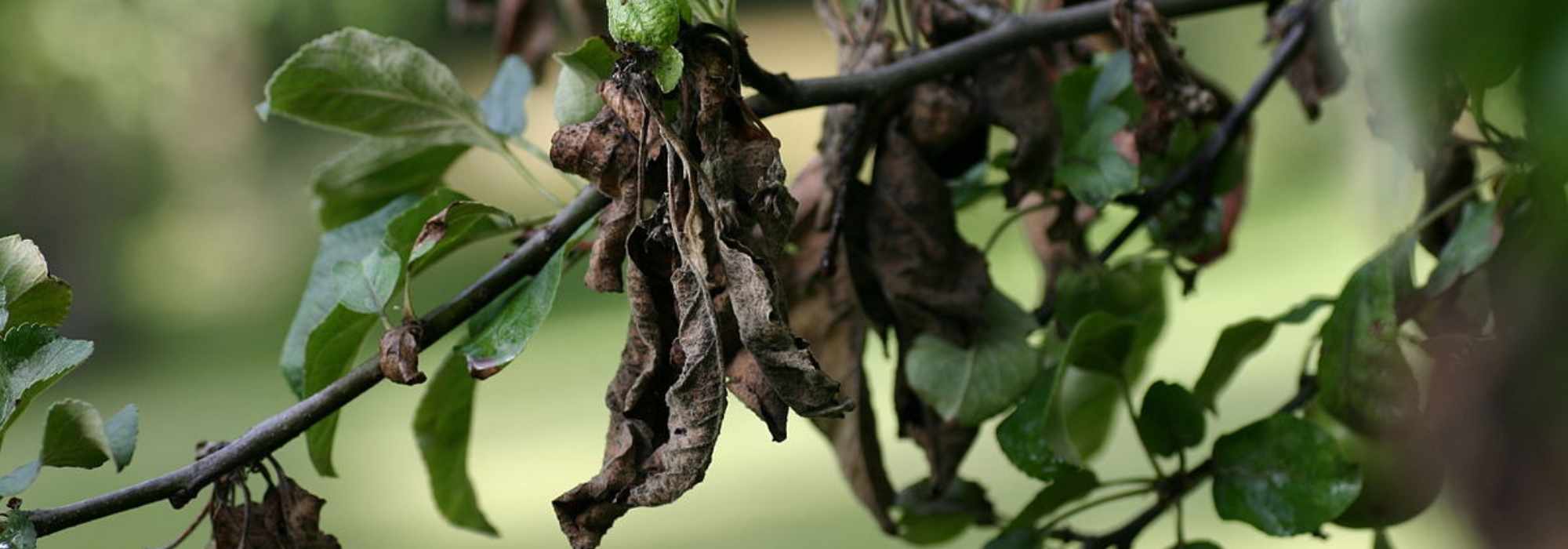
Fire blight: identifying and combating this disease
against this disease
Contents
Fire blight is a very serious disease, caused by the bacterium Erwinia amylovora, capable of killing a vigorous tree within three months. It attacks exclusively plants of the Rosaceae family and has wreaked havoc in pear orchards and on hawthorns in the past.
The potential emergence of this disease, also called “maladie du feu” is closely monitored in commercial orchards but can be transmitted from private gardens via ornamental plants such as Cotoneaster, Pyracantha and hawthorn, which are among the most susceptible plants.
Bacterium Erwinia amylovora, responsible for Fire blight, is subject to compulsory control in nurseries (European Directive 2000/29/EC) but also in all other places such as orchards, public green spaces, hedgerows and private gardens (Order of 31 July 2000). It must result in sanitisation measures, and if necessary uprooting.
The disease is recognised by the scorched appearance of branches occurring one after another. No treatment exists other than preventive measures such as controlling aphids, minimising wounds and splashing, etc. Uprooting and burning as soon as possible (mandatory before the end of October) are required to limit spread.
Which species are susceptible to fire blight?
Les Cotoneaster, Pear tree (Pyrus), Pyracantha, Hawthorn (Crataegus) are classed among most susceptible hosts so a law prohibits propagation, distribution and planting of certain species and cultivars known to be highly susceptible such as the Passe-Crassane pear, the Cotoneaster bullatus, salicifolius, watererii, congestus and their cultivars, Pyracantha atalentoïdes ‘Gibsii’, ‘Berlioz’, ‘Debussy’ and Pyracantha angustifolia… Nurseries in turn favour distribution of resistant cultivars such as Pyracantha Cadrou Saphyr Rouge or Cadrange Saphyr Orange and other less susceptible species.
Be aware that other plants can harbour and transmit the bacterium without anyone noticing such as Amelanchier, Aronia, Japanese quince (Chaenomeles), quince (Cydonia), loquat (Eriobotrya), apple (Malus), medlar (Mespilus), Photinia, Raphiolepis, Sorbus…
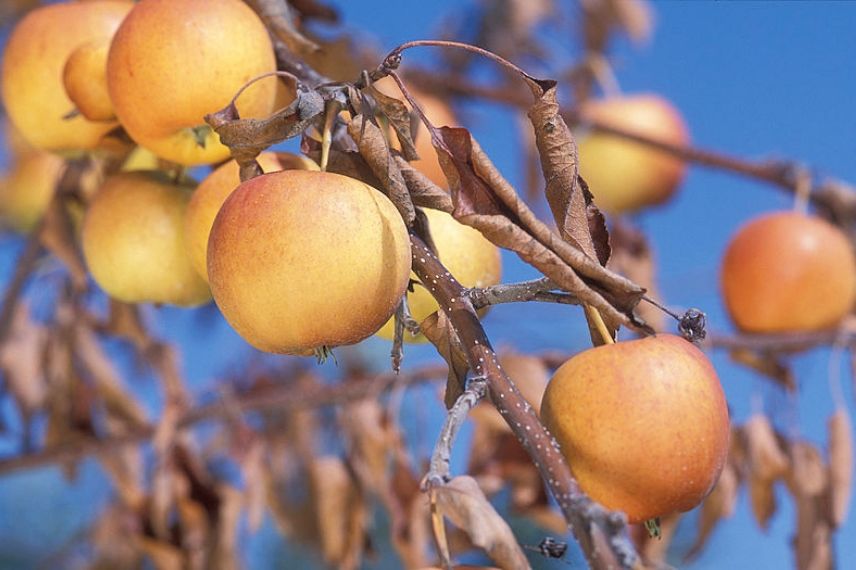
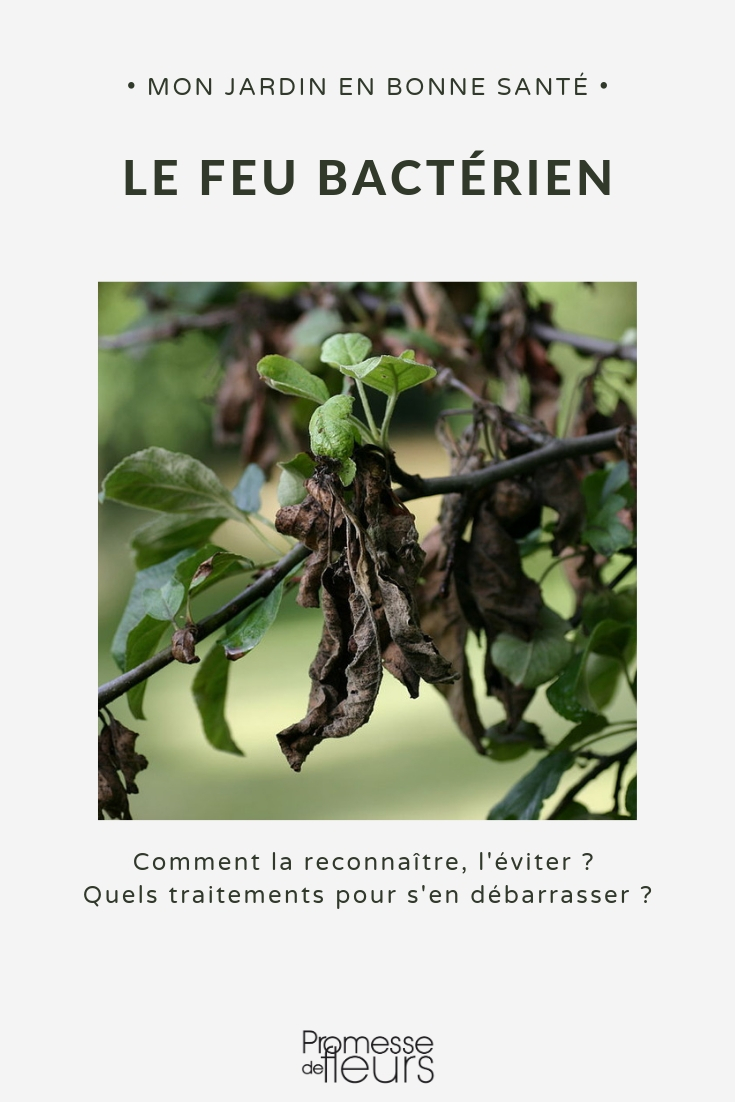
Severe fire blight infection on Gala apple tree
Read also
Brown rot of fruit treesHow to recognise fire blight?
- First symptoms appear in spring on flowers that wilt and dry out.
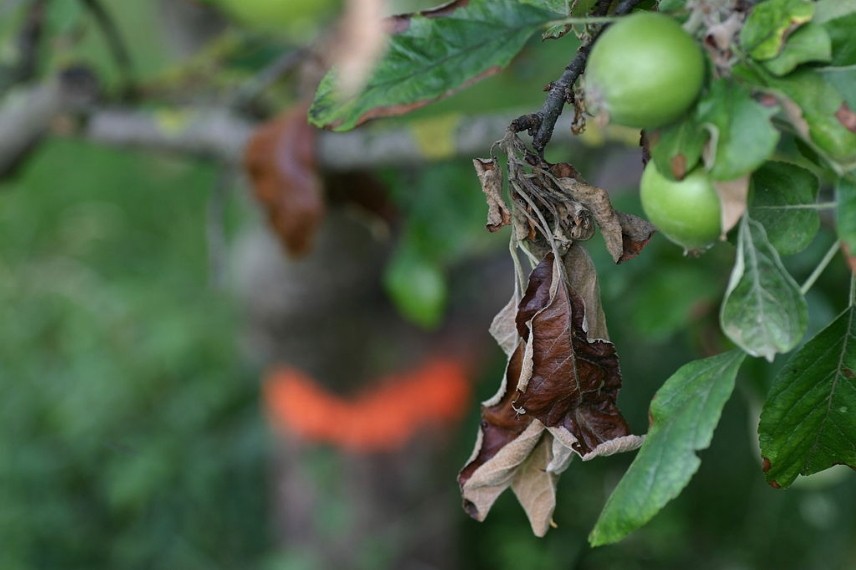
- Necroses affect the bearing shoots whose tips curl into a crozier and dry out. Young shoots redden (in apple trees) or blacken (in pear trees) suddenly as if burned but usually remain attached to the shoots.
- A whitish flow – golden on apple trees – is observed on infected organs (bark, fruits, shoots…) in mild, humid conditions.
To be certain it is fire blight, we advise:
- cut a diseased branch and inspect the cross-section: the tree ring just beneath the bark is reddish-brown and appears moist and shiny. Transition between healthy and infected tissue is gradual and, inside, droplets from the bacteria (exudates) sometimes ooze. Laboratory analysis can confirm the disease.
Disease progression:
- Disease spreads to shoots, scaffold branches and even the trunk, causing cankers. These cause sudden death of branches or of the whole tree by cutting off sap flow. A canker, variable in size, has a slightly sunken surface surrounded by cracked bark with, inside, ochre-red or brown areas that extend into healthy tissues. They often look water-soaked. They shelter the bacterium over winter, which spreads to other plants via whitish exudates that form at canker margins in spring or later on newly infected shoots and fruits.
Discover other Pear trees
View all →
Available in 0 sizes
Available in 0 sizes
Available in 0 sizes
Available in 0 sizes
Available in 0 sizes
Available in 0 sizes
Available in 1 sizes
Available in 1 sizes
Available in 1 sizes
Available in 5 sizes
Factors favouring fire blight
A warm (between 12 and 24°C) and humid period favours development of the bacterium which enters through natural openings such as flower nectaries or stomata (pores located under the lamina), through wounds caused by hail, wind or even by pruning.
Plants are most susceptible during flowering and periods of vigorous growth but symptoms are generally observed just after flowering, on young fruits that shrivel.
Control and Treatment Against Fire Blight
No truly curative treatment exists although copper can limit new infections.
Control relies on precautions and preventive methods, including early symptom detection and regular removal of infected shoots.
How to prune infected shoots?
A recently infected shoot shows three zones important to identify:
-
- a burnt tip, black or brownish,
- an intermediate zone where, when you lift the bark, tissues are often reddish,
- and an apparently healthy-looking zone that nevertheless harbours the bacterium.
Prune infected shoots, at least 30 cm below the intermediate zone in apple trees and up to 1 m below this zone in very susceptible pear varieties such as Passe‑Crassane. Carry out as quickly as possible but in dry weather.
In case of heavy attack, when the intermediate zone is close to the trunk, removal of the infected tree is compulsory and must be carried out, by law, no later than the end of October of the current year.
Disease progression within the tree is faster when growth is vigorous.
Precautions to take when pruning
- Disinfect cutting tool between each shoot pruning by soaking in 70% alcohol (more effective than methylated spirits at 90°) or in white vinegar diluted 50 ml in 1 litre of water.
- Remove prunings in dry weather (you can leave them on site for 24 hours in dry weather to reduce bacterial activity) then burn them. Avoid traffic to and from an infected plot. Return a few days after the first pruning then once a week to remove any new infected shoots.
- Avoid irrigating infected plots by sprinkler or surface irrigation and stop any new nitrogen applications which stimulate growth and thereby increase tree susceptibility to the bacterium.
- If a second flowering occurs on the infected tree, remove the flowers and monitor new summer shoots.
- Check neighbouring hedges that may host species susceptible to the bacterium such as hawthorn, Pyracantha, some cotoneasters, quince and medlar, rowans, etc. A distance of 500 m is recommended between these species and the orchard.
- After leaf fall, remove from the tree any shoots bearing cankers or dry leaves.
- If you practise grafting, beware of apple and pear scions which can transmit fire blight (current apple rootstocks are resistant to the disease).
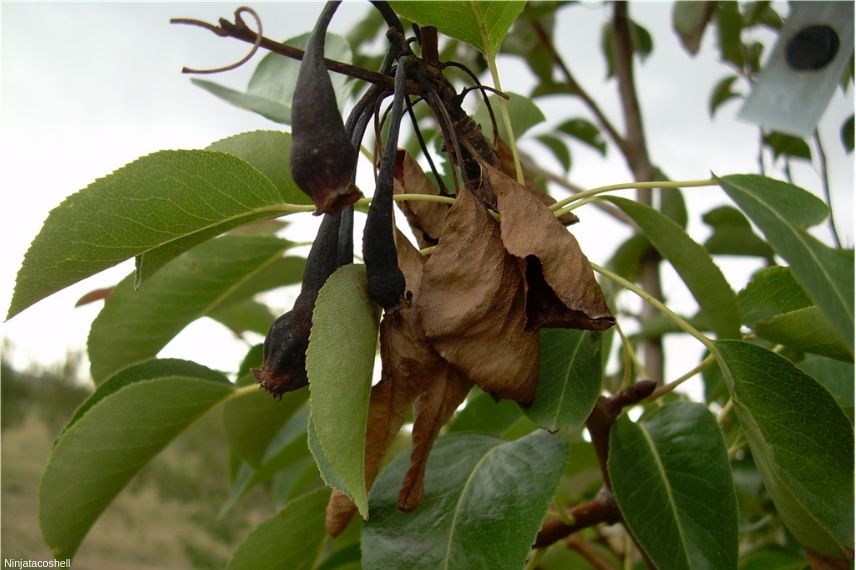
Fire blight on a pear tree
Risks of confusion
- The bacterium Pseudomonas syringae on pear (bacterium): flowers and small dry black fruits fall shortly after flowering but no exudate is visible and brown-black spots appear on leaves in summer, more widely throughout the tree than with Fire blight.
- Leaf scorch on pear, notably on Conference variety: foliage blackens under water stress but central vein of leaves remains green.
- Cèphe is a common insect on pear, but can also affect apple, quince and hawthorn, causing blackening and arching of shoot tips over up to 15 cm with characteristic spiral punctures at the base.
- Brown rot causes floral clusters to wither within days; they become brittle and fall but show no exudate. A cross-section of the twig shows a clearly demarcated transition to healthy bark.
Legislation on fire blight
- In France, planting of particularly susceptible varieties, such as the Passe-Crassane pear, is prohibited while propagation and planting of species susceptible to fire blight is subject to authorisation from the government.
- For information, you can find here the list of plants whose planting and propagation are prohibited nationwide because of the risks associated with fire blight.
- At departmental level, municipalities corresponding to buffer zones have been defined by prefectural order and are subject to systematic inspections for species susceptible to fire blight. In case of confirmed contamination, you must notify your town hall or the Regional Plant Protection Service so they can take the necessary measures to prevent spread. Please note that if tree removal is recommended, it must be carried out before the end of October of the current year.
- Subscribe!
- Contents
This form is protected by reCAPTCHA - the Google Privacy Policy and Terms of Service apply.

































Comments