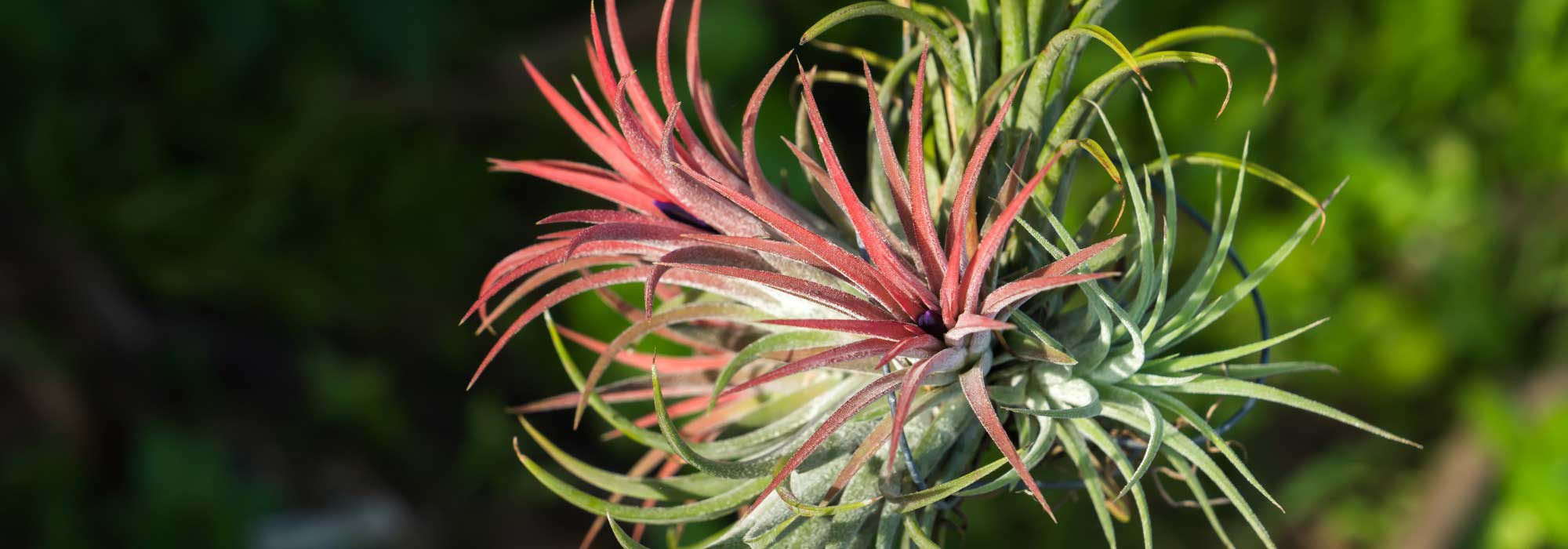
Tillandsia: to grow and care for
Contents
Tillandsia in a nutshell
- Tillandsia, nicknamed ‘air plant’, is an exotic plant with fine, graphic foliage
- Some species grow without soil and absorb moisture directly from the air.
- Highly decorative, Tillandsia stands out for the diversity of its forms, sizes and colours.
- Easy to grow, it suits both beginners and houseplant enthusiasts.
- It can be mounted on many supports (wood, stone, hanging displays), making it an ideal plant for creative displays.
Word from our expert
Tillandsia, nicknamed ‘air plant’, is attracting growing interest among indoor plant enthusiasts for its originality. Most species cultivated indoors are distinguished by a fascinating characteristic: their ability to grow without substrate, simply attached to a support. Unlike most plants, they do not need soil to develop, which makes them very decorative and adaptable to contemporary interiors.
Native mainly to tropical and subtropical regions of Central and South America, Tillandsia naturally colonises a variety of supports such as tree branches, rocks or even power lines. This ability to live as an epiphyte — that is, using a support without extracting nutrients from it — allows it to capture moisture and nutrients directly from the air thanks to its leaves.
Beyond its singular lifestyle, Tillandsia also charms with the diversity of its forms and colours. Some species have thin, silvery leaves, while others display broader rosettes, sometimes tinged red or pink at flowering. Finally, some, such as Tillandsia cyanea, are grown for their very colourful flowering.
Discover in this article the particularities of Tillandsia, different species and varieties, as well as all our advice on how to grow and showcase them.

Description and botany
Botanical data
- Latin name Tillandsia sp.
- Family Bromeliaceae
- Common name Air plant
- Flowering Usually in spring or summer
- Height Very variable, often between 5 cm and 30 cm (possibly up to several metres for trailing species)
- Sun exposure Bright, without direct sunlight
- Soil type None (epiphytic species) or very free-draining substrate (bark, sphagnum)
- Hardiness Frost-tender
Tillandsia belongs to family Bromeliaceae, which includes many exotic plants, some of which are well known such as pineapple (Ananas comosus). Bromeliaceae are distinguished by their generally thick foliage arranged in rosettes. Genus Tillandsia comprises several hundred species, showing great morphological and ecological diversity. These plants are found mainly throughout the Americas, from the southern United States to Argentina and Chile, with a strong concentration in Central America and Andean regions.
In their natural habitat, Tillandsia occupy very varied environments: humid tropical forests, semi-arid zones, mountains or coastal deserts. This wide ecological range explains their remarkable adaptability. Most species are epiphytic, meaning they grow on other plants, notably trees, without parasitising them. Some are saxicolous (grow on rocks) or terrestrial.
Their most notable feature lies in their absorption system. Unlike conventional plants, Tillandsias absorb water and nutrients mainly through their leaves, thanks to specialised cells called trichomes. These microscopic structures act like sponges, capturing moisture from air, dew and airborne organic particles.
Growth habit of Tillandsia is extremely variable depending on species. Some form compact rosettes, others develop looser clumps, or threadlike or trailing silhouettes. Perhaps the most emblematic example is Tillandsia usneoides, often called “Spanish moss” or “air moss”, which forms long, flexible garlands that can reach several metres in length in its natural habitat.
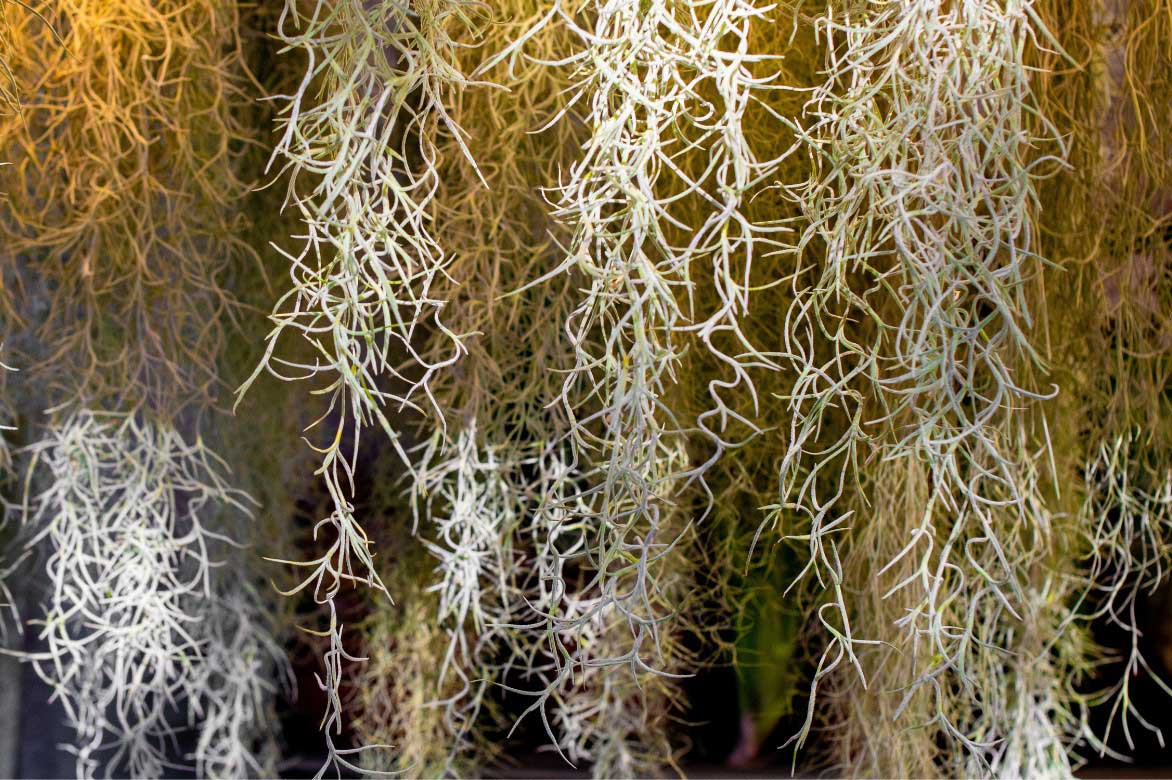
Tillandsia usneoides forms long, trailing, silvery, threadlike stems
Most Tillandsia are small, ranging from a few centimetres to around thirty centimetres in height. This makes them ideal for small spaces or decorative arrangements. They can find a place in any interior!
Tillandsias stand out mainly for their ornamental foliage. Leaves may be thin, stiff, curved, spiralled or spread in a rosette. Colour ranges from bright green to silvery grey, and may include red, pink or bluish tones. This colour variation often reflects adaptation to environment. Species with grey foliage have a high density of trichomes, giving a downy or powdered appearance. This helps reflect light and limit water loss, essential in dry, sunny habitats. Conversely, green-leaved species have fewer trichomes and require higher ambient humidity.
Some Tillandsias produce very decorative flowers. This is the case of Tillandsia cyanea, a somewhat special species that is grown in a pot in a light, free-draining substrate. It is distinguished by a flat, spike-like inflorescence, often compared to a racket, of vivid pink that is highly decorative. From this spike emerge small violet or bluish-violet flowers in succession, creating a striking contrast. This flowering can last several weeks, making it much valued for indoor decoration.
Other species such as Tillandsia aeranthos offer spectacular blooms in vivid hues, with large coloured bracts highlighting tubular flowers. Tillandsias are monocarpy: the plant gradually dies after flowering, but usually produces offshoots at its base which take over and ensure continuity.
Tillandsias are frost-sensitive: most species grown indoors prefer temperatures between 10 °C and 30 °C. Some tolerate occasional drops in temperature, but they remain generally susceptible to frost. In temperate climates, outdoor cultivation is therefore limited to summer periods or protected locations.
Their drought tolerance is, however, remarkable, especially among so-called xerophytic species, identifiable by their greyish or silvery foliage. These plants are adapted to arid environments and need less water than green-leaved species, known as mesophytes, which prefer more humid atmospheres.
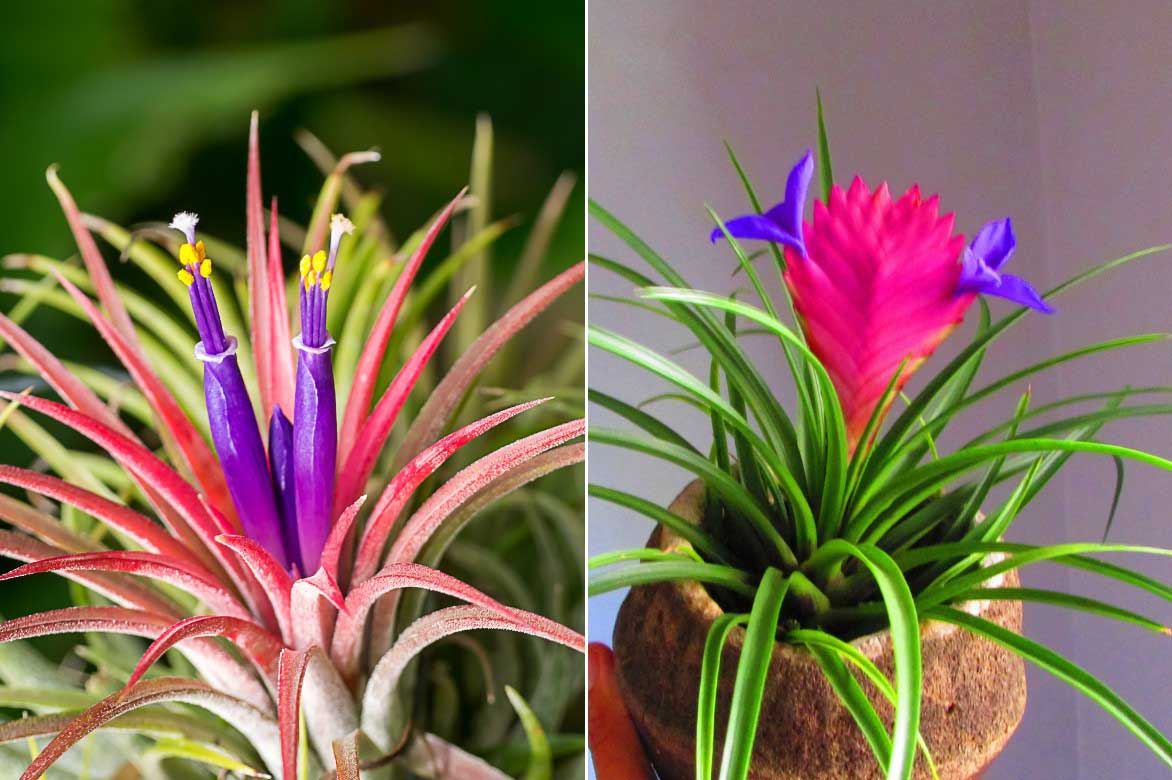
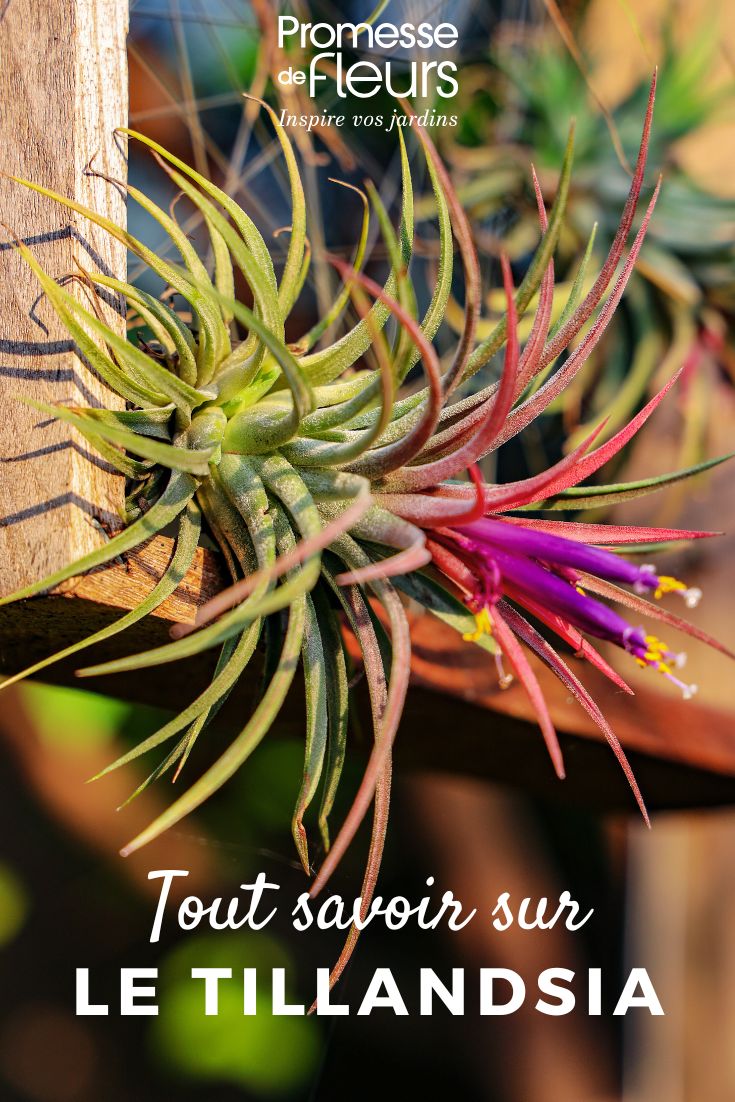
Flowering of Tillandsia ionantha and Tillandsia cyanea
Read also
Misting indoor plantsMain species and varieties
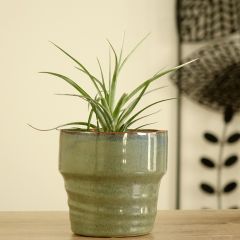
Tillandsia Naomi - Air plant
- Flowering time June to September
- Height at maturity 40 cm
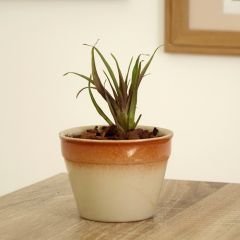
Tillandsia Mizuki - Air plant
- Flowering time June to September
- Height at maturity 20 cm
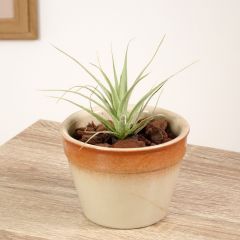
Tillandsia x Andreas - Air plant
- Flowering time June to September
- Height at maturity 40 cm
Tillandsia Samantha - Air plant
- Flowering time June to August
- Height at maturity 45 cm
Discover other Air plants - Tillandsia
View all →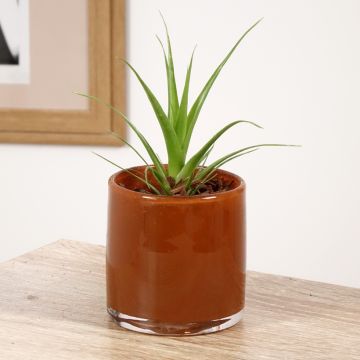
Available in 1 sizes
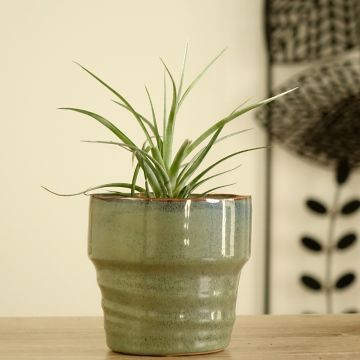
Available in 1 sizes
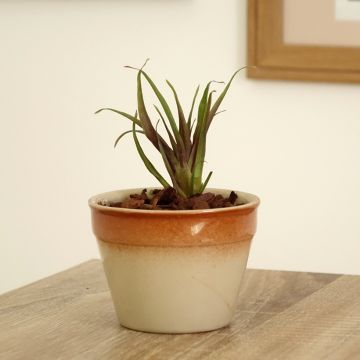
Available in 1 sizes
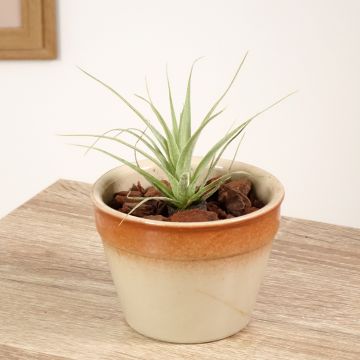
Available in 1 sizes
How to plant or install Tillandsia indoors?
Where to place it?
Tillandsia prefers bright locations, without prolonged direct sunlight. It will thrive near an east‑ or west‑facing window. Grey‑foliaged species tolerate stronger light better, while green‑foliaged ones prefer slightly shadier, more humid conditions.
Ventilation is another very important point: Tillandsia does not like confined spaces. Good air circulation helps prevent excess moisture and reduces risk of rot.
Finally, avoid placing it near direct heat sources such as radiators, which dry the air out too much, especially in winter.
When to plant?
Spring and early summer are the best times to install or plant a Tillandsia. At this time the plant is in its growth phase, which helps it adapt more easily to a new environment.
If you receive or buy a Tillandsia in winter, simply be a little more attentive to watering and light levels, which are often lower at that time.
How to pot it?
Although Tillandsia are generally epiphytic, grown without substrate, some species such as Tillandsia cyanea are grown in pots. This method, however, requires a very free‑draining substrate and particular attention to humidity.
- Choose a suitable pot : opt for a small pot with drainage holes in the base to ensure good drainage. Terracotta pots are particularly recommended because they promote aeration.
- Prepare a light substrate : use a very airy mix, for example bark (orchid substrate), sphagnum and possibly perlite or sand. The substrate should dry quickly and must not retain excess water.
- Position the plant : place the Tillandsia in the pot without deeply burying its base. Roots should simply be in contact with the substrate. Firm gently, without compacting, to keep the plant in place while allowing air to circulate.
- Water after planting : moisten the substrate slightly then mist the plant. It is important to let everything dry completely before the next watering.
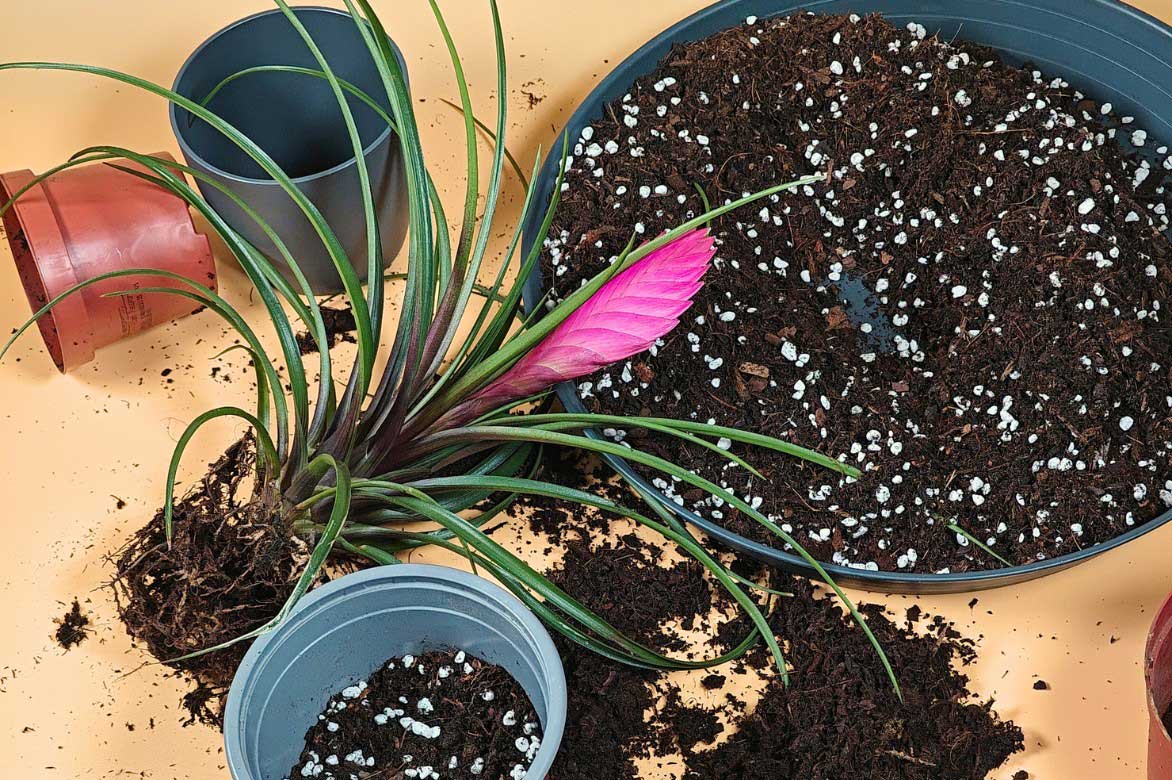
Planting of Tillandsia cyanea
How to mount it on a support?
Because epiphytic Tillandsia do not need soil, they can be attached or simply placed on various supports. Choice depends on aesthetic preferences.
Here are the main steps for a successful installation :
- Choose a suitable support : driftwood, bark, stone, shell or metal structure. It is important that the support does not retain too much water, to avoid stagnant dampness.
- Position the plant : place the Tillandsia so it is stable, taking care not to crush its base. Air should be able to circulate freely around it.
- Secure if necessary : you can use nylon thread, fine non‑rusting wire or a small drop of plant‑safe glue. Fixing should remain discreet and must not damage the plant.
- Avoid closed containers : closed terrariums are not suitable because they prevent good ventilation. If you use a glass container, it must remain open.
Some species can simply be placed without securing, provided they are stable. This is often the case with rosette‑forming Tillandsia.
Installation is also an opportunity to be creative. Tillandsia integrates easily into natural or modern arrangements, suspended, on a wall or placed on furniture.
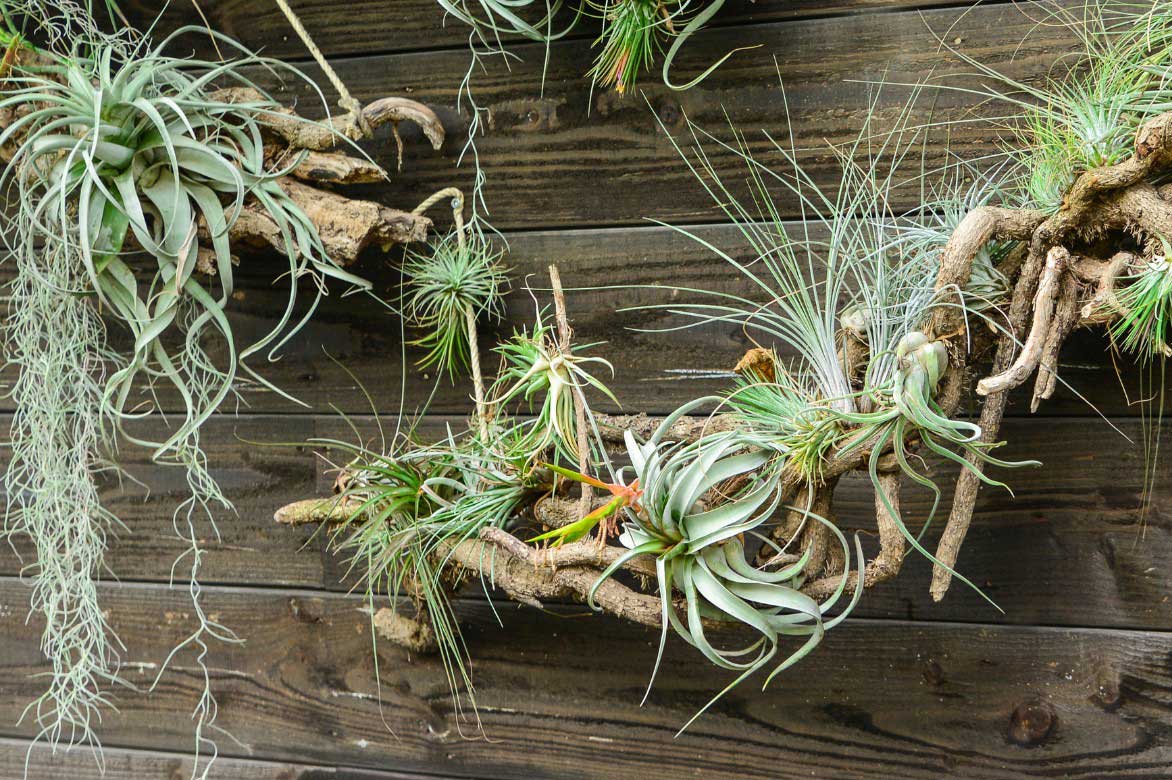
Different species of Tillandsia mounted on branches
Read also
The easiest indoor plants to growHow to care for a Tillandsia?
Care of Tillandsia relies on a few simple actions. However, care differs depending on whether it is an “aerial” Tillandsia or a species grown in a pot such as Tillandsia cyanea.
Watering is the most important factor. Tillandsias without substrate hydrate through their leaves: ideally mist them regularly, or soak them from time to time in water for about fifteen minutes. Frequency depends on ambient humidity and temperature. After each watering, it is essential to let the plant dry completely, preferably upside down, to avoid any water stagnation.
For species grown in pots, such as Tillandsia cyanea, watering is carried out in a more conventional way, directly on the substrate, while remaining moderate. The mix should be light and free-draining (bark or orchid mix type), and it is important not to let water stagnate in the rosette or in the saucer, which could lead to rot.
Tillandsia develops well at temperatures between 10 °C and 30 °C and does not tolerate frost. Indoors, good ventilation is essential to limit excess humidity and prevent disease, especially for species grown in pots.
A feed of fertiliser can be applied in spring and summer to support growth. For aerial Tillandsias, favour a special foliar fertiliser for Tillandsia, to spray on the foliage. For potted species, a very diluted fertiliser can be added with the watering, taking care to keep it light so as not to burn the roots.
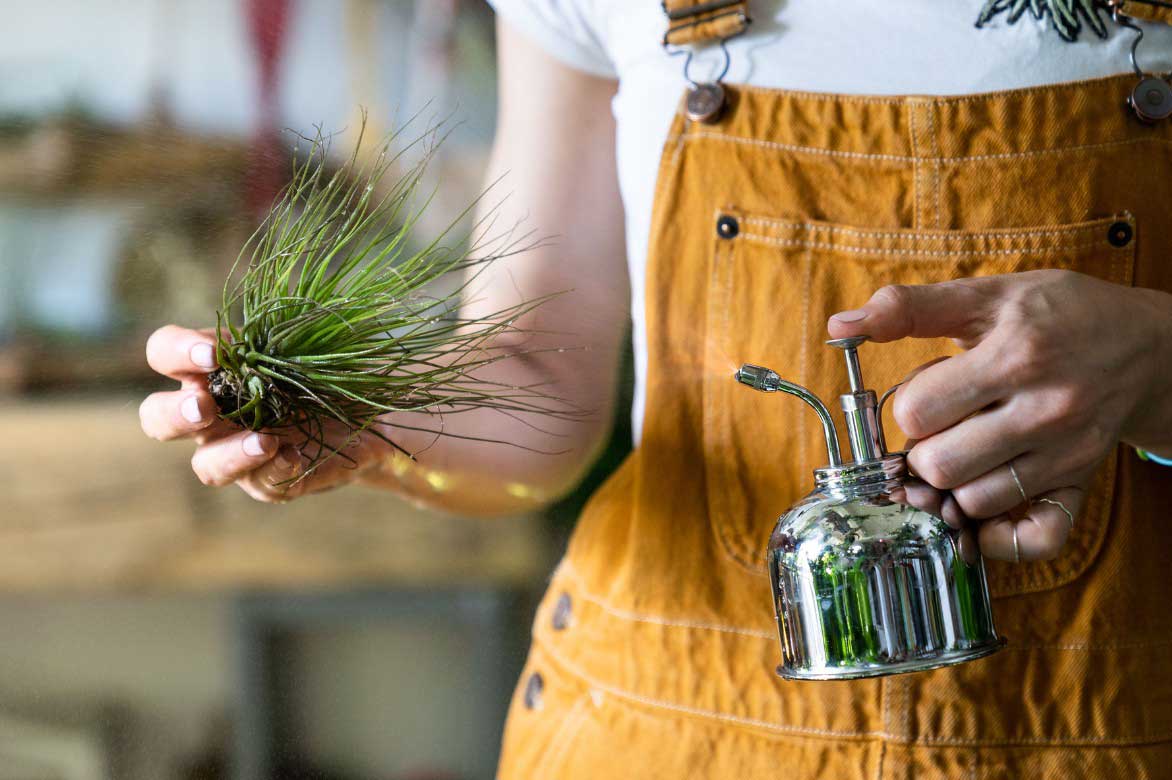
Remember to mist the Tillandsia foliage regularly
Diseases and parasitic organisms of Tillandsia
Tillandsia is a fairly hardy plant, but inadequate growing conditions can encourage the onset of disease or pest attack. Careful observation of the plant allows rapid detection of any problem and action before the situation worsens.
The most common growing problem is rot, which often affects the base of the plant or the leaves. It usually develops in cases of excessive humidity or poor air circulation. Signs are fairly obvious: leaves become soft, brown at the base and eventually fall off. To reduce this risk, avoid watering too frequently and ensure the plant dries completely after each bath or misting. If some leaves are already affected, it is best to remove them promptly to prevent rot from spreading to other parts of the plant.
Some pests can also attack Tillandsia. This is the case, for example, with mealybugs, which appear as small white or brown clusters, often around the base and along the leaves. red spider mites may also appear, especially in very dry, warm rooms, causing small yellow or brownish spots on the foliage. In such cases, pests can be removed manually with a cotton swab soaked in alcohol or treated with a mild insecticide suitable for houseplants. For red spider mites, rinsing with water and temporarily increasing humidity may be enough to deter them.
Finally, some signs indicate environmental stress rather than disease. Curled or very dry leaves generally signal lack of water or air that is too dry, while pale or discoloured leaves often reveal insufficient light. Reduced growth can result from temperatures that are too low or a lack of nutrients. Observing the plant and adjusting these conditions remains the most effective way to prevent problems.
How to propagate Tillandsia?
Propagation of Tillandsia is mainly done by removing offshoots. After flowering, the mother plant naturally produces young shoots at its base, which gradually develop.
It is generally recommended to leave offshoots attached to the mother plant for a while so they gain size and vigour. When they reach about one third of the size of the adult plant, they can be separated and grown independently.
How to do it?
- Wait until young plants are well developed, with several leaves and a sturdy habit.
- Gently separate the offshoot from the mother plant by hand, or with a clean tool if necessary, taking care not to damage the base.
- If cutting is necessary, allow the separation point to dry for a few hours to reduce risk of rot.
- Place the offshoot on a suitable support (wood, stone, hanging mount) or in a light substrate for some species.
- Water by misting or by regular watering for potted species.
- Place the plant in a bright spot and maintain adequate ventilation to favour recovery.
Once separated, the young Tillandsia grows independently and can in turn produce new offshoots after flowering. This method therefore makes it easy to renew plants and create new displays over time.
How to showcase Tillandsia and which plants to pair it with?
Tillandsia is a plant particularly well suited to indoor decoration thanks to its compact size, diversity of forms and ability to grow without soil. Its airy appearance allows integration into many compositions, alone or combined with other plants and decorative materials.
To create successful combinations, it is important to consider the plant’s needs. Tillandsia needs good light, sufficient ventilation and regular watering by misting or soaking. It is therefore best to place it near plants with similar requirements. It pairs particularly well with orchids, notably Phalaenopsis, which also appreciate bright light without direct sun and some ambient humidity. Their elegant flowering contrasts nicely with the more unusual forms of Tillandsia. Bromeliads, such as Guzmania or Vriesea, also make good companions. They share similar needs and add touches of bright colour with their inflorescences.
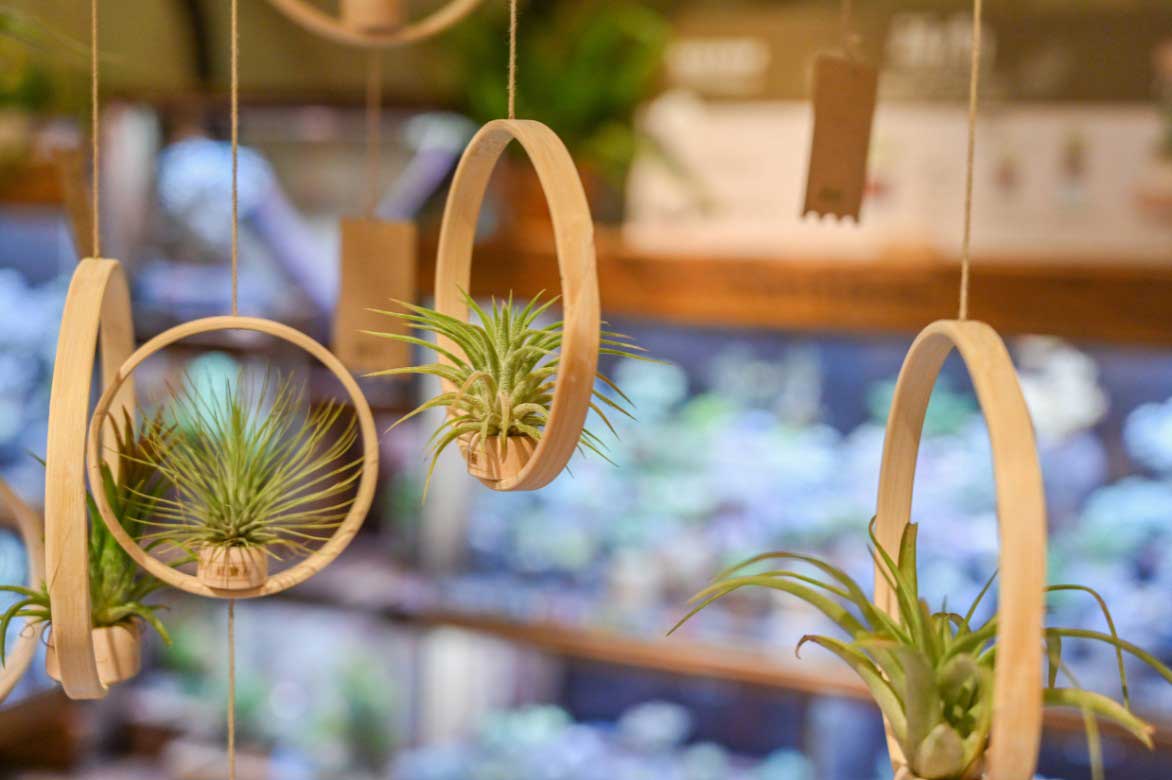
Tillandsias are perfectly showcased when mounted on aerial supports
In decoration, Tillandsia can be installed on various natural or artificial supports. Driftwood, bark, stones, shells or metal supports are all possible options. It is also very attractive in wall compositions, plant frames or fixed on glass or wire hangings. Trailing species, such as Tillandsia usneoides, can create a striking plant cascade, while compact rosettes bring a graphic, modern touch.
Tillandsia also pairs well with materials such as glass, metal or ceramic. For example, a silvery rosette placed on a glass base contrasts nicely with its colour and showcases its shape. It is also possible to combine several species on the same support, playing with heights, colours and textures to create a dynamic, original composition.
Finally, Tillandsia can be used in aerial mini-gardens or open terrariums, where it will add a light, graphic touch. In this type of composition, it is essential to maintain good ventilation to avoid stagnant moisture, which can harm the plant.
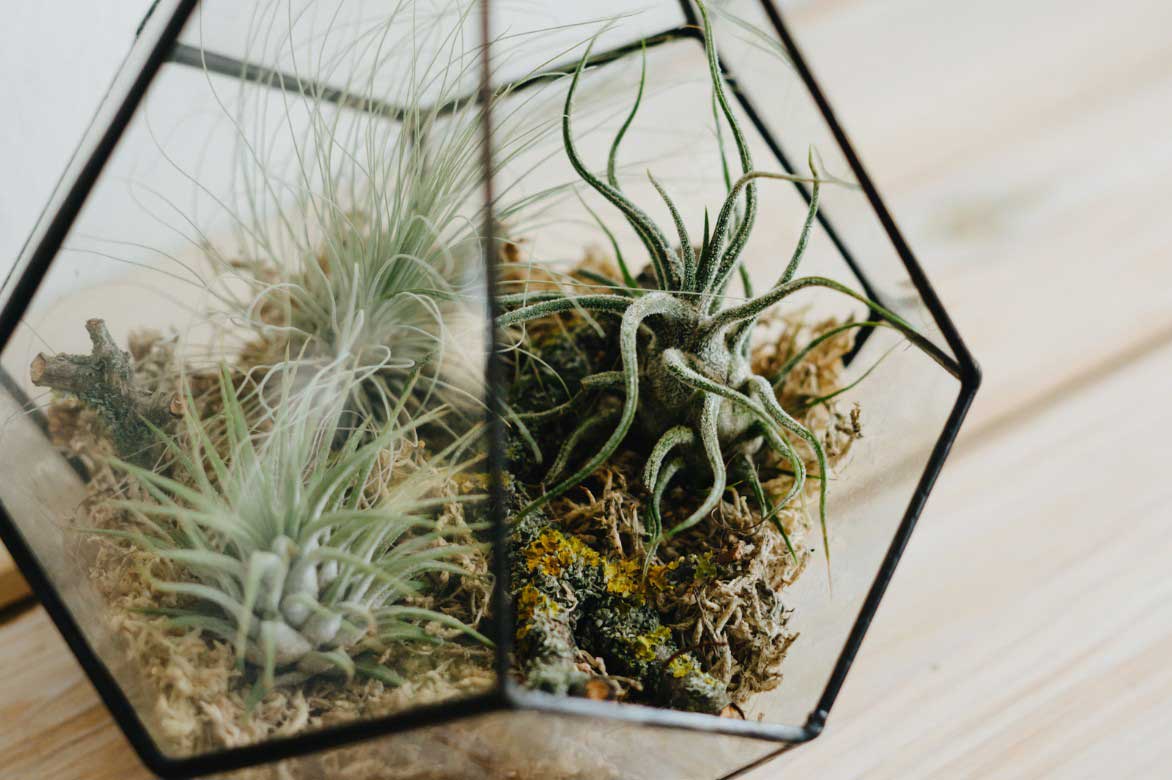
Tillandsias grown in terrariums
Useful resources
- Discover our full range of indoor plants.
- Our books on indoor plants.
- Subscribe!
- Contents
This form is protected by reCAPTCHA - the Google Privacy Policy and Terms of Service apply.

































Comments