





























Why and how to design different spaces in the garden?
Tips for dividing your garden into several zones
Contents
Designing your garden by dividing it offers several advantages. Creating multiple atmospheres, assigning a function to each area, introducing surprises, giving the impression that the garden is larger, filtering the wind… compartmentalising your plot into several zones is part of the creative process and should be considered in advance, taking the time to reflect. Many options are available to the gardener eager to organise and structure their garden in a way that is both optimised and aesthetically pleasing. This is where hard structures and plants come into play, each being a valuable ally, with its own advantages. I propose to highlight some elements to consider when structuring your garden into multiple zones.
Why divide a garden into several spaces?
Since a few years ago (and the pandemic has intensified this phenomenon), the garden has become a privileged space, and more and more people have embarked on the adventure.
- However, while gardening involves planting plants in one’s garden, the creation project is not limited to that. Plantings are organised into beds and borders, but to succeed in creating a garden, it is advisable to approach its design more holistically, which means considering the different spaces, their organisation, and the various pathways. The garden then becomes a true extension of the home. Like it, it is divided into different ‘rooms’, which can be thematic green chambers guided by a search for style or colours, for example, or result from a desire to assign a specific function to each area (terrace, vegetable garden, flower meadow, composting area, parking for the car, garden shed, waste storage…). While some of these areas are beautiful by nature, others deserve to be concealed so as not to spoil the overall aesthetics of the garden.
- On the other hand, dividing a garden allows one not to reveal everything at a single glance. Hidden by a hedge or a structure, the next area is suggested without being fully revealed, thus sharpening the visitor’s curiosity and encouraging them to explore further. By creating such surprises, the garden can offer multiple atmospheres and ambiances, and this also has the effect of making it appear larger than it actually is. This can be particularly useful in the design of small gardens or when one has to work with a long, narrow plot.
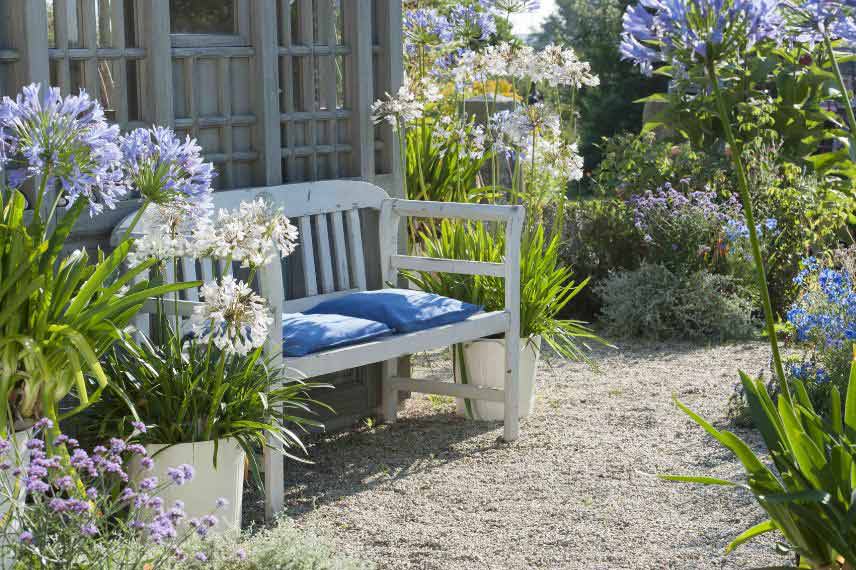 Each area of the garden, in addition to being visually pleasing, can have a specific function
Read also
Taking on a large gardenHow to create different zones?
- Once you have defined the areas you wish to prioritise (a vegetable garden for fresh vegetables, a terrace for convivial moments outdoors, a chicken coop, a swimming pool…) and you know how much space each will occupy, you need to consider how to connect them. This involves the pathways, meaning how one can move from one area to another. Straight paths can create beautiful perspectives and draw the eye towards a focal point (a tree, a statue, a pot, a panorama…). Curved pathways have a more romantic feel and can, conversely, break this perspective effect by concealing the continuation of the walk. However, be careful not to opt for curves that are too tight and/or too numerous, as they can make mowing feel like a gymkhana challenge!
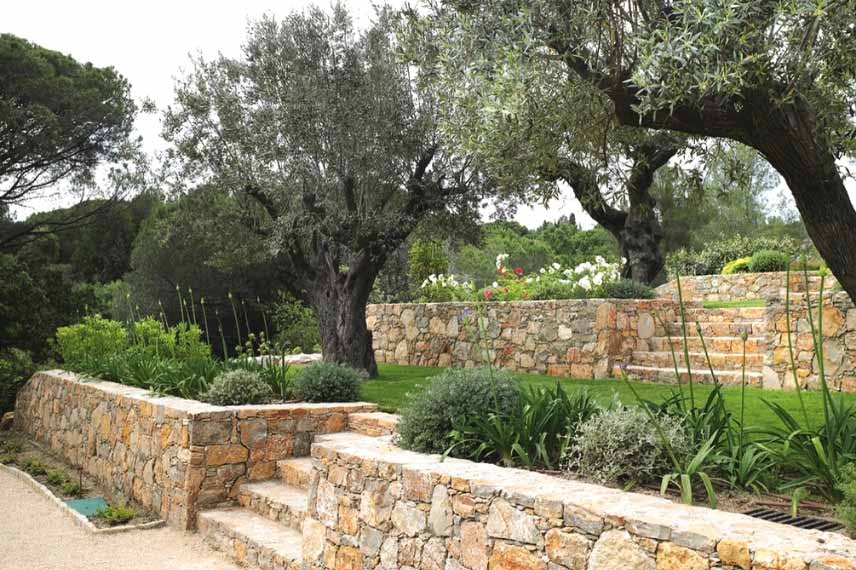
- To landscape a sloping garden, creating terraces (or retaining walls) and steps is sometimes essential, which contributes to the idea of compartmentalising the garden.
- Designing a flat garden conversely encourages the creation of artificial levels (adding soil to create gradients, excavating certain areas to create a more sheltered and intimate space, inserting vertical elements…).
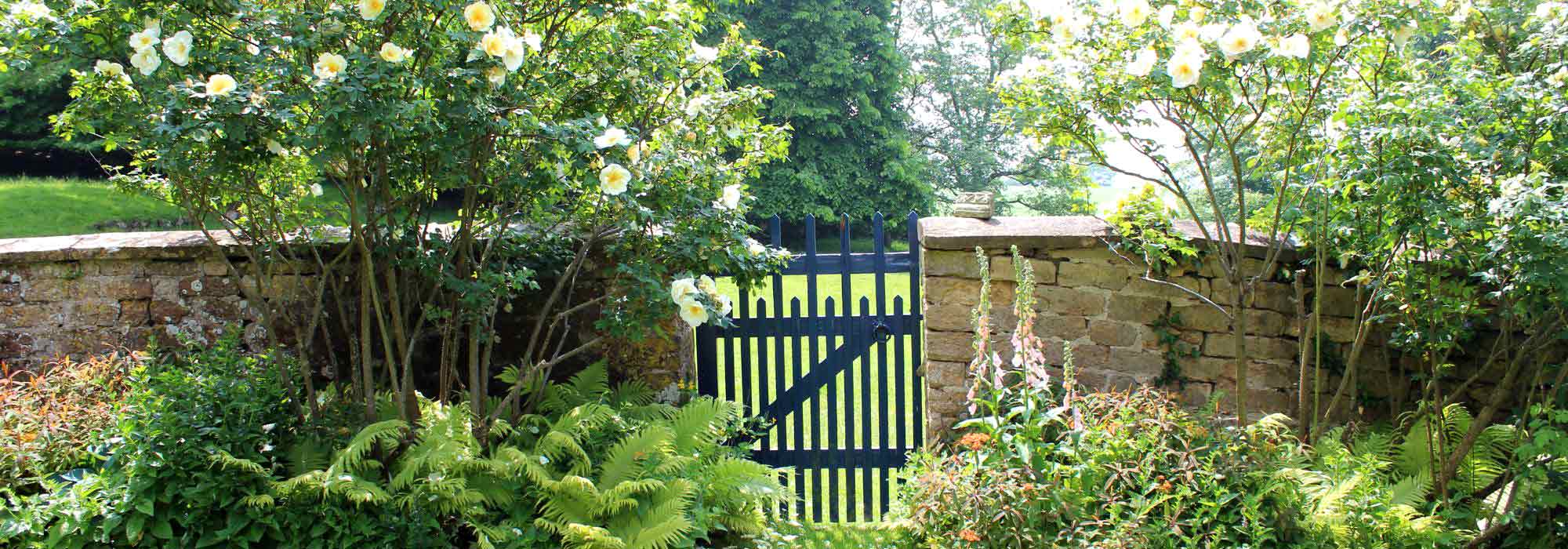
- Finally, it is important to pay particular attention to how to materialise these spaces and to mark their entrance. Boundaries can take the form of hedges of plants: some completely block the view, either permanently or just seasonally, while others allow the eye to pass through, enabling you to enjoy an interesting view and integrate the surrounding landscape as if it were part of your garden, visually enlarging it. Another solution is to use fixed structures and non-plant materials, which does not prevent you from associating them with plants.
Separate and link areas with structures.
Les constructions, selon les matériaux utilisés, peuvent se révéler très durables. Elles peuvent être utilisées seules ou associées à des plantes, qui les rendent moins artificielles et leur apportent un supplément d’âme.
Walls and Low Walls
Walls can be used, among other things, to support different soil levels or to delineate spaces (see the entire garden).
Built from masonry, they can be quite tall and effectively enclose the garden. Rather than leaving them bare, make use of them by dressing them with climbing plants. When adorned, their presence is attenuated, and the boundaries of the garden become blurred, creating the impression that it is larger. Some plants, such as ivy, trumpet vine, climbing hydrangea, or Virginia creeper can attach themselves to this support. Climbing roses, jasmines, honeysuckles, or wisterias require a structure to cling to, sometimes assisted by the gardener. To provide them with suitable support, simple metal cables or wooden trellises can be used. Well-exposed walls also offer an ideal area to train fruit trees, without taking up much ground space.
Dry stone walls have undeniable charm, further enhanced if you vegetate them. The top and crevices can host numerous plants that brighten the structure with their blooms.
Gabions
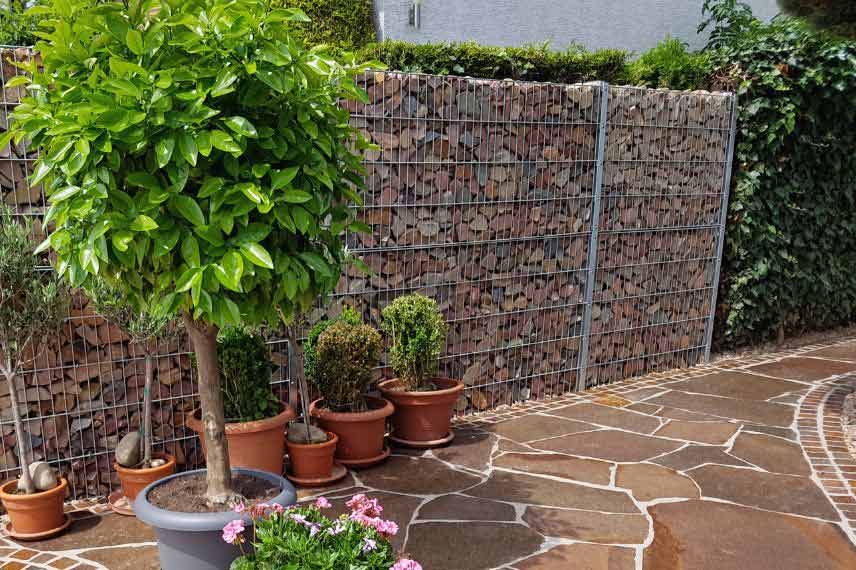
Gabions are structures that are gaining popularity. These “cages” made of metal, filled with stones, pebbles, or any other material of your choice, have a very contemporary look that may not suit all garden styles. Quite similar to some walls in their use, they are easier to implement and can also be vegetated.
Wood or Stone Beams
To support a terrace or raised bed, large wooden or stone beams, installed vertically or horizontally, add a warm touch to the garden. To break the rhythm, dress the top of the earth retention with creeping and trailing shrubs, which soften the lines, interspersed with perennials. Besides their decorative role, the plants positioned this way create a sort of natural barrier that secures the change in levels.
These elements can also be laid flat, buried to ground level, thus marking out a space, passage, or path.
Pergolas, Arches, and Arches
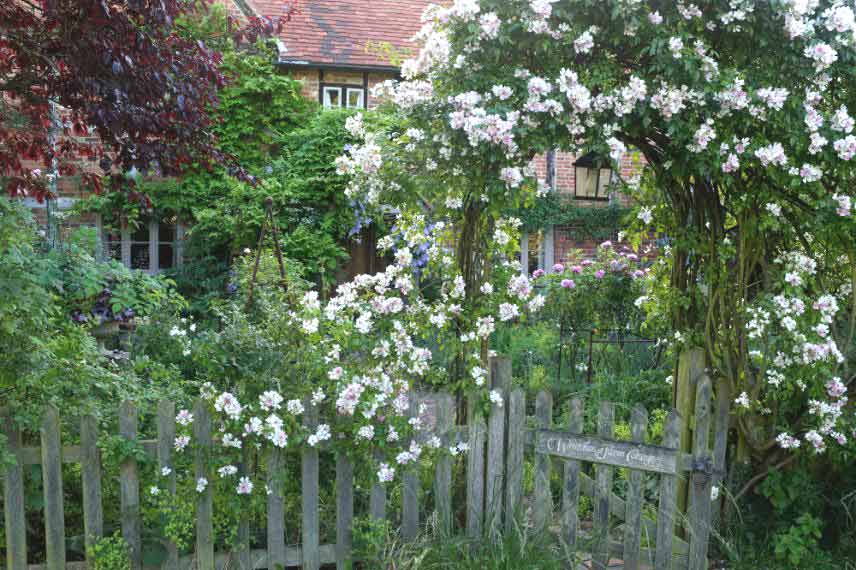
Pergolas, arches, gazebos, and other arches are excellent means of creating verticals. Their purpose can be practical, such as a pergola that provides shade over a terrace or a resting corner. Topped with a shade cloth or reed matting, they create a protected area, where one can eat and relax away from the sun’s heat. Installing climbing plants allows for beautiful blooms, decorative foliage, and even fruits (such as kiwis, grapes, passion fruits, etc.). The arches particularly mark the passage from one space to another. Framed by hedges, for example, they invite one to continue the stroll, forming a sort of portal, more or less mysterious, especially when adorned with climbing plants. This is an opportunity to create beautiful associations (a rose and a clematis, a spring-flowering climber paired with a climber with autumn interest, for example, to beautify different seasons).
Fences and Trellises
A simple fence or an ornate trellis can be used to delineate two areas of the garden. Securing the edges of a pool, delineating the vegetable garden or chicken coop while limiting the risk of intrusions, enclosing the garden, they are very versatile and can represent a low investment. While some offer an aesthetic advantage, others benefit from being concealed by using climbing plants once again. This type of structure is suitable for many plants (either self-clinging or those that need something to wrap around), but be mindful of their exposure to prevailing winds. Their surfaces can indeed represent a significant catch that, in strong gusts, can be destroyed in a matter of minutes.
Barriers
Wooden barriers add a rustic, bucolic, or more ‘ranchy’ touch to your garden. You can easily make them from stakes and boards from the store, or even simply repurpose elements from the garden (trunks and branches from pruning, for example). Left “bare”, the barriers allow the eye to pass through, delineating without enclosing. Enriched with climbing plants, they gain in poetry. Of course, more durable versions are available, thanks to concrete barriers, and it ultimately comes down to taste and budget.
Read also
Designing a city gardenCompartmentalising with plants
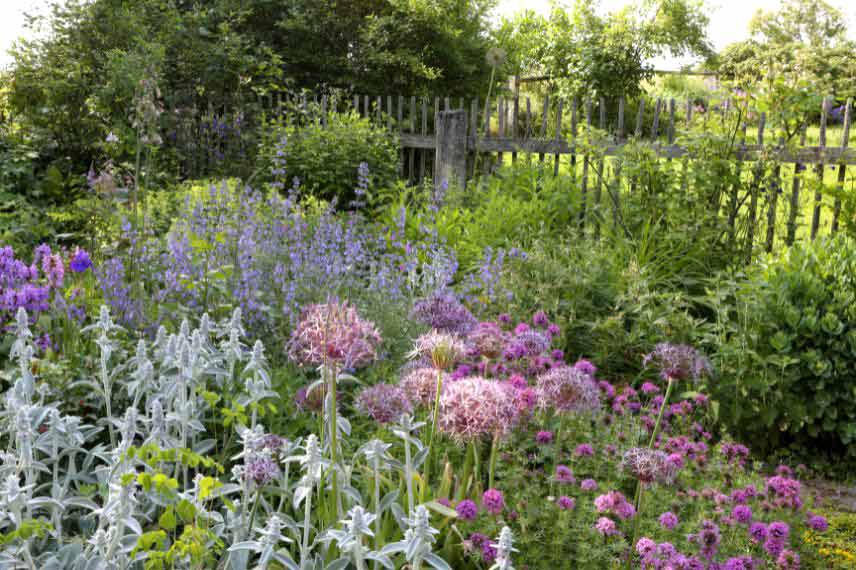
A hedge is a classic and well-known way to enclose a space, but the effect is entirely different depending on the type of plants you choose.
- Evergreen, semi-evergreen or marcescent bushes have several advantages. They structure the garden, effectively filter the wind, and ensure a degree of privacy all year round. Photinia, Eleagnus, Privet, Hornbeam, and many conifers are among those often used. When trimmed square, they also convey a certain rigor.
- More variable, the flowering hedges, fragrant and countryside hedges benefit from being left free. This way, you can enjoy their flowering, fruiting, or foliage that marks the seasons.
- To separate without blocking the view, it is possible to use low-growing bushes, some of which also tolerate pruning well: certain Berberis, Euonymus, bush honeysuckles, and bush cinquefoils are good candidates, but you can also consider some roses, which are however less attractive in the off-season. All these plants can also serve to frame a path or walkway.
- In the same spirit, some perennials can fulfil this function and create low hedges. Choosing perennials with evergreen foliage (Artemisia, Carex, Euphorbias, Heucheras, Lavenders, small Phormium, Heathers) ensures maintaining a certain structure in winter.
- The style of your garden (in addition to your soil and climate and exposure, of course) should also play a role in the type of plants you welcome. In a zen or Asian-inspired garden, for example, bamboos are appropriate, whereas they might be more surprising in a naturalistic garden. Therefore, ensure to maintain a certain coherence, or to create well-defined spaces, each imbued with a particular atmosphere, which can only be discovered by entering.
- Subscribe!
- Contents
![[title]Designing Different Garden Spaces[/title]
[dropcap]W[/dropcap]hen it comes to {glossary}landscaping{/glossary}, creating distinct areas in your garden can enhance its beauty and functionality. Whether you want a cosy {glossary}patio{/glossary} for relaxing, a vibrant {glossary}flower bed{/glossary} for colour, or a productive {glossary}vegetable patch{/glossary}, each space can serve a unique purpose. By carefully planning and {glossary}planting{/glossary} the right {glossary}species{/glossary}, you can transform your outdoor space into a harmonious oasis.](https://www.promessedefleurs.ie/blogwp/wp-content/uploads/2022/07/amenager-differents-espaces-au-jardin.jpg "[title]Designing Different Garden Spaces[/title]
Creating distinct areas in the garden allows for a variety of experiences and activities. From a cosy reading nook to a vibrant flower bed, each space can be tailored to suit your needs and preferences. Here are some ideas to inspire you in planning your garden layout:
[subtitle]1. Relaxation Area[/subtitle]
Transform a corner of your garden into a tranquil retreat with comfortable seating, surrounded by fragrant {glossary}flowers{/glossary} and lush greenery. Add a small table for your morning coffee or evening drinks.
[subtitle]2. Herb Garden[/subtitle]
Dedicate a sunny spot to growing a selection of {glossary}herbs{/glossary} such as {glossary}rosemary{/glossary}, {glossary}thyme{/glossary}, and {glossary}mint{/glossary}. Not only will they enhance your culinary creations, but they will also add beauty and fragrance to your garden.
[subtitle]3. Vegetable Patch[/subtitle]
Grow your own fresh produce in a dedicated {glossary}vegetable{/glossary} garden. From juicy tomatoes to crunchy {glossary}carrots{/glossary}, there's nothing quite like harvesting your own organic vegetables.
[subtitle]4. Water Feature[/subtitle]
Introduce a sense of tranquillity with a {glossary}water feature{/glossary} such as a {glossary}pond{/glossary} or a {glossary}fountain{/glossary}. The sound of running water can create a peaceful ambiance in your garden.
[subtitle]5. Play Area[/subtitle]
If you have children or grandchildren, consider setting up a play area with a swing set, sandbox, or even a mini vegetable garden for them to tend to. It's a great way to involve them in gardening from a young age.
By designing different garden spaces, you can make the most of your outdoor area and create a harmonious environment that reflects your personality and lifestyle.")
Comments