




























Which potato is best for making chips?
Our selection of varieties to plant
Contents
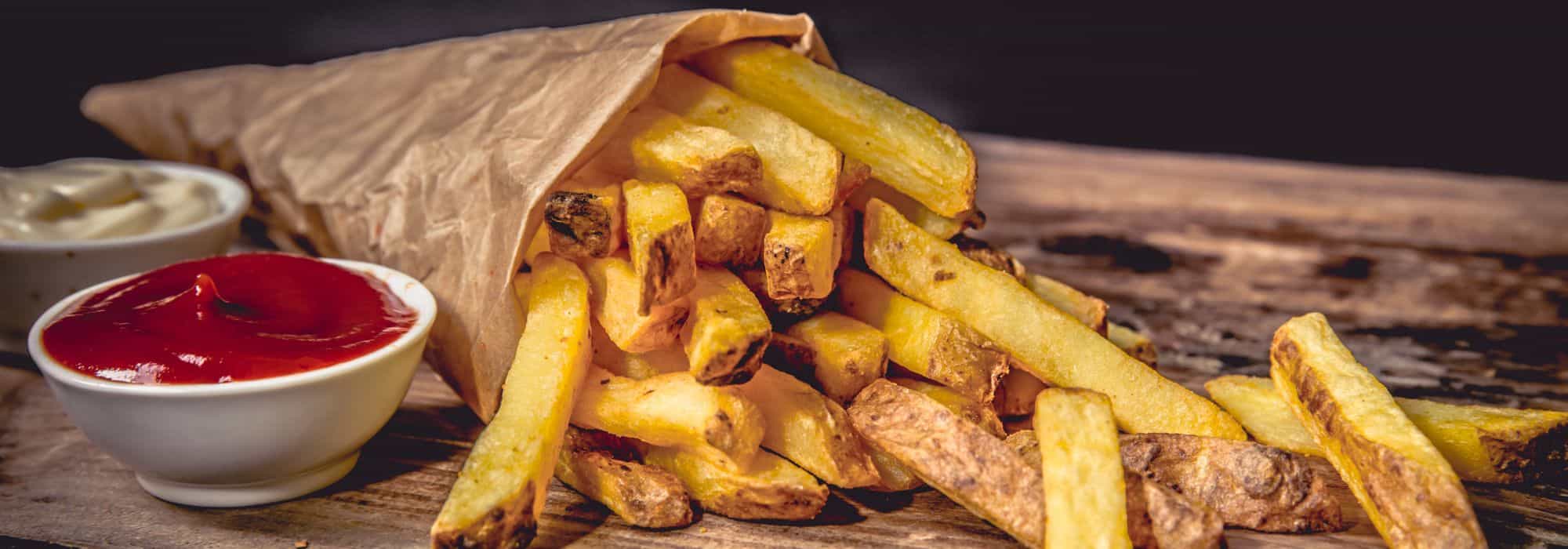
Classics, matchstick, waffle, quartered like “potatoes”, with or without skin, served with mussels or roast chicken, dipped in mayonnaise or ketchup… there are a thousand and one ways to enjoy chips! Very popular all over the world (with a special mention for our Belgian friends!), chips are universally loved. At least in terms of flavour and texture. Crunchy and creamy at the same time, they delight all generations. Their only downside may be their fat content. However, when consumed in moderation, chips bring a smile to all food lovers.
But to make good chips, you need to choose the right potato for chips, meaning a variety suited for frying, rich in dry matter and low in moisture. Discover our selection of potatoes for frying, specially suited for making crispy and tasty chips.

What types of potatoes for crispy chips?
Which potato for crispy chips? This is the essential question to ask when aiming to perfect homemade chips. To achieve a texture that is both golden and crunchy on the outside, yet fluffy on the inside, you need to choose a floury potato. These varieties are high in starch and contain a significant amount of dry matter. This profile allows them to hold up well during cooking, absorb less oil, and provide a homogeneous frying result.
The best potato for chips will therefore be one that does not crumble, while browning perfectly. This type of potato for frying is ideally cut into sticks before undergoing a double cooking process, in vegetable oil or animal fat.
As for the method to make homemade chips, it is simple:
- Peel and cut the potatoes into chips.
- Soak the cut potatoes in clear water and rinse.
- Thoroughly dry the chips.
- Immerse the chips in the fryer at 150 °C for 6 to 7 minutes.
- Shake occasionally during the first cooking.
- Drain and set aside for 30 minutes.
- Immerse your chips again in the fryer at 170 °C for 4 to 5 minutes to achieve crispy chips.
- Drain and serve hot.
The 'Bintje', the essential variety of potato for chips
The ‘Bintje’ is the most widely used potato in the world for making perfectly crispy chips. Rich in dry matter, it offers a homogeneous cooking process and a crispy result. It is the best potato for chips if you are looking for a traditional taste and a beautiful colour.
Originating from the Netherlands, this potato variety has been listed in the French Catalogue of species since 1935. It is a semi-late potato that stores very well. It is harvested 120 days after planting.
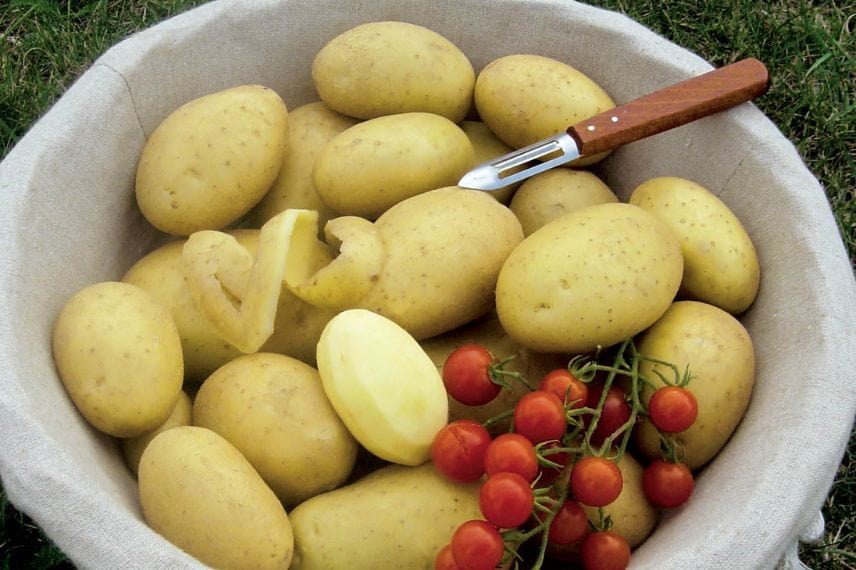
The ‘Bintje’
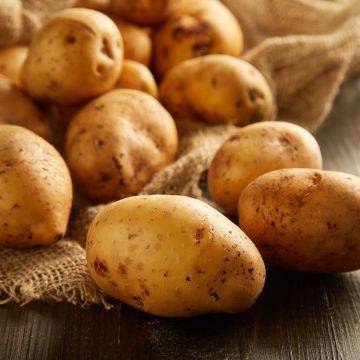
It produces regular oblong tubercles, with shallow eyes, and yellow skin and flesh. It is a productive potato with good yields, with a relatively high proportion of large tubercles. While it is excellent for preparing chips, it is also very versatile for steaming, mashing, and making crisps…
This potato variety is relatively sensitive to blight and common scab, but very little prone to rust spots, hollow heart, and scabby spots.
Discover other Seed potatoes
View all →
Available in 2 sizes
Available in 0 sizes
Available in 1 sizes
Available in 0 sizes
Available in 1 sizes
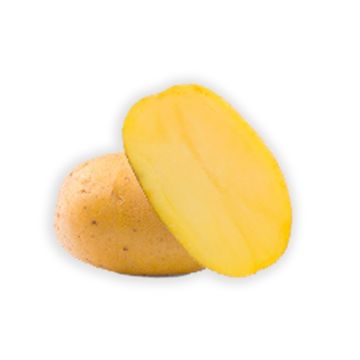
Available in 2 sizes
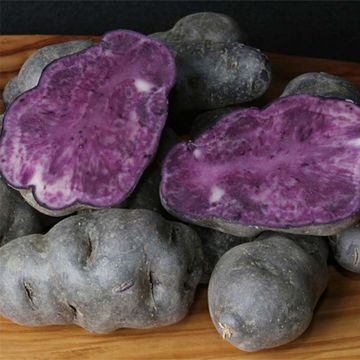
Available in 1 sizes
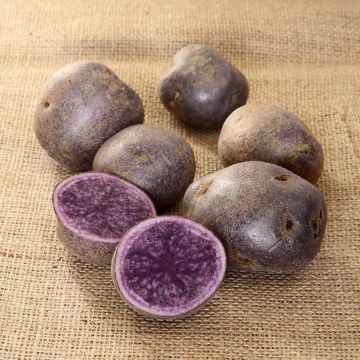
Available in 1 sizes
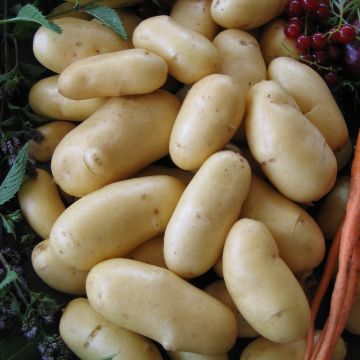
Available in 3 sizes
Available in 1 sizes
'Artémis', the cold-resistant frying potato
With its good hardiness, ‘Artémis’ is an excellent potato for frying in cold regions. It produces beautiful homogeneous tubercles with pale yellow flesh, perfect for a two-stage cooking process. Thanks to its texture, it responds very well to the demands of crispy homemade chips.
Originating from the Netherlands, ‘Artémis’ is an early potato. It does not have a long shelf life, but it compensates for this minor flaw with a beautiful appearance, excellent shape uniformity, and great consistency in size.
Its strong point lies in its significant hardiness, allowing it to adapt to the coldest climates, including in northern France. It shows low sensitivity to viruses and common scab, but is slightly susceptible to blight.
Read also
When and how to earth up potatoes?‘Désirée’, the potato for colourful and tasty chips
Also originating from the Netherlands, the ‘Désirée’ variety is known for its productivity and good frying quality.
This potato has a medium to late maturity and is very suitable for long storage. This highly productive variety produces large tubercles with red skin and yellow flesh, oblong and fairly regular, with shallow eyes.
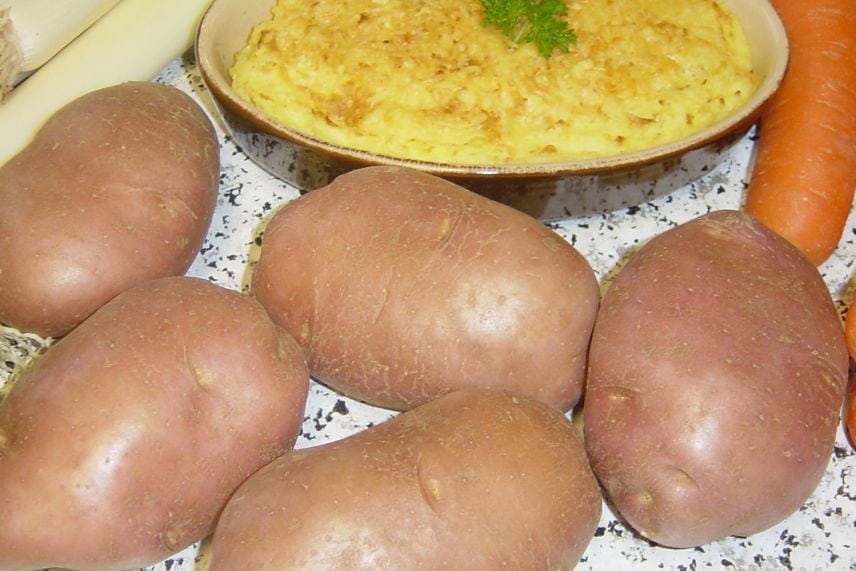
The ‘Désirée’
Due to its high dry matter content, the ‘Désirée’ holds up very well during cooking and develops a beautiful colour when fried. It is ideal if you are looking for which potato to grow for colourful and tasty fries in your vegetable garden.
This variety is quite sensitive to common scab and hollow heart, but relatively resistant to blight and rust spots.
The 'Œil de perdrix', an old variety of potato for chips
The semi-late variety ‘Eye of the Partridge’ is an old English variety, also known as ‘King Edward VII’, who was crowned in 1902. Resulting from the cross-breeding of ‘Magnun Bonum‘ and ‘Beauty of Hebron’, this potato was initially named ‘Fellside Hero’ before being renamed in honour of the king.
It is renowned for the fineness of its flesh and its ability to produce golden fries with a unique taste. Although somewhat sensitive to moisture, it remains an interesting potato for frying that is worth rediscovering.
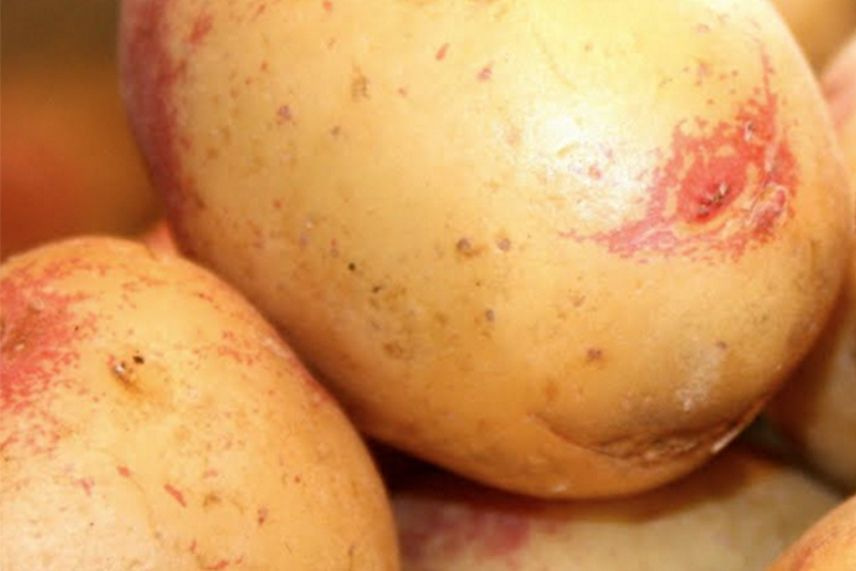
The ‘Eye of the Partridge’
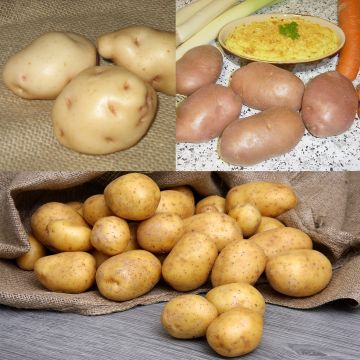
Its long oblong tubercles are easily recognisable by their yellow skin marbled with red, especially around the eyes, which is very smooth, and their white-yellowish flesh. It has a medium yield, compensated by excellent taste quality and a fine grain.
It can be sensitive to blight in cases of excess moisture.
Once very common in vegetable gardens until the 1950s, it has somewhat disappeared in favour of more profitable potatoes.
The 'Caesar', the potato for large golden chips
Dutch variety, the ‘Caesar’ is known for its large, oblong, and regular tubercles. Its pale yellow flesh, rich in dry matter, is perfectly suited for frying. If you’re wondering which potato to choose for crispy and generous chips, this is an excellent option.
Derived from the cross-breeding of Monalisa and another semi-early to medium-maturing potato, the ‘Caesar’ features elongated oblong tubercles with a nice appearance, very shallow eyes, and a yellow skin.
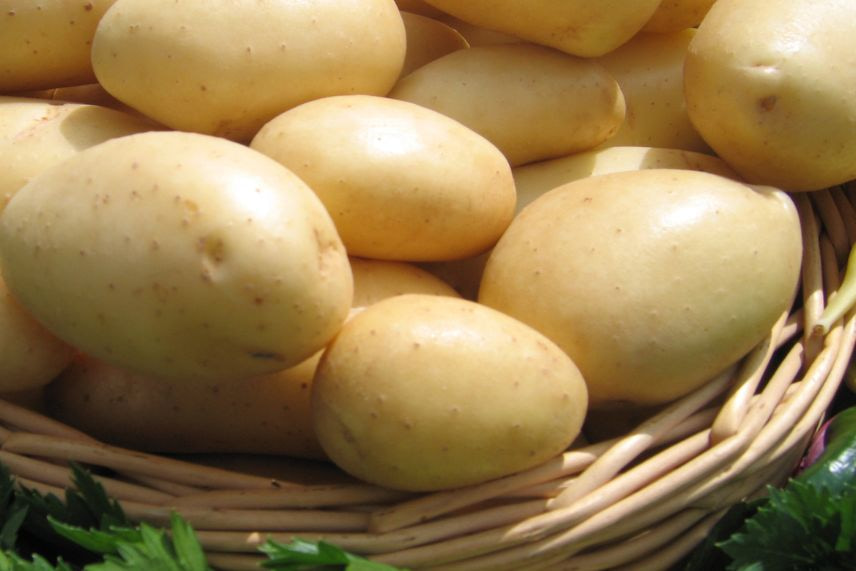
The ‘Caesar’
Productive, this variety has a high proportion of large-calibre tubercles, perfect for regular-sized and attractive chips.
Not very susceptible to hollow heart, moderately sensitive to blight, this potato is quite susceptible to common scab.
- Subscribe!
- Contents

Comments