






























What to do in the garden in December?
When the chill of winter is felt
Contents
In December, our minds are entirely occupied by the festivities: between gifts, menu preparations, and home decorations, a bit of relaxation in the garden will certainly be welcome! But what can you do in the garden when it is covered in frost or snow? Not much, of course, apart from contemplating the upcoming arrangements and projects to implement in the coming months. However, when the weather becomes a bit milder, when frost is not present during the day, and the soil is not too waterlogged, it’s the perfect time to plant young plants sold as bare roots. They will establish well and be nicely rooted to face the upcoming hot and dry season.
Here’s a brief overview of the gardening tasks you can undertake this December: perhaps it’s the perfect opportunity to try out the new gardening tools and accessories found under the Christmas tree?

On the side of trees, shrubs, and fruit plants
Everything considered, there is always something to do in the garden! In December, we plant trees and bushes with bare roots, prune, and protect tender plants. Find all our articles dedicated to planting bare root young plants.
Ornamental Trees and Conifers
- Prune and trim trees and thoroughly coat the wounds with a healing paste. In this article, we review the pruning tasks to carry out in winter
- Plant trees sold with bare roots while avoiding frost periods and waterlogged soils
- The trunks of tender trees (Lagerstroemia, palms, banana plants…) can be protected with a straw sleeve during severe frosts
Fruit Trees and Small Fruits
- Outside of frost periods, prune trees prone to gummosis such as walnut trees and stone fruit trees. This resinous substance flows from the trunks and branches and can have several causes. If you notice an atrophied or torn branch, cut it cleanly
- Start pruning pome fruit trees like pears, quince, in open forms or trained forms. Also prune hazelnuts and walnuts to remove dead wood and crossing branches
- Prune kaki approximately every two years, during or just after harvest, from December to February for most varieties (early persimmons are pruned at the end of autumn, depending on the harvest). Cut the main branches that require it below an eye, 1m from the trunk, remove recent branches that have appeared on the trunk, and eliminate branches growing inward.
- Prune the common medlar (Mespilus germanica) after fruiting, which generally occurs from October to December. This must be done during a frost-free period. However, this light pruning will only be done every 5 years: discover how to prune medlar trees
- Prune kiwis (Actinidia chinensis, deliciosa and arguta) by following our dedicated advice
- Plant fruit trees supplied with bare roots: it’s the right time, while respecting planting distances in the orchard. Check out our selection of 7 fruit trees for continental climates. Also take the opportunity to create fruit hedges, which are both delicious and beneficial for biodiversity
- Plant small fruits in pots or with bare roots (raspberries, gooseberries…)
- December is ideal for taking cuttings from fruit trees such as apple, pear, peach, cherry, plum, and quince trees. Store them in the ground in a sheltered spot or in a pot filled with sand. In spring, you can proceed with cleft grafting.
- Remove mistletoe from apple trees before birds disperse the seeds
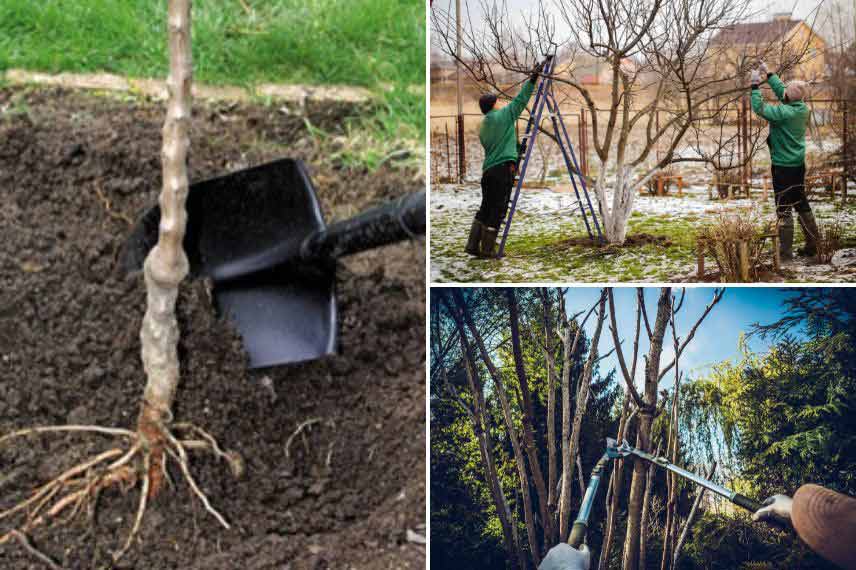
Plant bare root trees, prune shrubs and fruit and ornamental trees
Shrubs
- Plant deciduous shrubs with bare roots, as well as those supplied in pots. For a garden that looks beautiful all year round, including in winter, check out our video tips
- Also take advantage of this time to plant your hedge shrubs with bare roots by following these guidelines: How to plant a hedge with bare roots? To avoid issues with your neighbours, the rule is simple: hedges must be planted at least 50 cm from the boundary and at least 2 metres if they exceed 2 metres in height
- December is a good month to transplant shrubs that need to be moved. Find professional advice in our guide on how to “move” your plants gently
- Summer or autumn flowering shrubs should be pruned between December and March. So get your pruning shears out, you can start this pruning. Spring-flowering shrubs will be pruned after flowering
- Take advantage of pruning tasks to take cuttings of hardwood and multiply your favourite varieties:
- Remember to remove snow covering your camellias as it can scorch the foliage and break some branches. If winter is particularly harsh, you can protect them with fleece and heavily mulch their base with fallen leaves, straw, or pine bark. This covering will insulate their shallow roots from the cold. Indeed, the average hardiness of camellias is around -10°C, but damage can be observed from -4°C, especially if your shrubs are not growing in ideal conditions. Find all these tips in our article My Camellia in winter: how to care for it?
- Protect your most tender shrubs by sheltering them with a canopy made of canes placed all around them. You can also wrap them in fleece, remembering to ventilate occasionally
Read also
What to do in the garden in November?Perennials, bulbs and climbing plants
In December, we mentally prepare for the upcoming beautiful season by considering new flowerbeds to create and protecting the more delicate plants from the cold that can start to bite.
Perennials
- Spread fallen leaves or a good layer of straw over the perennial beds to protect them from the cold
- Start sketching your future flowerbeds, imagining your upcoming plantings. We explain why and how to design different spaces in the garden
- Plant the perennials offered as bare roots. We explain how and why to plant them
- While grasses and perennials sold in pots can be planted at any time of the year, avoid periods of severe cold and when your soil is waterlogged due to heavy rains. If you live in a Mediterranean region or on the Atlantic coast, where the cold is never too severe, feel free to plant while monitoring watering if the weather is dry. Opt for species that are heat and drought resistant to replace water-hungry plants decimated by successive droughts.
Bulbs
- The best time to plant spring-flowering bulbs is autumn, but most varieties can be planted without issues until December. Focus on late varieties such as Alliums, Eremurus (Foxtail Lily) or Lilies that will bloom in summer. Discover our tips for late planting of spring bulbs
Climbers
- Container plants can theoretically be planted all year round. If you live in an area where frost is rare or as long as you plant avoiding frost days and waterlogged soils, you can install climbers that will dress your walls, climb your pergolas and arbours to naturally shade and cool your terrace next summer. Clematis, Trumpet Vine, Honeysuckles, Wisterias, Akebias or Jasmines can therefore be planted during this period, provided you protect their roots from severe frosts with a thick mulch.
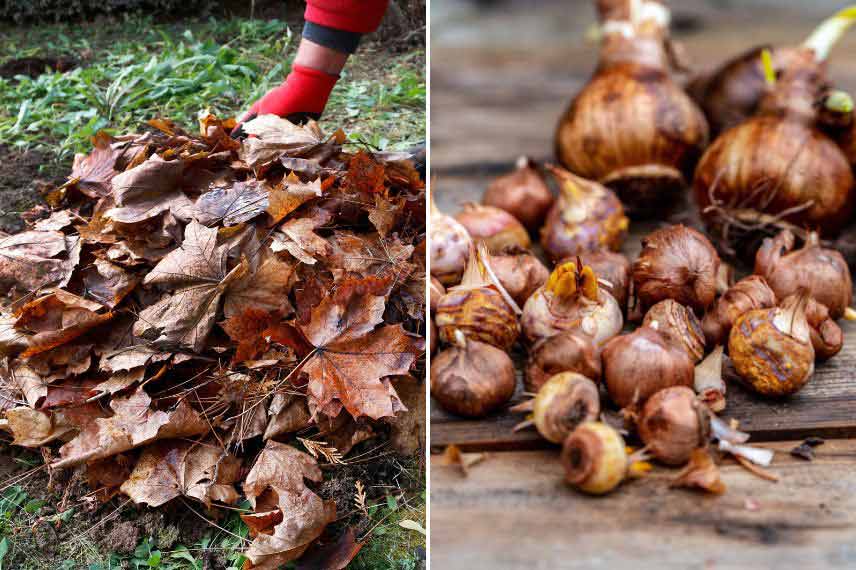 Protect your perennials with a good layer of fallen leaves. If you have fallen behind in planting your bulbs, you can still do so in December.
Roses
- Bare root roses should be planted between November and the end of March, but never during frost periods. If it’s too cold, wait for a thaw, placing your bare root roses in a heel. Remember that you should never plant a rose in a spot previously occupied by another rose unless you renew the soil.
- After determining a sunny location, work the soil a few days or weeks in advance so that it is well loosened and aerated at planting time. Plan to amend the soil with well-rotted manure or compost.
- Dress the roots by slightly shortening them and cutting any damaged ones, and coat them before planting the rose.
- Create a mound at the base of young plants by burying the grafting point for winter.
- We provide you with some valuable tips for planting a rose in very cold climates.
- Take advantage of leaf fall to check the ties of climbing roses.
- Transplanting roses can be done between October and March, during the dormant period, but outside of frost periods. You can proceed this December if the weather is mild.
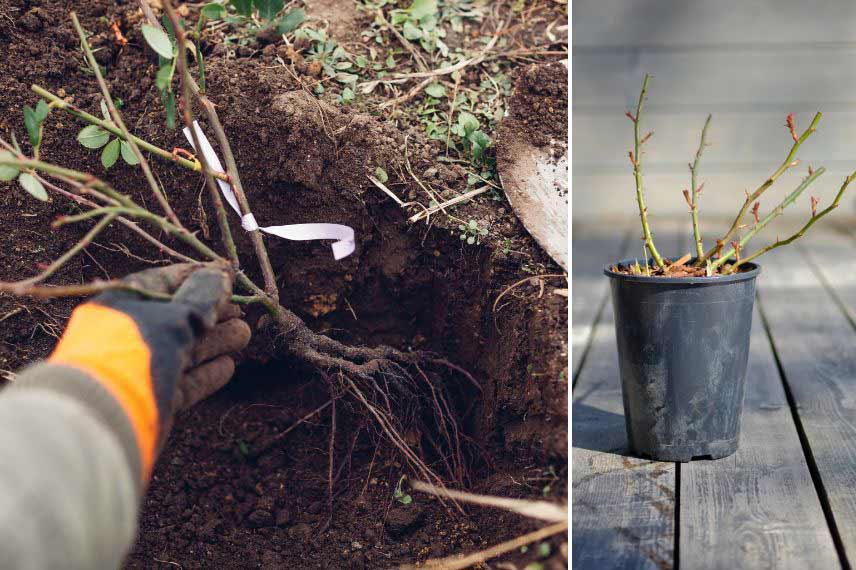 Plant bare root roses and those in containers when it is not freezing</caption]
Read also
What to do in the garden in winter?Annuals and potted plants
- Complete the installation of protections or wintering for the most delicate plants. Remove the saucers and place wedges under the pots to insulate them from cold and moisture. Mulch the surface of the substrate with, for example, leaves or straw.
- Take your wintered plants to a sheltered spot (citrus trees, cacti…) for a few hours during the day, if it’s not freezing, to let them bask in the sun.
- In dry weather, don’t forget to monitor the watering of your potted plants.
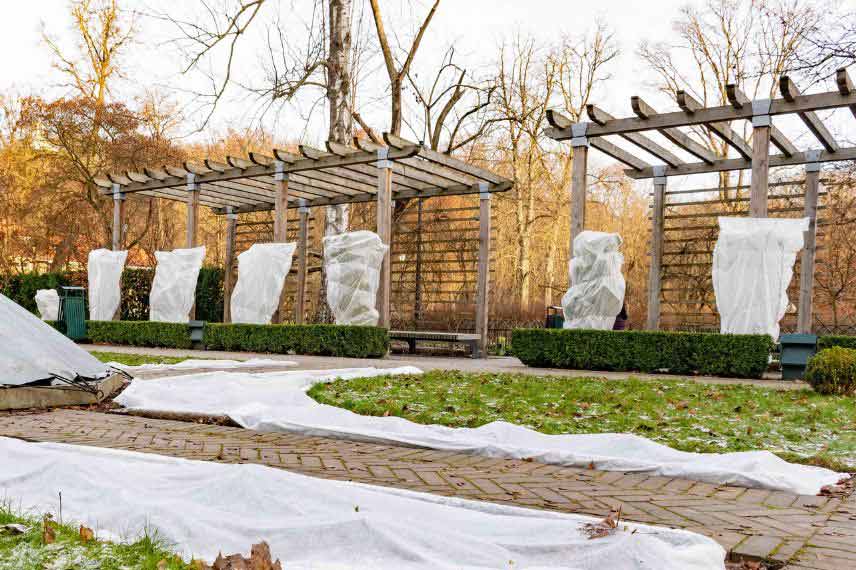 Protect your most delicate plants with winter protection covers.</caption]
In the vegetable garden
Vegetables to Plant in November, Sowing and Tasks to Do:
- Plant bare root strawberries
- Check the health status of stored fruits and vegetables for winter
- Top the Brussels sprouts that are most advanced
- Remove the roots of dandelions and blanch them with endives. Consume the green leaves in salads
- Small fruit bushes need a large amount of potassium: adding wood ash will be beneficial in the rows of raspberries and currants. It also raises the pH of overly acidic soil. Sift the ashes and spread them on the soil at a rate of 100g/m² per year (about 2 handfuls). Be careful, as overdosing will saturate the soil with calcium and your plants will then suffer from chlorosis
- Prune raspberries following our advice
- If you have planted peas and broad beans for your spring dishes, earth them up regularly to prevent frost from destroying them. Do the same with leeks
- In December, it is time to harvest endives to place them in the cellar and blanch them: once the chicory roots are unearthed, cut off the top part of the foliage and leave the tender heart. Place the roots in a box filled with sand and keep them in the dark. A month later, you will have the first endives. For more details, check our sheet “Succeeding in Growing Chicory”
- For those who prefer deep digging or the gentle method advocated in permaculture without turning the soil, it is still time to work your soil in the vegetable garden to aerate it and eliminate adventive plants before the next growing season. Do this on a day without rain, frost, or snow.
- After that, it is still time to enrich the soil to maintain its fertility by adding natural amendments: compost, manure, leaf mould and wood ash
- Then cover the soil for winter to limit the proliferation of weeds by laying down cardboard (without ink), dead leaves, shredded hedge and bush trimmings, or straw
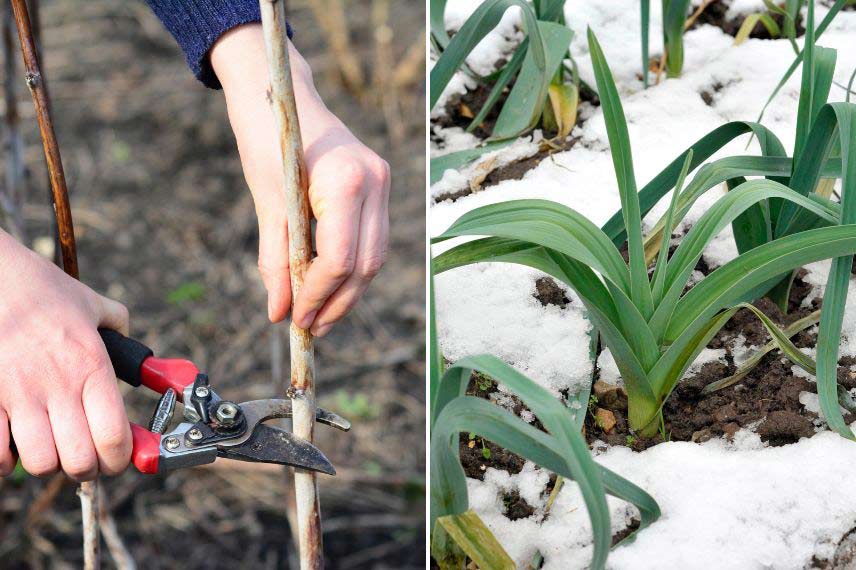
In December, you can prune raspberries. Remember to earth up the boles of leeks to protect them from the cold
Lawn and various works
Lawn and Flower Meadows
- Continue collecting leaves on the lawn
- Avoid walking on the lawn when it snows
- Also, try not to walk in the same spots when it rains, especially on heavy ground
Various Tasks in the Garden
- Gather branches and bundles of dead wood in small corners of the garden, directly on the ground. These natural shelters will welcome insects or hedgehogs that will be happy to hibernate there
- Remember to feed the birds in the garden
- Don’t forget to protect your chickens from the cold
- Insulate frames and greenhouses against the cold
- Bring dead leaves to the compost
- Now is a good time to clean, maintain, and protect your gardening tools
- Be careful if you need to salt your paths or terrace in case of ice: salt burns the grass and plants
At the Pond
- The pond has entered its resting period: aquatic plants are in dormancy and fish are moving slowly at the bottom of the pond. Stop feeding them and ensure that the entire surface of the water does not freeze for too long. If you find your pond or pool frozen in the early morning, do not break the ice by hitting it, but prefer to place a pot filled with very hot water to clear a space in the ice. Snow on the ice can provide a good layer of insulation, but it is wise to remove some of that snow.
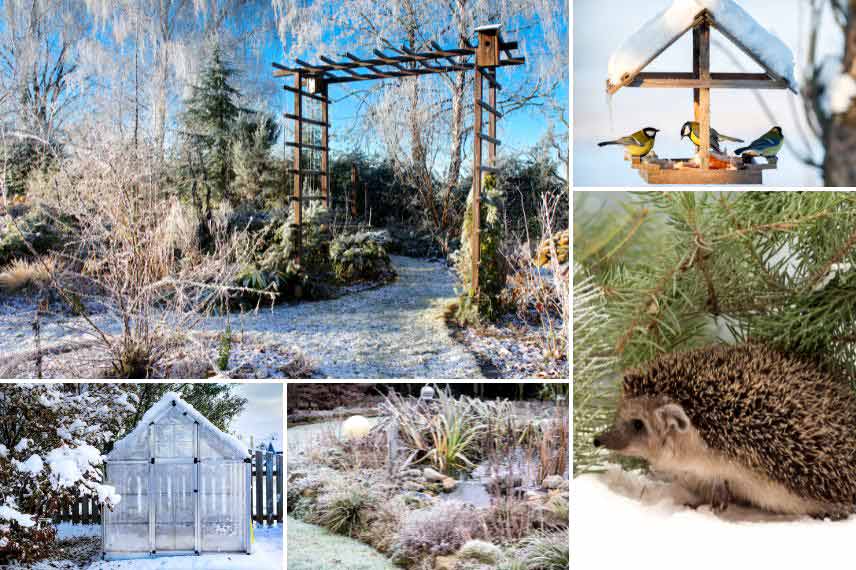
Avoid walking on the lawn covered with snow. Consider the small wildlife in the garden, insulate your greenhouse against the cold, and monitor the formation of ice on ponds or pools

- Subscribe!
- Contents

Comments