





























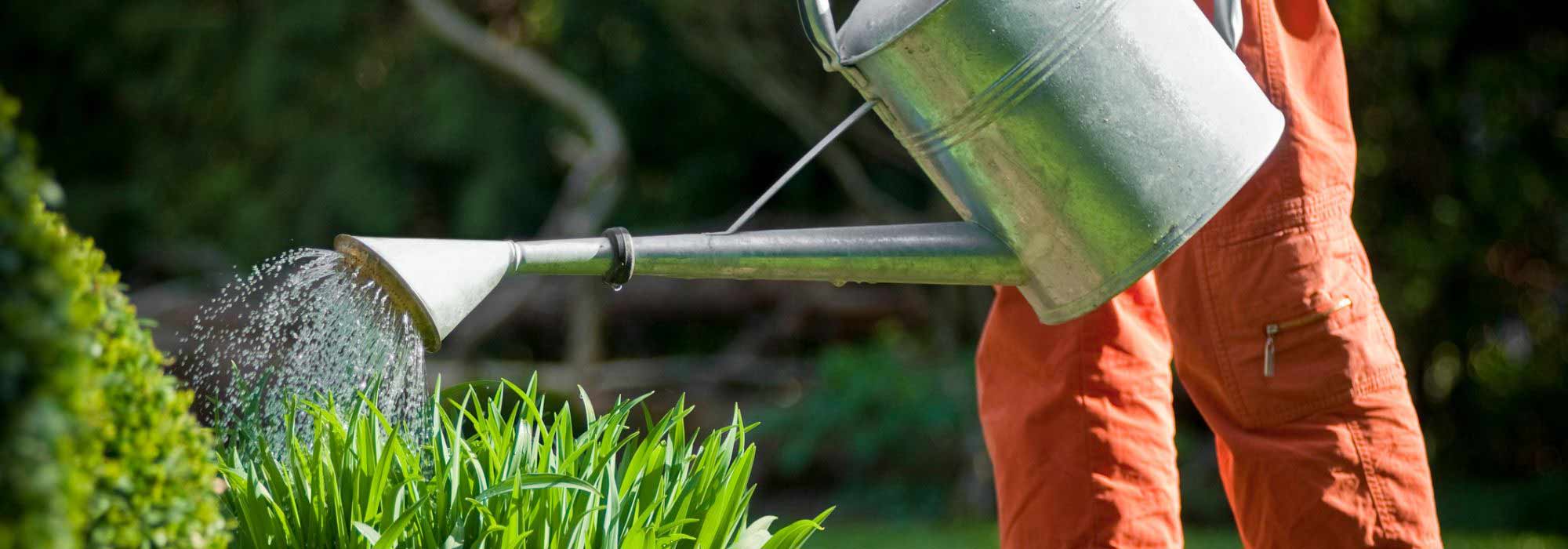
Watering plants during or after a drought
Managing water shortages in the garden and on the terrace
Contents
Year after year, drought periods are becoming earlier, more frequent, and longer. All departments are affected by water restrictions imposed by the prefectures because water is an infinitely precious resource that we must now conserve. Despite this, with gardens looking sad during droughts, it is important to know how to manage watering effectively to both conserve water resources and care for our plants.
By following some common-sense advice, it is possible to limit the damage. Discover how to water plants during drought.

When and how to water in very dry weather?
Before anything else, stay informed about the water restrictions implemented in your area according to the alert level and adhere to them scrupulously.
- Collect water in advance, in anticipation of drought episodes during rainy periods. Water collectors are easily available these days. Don’t hesitate to install several if you have the space; the investment will quickly pay off through the savings you make, not to mention the positive impact on the planet. Ensure you properly cover your containers to avoid contributing to mosquito proliferation!
- Collect water daily, even during drought. Water from washing vegetables, rinsing hands using a small basin placed in the sink… If you decide to use Marseille soap for your shower, place a bucket in it and you will collect valuable litres of water each day, perfectly usable for watering your garden and potted plants.
- Apply a mulch at the base of your plants at least 6 cm thick to maintain soil moisture and prevent evaporation. In the event of heavy rain, this mulch will significantly reduce runoff.
- Create shade to protect your plants: shading nets above the most delicate plants, parasols, wooden crates for the vegetable garden, etc.
- Loosen the soil before watering to break the hard, impermeable crust on the surface. This action will allow for better water penetration into the soil.
- Create watering basins at the base of your plants. This way, the watering water will stay right at the base rather than running off around without any beneficial effect.
- Concentrate your watering during the cooler hours of the day (morning until 8 am or evening from 8 pm) to maintain a humid atmosphere for longer. This will save you 10 to 20% of water compared to watering done in the middle of the day.
- Water less frequently, but generously. Indeed, with water applications that are too close together and too superficial, your plants will not develop their root system deeply, but it will remain on the surface, where the soil will dry out immediately with the first heat. Teach them to become more self-sufficient and to seek water deeper in the soil through deep rooting.
- To disperse water in fine droplets, install a watering head on your watering cans and hoses. This will penetrate more effectively to the roots.
- Focus watering at soil level and avoid watering the foliage.
- Cut faded flowers to allow plants to conserve all their resources. In cases of severe dehydration, remove half of the flowers.
- Prune perennial plants to reduce evaporation, using the “Chelsea Chop” technique.
- Do not uproot weeds: the plant cover protects the soil from the sun’s rays and thus from drying out. Simply remove the flower spikes to prevent adventive plants from reseeding throughout your beds.
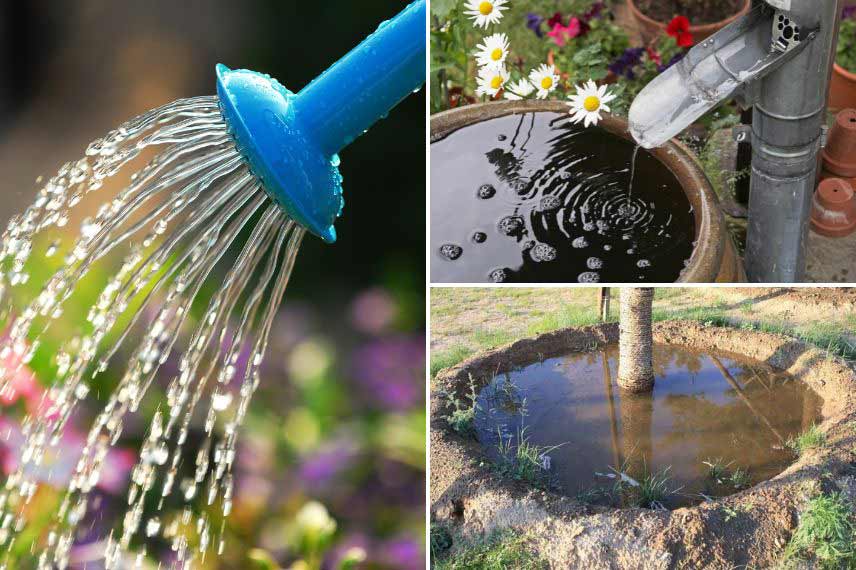 Collecting water and creating watering basins are two very effective ways to save drinking water and navigate drought periods in the garden smoothly.
Installing a drip irrigation system is a great way to save water and deliver it directly to the base of the plants. This system can be managed by a timer that triggers watering at night, for example. You will be exempt from a chore and make real water savings! This installation, which is not so complicated, can be done by yourself or carried out by a professional. Oyas are also very economical and easy-to-implement watering solutions for the vegetable garden or within beds of water-hungry plants.
And then?
When drought is just a bad memory, the goal is to ensure that the plants in your garden recover in good conditions. Check with your local council or on your prefecture’s website to find out if water usage restrictions have been lifted. Again, please follow the guidelines.
- Hoe your flower beds, hedge bases, tree bases, in short, everywhere it is possible and necessary. Take advantage of rain to intervene right after.
- Reform the watering basins
- Top up the mulch where it has diminished; autumn leaves will soon fall, so it’s the perfect time to take advantage of this!
- If the rains are delayed or insufficient, water your plants that look the saddest, providing the equivalent of one watering can per plant, about once a week. For larger specimens (established bushes, trees), the amount of water should be at least 50 litres per specimen.
- A supply of compost will help your plants regain strength after this ordeal.
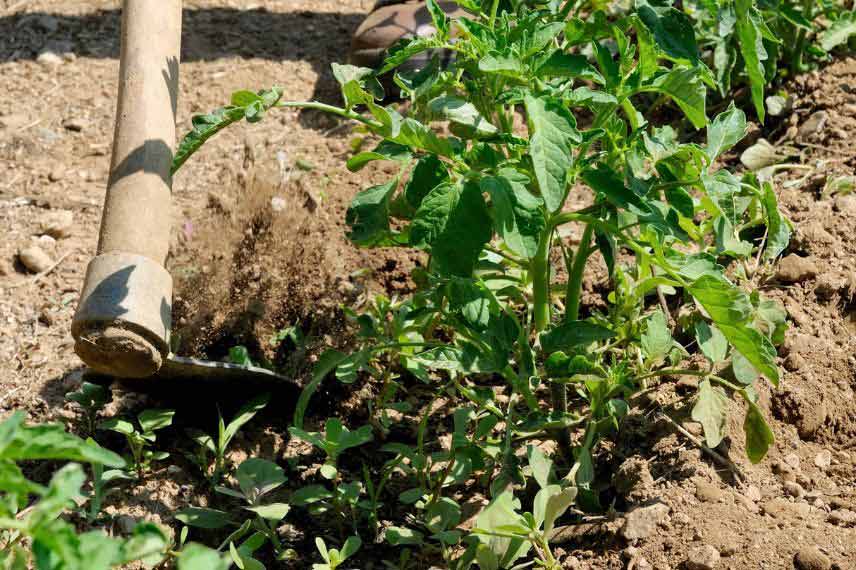
In flower beds as well as in the vegetable garden, hoeing is worth two waterings!
Watering potted plants
Plants grown on terraces or balconies in pots, planters, or containers require special attention regarding watering: water tends to evaporate more quickly than in open ground, and the root system of the plants cannot develop to seek water at depth.
-
Opt for terracotta pots: plastic, metal, or iron containers attract and concentrate heat, while terracotta ones retain moisture and keep cool.
-
Apply a mulch at the base of your potted plants to maintain substrate freshness and prevent evaporation. If organic mulch (wood chips, bark…) doesn’t appeal to you on the terrace, you can replace it with a mineral mulch (gravel, pebbles…). In full sun, opt for lighter colours to avoid overheating.
-
Mix a water-retaining agent into your substrate, which will allow you to space out your watering.
-
Create shade to protect your plants: shade cloths, parasols, etc. Group your pots in the most sheltered spots from the sun during the day and shade smaller pots by placing them behind larger ones.
-
Break the surface crust regularly for better water diffusion in the substrate.
-
Place saucers under the pots to catch water and benefit your plants for longer. Remember to clean them once a week to prevent mosquito proliferation near the house!
-
As in the garden, concentrate your watering during the cooler hours of the day (early morning or late evening) to maintain a humid atmosphere for longer.
-
Water regularly according to the needs of each plant (a Yucca has different needs than a Fuchsia).
-
Focus watering at soil level and avoid wetting the foliage.
-
Regularly cut faded flowers, and in case of a heatwave, remove half of the flowers.
-
Prune plants that benefit from it (annuals, perennials) to reduce evaporation, using the “Chelsea Chop” technique.
Once the dry period is over, cut and prune the last faded flowers and dried branches. To help them regain colour, soak wilted plants in a bucket of water.
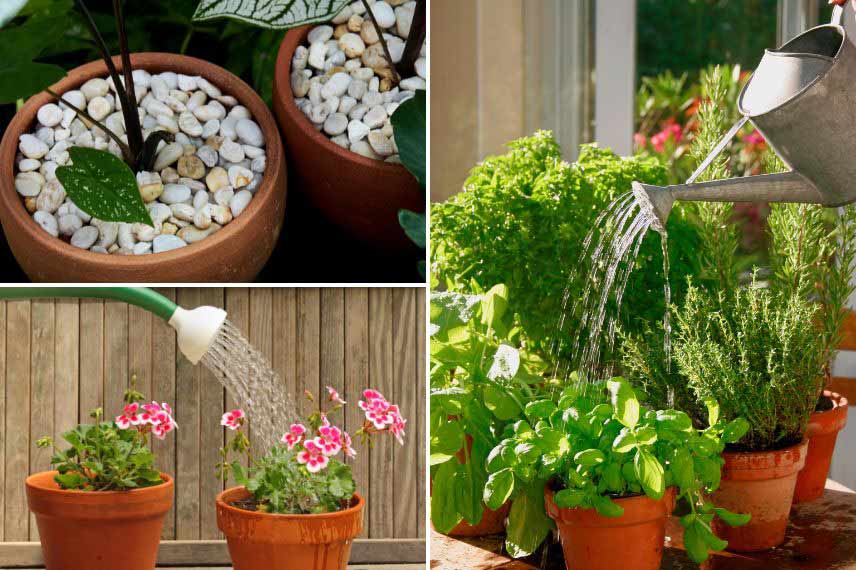 On the terrace or balcony, plants placed in the shade in terracotta pots with mineral or organic mulch will fare better during dry periods.
As in the garden, to make daily life easier and in case of absence, setting up an automatic watering system is a very interesting solution.
→ Discover watering solutions for a balcony or terrace and how to install an automatic watering system on a balcony or terrace
Read also
Gardening in Hot Weather: Our 8 TipsFor further reading
→ Discover how to rethink our gardens to adapt to climate change
→ Discover how to save garden plants after a drought
→ Raise awareness about the economy of water, a precious and fragile resource

- Subscribe!
- Contents
Comments