



























Water: a precious and fragile resource
a vital and limited resource to share!
Contents
As water resources become increasingly scarce and temperatures rise, the risk of drought returns each year in France, as well as around the world. Over the past ten years, we have experienced six years of drought.
While these water resources have so far been sufficient to meet everyone’s needs, we must face this reality: “blue gold” is now highly sought after and, above all, unevenly distributed across the Earth. With our planet largely covered in water, why is it so precious? We will explain why and provide you with tips to continue gardening while preserving it.

Why is water resource not inexhaustible?
When we visualise our planet, the first thing that comes to mind is its status as the “blue planet,” covered by 70% water. One might therefore think that this is an unlimited resource. However, we know that nothing is lost, nothing is created, and everything transforms: water changes state during its cycle, transitioning from gas to liquid or solid, but its quantity has remained unchanged for three billion years, since its appearance on Earth. Consequently, all humans, as well as all living beings present on Earth, share the same amount of water available throughout this time!
And in its vast majority – about 97% – this water is salty. Freshwater accounts for only 2.5% of the total amount of water, and two-thirds of this freshwater exists in frozen or underground forms. In other words: only 0.3% of the water present on Earth is usable by humanity, and it is estimated that 600 million people worldwide lack access to drinking water.
Indeed, while resources remain the same, the global population continues to grow, along with its water needs. Moreover, our lifestyles lead us to consume ever more: for example, in Europe, our generation consumes eight times more water than that of our grandparents. However, our resources are evolving at the same time, due to poor management of the hydraulic system, waste, and pollution.
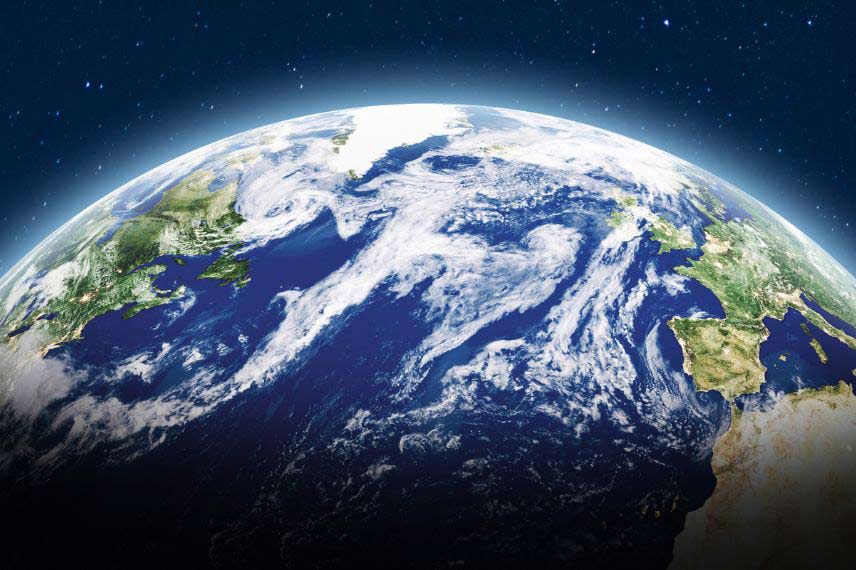
Less than 0.5% of the water present on Earth is freshwater that we can use for our ever-growing needs
Read also
Watering the garden: how to do it?Gardening with less water is possible
The overconsumption of those who have access to it, along with pollution, exacerbates the dangers of water resource scarcity. New drought zones are constantly emerging, proving that today, fresh water is becoming increasingly rare. When we consider it both as invaluable and naturally accessible while gardening, we realise, upon reflecting on this data, that wasting it to beautify our plots and satisfy our desire for greenery is quite selfish.
Should we then stop gardening in the face of heatwaves and the ever-growing threat of scarcity? No, because solutions exist that can be implemented as soon as possible! Nature has provided for everything (well, almost…) and the range of drought-resistant plants is rich and vast.
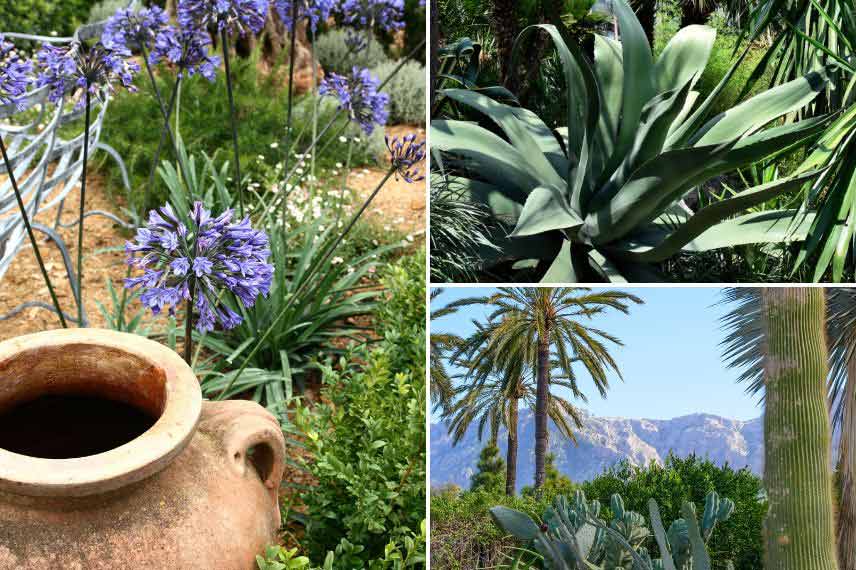
Water-efficient plants allow for beautiful outdoor spaces while saving “blue gold”!
How to save water in the garden?
- First of all, from the moment of planting, let’s prioritise drought-resistant plants: many plants can withstand potential dry spells without much suffering. This includes trees and bushes, perennials, and even annuals or vegetables! Feel free to browse our articles and gather information on our site to make the right choices for your future plantings. Groundcover plants and dense plantings help prevent the soil from being left naked and allow it to retain moisture better;
- Next, let’s adapt our watering techniques to the needs: it is counterproductive to water well-established beds by spraying directly onto the foliage! It is equally futile (and even prohibited during restriction periods) to water the lawn. Drip irrigation, porous hoses, and oyas… allow for targeted and optimised watering. Timers can be set to start watering at night, according to different zones. Even in the garden, let’s remember to monitor and detect leaks;
- Let’s maximise rainwater storage in all possible containers, to use it wisely later. The technique of swales, also known as infiltration ditches, can be very effective in certain terrains;
- Let’s mulch and enrich our soil with organic matter (compost…) to make it more alive and enable it to store water better. Weeding makes the soil more permeable to water. Plants are then irrigated more effectively after watering or rain;
- Watering basins, properly sized, allow for well-targeted watering at the base of plants;
- Let’s remember to collect and use in the garden cooking water, water used for rinsing fruits and vegetables, and the water we let run before taking a shower while waiting for it to warm up. A few buckets and basins will do the trick;
- Avoid cleaning garden furniture and patios too often and with excessive water.
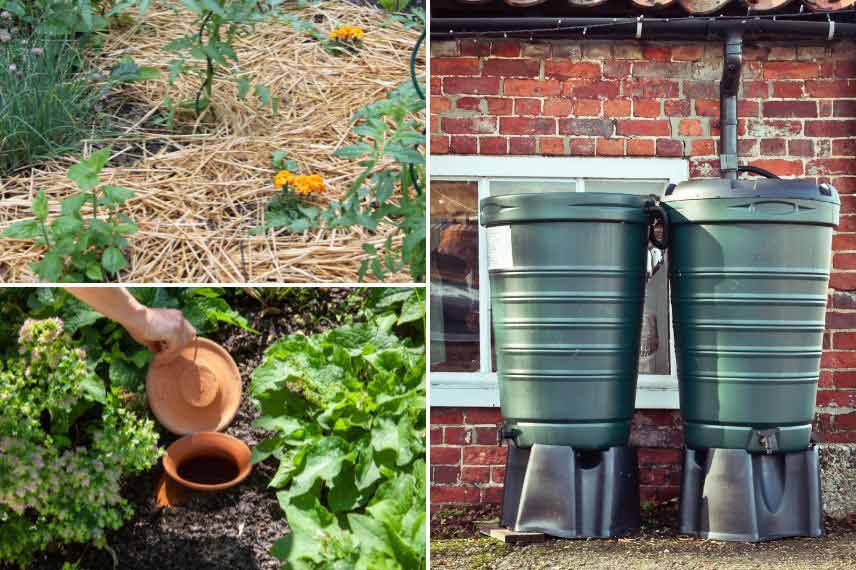 By combining all existing solutions to collect and preserve water, we can continue to garden… sustainably
Find our best tips for saving water in the garden in this dedicated article.
For further reading...
The French website Info sécheresse provides easy access to public data on drought by processing over 30,000 indicators daily across the French territory, such as rainfall, river levels, and groundwater levels. This data is mapped by department.
→ You can view the map of water restrictions in France here.
→ If you would like to learn more about available water resources, feel free to check this article from the Water Information Centre.

- Subscribe!
- Contents
Comments