





























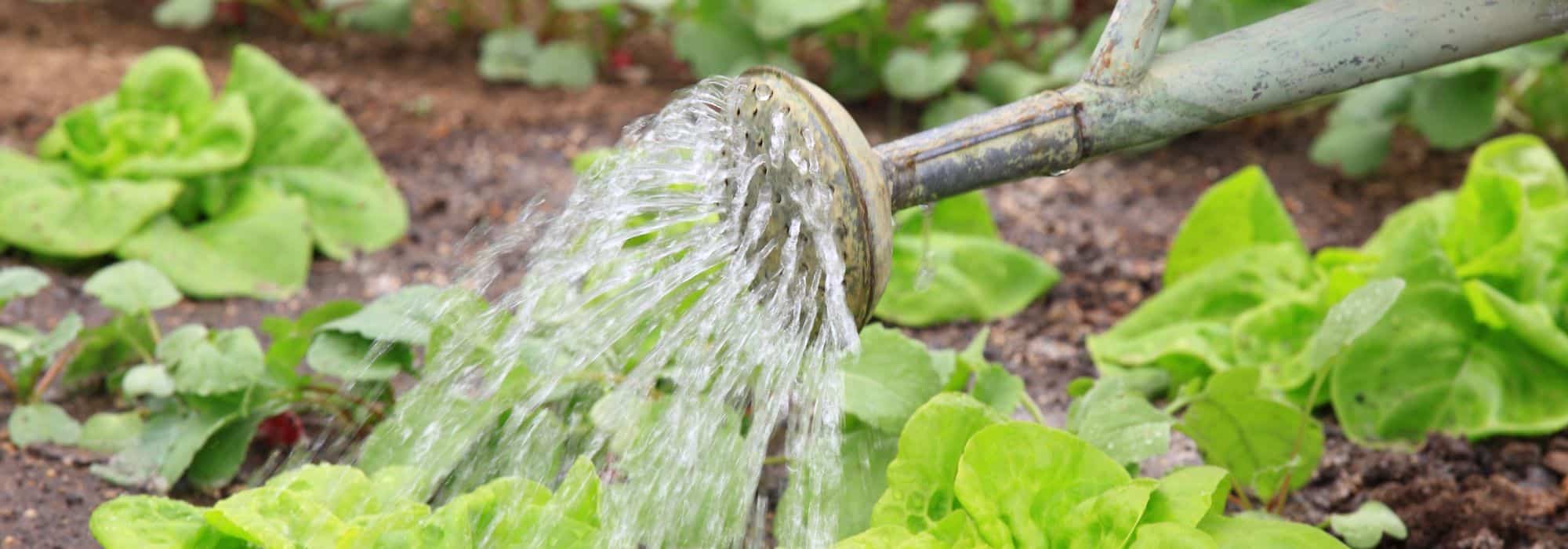
Vegetable garden: which vegetables to water as a priority?
Which vegetables to prioritise in case of drought?
Contents
Each year, summers are getting hotter. Drought is affecting all of France, and more and more water restrictions are being implemented. It is therefore necessary to save water. However, the vegetables in our gardens need watering to grow and bear fruit.
If you have taken the precaution of multiplying rainwater harvesting systems, that is an excellent initiative. Yet, in the midst of a rainless summer, the level of water collectors drops quickly, risking total depletion. As the vegetables in the garden have different water needs, it is essential to prioritise watering. It is therefore very important to focus on the vegetables that are most water-hungry.
Vegetables that are not grown in open ground
For various reasons, some gardeners grow their vegetables “off the ground”, or more precisely in pots, planters, or balcony boxes, in growing bags, or even in raised beds, placed on the ground or on stands, on a balcony or terrace. In these containers, vegetables are put to the test and growing them this way is already a constraint in itself.
Indeed, in a container, the development of the root system is limited by the surface area and the amount of soil. In open ground, some vegetables can reach for the water and nutrients they need up to a metre deep. In a pot, the same vegetable plant will quickly exhaust the surface area available to it.
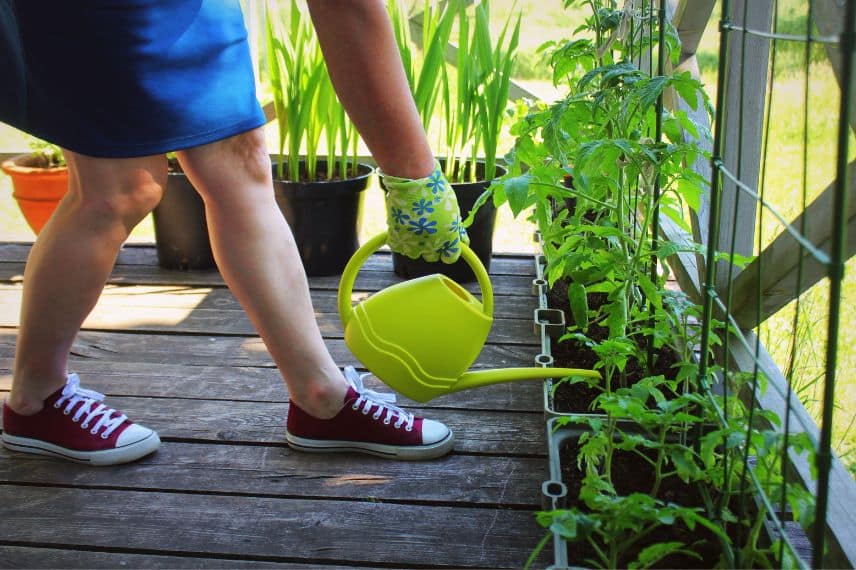
All vegetables planted off the ground will therefore need to be watered as a priority, every day if the heat is too intense.
Discover all our tips for creating an off-ground vegetable garden:
- Raised vegetable gardens: why and how to build them?
- Balcony vegetable garden: 15 mini-vegetables perfectly suited
- The balcony vegetable garden
- How to make a raised bed vegetable garden
Read also
Watering the vegetable garden: our tipsVegetables grown in greenhouses
To avoid the climatic risks of spring, particularly late frosts or heavy downpours, to protect your vegetables from fungal diseases such as powdery mildew, or to achieve better yields, it is possible to grow your vegetables under a greenhouse.
However, inside a greenhouse, temperatures can rise quickly, very quickly indeed, even with good ventilation. Additionally, vegetables cannot benefit from the rainwater that falls from the sky. Therefore, watering must be managed carefully while monitoring humidity levels to prevent the development of diseases.
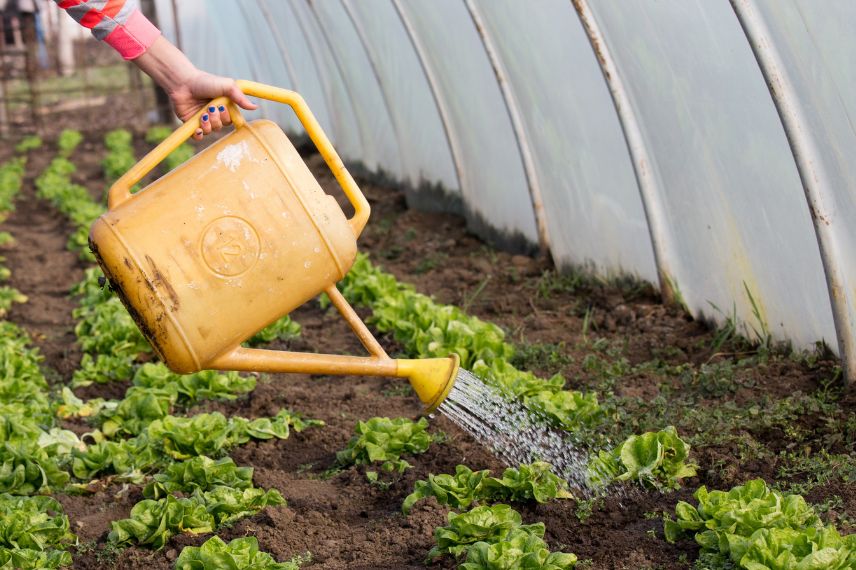
As a result, vegetables grown in a greenhouse must also be prioritised for watering. Watering with a watering can is the most suitable method in a greenhouse, using a rose for seedlings, and without a rose for tomatoes, aubergines, cucumbers, and other summer vegetables to avoid wetting the foliage. It is also possible to consider drip irrigation, which is quite beneficial for a greenhouse.
If you want to learn more about automatic watering systems:
Water-hungry fruit vegetables
Among the vegetables to prioritise watering in the vegetable garden are the fruiting vegetables such as tomatoes, aubergines, cucumbers, and courgettes, melons, peppers and chillies, and watermelons. This is for several reasons:
- These vegetables require significant amounts of water to bring their fruits to ripeness (more so than leafy vegetables, for example).
- The fruits of these vegetable plants are particularly watery, so their water needs are greater than those of others.
- These vegetable plants can develop diseases caused by a lack of water or irregular watering. Starting with blossom end rot, also known as black bottom, which primarily affects tomatoes and peppers. In practical terms, it is water that allows calcium present in the soil to reach the fruits. Without sufficient water, the fruiting vegetables lack calcium and develop this disease, which mainly affects the first fruits to appear on the plants. By watering more regularly (as well as mulching and adding organic matter to help retain water), the problem disappears.
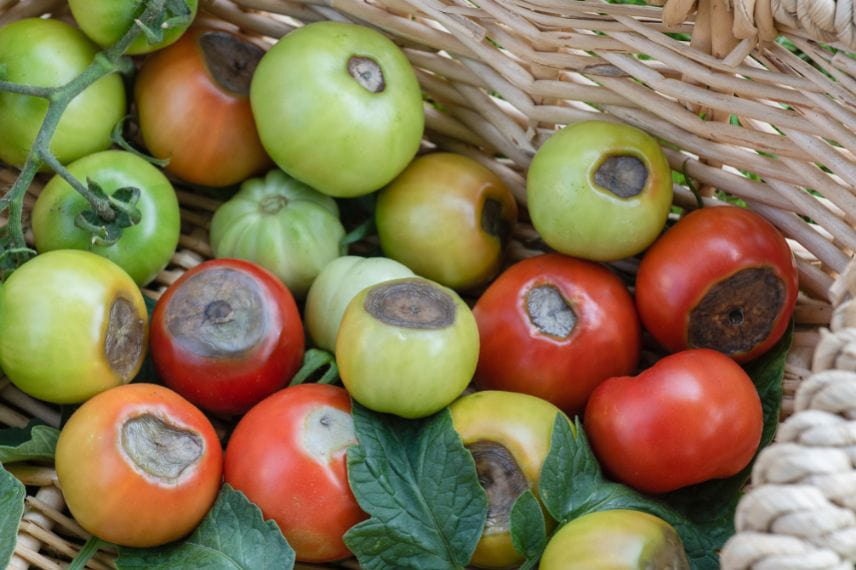
Tomatoes affected by blossom end rot
Root vegetables
To develop properly, root vegetables, particularly radishes and turnips, need the soil to remain consistently cool. Indeed, these two vegetables are thirsty and are very sensitive to a lack of water. If they are not watered sufficiently, they start to become pungent and hollow out.
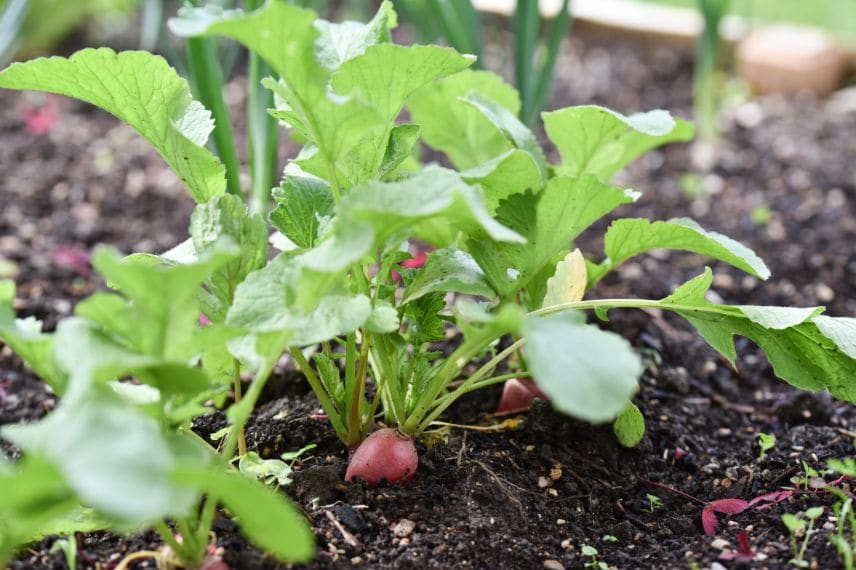
That’s why it’s better to water in small amounts but frequently, that is to say, every day during hot weather, and every two days in spring.
And, unlike most vegetables, it is recommended to water radishes or turnips with a watering can. Wet foliage is less appealing to flea beetles, which tend to nibble on them in dry weather.
Broadleaf vegetables and legumes
In broad-leaved vegetables, we classify salads, cabbages, chards, celeries… These vegetables have the particularity of losing a lot of water through evapotranspiration. The hotter it gets, the more they open their pores to transpire. This is why they quickly run out of water and become very vulnerable in times of drought. Thus, salads will quickly bolt to ensure their survival, cabbages will stop their growth and their leaves will yellow and soften.
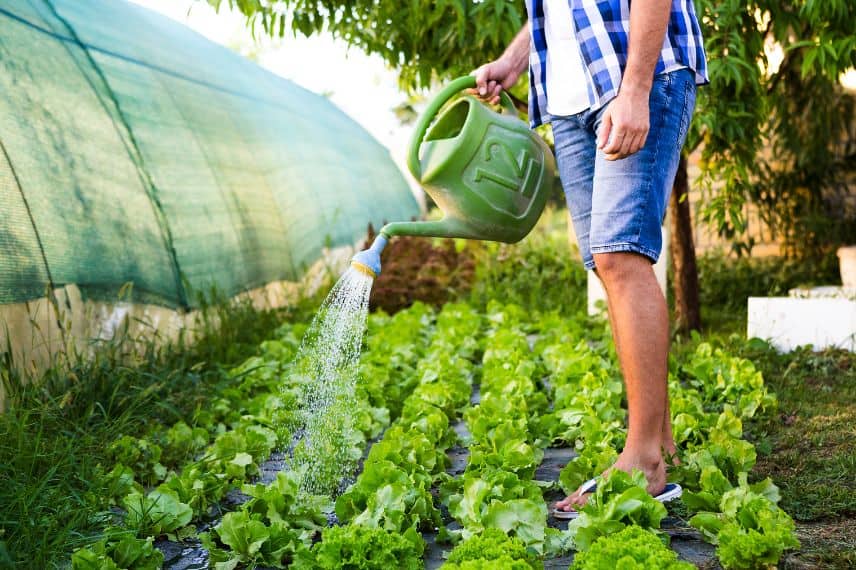
So again, during the summer, these leafy vegetables need to be watered as a priority.
As for the beans, they will also need water at the time of pod formation. Without water, the plants stagnate and the pods do not develop, or they form thin pods without swelling. Peas also slow their growth if they are thirsty. However, as they occupy the garden during a period generally less marked by drought, the problem is less severe.
- Subscribe!
- Contents
Comments