





























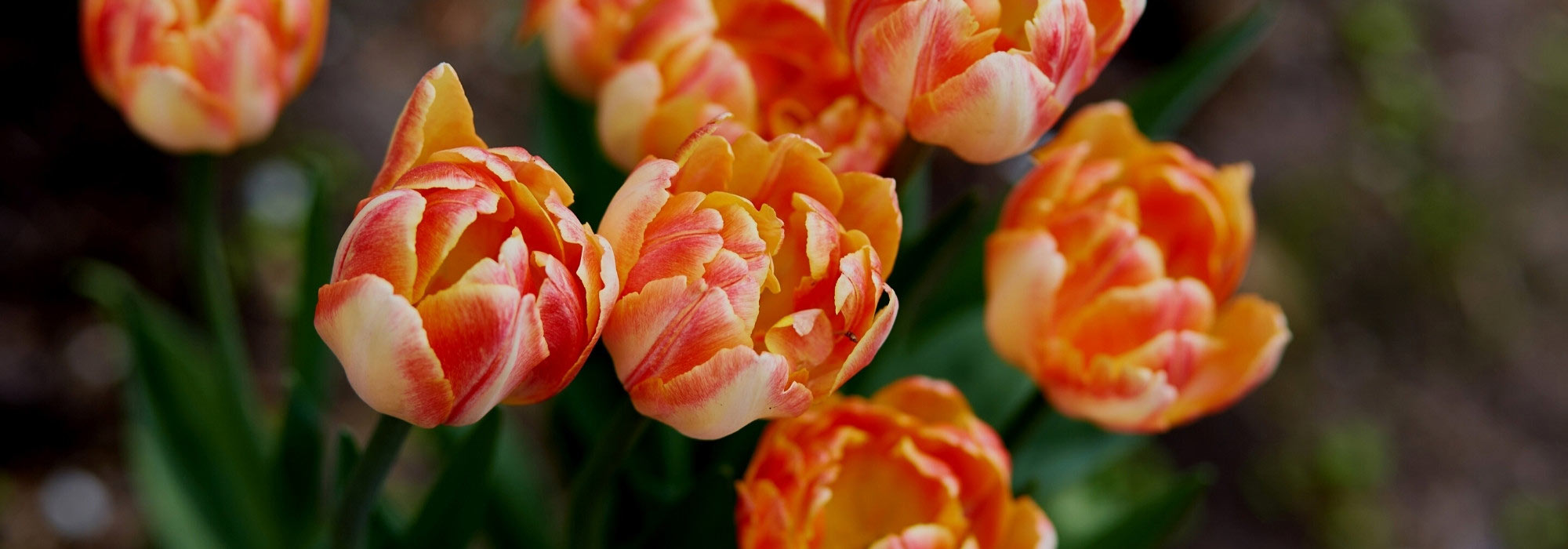
Tulips: what to do when they have finished flowering?
What to do after flowering
Contents
Symbol of renewal and springtime beauty, tulips are beautiful bulbous plants that enchant the garden with their bright flowering between March and May, or even until June for the later varieties. Easy to grow and not demanding, they are planted in autumn, in full sun and in well-drained soil, and even in pots to brighten the terrace or a windowsill. Some, such as botanical tulips, can even naturalise, returning faithfully year after year. After brightening our gardens with their colourful flowers, let’s see what care they need from the first spring to keep tulip bulbs healthy after flowering.
Discover also our tips for making tulips bloom again, and to learn everything about their cultivation, feel free to consult our complete guide: “Tulips: Planting, growing and maintaining”

Cut off the faded tulip flowers.
After flowering, tulips start spending energy to produce seeds. By cutting off the spent blooms, you prevent them from wasting energy. Use a clean pruning shear to cut the stem just below the spent bloom, taking care to leave the foliage intact. This simple step preserves the vitality of the bulbs, promoting more vigorous flowering in the following year.
Read also
When and how to divide spring bulbs?Allow leaves to yellow before cutting them.
The tulips’ foliage plays an essential role in photosynthesis, feeding the bulb for the next season. After flowering, the foliage allows the bulb to rebuild its reserves. It is therefore essential not to cut it immediately after it has flowered. If you cut the still-green leaves, together with the spent stems, you drain the bulb of its energy, leaving it unable to flower again. Let the leaves yellow and die back naturally. This process can take several weeks. This period allows the bulbs to store enough energy to flower generously the following spring. Healthy, undisturbed foliage is a sign of hardier, more prolific flowering tulips year after year. To disguise this yellowing foliage, which can look quite unsightly in borders, plan to plant beside them perennials with ample foliage, for example Hardy Geraniums, Bleeding Hearts, or Hostas.
If your tulips are planted in a lawn, you must wait until the foliage has fully dried before mowing.
Pourriez-vous préciser le sens ? Voulez-vous dire: - « fertilisers » (les engrais, nom au pluriel) - ou « to fertilise » (forcer une action, verbe à l’infinitif), éventuellement avec un complément comme « them » ? En anglais britannique, cela se traduirait donc typiquement par: - Fertilisers (pour “Les fertiliser” en tant que nom pluriel) - To fertilise (pour l’infinitif) - Fertilise them (si c’est l’impératif avec pronom « them ») Si vous pouvez donner le contexte (titre, phrase, ou élargissement de la phrase), je vous proposerai une traduction exacte prête pour WordPress.
Tulips can go without fertiliser, as their bulbs contain sufficient nutrient reserves to feed them. However, just after flowering, a proper fertilisation can strengthen the health of the bulbs. Preferably use a fertiliser rich in potassium and low in nitrogen to boost their resilience. This fertiliser helps prepare tulips for a productive winter rest and will promote future spectacular flowering.
Do not water them.
Tulips during dormancy, which begins after the foliage has yellowed, do not require watering. It is essential to let the soil dry naturally, as excess moisture can cause bulb rot during their dormancy. In regions where the climate is drier, light watering may be necessary until the foliage begins to yellow. After that, it is recommended to gradually reduce watering, allowing the bulbs to prepare naturally for their dormancy. Thus, they will be more resilient and ready for a new flowering in the following spring.
Prepare them for winter dormancy.
Preparation for dormancy is a step often overlooked, yet essential in post-flowering care of tulips. Once the foliage has dried completely, it can be removed to prevent diseases. Then, ensure that the soil around the bulbs is well drained to prevent any water buildup during the winter, which could lead to rot. A light layer of mulch can help regulate soil temperature and moisture, providing additional protection during the cold months.
Divide bulbs to rejuvenate them.
Dividing bulbs is recommended every 3 to 5 years to rejuvenate clumps and promote vigorous flowering. In summer or autumn, once the foliage is dry, dig up the bulbs gently. Separate the bulblets from the mother bulbs and replant them at an appropriate spacing. This division also allows you to propagate your favourite tulips in different areas of your garden.
Should tulip bulbs be dug up or left in the ground?
It used to be common practice to dig up bulbs once the foliage had yellowed, so as to keep them dry until replanting in autumn; today, we would rather leave them in place, especially if your soil is well-drained and the flowering remains strong. Whether you dig them up or not, know that garden tulip bulbs will eventually deteriorate after a few years. It will then be time to dig up the tired bulbs and consider new displays.
- Subscribe!
- Contents

Comments