





























The Swiss Grass Snake
A completely harmless snake
Contents
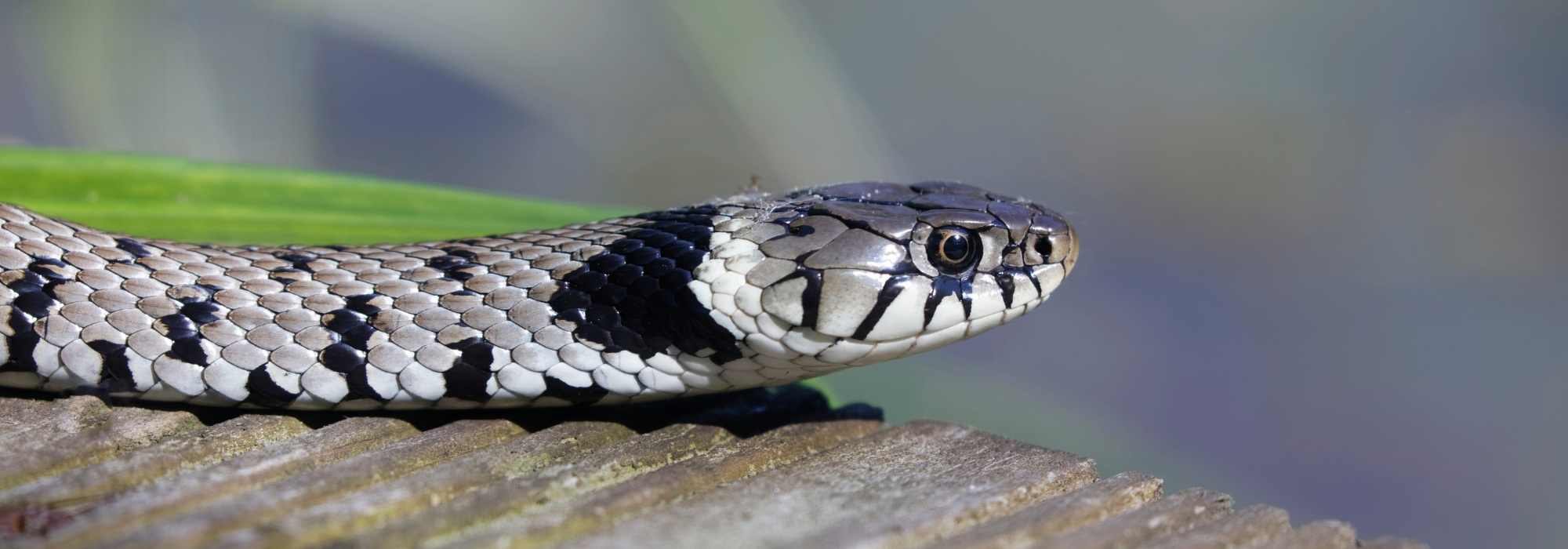
The Swiss Grass Snake is a harmless snake that lives near wet environments in France and Belgium. The grass snake is an important element of biodiversity balance in nature and gardens. It is indeed a predator of rodents, amphibians, and even insects. Meanwhile, it is itself preyed upon by foxes, herons, and some birds of prey, among others. Absolutely not dangerous, unlike vipers, and useful: it is time to give more space to this friendly snake.
What is the Grass Snake? How does it live and how can you differentiate it from a viper? We provide information in our advice sheet.
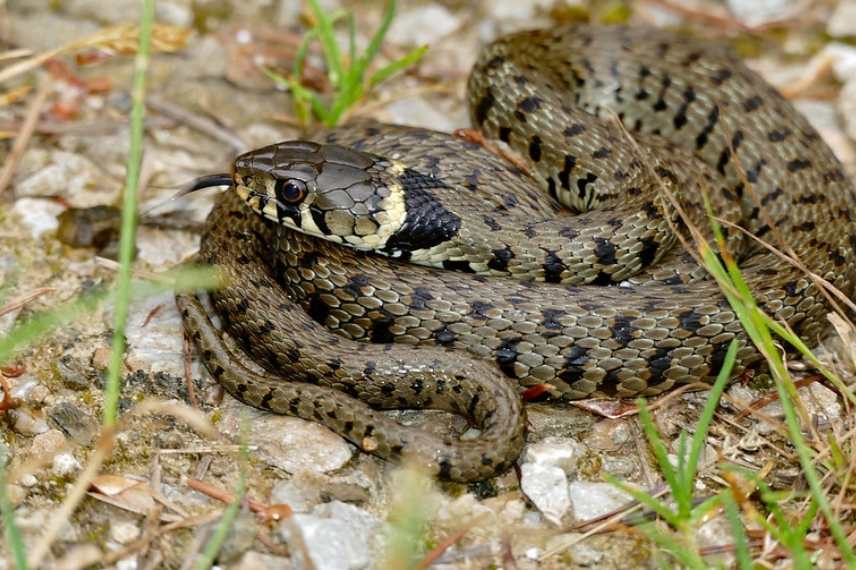
Natrix helvetica (© Bernard Dupont)

Did you say "Swiss"?
The Swiss Grass Snake (Natrix helvetica) is the most common species of snake in France and Belgium. Other “grass snakes” can be found in France, such as the Viperine Snake, the Dice Snake, the Smooth Snake (Coronella coronella), the Aesculapian Snake, or the Montpellier Snake. In Belgium, only the Smooth Snake is present alongside the Swiss Grass Snake.
The Swiss Grass Snake was long considered a subspecies of the “true” Grass Snake (Natrix natrix), which is typically found further north in Europe beyond the Rhine. As of 2017, the two species are now clearly distinct, so don’t be surprised to see the simple name Grass Snake in older publications referring to the snake found in France and Belgium. In reality, the two species are very similar in their habits and appearance. You really need to be a confirmed herpetologist (someone who studies reptiles) to tell them apart. In summary (and in theory!), we have the species Natrix helvetica in France and Belgium, not Natrix natrix.
Additionally, to complicate matters, Natrix helvetica hybridises in the wild with Natrix natrix or Natrix maura (the Viperine Snake). Who said herpetology was an easy science?
Nota bene: Another species once considered a subspecies of the Grass Snake (Natrix natrix), the Iberian Grass Snake (Natrix astreptophora), is found much further south.
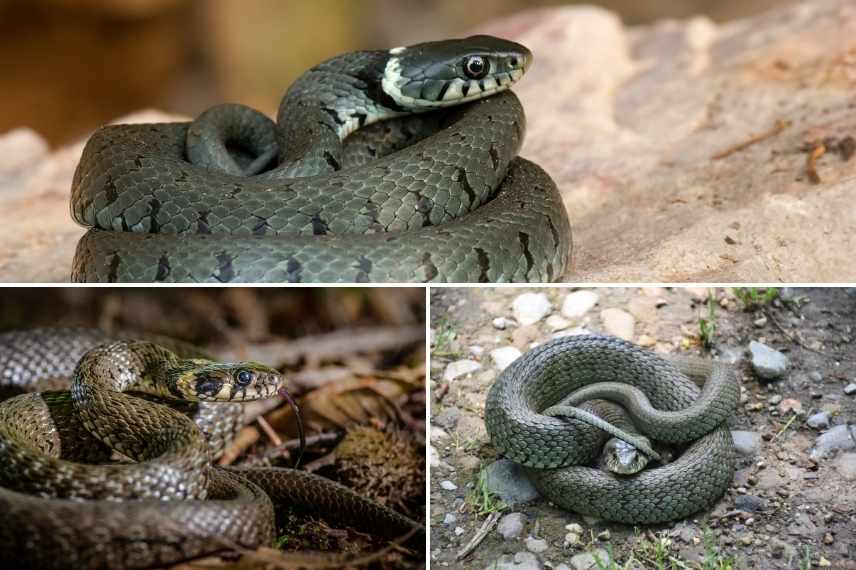 Natrix helvetica above, below left Natrix natrix, right Natrix astreptophora
How to recognise the Swiss Grass Snake?
- Pupils are round and black;
- The top of the head comprises 9 large plates (large scales);
- The neck is adorned with a pale yellow to dirty white collar edged in black at the back;
- The tail is long with a gradual taper: the female can measure 120 cm, compared to 90 cm for the male;
- The body is slate grey to olive green, the back is sprinkled with black spots and the flanks are striated with black;
- The upper labial scales (on the “cheeks”) are cream white, edged in black.
Note: the female and male are absolutely similar. Only the size at adulthood and the base of the tail differ: the base of the tail is swollen in the male. This is not always easy to observe, and some experts may occasionally be mistaken.
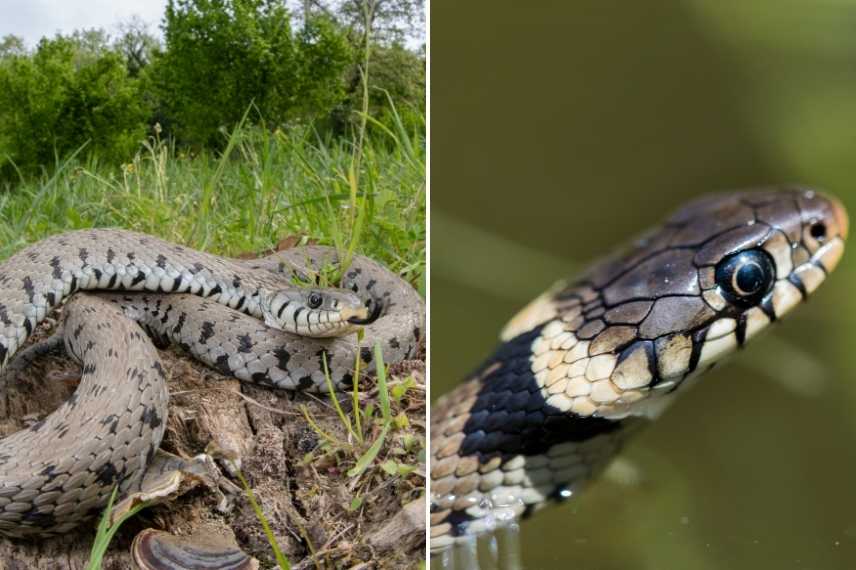
Natrix helvetica
The differences between a viper and a grass snake
There are three notable differences between these two types of snakes:
- The eye: round pupil in grass snakes, a vertical slit that crosses the eye in vipers (similar to that of a cat);
- The scales: large scales for grass snakes, small scales for vipers;
- The tail: long tail for grass snakes and short tail for vipers.
The head is not really a reliable criterion. While grass snakes generally have an ovate head and vipers have a triangular head, some species of grass snake, such as the European grass snake, also have a triangular head.
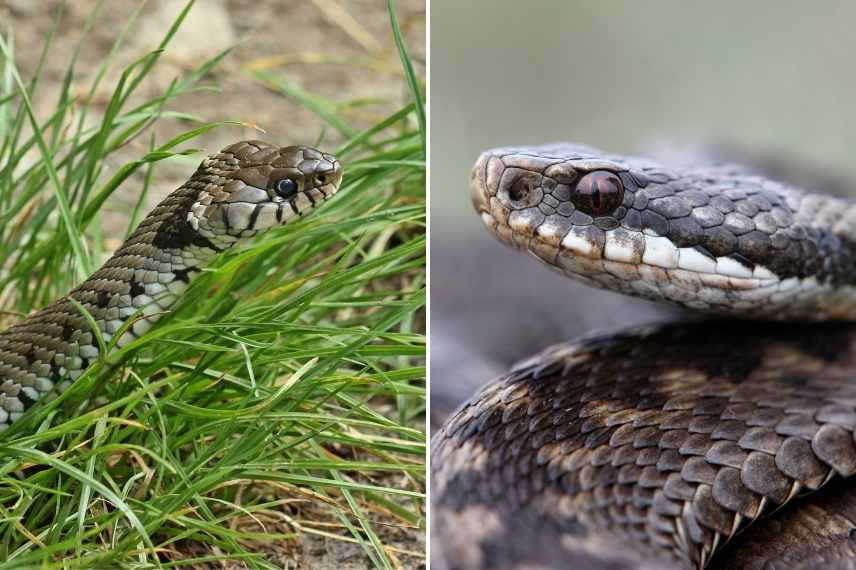
Natrix helvetica on the left and viper on the right
Collared grass snakes are not venomous. A few other species of grass snake produce venom, but it is absolutely harmless to humans. In contrast, vipers are more dangerous. When out walking, it is advisable to wear high shoes and not to disturb vipers (or other animals, for that matter).
As a reminder, here are the correct actions to take in case of a viper bite:
- Wash the wound with Marseille soap;
- Remove clothing, watches, bracelets… around the bite;
- Keep the affected limb still and remain calm (easier said than done!);
- Go to the hospital to receive antivenom.
- Do not do: no suction of the venom (you are not in a film!), also forget about AspiVenins and definitely no tourniquet.
Read also
Creating a natural pond in your gardenLa Couleuvre à collier helvétique, ou Natrix natrix helvetica, est une espèce de serpent semi-aquatique que l'on trouve principalement dans les zones humides, comme les rivières, les lacs et les marais. Elle se nourrit principalement de grenouilles, de poissons et d'autres petits animaux aquatiques. Ce serpent est connu pour sa capacité à se camoufler dans son environnement, ce qui lui permet d'échapper à ses prédateurs. La Couleuvre à collier helvétique est également capable de nager avec aisance, utilisant sa queue pour se propulser dans l'eau. En période de reproduction, elle se regroupe souvent en colonies, et les femelles pondent leurs œufs dans des endroits chauds et humides. En hiver, elle hiberne dans des terriers ou sous des rochers, revenant à la surface au printemps lorsque les températures commencent à se réchauffer.
The Habitat
The Swiss Grass Snake loves humid environments, riverbanks or streams, grassy slopes, and the surroundings of a pond… Although infrequent, this snake can be found in gardens that allow nature to thrive or in gardens located near natural wetlands.
Behaviour
This snake is diurnal (it only moves during the day) and is a good swimmer. When it feels threatened, this grass snake emits a hiss, then plays dead and… releases a foul secretion from its cloaca. Grass snakes are not venomous!
The Swiss Grass Snake lives for about twenty years and reproduces from April to May (sexual maturity at 4 years). The laying of around forty eggs (oviparous) occurs in a pile of manure or compost, where the heat and humidity are ideal for ensuring good incubation (5 to 10 weeks). The young grass snake is called a hatchling.
The Swiss Grass Snake hibernates in an old rodent burrow, a crack in a wall, a pile of wood, or a heap of rocks.
Grass snakes sometimes enter houses for various reasons: to find a welcoming, warm, and humid place to lay eggs or even hibernate, to hunt for mice, or to seek coolness or warmth (yes, they are cold-blooded animals!). If this happens to you: don’t panic! Gently coax the snake out using a net or by getting it to latch onto a scraper or broom.
Diet
The Swiss Grass Snake feeds on small fish, amphibians, large insects, and micromammals such as shrews, voles, and mice…
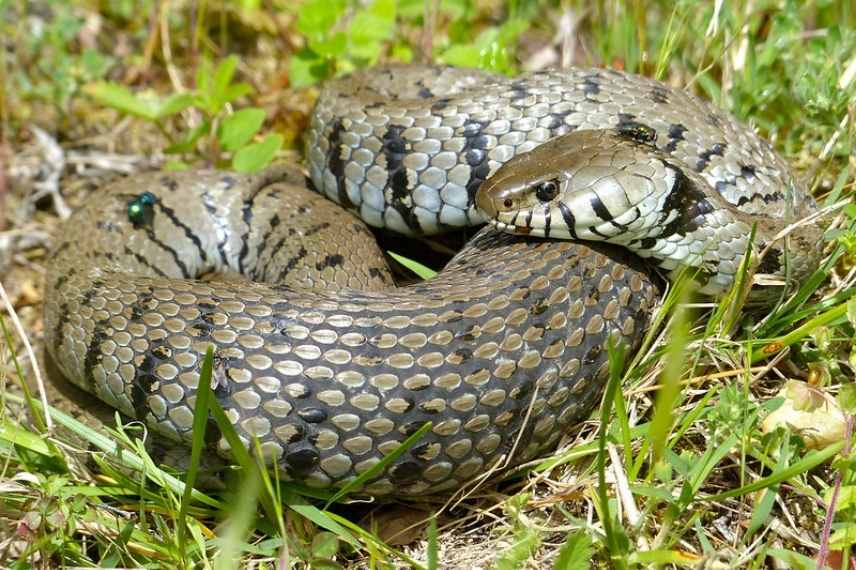
Natrix helvetica after a hearty meal… (© Bernard Dupont)
Why save the snakes?
The lack of knowledge about snakes and the ancestral fear of them cause a lot of harm to grass snakes (and other reptiles) each year. However, as we have seen, grass snakes are completely harmless.
Moreover, they actively contribute to the balance of biodiversity as predators of rodents, amphibians, and reptiles, and as regulators of insect populations. Grass snakes themselves are preyed upon by foxes, badgers, otters, weasels, and birds such as the Grey Heron, Great Crested Grebe, and various diurnal raptors (Kites and Buzzards). Young grass snakes can also be eaten by other grass snakes, large amphibians (green frogs), and even fish.
If you want to help grass snakes in your area: creating a natural pond, a few piles of wood, and a sunlit rock pile is a good start.
As a reminder: in France, snakes have been protected species since 1976. It is illegal to kill or intentionally disturb them. In Belgium, all reptiles are also fully protected.
- Subscribe!
- Contents
Comments