





























Shading the vegetable garden and its vegetables in summer
All the tips for creating shade in the garden during a heatwave
Contents
Recent summers have been marked by successive heatwaves. Across France, thermometers have cheerfully displayed temperatures exceeding 40 °C for several consecutive days. And, with the anticipated climate change, these periods of extreme heat and drought are likely to become recurrent… This is why it is necessary to consider cultivating your vegetable garden differently and to find solutions to mitigate the effects of these repeated heatwaves. These alternatives naturally involve a few actions that help limit and optimise watering. However, this is not enough against the relentless rays of the sun and the lack of water. Shading your vegetable garden becomes almost obligatory to attenuate the effects of heat. Discover with us some tips and advice on shading your vegetable garden.
→ Also read our tutorial: How to build a shade structure

The effects of a heatwave on the vegetable garden
Heatwaves can have severe repercussions on our bodies and those of our pets or livestock. They can also have serious consequences for plants, particularly vegetables and fruits in the garden. The summer of 2022 was disastrous for gardens, even in regions where temperatures are generally milder.
Although plants have the ability to defend themselves against heat, they can also experience a form of water stress. Indeed, high temperatures increase the evapotranspiration of plants. In fact, like humans, plants sweat through their pores called stomata. This loss of water slows down photosynthesis, and plants draw on their reserves, leading to exhaustion. Soon, the effects of the heatwave and drought become apparent:
- Leaves wilt, show signs of weakness, and eventually fall off. The larger the leaves, such as those of squashes, the more pronounced the phenomenon becomes.
- Foliage or fruits scorch and display dark or lighter discolouration.
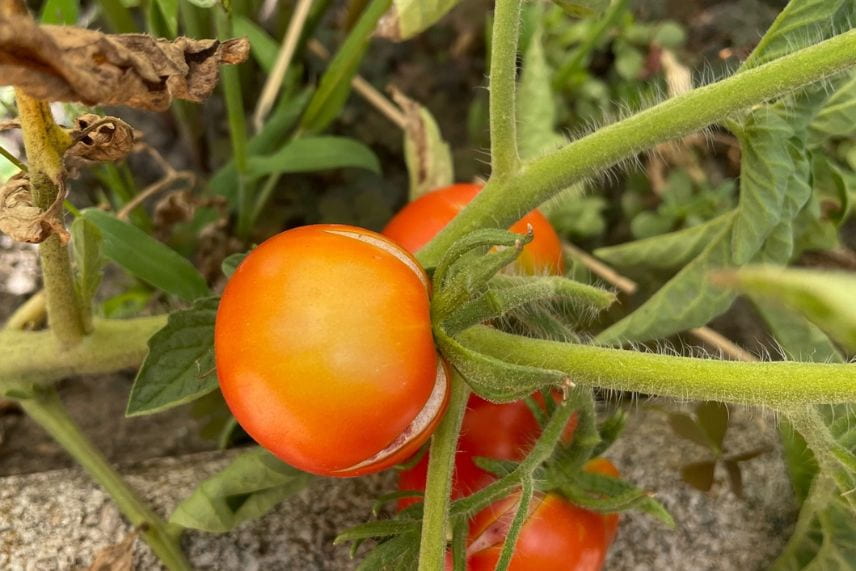
Tomatoes slightly scorched by the sun
- Plants stagnate, develop poorly, and growth slows down. The harvest of fruits and vegetables is reduced, or even non-existent.
- Some vegetable plants struggle to survive, but become unfit for consumption. For instance, radishes become pithy and hollow, leafy vegetables like salads or spinach bolt, and turnips are marked by bitterness…
- Sowing stops germination and growth, and they do not emerge.
[caption id=”attachment_169401″ align=”aligncenter” width=”856″>
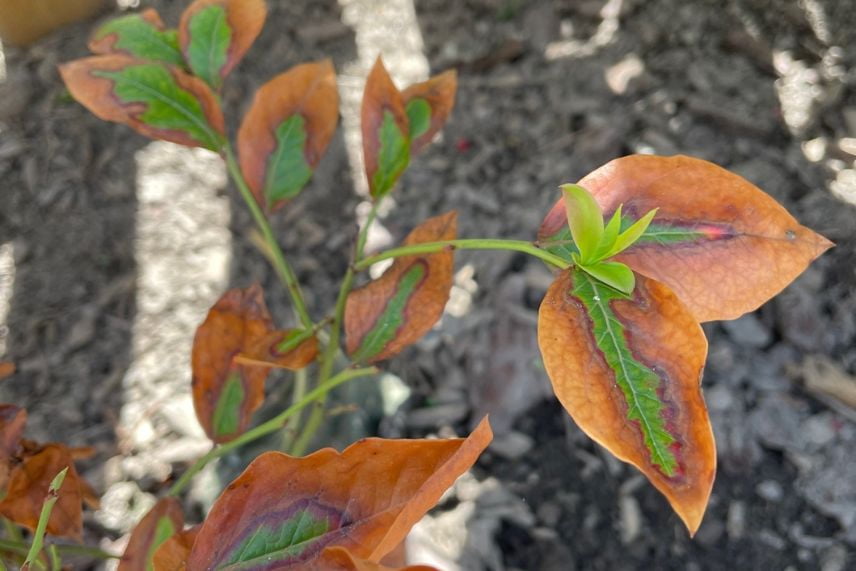 The leaves of my blueberry bush literally burned under the sun’s rays
Read also
10 corns to grow in the vegetable gardenShading solutions to protect the vegetable garden from heat
To protect your vegetable garden from solar radiation, it has become necessary to shade your vegetables and soft fruits. However, this shading should be deployed temporarily, as vegetable plants also need light and sun to thrive. Similarly, these shades must never prevent beneficial rain from reaching the soil. Finally, it is crucial to understand the orientation of your vegetable garden and identify the areas most exposed to the sun during the hottest hours of the day.
To create shade in the vegetable garden, various tips or solutions can be implemented without necessarily making a financial investment. Common sense, DIY skills, or recycling can also help protect your vegetables from the sun and heat. A simple shade can lower the soil temperature by about ten degrees!
Let’s explore some ideas for providing shade in the garden:
- The installation of shade cloths or shade nets. These solutions are available commercially, but they can easily be made from old sheets or recycled textiles, simply tied to stakes driven into the ground. These shade cloths are easy to install and remove. Their only drawback is their low resistance to wind that can get caught in them.
 Shade cloths are effective in lowering soil temperature
- Creating wooden structures that allow for the installation of canes at height. Simply plant four wooden stakes to define your plantings and connect them with horizontal stakes. Then, place the canes on top. On the sides, installing mesh or trellis allows climbing plants that will also provide shade. If you don’t have canes, camouflage nets can also be used. Be sure to create structures tall enough so you don’t have to bend down. The shade cast will be even more significant.
- The installation of privacy screens or windbreaks can be considered along the edges of the vegetable garden.
- Turning crates upside down over certain recently transplanted vegetable plants or seedlings can provide protection.
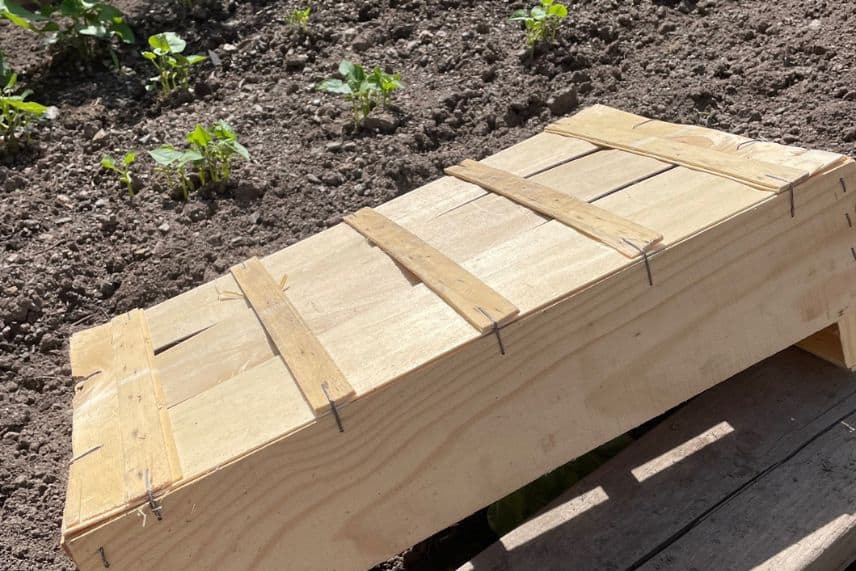 An upside-down crate provides beneficial shade to seedlings and transplanted vegetable plants
- A chicken wire shaped into a tunnel and covered with hessian can be placed over leafy vegetable seedlings.
- Old parasols or umbrellas also provide beneficial shade for the vegetable garden.
- Cardboard placed vertically and supported by wooden stakes is easy to set up.
Discover other Vegetable gardens
View all →
Available in 1 sizes
Available in 1 sizes
Available in 1 sizes

Available in 1 sizes
Available in 1 sizes

Available in 1 sizes

Available in 1 sizes
Available in 1 sizes
Available in 1 sizes
Planting shade plants
If you’re neither handy nor particularly inventive, the solution to provide shade for your vegetable garden may lie in planting sufficiently tall plants that will cast shadows. There are plenty of tips in this regard:
- Some annual plants like sweetcorn, sunflowers, cosmos, and Jerusalem artichokes (which can be invasive) can serve as shade providers, as they grow tall. However, they also suffer from heat and will need watering to fulfil their role. A cereal like sorghum proves to be more heat and drought-resistant and can reach 2 m.
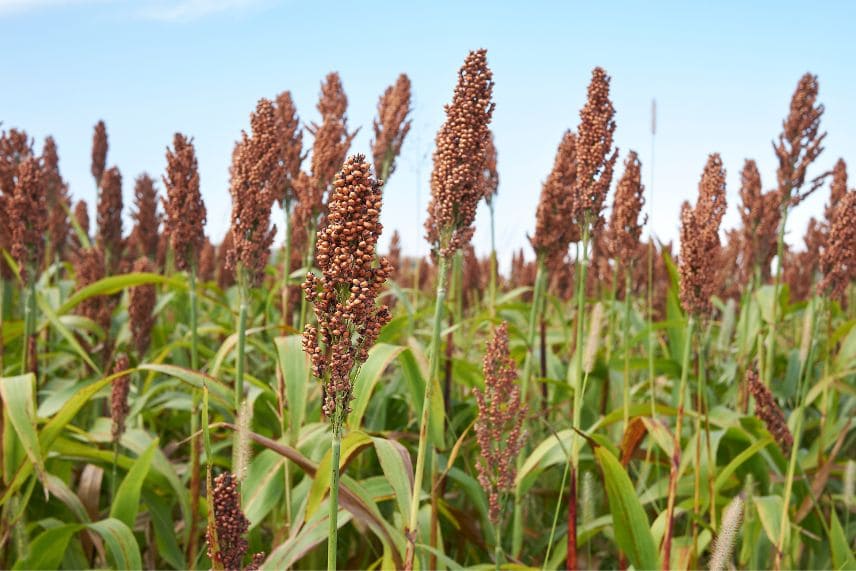 Due to its height and drought resistance, sorghum can be planted in the vegetable garden to provide shade.
- Planting a hedge of bushes is also an interesting solution, especially if it is melliferous to attract pollinating insects, or fruit-bearing to delight the birds, insatiable predators of harmful insects. Unfortunately, you will have to wait a few years for this hedge to grow sufficiently to provide its beneficial shade. Similarly, it is preferable to favour deciduous bushes to allow light and sun to filter through during the cooler seasons. To discover ideas for species to plant, I recommend reading Olivier and Ingrid’s articles: 10 bushes for a melliferous hedge to feed bees or Planting a fruit hedge that stands out from the crowd.
- Planting fast-growing deciduous bushes or fruit trees that will provide shade in summer but allow sunlight to filter through in spring and autumn. You can plant buddleias, a black locust or false acacia (Robinia pseudoacacia), a black elder (Sambucus), a mock orange (Philadelphus), a forsythia, a Japanese quince (Chaenomeles) … or fruit trees suitable for your region’s climate.
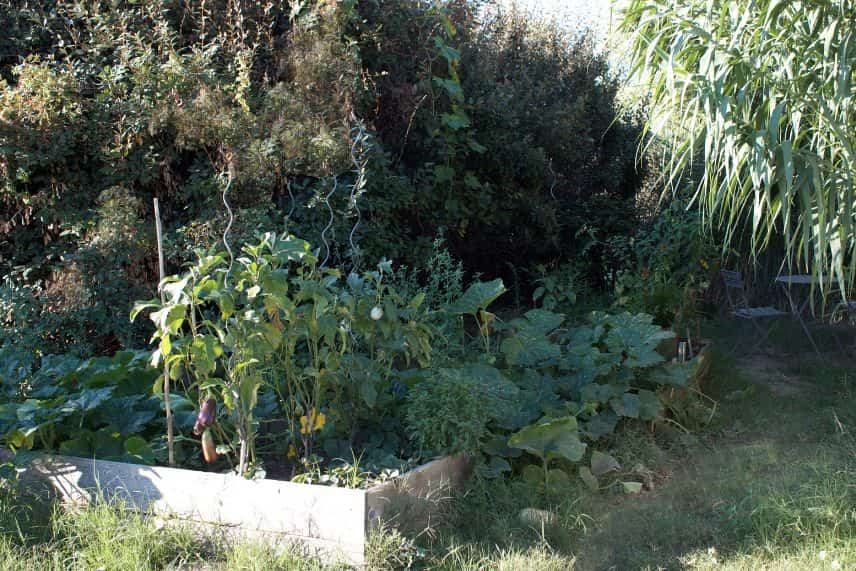 During the hottest hours of the day, vegetables appreciate the shade of a hedge (©Sophie Dionet).
Read also
Watering the vegetable garden: our tipsThe right actions to minimise the effects of heat
Besides shade, to withstand heat, vegetables will need some careful attention.
- A good mulch that is thick helps retain a certain degree of moisture, thus optimising watering from rain or irrigation. And during hot weather, the thicker the mulch, the better it is.
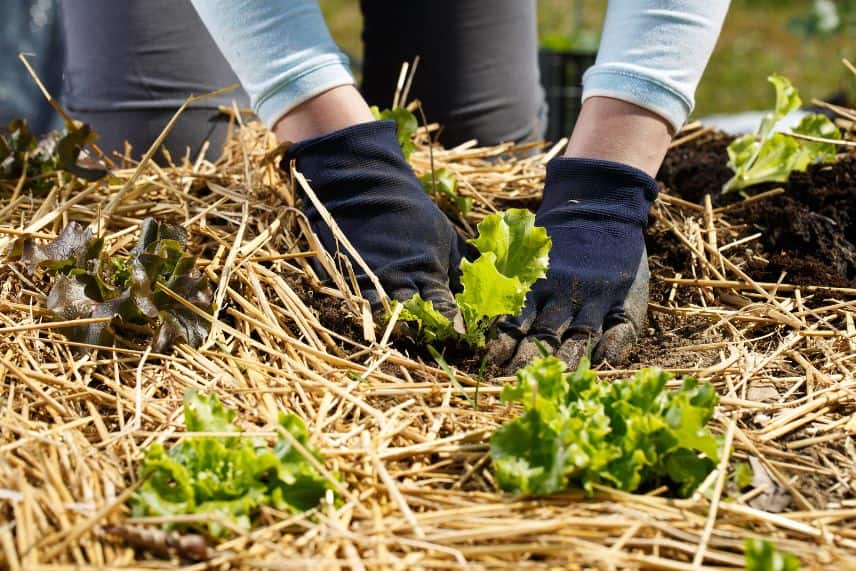 Mulching reduces the effects of the heatwave
However, it is important to choose a plant-based mulch such as straw, well-dried grass clippings (if the sun hasn’t scorched them!), shredded branches, or commercial mulches like lin flakes, miscanthus, or hemp. Don’t hesitate to almost cover strawberries or leafy vegetables with light mulches like straw.
- Regular hoeing helps break the crust of soil caused by dryness. This way, watering will be more targeted, and water will reach the root system.
- Watering should be done judiciously and carried out very early in the morning or very late in the evening. Similarly, systems like drip irrigation or porous hoses, combined with a water collector, or oyas, prove to be quite effective during dry periods.
For further reading on watering the vegetable garden:
- Watering the vegetable garden: our tips
- Watering: the technique of oyas
- Ollas or oyas: an efficient and economical watering system
- Automatic watering: the different systems
- Water restrictions and watering: how to manage the crisis in the garden?
- Subscribe!
- Contents

Comments