





























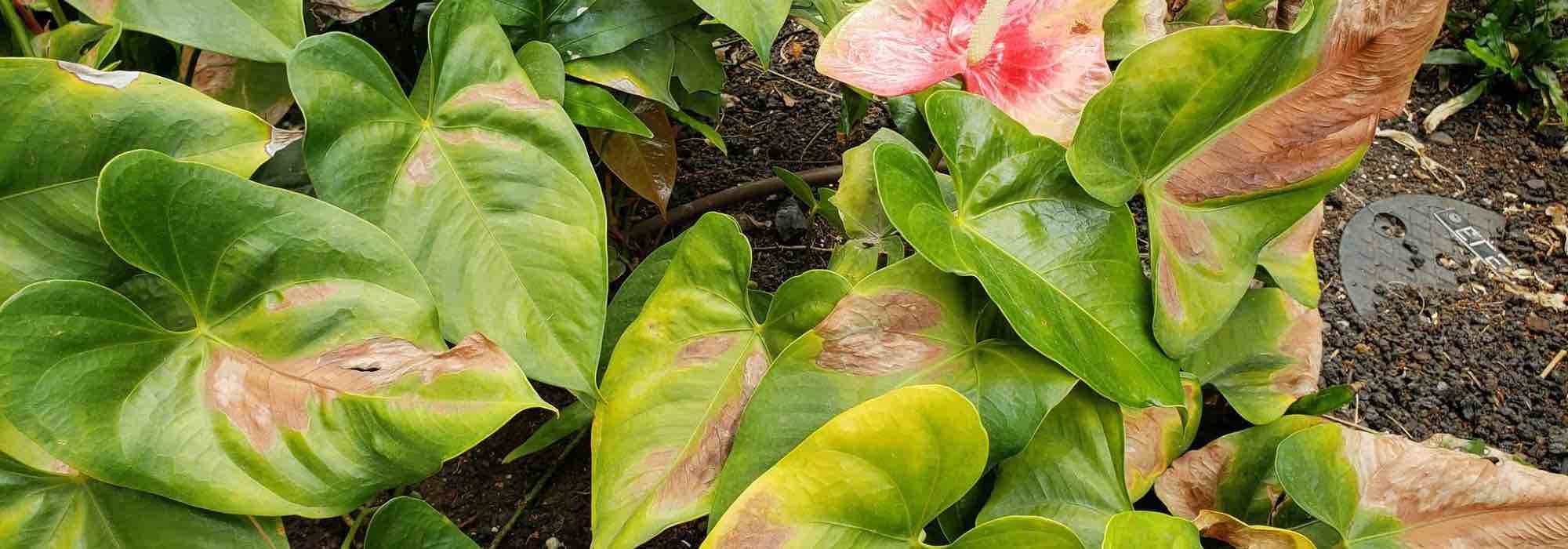
Recognising, preventing, and treating sunburn on plants
Identifying Sunburn on Plants and Remedies
Contents
The burns from the scorching rays of the sun on our plants are a symptom that is becoming more common these days during periods of intense heat and drought. When multiplied, they can be fatal to plants. They can also be mistaken for something else. When correctly identified and treated, the plant can survive.
Above all, learn the right prevention measures, as this is much more effective than trying to save a plant subjected to burns and dehydration. How can you save a plant exposed to full sun? How can you keep it healthy all year round? Follow our tips!

Recognise the symptoms
Sunburn on an outdoor plant manifests as discolouration: the leaves show a change in colour in certain areas; the discolouration appears as pale green, white, and sometimes yellow or brown. If it appears on the veins of the plant and gradually spreads to the tips of the leaves, then the leaf will die. Damage can be visible quickly, but it may also take time to appear, unlike sunburns in humans. If this symptom spreads throughout the plant, it may not recover.
This deterioration can occur in plants whose exposure is unsuitable, too strong for their needs, but also in plants that thrive in full sun during intense heatwaves.
Why has my plant burned? This sunburn is, of course, the result of accumulated scorching rays and too much light. The risk is heightened when the plant is dehydrated. In the plant world, excessive exposure to the sun can cause visible and immediate damage, but it is primarily the lack of moisture in the soil that generates this burn.
Other stress factors that cause such symptoms include a difference between low night temperatures and very strong sunlight during the day. Be cautious of certain severe pruning practices that expose lower branches and bark to excessively strong sunlight and high temperatures. The reflection from light-coloured walls or very bright colours can also affect plants that are not suited to such environments.
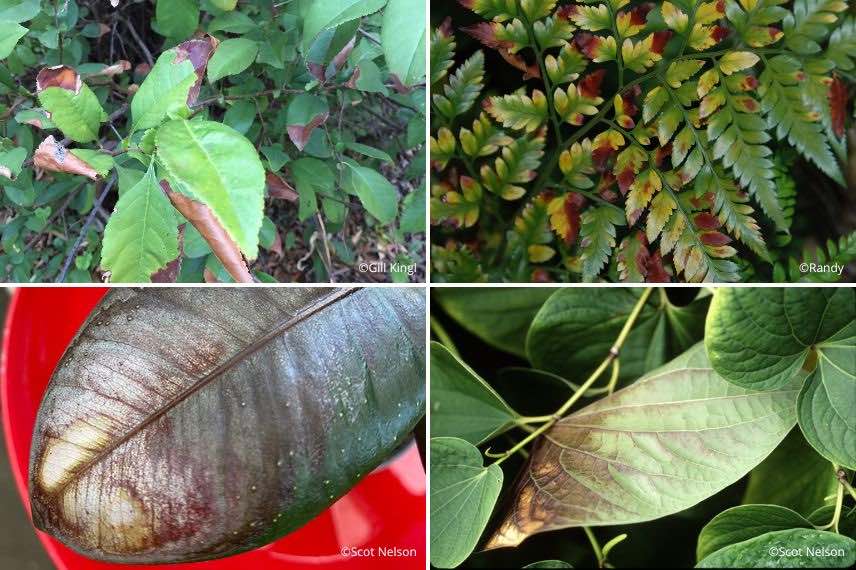 Different signs of sunburn on various plants
Let’s also mention the burns that can appear on the bark of trunks, which manifest as bark that cracks and appears scarred. This makes the wood more susceptible to insect infestations and fungal infections. This symptom also appears on fruits, creating visible damage to their skin and leading to the same risks of susceptibility to insect attacks and cryptogamic diseases.
Read also
How to save water in the garden?To care for
Prevention is largely the best remedy, but let’s first discuss the care you can provide for your plant once damage has been observed and identified. This can be summarised in three points for outdoor plants that you cannot move:
- Remove or not the damaged leaves: you can remove damaged or dead leaves if this does not expose the rest of the plant to excessive sunlight on leaves that were previously protected from the sun’s rays. Otherwise, wait for a cooler season.
- Use your creativity to protect the plant from sunlight, ideally with a shading net. Consider using parasols or old umbrellas as well. Keep this protection in place until new shoots appear. If a trunk is affected, wrap it in a soft protection, such as fabric. Be careful: different plants have different shade needs. Don’t overdo it; don’t shade a full sun plant for too long or the foliage will pale.
- If possible, water the plant thoroughly at sunset or early in the morning by using a few watering cans to saturate the plant with water for a few days. Water carefully at the base of the plant without wasting water. If your area is under total water restrictions, refrain from watering and be patient. Take this opportunity to rethink your personal water consumption and how you might recover cooled cooking water without salt, for example, or any other recovery method that does not lead to waste and that you can use for your plants.
For potted plants on the terrace or balcony: you can more easily move them to the shade, which is the first step to take. If you have access to water, soak the potted plants rather than watering them by immersing them in a basin of water for about 30 minutes. Repeat this action for a few days.
→ See Pascale’s article and her tips for creating shade in the vegetable garden, which can also be adapted for ornamental gardens.
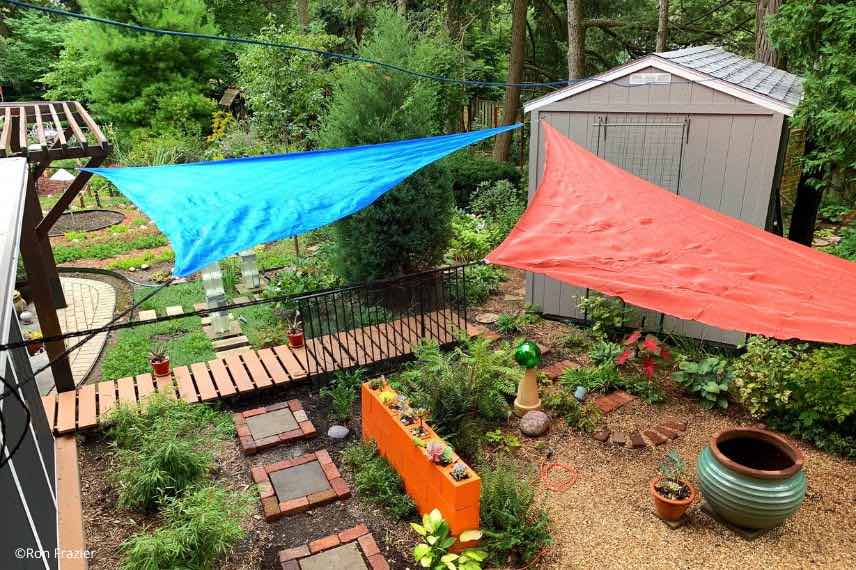 Shade cloths in the garden
Preventing Sunburn on Plants
Let’s see how to minimise the chances of this type of situation occurring, as prevention is the most effective method. Pay attention to the following aspects in the garden:
- Before planting, ensure that the newly acquired plant is well-suited to the light conditions it will receive. Choose plants that are suitable for your climate, and check their USDA zone classification.
- Practice good watering habits throughout the year: water generously, but not too frequently, the newly installed plants or those that require it. This will help the plant become self-sufficient.
- Mulch and mulch thickly: a corollary to watering, mulching is essential in the garden. In spring or autumn, during non-dry periods, after a good watering, apply a thick layer (5 to 6 cm) of mulch to your soil. It helps retain water in the soil, reduces light reflection, and limits temperature rise in the soil. Clear a few centimetres around the collar of the stem or trunk to prevent diseases and pests. → Learn all about mulching in Michael’s article.
- Do not prune more than 20% of the canopy surface in a year on young trees and bushes to avoid exposing them too much to sunlight.
- Maintain and care for your soil with regular compost additions to improve water retention in the soil.
- For potted plants on the terrace or balcony, apply the same principles: a substrate with good water retention, renewed regularly; mulch; and appropriate exposure for the plant.
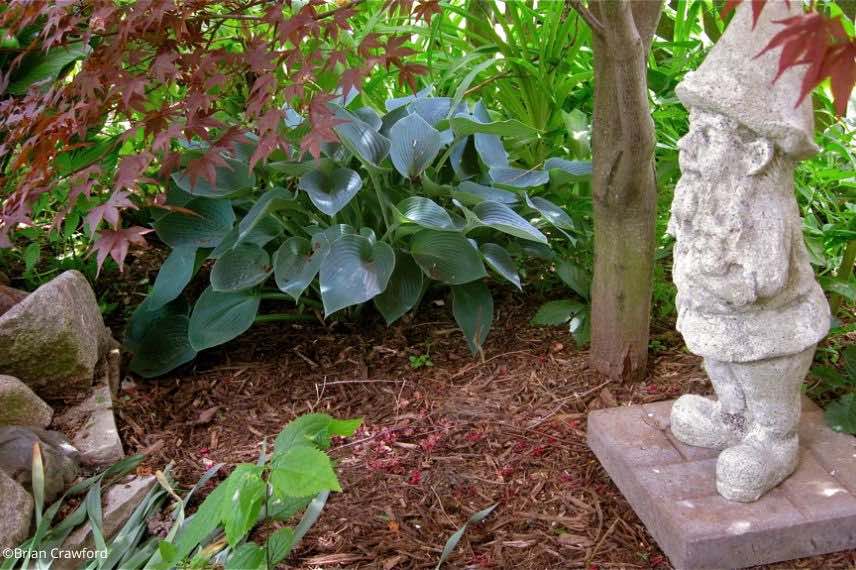 Mulching is essential in both ornamental and vegetable gardens. Never leave soil bare.
- Subscribe!
- Contents

Comments