





























Protecting the artichoke from the cold
our tips for effective wintering
Contents
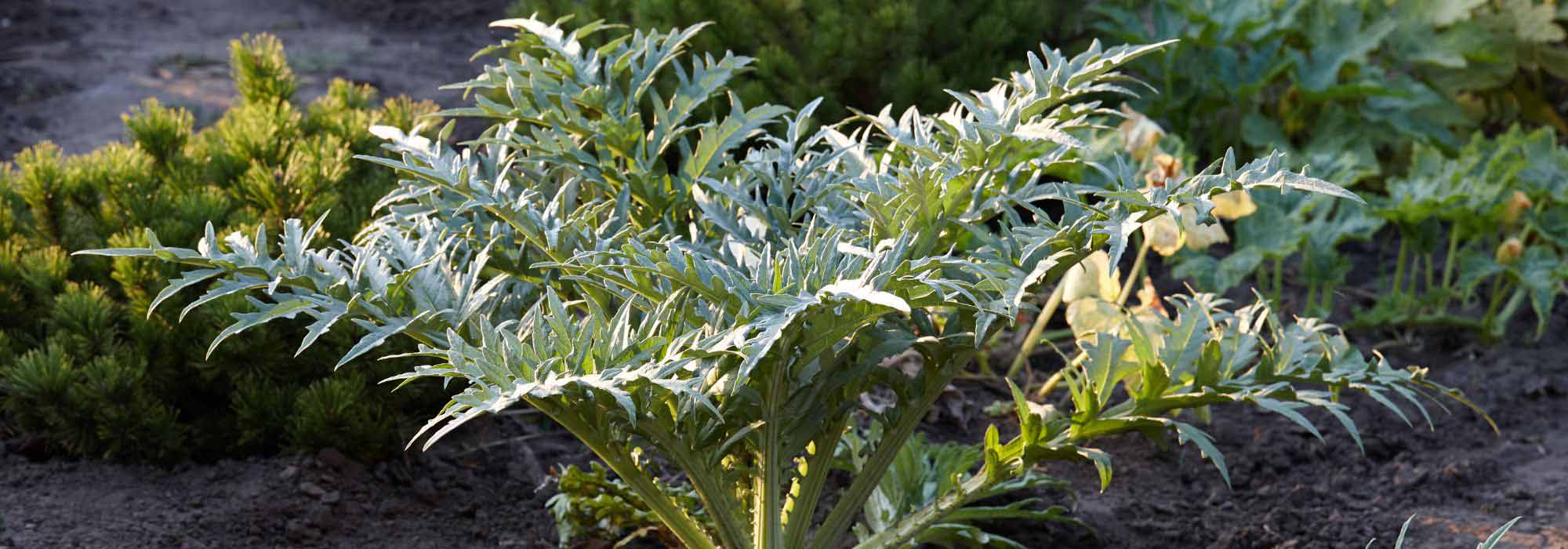
Belonging to the Asteraceae family, artichokes (Cynara scolymus) offer gourmets a very subtle flavour, are rich in vitamin B9, and are allies in stimulating the liver and digestive functions of the body. Very easy to cultivate, these young plants fear humidity and are quite sensitive to cold. Being perennials, they remain in place during winter and must therefore be protected from its harshness. Discover our tips to protect your artichokes from the cold throughout winter and find them in great shape when the warm days return!
→ Find our growing tips in our complete guide on artichokes.

Why protecting artichokes in winter?
Cousin of the cardoon and the thistle, the artichoke is native to the Mediterranean basin. Introduced to France in the 16th century, it is now grown by many market gardeners in Finistère, as well as in the Pyrénées-Orientales where the more tender varieties thrive particularly well. It has a reputation for hating the cold, but upon closer inspection, it becomes clear that hardiness varies somewhat depending on the varieties.
Among the hardiest, we find ‘Gros vert de Laon’, which can be grown in northern and eastern regions due to its better resistance to cold. The artichoke ‘Vert globe’ is also distinguished by its excellent resistance. However, this is a relative hardiness, as an artichoke plant struggles to withstand temperatures below -5 °C.
Among the more tender varieties, we find the ‘Imperial Star’, which is very early, as well as smaller artichokes less suited to the cold, such as ‘Violet de Provence’ and ‘Vert de Provence’. They are best reserved for coastal or southern regions of our country. These are the most commonly grown varieties in the South.
Winter is a delicate time for gardeners wishing to grow artichokes in the vegetable garden, as they need to be protected as soon as the first cold weather arrives in mid-autumn, while being careful to allow the plant to breathe. A plant can thus live for several years and produce beautiful and tasty harvests.
Should you prune the artichoke before winter?
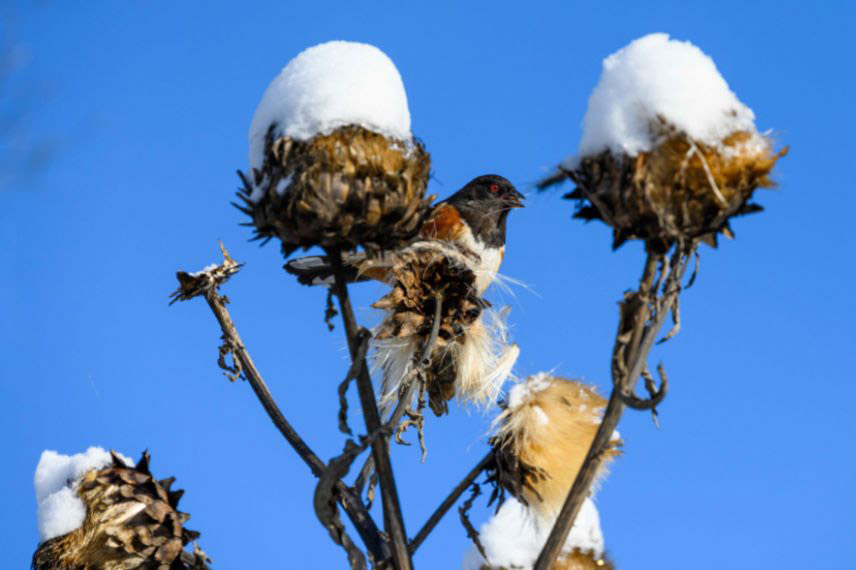
Even if pruning is not necessary, you can still remove dead stems and leaves from the base to prevent them from rotting. Depending on the size of your artichoke young plants, you can also cut them back, keeping only 2 or 3 of the best. If you are in a windy area, tie them together in a bun above the base, taking care not to tighten too much to limit their exposure to the wind.
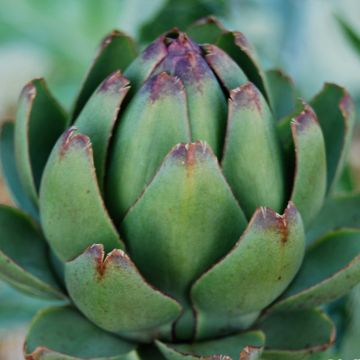
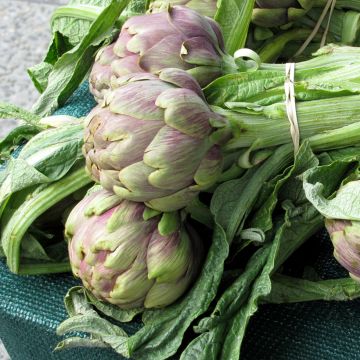
Discover other Artichokes
View all →
Available in 1 sizes
Available in 2 sizes
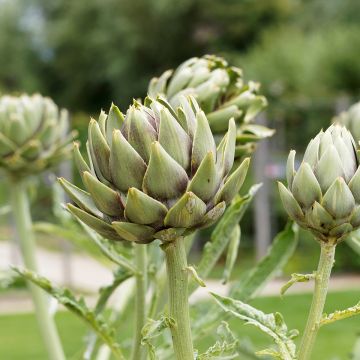
Available in 1 sizes

Available in 1 sizes
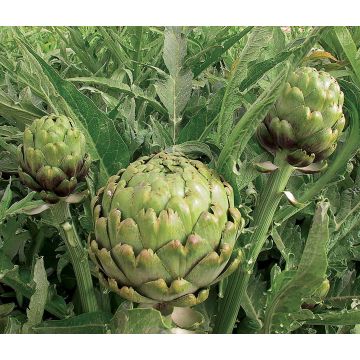
Available in 1 sizes

Available in 1 sizes
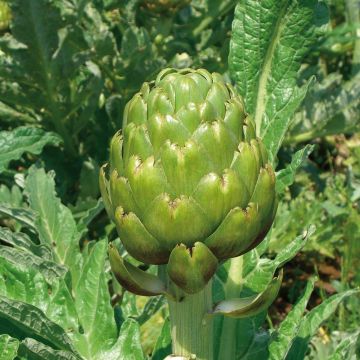
Available in 1 sizes
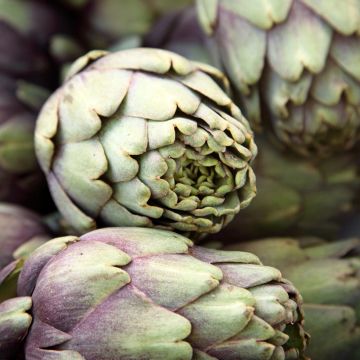
Available in 1 sizes
Available in 1 sizes
Available in 1 sizes
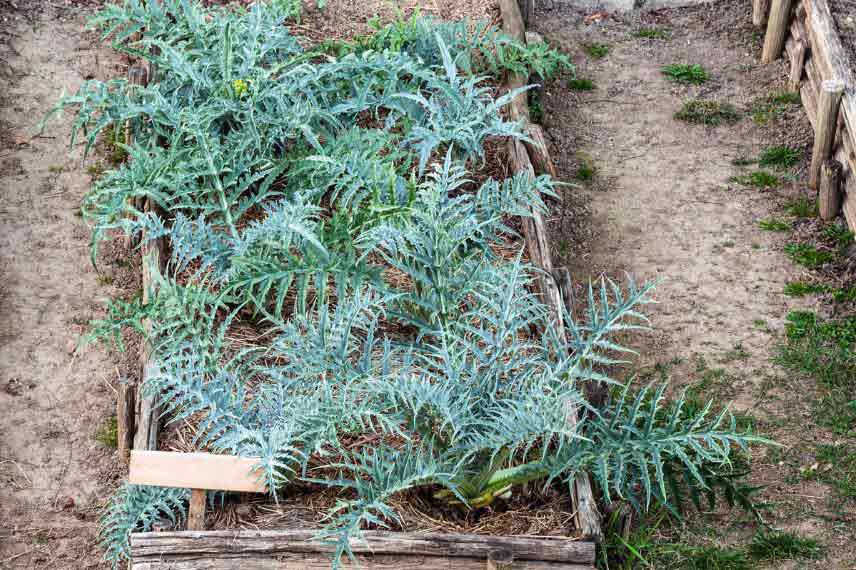
Protecting artichokes in the ground
Artichokes are not just for the mildest climates, and you can grow them in open ground in most regions, provided you give them good winter protection.
→ Note that artichokes are also sensitive to excess water, so you should plant them in well-drained soil to avoid stagnant moisture. If your soil is heavy and wet in winter, you can raise the growing bed where you plant them to allow for better drainage.
When to protect the artichoke?
As long as the weather remains mild and dry, your plant is safe. Be sure to take action as soon as the first cold spells arrive.
How to protect the artichoke?
- Start by hilling up around the plants, bringing about ten centimetres of soil around them. It is mainly the heart of the plant, located at the base of the leaves, that is most sensitive to the cold.
- Next, add a large volume of well-dried organic mulch (dead leaves, straw, shredded wood…) to a thickness of 20 to 30 cm all around the plant. Be generous with the thickness of this blanket, but still leave the tips of the leaves exposed so they can continue their photosynthesis. In Brittany, ferns are commonly used for this mulching. They are repellent, pest-resistant, and do not easily retain water.
- Being sensitive to moisture and rot, ensure that air can circulate around the heart without water stagnating in the protection. Remember to regularly check the heart during winter, as the mulch can harbour pests that might nibble on it, and the same goes for the development of diseases due to the humid environment of the protective cover.
- If your region experiences harsh winters, you can add a winter cover as additional protection, remembering to ventilate regularly on sunny days.
- As soon as temperatures become milder and the risk of frost has passed, you can remove these protections and cut back the withered leaves.
Adapt the location of the artichoke when planting
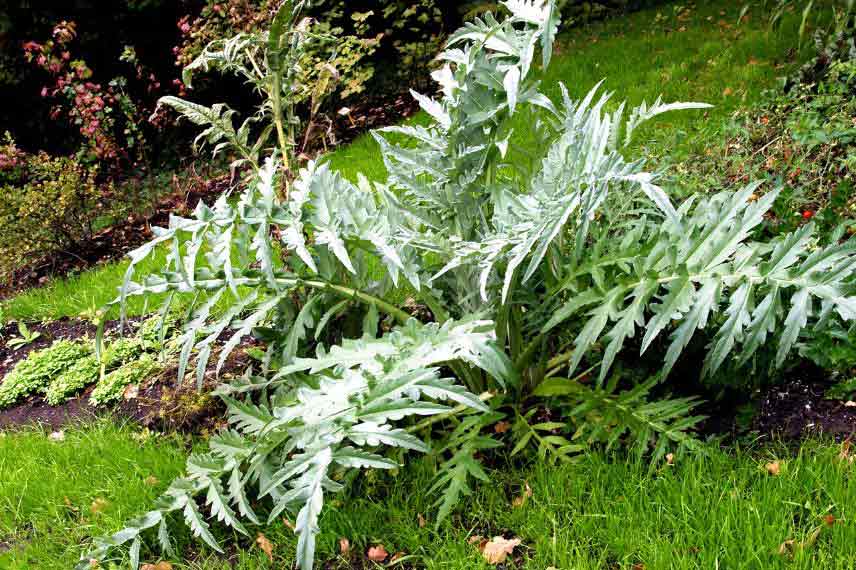
Being a perennial and of large dimensions, you may consider planting the artichoke elsewhere than in the vegetable garden if you cannot provide it with a naturally sheltered location. Its architectural silhouette and colours allow it to be planted elsewhere in the garden, for example against a south-facing wall or in a bed of bushes and perennials that is well-sunny and sheltered from cold winds.

- Subscribe!
- Contents
![[protect_artichoke_from_cold_in_winter]
To protect the {glossary} artichoke from the cold in winter, you can cover it with a thick layer of {glossary} mulch. This will help insulate the plant and protect it from frost. Additionally, you can also use a frost cloth or horticultural fleece to cover the plant during particularly cold spells. Remember to remove the coverings during the day to allow the plant to receive sunlight and air.](https://www.promessedefleurs.ie/blogwp/wp-content/uploads/2022/12/proteger-lartichaut-du-froid-en-hiver-1.jpg "[protect_artichoke_from_cold_in_winter]
To protect the {glossary} artichoke from the cold in winter, you can cover it with a thick layer of {glossary} mulch. This will help insulate the plant and protect it from freezing temperatures. Additionally, you can also use a frost cloth or horticultural fleece to cover the plant during particularly cold nights. Remember to remove the coverings during the day to allow the plant to receive sunlight and air.")
Comments