






























Protecting Balcony Plants in Winter
Against the cold and frost
Contents
On your balcony, you enjoy your plants when the weather is nice in spring, summer, and autumn, but when winter or the first frosts arrive, flowering is no longer on the agenda and it’s time to protect the most delicate plants from the cold, such as oleander, citrus trees, or hibiscus. Fleece, mulching, bringing them indoors, discover our tips to best protect the plants on your balcony in winter!

Why is winter harmful to plants?
Some plants are hardy and withstand the cold well, while others are sensitive to drops in temperature and frost.
It is the cold, but also the humidity, that can cause plants to die in winter. The water contained in the sap freezes and causes the plant molecules to burst. Signs of this include leaves with a burnt appearance or a trunk split by frost. In winter, it is therefore essential to protect both the roots and the aerial parts of non-hardy plants.
Several solutions exist: covering them or bringing them indoors to raise the temperature and avoid standing water, as well as refraining from watering when it is freezing.
Which plants should be protected from the cold?
These are the tender plants or non-hardy plants that need to be protected in winter, depending on the temperatures they can withstand and the climate of your region.
Among the frost-sensitive plants are tropical plants like the banana tree and certain palms, Mediterranean plants like the oleander, citrus trees (lemon tree, orange tree, etc.), succulents and cacti, as well as more common plants like geraniums and dahlias.
It is therefore important to find out about the plants on your balcony to know which ones to protect.
To help you, you can use our Plantfit web application and also check out our article: 10 plants to protect in winter.
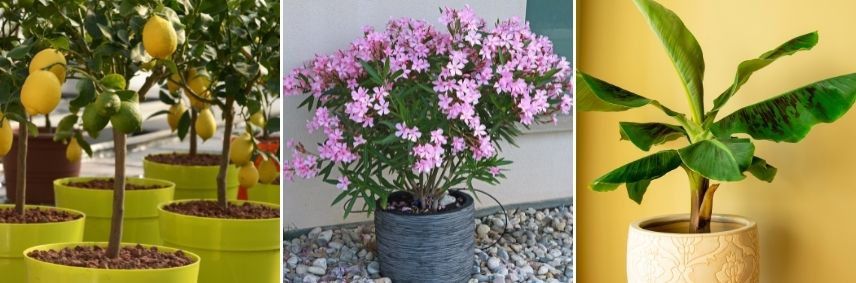
Lemon tree, oleander, and banana tree in pot
Elevate and group the pots
Potted plants are more sensitive to cold than garden plants, as they have a limited volume of soil, making their roots more exposed to the cold.
To prepare your plants for a trouble-free winter on your balcony, some precautions are therefore necessary and should be taken from the first frosts, in October or November.
Start by emptying the water saucers and do not water during frost as it is the water and humidity that cause plants to freeze in winter. The substrate must remain well-drained.
Elevate the plants by placing the pots on wooden blocks or small wheeled trays, which are more practical for moving heavy large pots. This will allow the water in the pot to drain better and not come into contact with the plant.
Group the pots out of the wind and cold against a wall.
Using fleece or winter covers
Protect pots or containers whether they are made of clay, wood, plastic, or other materials, by wrapping them in bubble wrap secured with string or a blanket.
Then wrap the plants with a winter fleece or a winter cover. The fleece protects from the cold and creates a micro-climate. It also allows the plant to breathe and lets light through. Winter covers are more convenient to place on bushes and close with a Velcro or zip fastening. The average weight of a fleece or winter cover is 17 grams per square metre.
When the weather is nice, we recommend airing the plant by removing part of the fleece or opening the winter cover.
Water sparingly and when frost-free (about once a month).
Be careful, do not use plastic to protect the aerial parts of plants as it is a material that does not allow air to pass through.
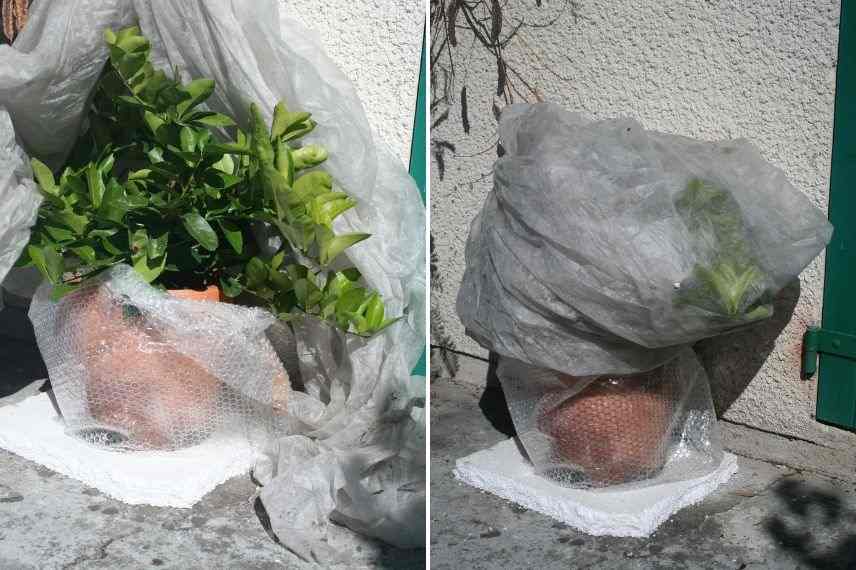
Plant protected by winter fleece and bubble wrap
Using mulch
To protect the roots, you can also use mulching, by placing a thick layer of it on the compost at the base of your plants. Different types of mulch are available: you can use dry leaves, flax mulch, or wood chips for example, sold commercially. The material used for mulching should be dry.
Bring the pots indoors for protection.
Some more delicate plants cannot stay outside, even when protected, and must be brought indoors to a greenhouse or conservatory. The shelter should be bright and unheated, with a temperature around 10 degrees.
If you do not have a conservatory, you can also get a small greenhouse to place on your balcony where you can put your frost-sensitive plants.
Regarding watering, it should remain modest, as the plants are in a period of dormancy or metabolic slowdown. You can water once a month.
For frost-sensitive plants like dahlias or gladioli, you can dig them up and store them in a cellar.
Once winter and the frosts are over, remove the winter covers and wraps or take your plants out of your conservatory or small greenhouse.
Gradually re-acclimatise them to cooler temperatures and more frequent watering, then let them thrive on your balcony!
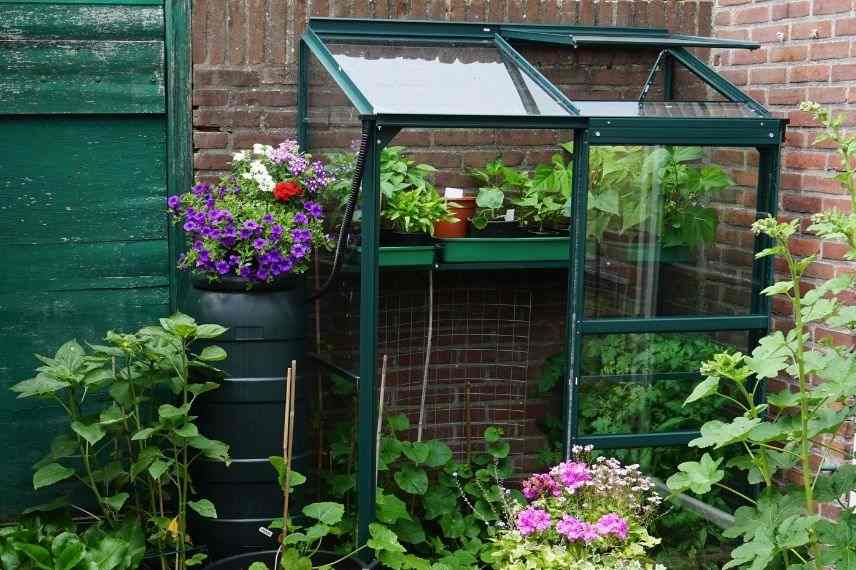
An example of a balcony greenhouse
For further reading
- Subscribe!
- Contents

Comments