





























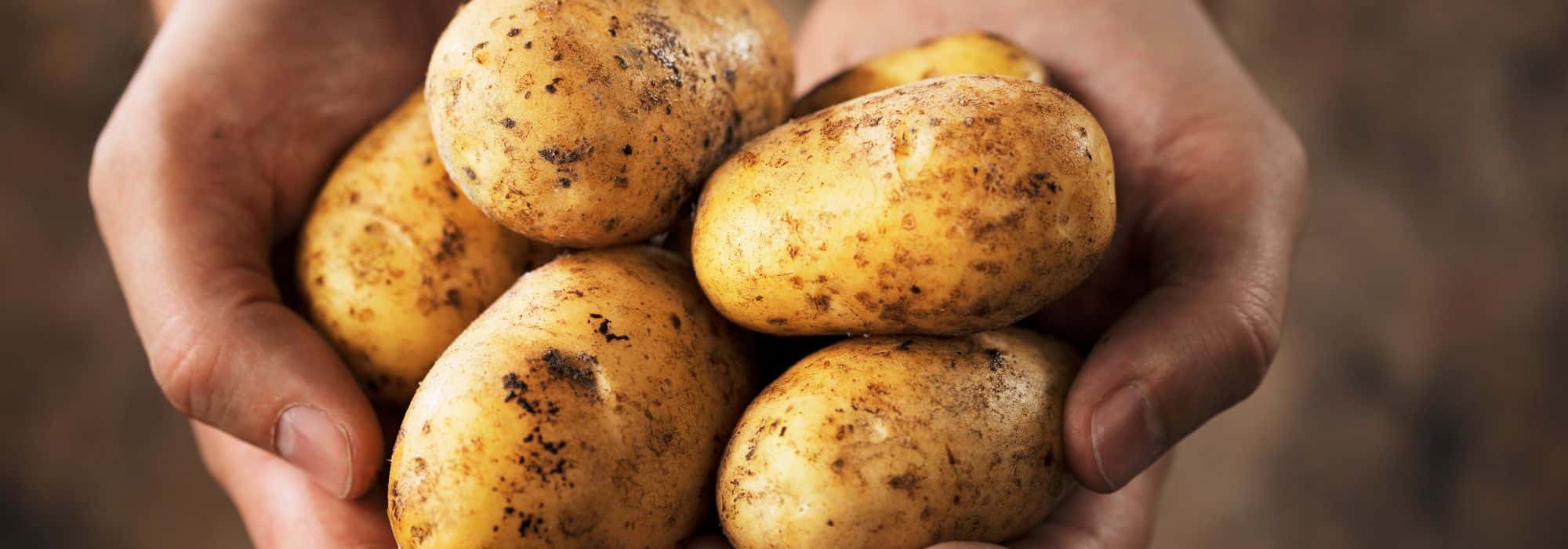
Potatoes resistant to blight
some potato varieties resistant to blight
Contents
To understand the impact of blight on potatoes, let’s take a brief dive into history… We are in the mid-19th century, a time when the potato is the staple food of the peasant class. This is particularly true in Ireland, where, after a period of political and religious turmoil, the country experiences a time of prosperity. Unfortunately, in 1845, blight arrives on the island, finding a humid climate conducive to its development. Blight settles in, and for the next four years, it destroys potato crops, plunging the country into an unimaginable famine for the working class, exacerbated by the evident disdain of political leaders who failed to take measures to mitigate this catastrophe. Although the figures are not precise, the number of deaths due to this famine is estimated at one million between 1846 and 1851.
Certainly, blight will not have the same consequences in your vegetable garden. However, it can still destroy a potato crop. To address this issue, the best approach is to select blight-resistant potato seeds.
→ To learn more about blight, you can also read our article Blight: identification, treatment, prevention

What exactly is downy mildew?
Downy mildew is a fungal disease caused by the fungus Phytophthora infestans. A warm and humid climate promotes its development, which is why downy mildew is particularly prevalent during wet years.
The fungus overwinters in the soil as oospores, which are fertilised eggs. Subsequently, plants primarily become infected through the stomata during the growing season. Potatoes, tomatoes, and many Solanaceae are highly susceptible.
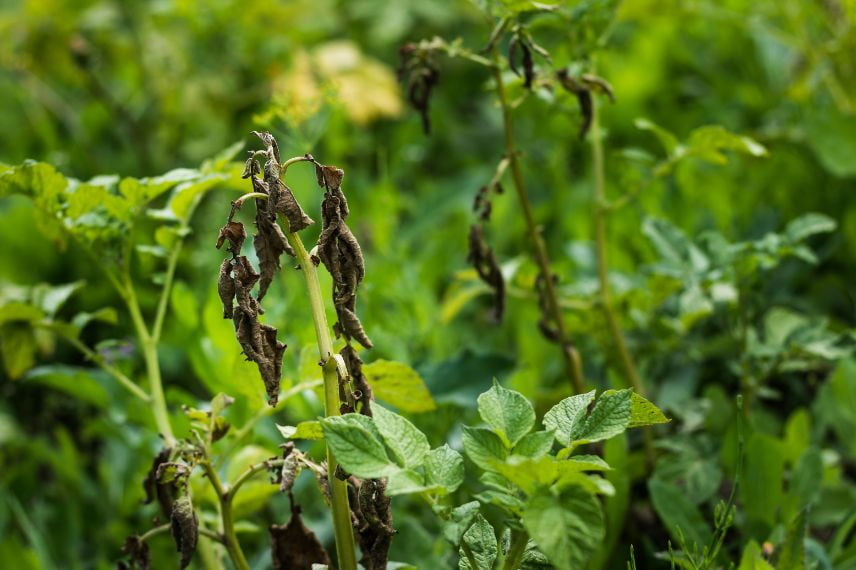
Symptoms:
- Appearance of translucent yellowish-white spots on the upper surface of tomato leaves
- These spots take on an oily appearance, with necrosis in the centre, bordered by a livid margin
- On the underside of the leaves, a white to grey-violet down develops
- The disease develops on the stems; in very humid conditions, it penetrates the soil and attacks the tubers, which will become contaminated. They will be impossible to store as they will rot.
How to prevent the disease?
- Maintain loose soil
- Implement a crop rotation of at least 3 years
- Avoid planting too closely to ensure good aeration for potato plants
- Never water by sprinkling to avoid excessively wetting the foliage
- Strengthen young plants with nettle manure. While it won’t prevent downy mildew, it will stimulate the plants, making them more resistant to diseases
- Carry out preventive sprays of horsetail manure
- Avoid planting potatoes next to tomatoes.
- And above all, choose potato varieties resistant to downy mildew
To learn more about downy mildew: Tomato: downy mildew, other diseases and pests
To make your own manures:
Read also
Potatoes: planting, growing, harvest‘Allian’, a waxy potato
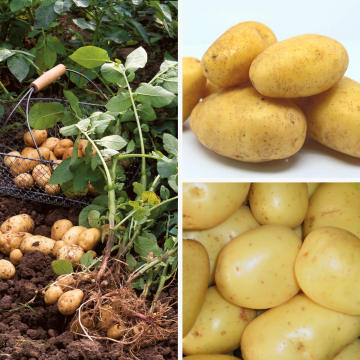
The potato variety ‘Allians’ is relatively recent as it was developed by Böhm Nordkartoffel and registered in the French Catalogue in 2003. It is a medium-early variety that offers a good yield. However, the potatoes are of modest size, rather oblong and elongated.
The plants are medium to tall, with a semi-upright habit. The foliage is light to medium green.
Beneath their smooth, yellow skin lies a pale to dark yellow flesh, firm enough, tasty, and low in starch. These potatoes are delicious when consumed early, after 90 days of cultivation. If the cultivation is extended to 120 days, they can be stored provided they are kept in a cool, dark place and consumed fairly quickly.
When cooked, the ‘Allians’ potato has good holding qualities and does not crumble. It is perfect for salad preparation, steaming, or enjoying in its skin. It can also be sautéed or roasted, but it is not recommended for purées, soups, or chips.
Discover other Seed potatoes
View all →
Available in 2 sizes
Available in 0 sizes
Available in 1 sizes
Available in 0 sizes
Available in 1 sizes
Available in 2 sizes
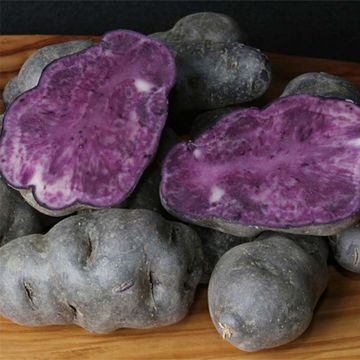
Available in 1 sizes
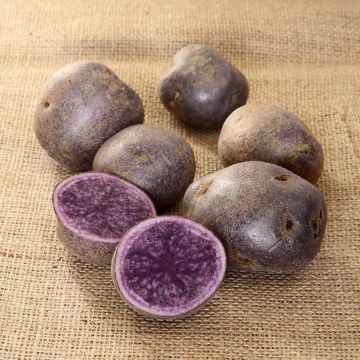
Available in 1 sizes
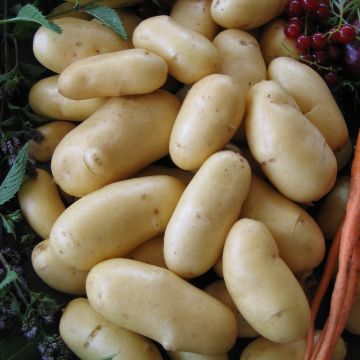
Available in 3 sizes
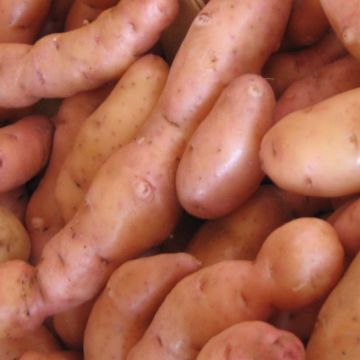
Available in 1 sizes
The ‘Vittabella’, an early variety with firm flesh
The ‘Vittabella’ is a potato, originating from Holland, known for its real resistance to blight and other common diseases. This is indeed its strong point! It is an early to early-maturing variety, offering a very good yield of rather short oblong tubercles. Perhaps less productive than some, it is easy to grow. It can be harvested as early as 80 days after sowing.
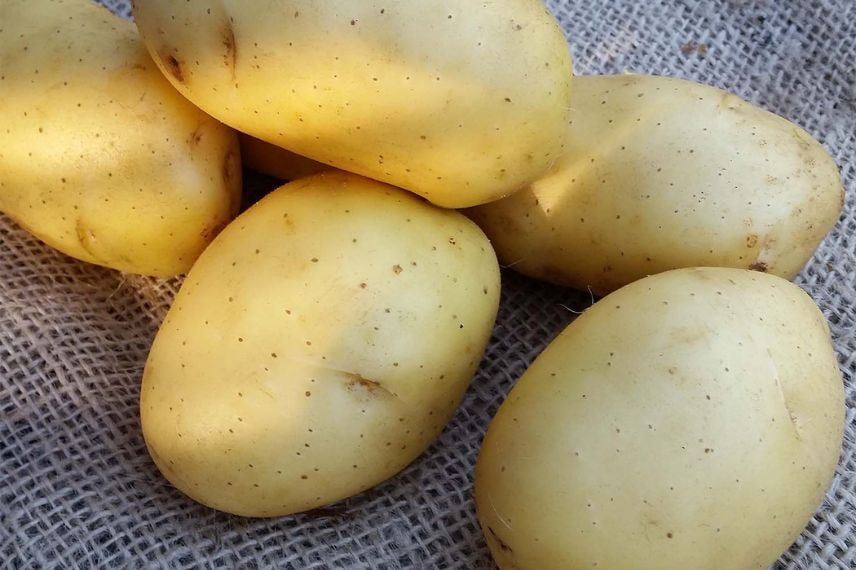
It has a yellow, very fine flesh that remains firm and tender when cooked. Its skin is also yellow. Very versatile in the kitchen, this potato is ideal for boiling or steaming, roasting, stewing, sautéing, or making chips. It boasts excellent culinary quality and is very tasty.
Quite similar to the ‘Charlotte’, it is therefore ideal for damp soils where blight frequently occurs.
Read also
Diseases and pests of potatoes‘Désirée’, the red-skinned potato
‘Désirée’ is a variety of potato that stands out thanks to its pink-red skin and yellow flesh. Originating from the Netherlands, this potato was added to the French catalogue in 1971. With a very good yield, this variety of medium to late maturity produces large, oblong, and smooth tubercles.
The plants of this variety are quite tall and upright, vigorous. The leaves are a beautiful deep green, full as they are not deeply divided, and flat. In the kitchen, ‘Désirée’ holds up well during cooking and absorbs little fat, making it an ideal potato for chips. Its floury flesh allows for the preparation of purées and soups as this potato crushes easily. 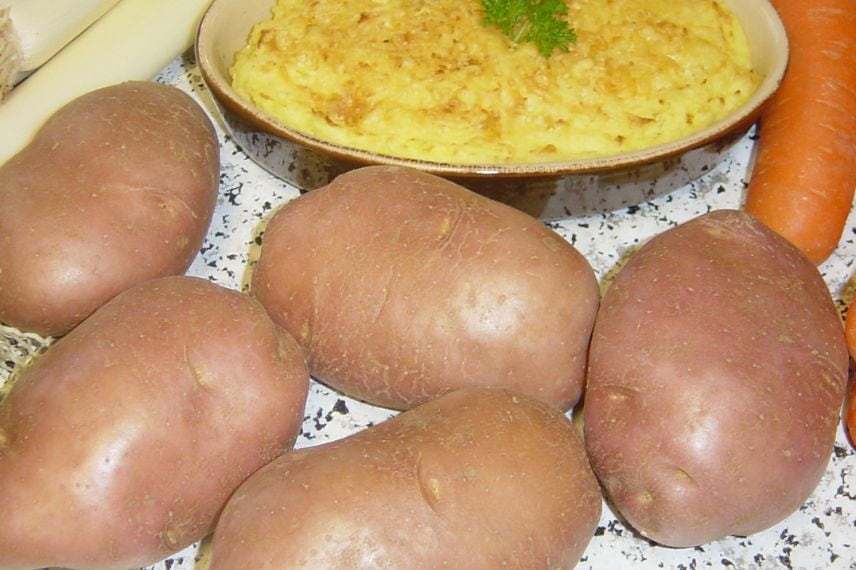
‘Désirée’ is harvested 120 days after planting. They store very well throughout the winter.
'Minette', a semi-early variety that stores well
Resulting from the cross-breeding of ‘Denise’ and ‘Agata’, the variety ‘Minette’ is semi-early with excellent taste qualities. It is a potato with a cycle of 110 days from planting to harvest. Very easy to grow, it benefits from good yield and beautiful tuber formation, qualities that can be complemented by its excellent storage during winter in a cool, dark place.
This variety produces oblong tubercles with pale yellow skin and yellow flesh that holds up very well during cooking. This characteristic makes it a perfect potato for steaming and preparing salads.
The 'JB007', a versatile potato
The ‘JB007’, an productive variety, resulting from the cross-breeding of ‘Adriana’ and ‘Carrera’, is relatively recent. Very easy to grow, it can be harvested 90 days after planting. Additionally, it stores well and is resistant to drought.
This variety produces round, very regular potatoes with pale yellow epidermis and white flesh. Their slightly floury flesh holds together well during cooking. This makes it very versatile for cooking: the ‘JB007’ is well-suited for preparing mash, stews, chips, and crisps, but it can also be used for gratins and oven dishes. Not to mention steaming, cooking in their skins, or sautéing. A truly all-purpose potato!
- Subscribe!
- Contents
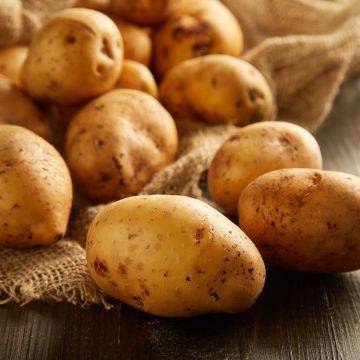
![[mildew-resistant potatoes]](https://www.promessedefleurs.ie/blogwp/wp-content/uploads/2022/12/pommes-de-terre-resistantes-au-mildou.jpg "[mildew-resistant potatoes]")
Comments