





























Planting a caladium bulb
In pots or in the garden
Contents
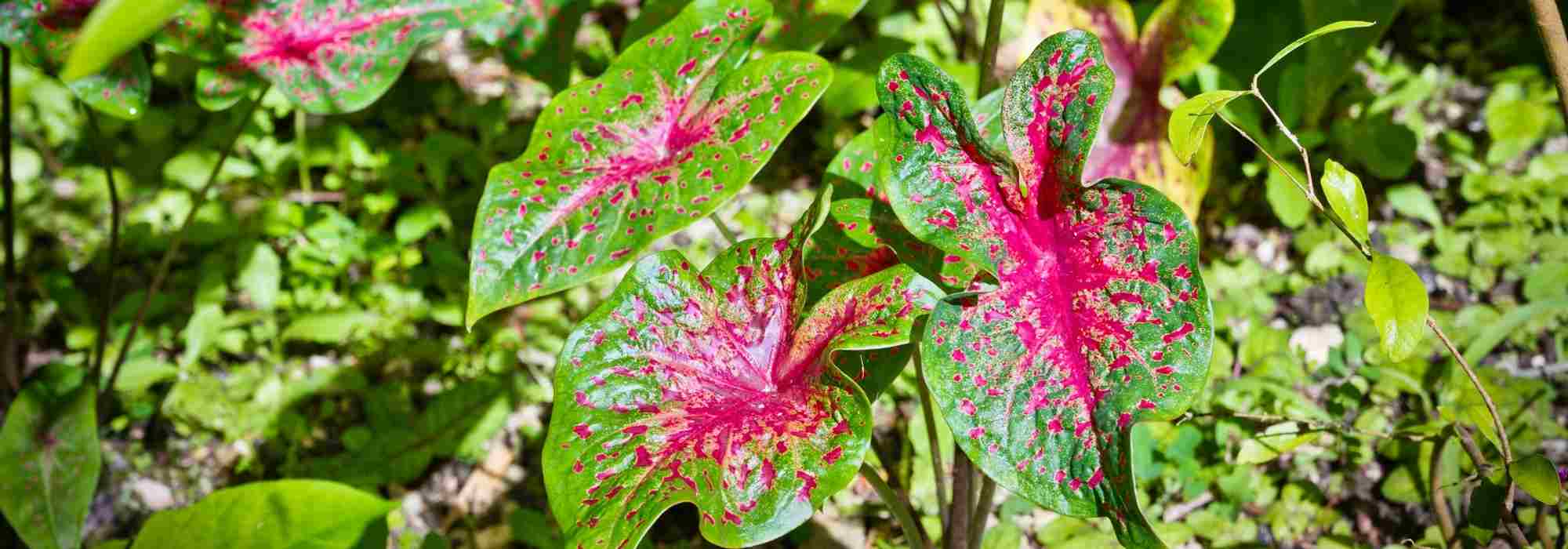
Caladiums or elephant ears are tropical bulb plants. They thrive in warmth, light (but not direct sunlight!), and humidity. Caladiums are especially valued for their magnificent foliage, which can be very colourful. Not hardy, these bulb plants can be grown in pots indoors, in a warm greenhouse, or on a veranda. However, they can also be attempted outdoors, in partial shade under trees, in soil that remains moist: the plant will then be grown as an annual, or care should be taken to lift the bulb from the soil in autumn to store it in a cool, dry place throughout winter.
→ Here are all our tips for successfully growing caladiums in pots indoors or in the ground outdoors.

The needs of Caladium
The soil or substrate must be rich, acidic, and moist. Caladiums are sensitive to heavy, poorly drained soils and dry conditions.
Caladiums are tropical plants that require a temperature between 20 and 25 °C (15° C being the minimum vital). Therefore, caladiums are best suited for cultivation in a warm greenhouse, conservatory, or indoors, provided sufficient humidity is maintained. However, they can also be attempted in open ground after the last frosts. In this latter case, caladiums will be grown as annual plants.
Caladiums require partial shade in open ground or gentle light indoors. Indoors, place your caladium in light, but not behind a south-facing window, as the sun will scorch the foliage. In the garden, plant your caladium in partial shade under trees.
Avoid placing your caladium near a heat source, such as a radiator, as this plant needs high ambient humidity.
Also, keep it away from drafts and dry air that tend to curl the foliage, whether indoors or in the garden.
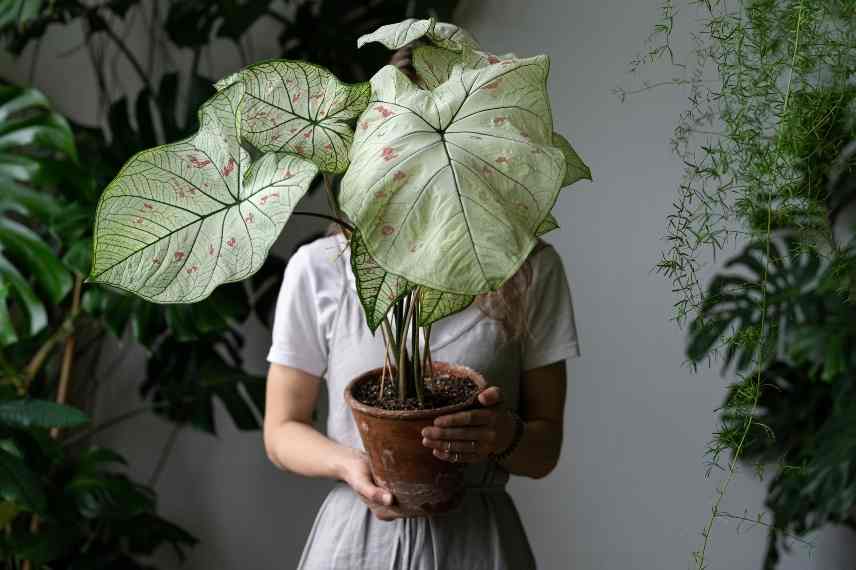 The Caladium has a tropical look!</caption]
Read also
Growing a caladium in a potOutdoor planting
Planting in open ground should be in partial shade, in humus-bearing soil, and after the last spring frosts.
- Loosen the soil a few centimetres: add some compost if you deem it necessary;
- Plant your caladium bulb, spacing each bulb about thirty centimetres apart: the tubercle bud should be facing upwards, cover it with 3-4 cm of soil;
- Water to thoroughly moisten the soil around the bulb(s);
- Water occasionally, especially in summer, to prevent the soil from drying out;
- If you wish to keep your caladiums from year to year: dig up the bulbs before the first frosts, around October (when the foliage has dried), and store them in some turf or sand, in a dry, cool place (15 to 18 °C) and in darkness over winter.
 Caladium planted in the garden
Discover other Caladium
View all →
Available in 1 sizes
Available in 1 sizes
Available in 1 sizes
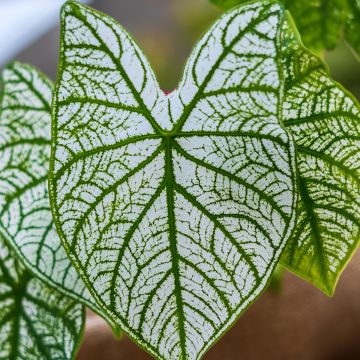
Available in 1 sizes

Available in 1 sizes
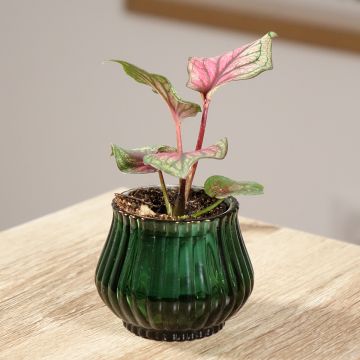
Available in 1 sizes
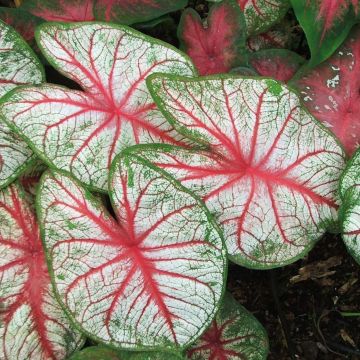
Available in 1 sizes
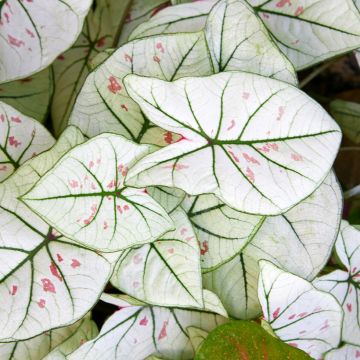
Available in 1 sizes
Available in 1 sizes
Available in 1 sizes
Potted planting for indoors
Terracotta pots are more durable and more porous: they help prevent excess water. In any case, choose a pot with drainage holes in the bottom. For small caladium bulbs, a pot with a diameter of 10 cm will suffice. For larger bulbs or for repotting every two years, a pot with a diameter of 15 to 20 cm will be perfect.
As for the substrate, a potting mix for green plants or houseplants will work very well.
Planting a caladium bulb in a pot:
- Place clay balls, gravel, or simple pottery shards at the bottom of the pot. This will further facilitate drainage;
- Fill with the appropriate substrate (as mentioned above);
- Place your caladium bulb in the centre of the pot and bury it about 2 cm deep;
- Fill the rest of the pot with potting mix and lightly press down with your fingers;
- Water well to moisten the substrate and eliminate any potential “air pockets” in the potting mix;
- Use a saucer under your pot to catch excess watering. This saucer can also be filled with clay balls or small gravel to retain some moisture.
If necessary, in the case of a pot that is too small, repotting should be done at the beginning of spring, around March-April.
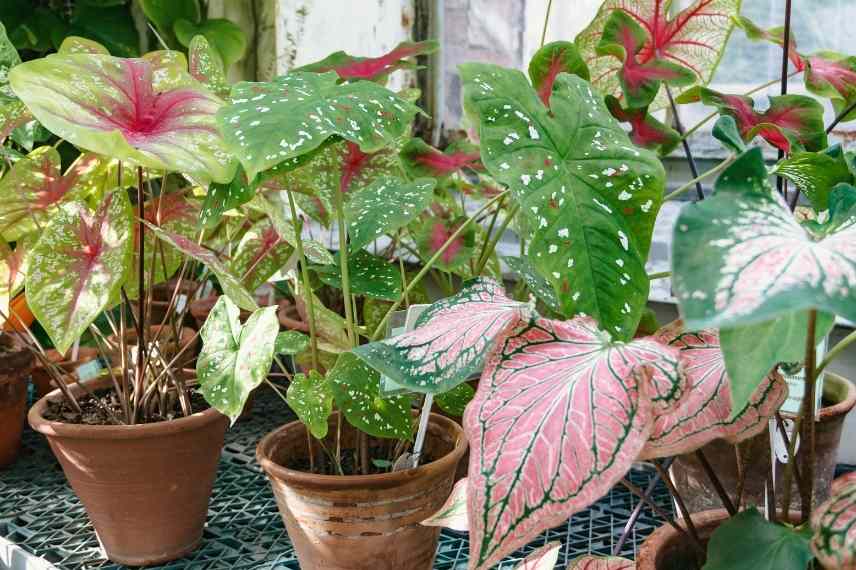
Caladiums in a greenhouse
Read also
How to design a tropical garden?Bulb Management in Autumn and Winter
Caladium enters dormancy in autumn when temperatures drop and light diminishes. This is a natural process. The leaves then begin to yellow and wilt. There’s no need to worry; this is a sign that it’s time to prepare the plant for winter. Here are the steps to follow:
- Reduce watering: gradually decrease the frequency of watering from the end of summer.
- Stop watering completely: once the foliage has completely dried, cease watering.
- Bulb extraction (optional): you can dig up the bulbs and gently clean them. Allow them to air dry for a few days. Then, store them in a cool (around 15-18 °C), dry, dark place, wrapped in newspaper, dry turf, or vermiculite. This step is not obligatory; you can also leave the bulbs in the ground.
- Pot conservation (alternative): if you prefer, you can leave the bulbs in their pot. In this case, place the pot in a cool, dry location, protected from frost, such as an unheated cellar or garage.
Restarting in spring and using a mini greenhouse:
In spring, when temperatures rise (ideally above 20 °C) and days lengthen, it’s time to wake the bulbs:
- Repotting (if the bulbs have been extracted): replant the bulbs in fresh, well-draining potting soil, placing them a few centimetres deep.
- Resuming watering: start watering sparingly, then gradually increase the frequency as the plant develops.
- Using a mini greenhouse: to encourage the start and growth of Caladium, especially if you kept it cool all winter, using a plastic mini greenhouse can be very beneficial. It helps maintain high temperature and humidity, recreating the tropical conditions that Caladium needs. Place the pot in the mini greenhouse and ensure it is in a bright location, but out of direct sunlight. Regularly ventilate the mini greenhouse to avoid excessive condensation and the risk of rot. Once the first leaves appear and the plant seems to be thriving, you can gradually remove the cover of the mini greenhouse to acclimatise it to the ambient air.
- Subscribe!
- Contents
Comments