





























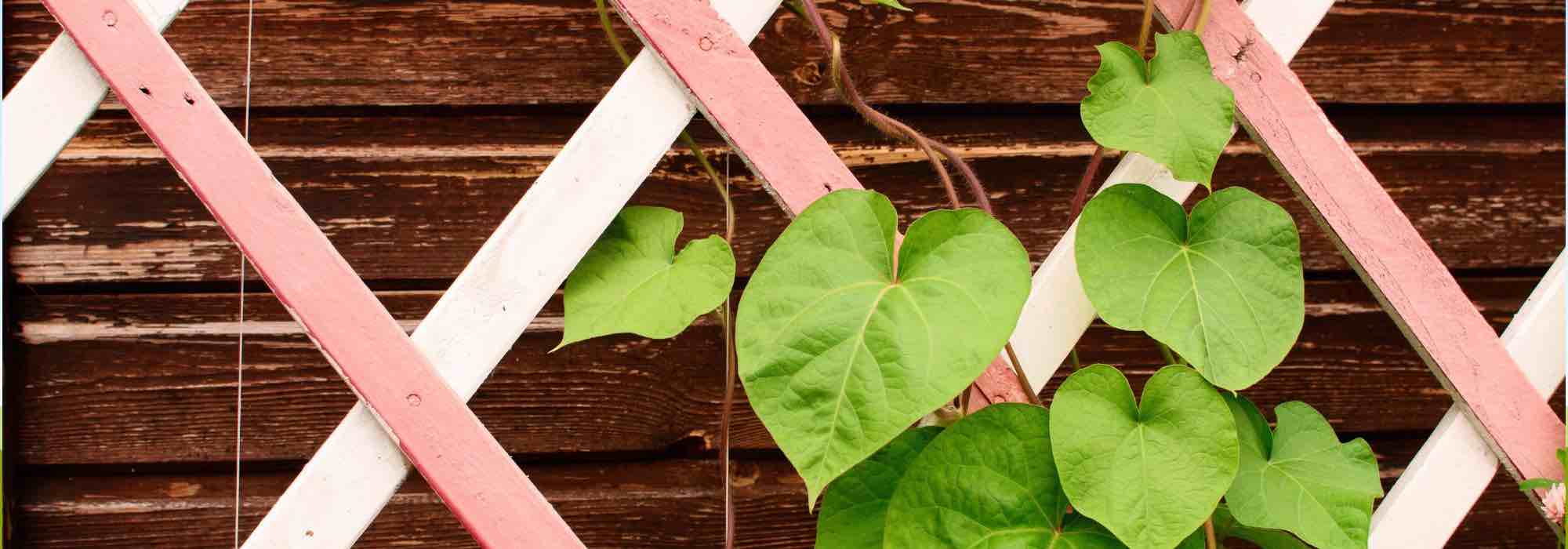
Plant stakes and supports: everything you need to know to choose the right ones.
Our guide
Contents
Choosing supports and stakes for your plants is like choosing the best friend for your favourite plant! Stakes and supports provide physical support to ornamental plants; they help to maintain their vertical growth, prevent drooping and enhance their overall appearance in the garden. Whether for climbing plants, long-stemmed flowers or heavy-blooming varieties, fragile varieties requiring extra support, the right choice of stakes and supports is essential to ensure their health and optimal development.
This article aims to help gardeners understand the different staking and support options available on the market and to choose those that best suit their specific needs. Whether you are growing climbing roses, sweet peas or clematis, there is a suitable solution for every type of ornamental plant.
Bamboo and wooden plant supports.
Bamboo stakes
Bamboo stakes are among the simplest and most economical options for supporting ornamental plants. Bamboo is a naturally robust and hardy material, offering solid support while blending harmoniously with the garden landscape. These stakes are available in a range of sizes, which makes them suitable for a wide range of plants, from small annuals to small climbing plants.
Bamboo is also naturally resistant to many pests and diseases, which makes it durable over time without chemical treatment. It is fairly flexible and can be adjusted or moved easily. Perfect for plants that need light support.
The main advantage of bamboo stakes lies in their ease of use. They are light and easy to handle, which makes installation in the soil straightforward without damaging plant roots. They are suitable for single-stemmed plants or those with vertical growth.
Ornamental plants such as sweet peas, dahlias, delphiniums and sunflowers benefit from this type of support. For optimum installation, push the stakes into the soil to a suitable depth, taking care to space them evenly for balanced plant support.
Bamboo stakes can crack and become brittle with moisture. Replace them as needed.
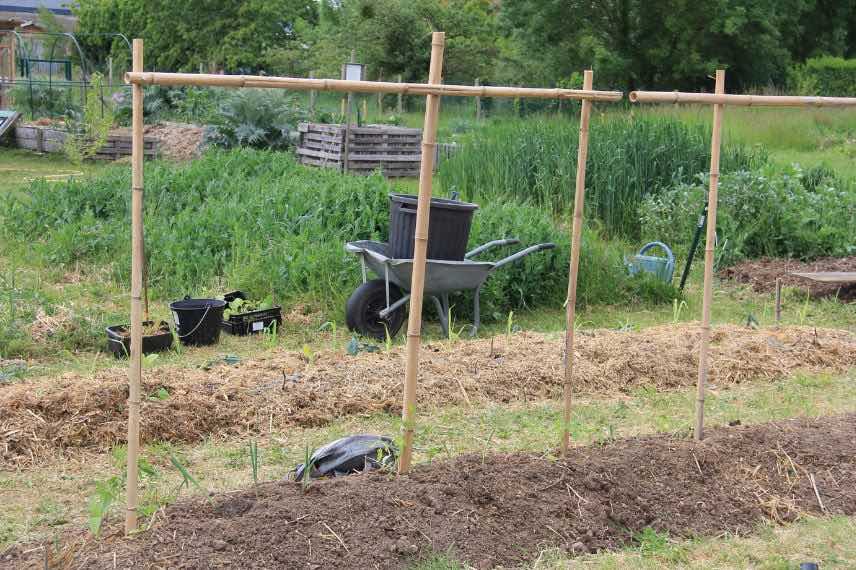
Bamboo stakes can be used alone or assembled together
Wooden stakes
Wooden stakes offer a hardy aesthetic. The wood is solid and can be cut to the desired size, and is available in a variety of wood species, which allows gardeners to choose the one that best suits their aesthetic and needs.
Wooden stakes are well suited to large hardy plants, as they are capable of supporting more than the bamboo. They come in different sections; the larger the diameter, the more effort required to plant them.
They are often made from treated wood to resist weather and insect attacks, which makes them more durable in harsh outdoor conditions.
They are well suited to young trees that require a strong anchor against wind, as well as sturdier climbing plants such as climbing roses and certain vine varieties.
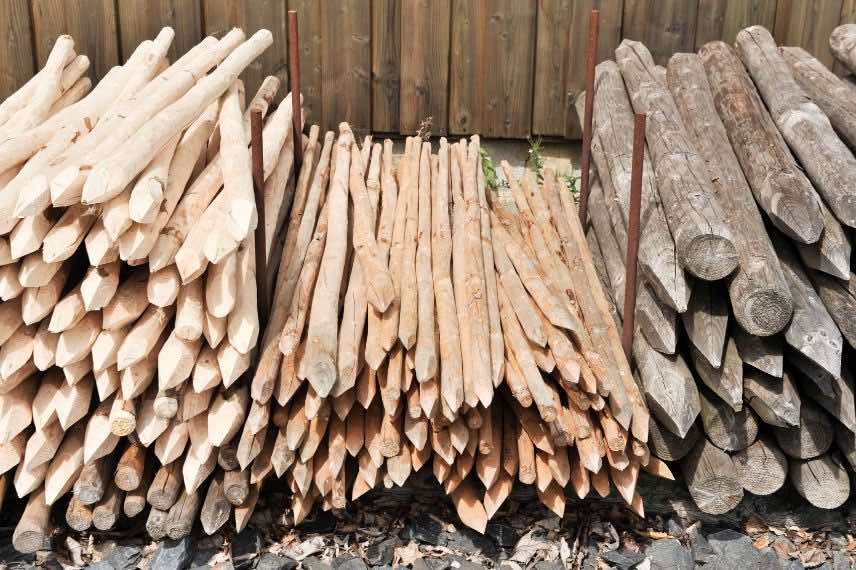
Different sizes and wood species for wooden stakes
Read also
Should trees be staked?Metal and wood trellises and trellising kits
Wooden Trellises
Wooden trellises offer a warm, natural touch to the garden. They blend harmoniously with the outdoor environment and create a rustic, welcoming atmosphere. Wood is a durable material which, if well treated or chosen (such as cedar or weather-resistant acacia), can last for many years. Wooden trellises are also highly adaptable and can be painted or stained.
They are particularly suited for climbing plants such as climbing roses, jasmine, and clematis. These plants benefit from the solid structure of wooden trellises to grip and rise.
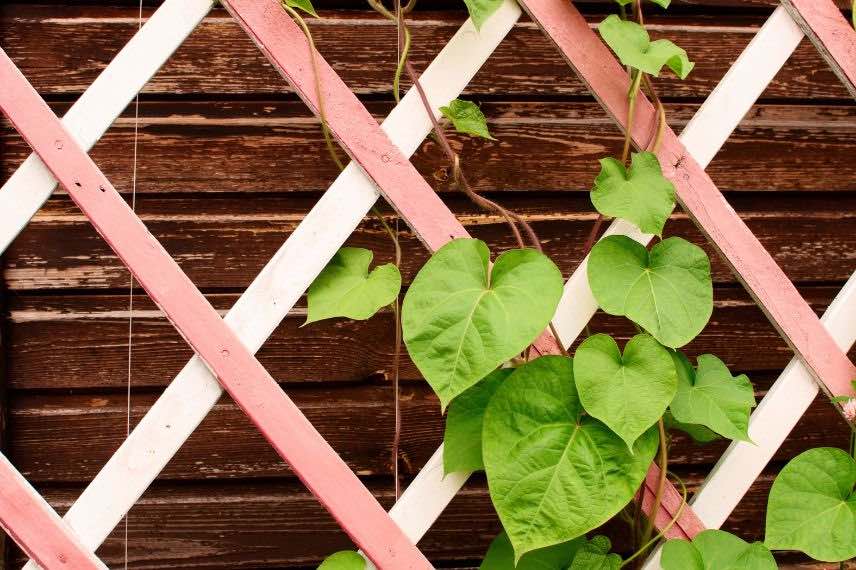
Wooden trellises can be painted
Metal Trellises
Metal trellises offer exceptional strength and durability. They withstand the weather, corrosion and insect pests. They offer a wide variety of styles.
Metal trellises are particularly suited for vigorous climbing plants such as certain grape varieties, passionflower and kiwifruit. They can easily support the weight of these plants without bending or breaking. Additionally, for contemporary-style gardens or for those seeking a long-term, low-maintenance support solution, metal trellises are perfect.
Trellising Kits
Trellising kits consist of stainless steel cables that are stretched to suit on a wall using wall plugs, nuts and lag screws. They are particularly sturdy as well as highly modular and can even accommodate a vigorous and strong plant such as wisteria.
Arches and arbours
Arches and pergolas are decorative and functional features that offer elegant support for climbing plants in the garden. These structures add a touch of charm and verticality to the landscape design, while offering ideal support for climbing plants with vigorous growth.
Arches are often used to mark a passage in the garden, while pergolas can create shaded and sheltered areas. Whatever their function, these structures provide sturdy and reliable support for plants, while creating attractive focal points in the landscape.
Installing arches and pergolas may require a certain level of skill and effort, especially for larger and more complex structures. It is essential to anchor them securely into the soil to avoid any tipping or weather-related damage.
It is important to periodically inspect the condition of the structure for any signs of damage or corrosion.
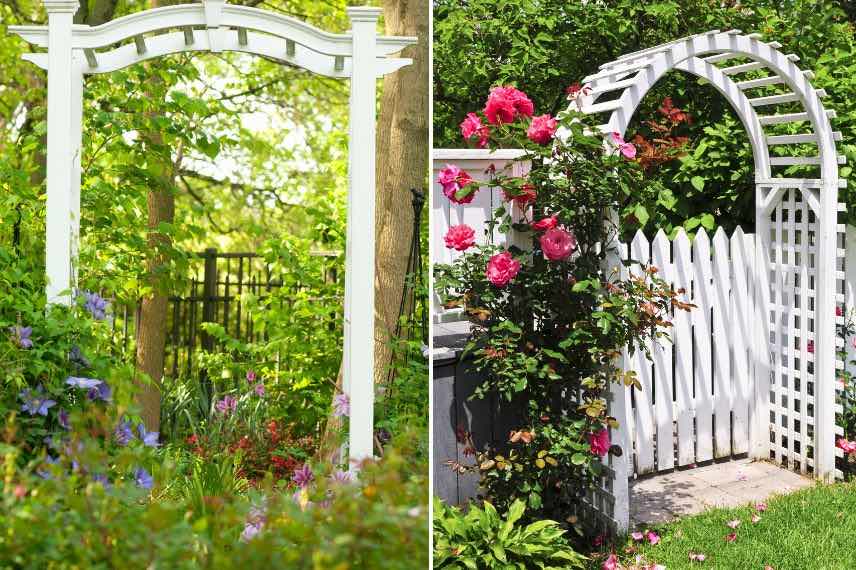
Arches mark a passage or an entrance
Read also
How to support peonies?Ropes and filaments
Planting circles
Planting circles are circular or semi-circular structures made from metal or plastic. They provide effective support for plants with large, heavy flowers that tend to sag or spread.
By placing them around plants from the start of their growth, planting circles help to maintain a compact and vertical structure, thus promoting harmonious growth.
Plants such as dahlias, peonies, delphiniums, greatly benefit from the support provided by planting circles. These structures prevent them from sagging under the weight of their flowers or leaves, while allowing them to bloom fully.
Installing planting circles is straightforward and generally only requires you to gently push them into the soil around the plant to be supported. It is important to position them so that they surround the base of the plant evenly, leaving enough space for its future growth.
Types of ties to avoid damaging plants
When it comes to supporting ornamental plants, choosing the right ties is important to avoid damaging delicate stems or plant tissues.Different types of ties are available, each offering specific advantages in terms of flexibility, durability and gentleness for plants.
- Gardening strings: Strings are simple and affordable options for tying plants to supports, but they are not the most durable.
- Velcro ties: Velcro ties are ideal for plants that require regular adjustment of their support. They provide a secure grip while allowing easy removal for plant care.
- Adjustable garden ties: These ties feature an adjustable mechanism that allows gardeners to easily adjust the tension according to the growth of the plants. They provide secure support while minimising the risk of stem constriction.
- Plastic-coated metal ties: It’s a more expensive option, but more durable than string, combining the strength of metal with the softness of rubber, which won’t harm the plants.
- Subscribe!
- Contents
Comments