





























Passion flowers: 5 captivating varieties to discover
Spectacular flowering varieties
Contents
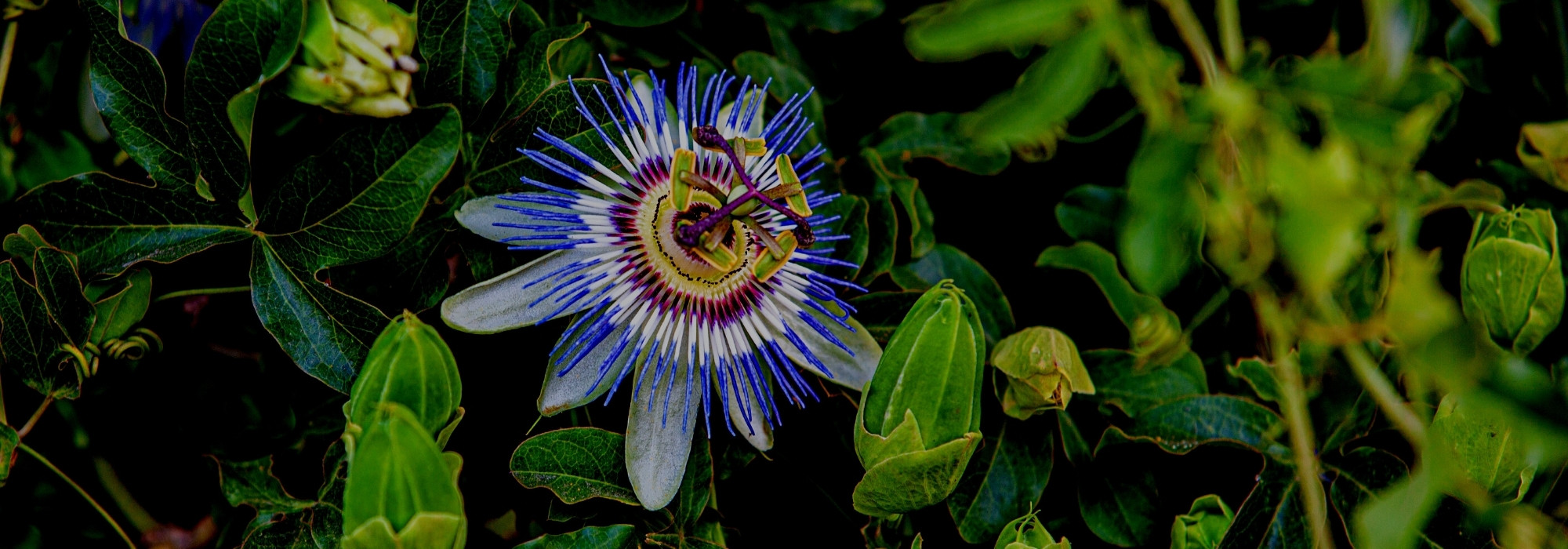
The Passionflower or ‘Passion Flower’ is a climbing plant notable for its striking, intricately patterned and colourful flowers. The inflorescences are composed of 10 tepals surrounded by a crown of coloured filaments which give them their distinctive character. This exotic flowering attracts admiring glances and can bear edible fruit, the famous passion fruit. This vigorous climbing plant clings by its tendrils and quickly rises to over 4 m in height to cover fences, walls or pergolas which it flowers abundantly from June to the first frosts. Whether planted in the ground or in a pot, it will be generous with plenty of sun and a fertile, deep soil that stays moist. More or less hardy, depending on the variety it should be grown in a pot and kept out of the frost in a greenhouse or conservatory during the winter. Here is a selection of passionflowers with some of the most fantastic and rare blooms!

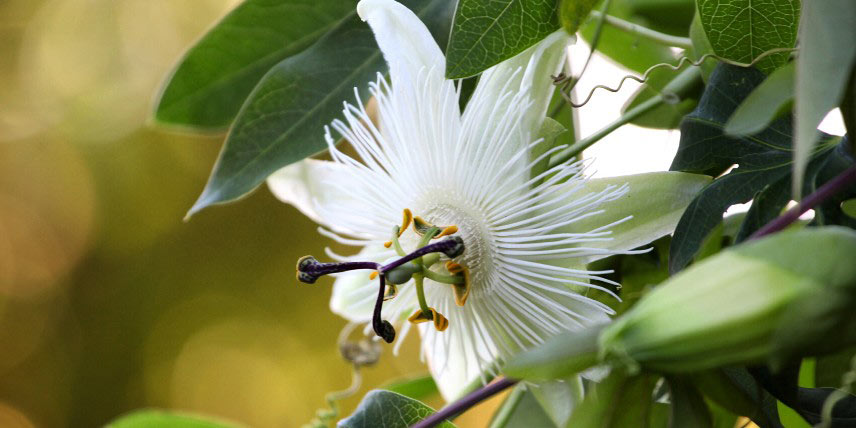
Passiflora 'Snow Queen'
The Passiflora ‘Snow Queen’ stands out for its large pure-white flowers adorned with a complex and delicate heart. Like snow stars, measuring 10–12 cm in diameter, they bloom ceaselessly, from June to September, in ten petals and sepals adorned with long white cilia. This crown of filaments supports a heart of four green stamens and a pistil divided into three black stigmas. Very fragrant, they release an exotic, fruity, tangy scent. It produces decorative, edible fruits, but not particularly tasty. Its foliage, a dark glossy green, is thick and semi-evergreen to evergreen depending on the severity of the climate. It can reach up to 4 metres, and will quickly drape walls, fences, lattices, porches and trellises. Hardy to -8°C, it will only establish in the open ground in mild climates (coastal regions) in any well-drained, light, fairly deep and not too dry soil, in sun and sheltered from cold, drying winds. Pair it with companions such as large-flowered summer-clematis or climbing roses in soft hues to create subtle and elegant contrasts.
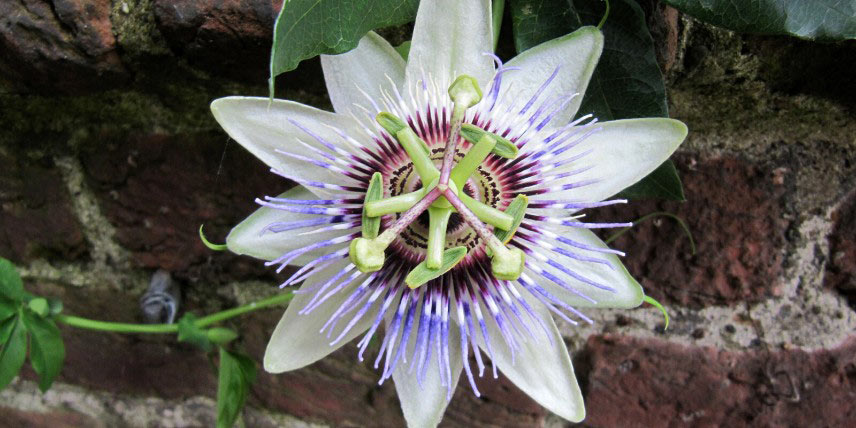
Passiflora caerulea ‘Clear Sky’
Here’s another variety with very graphic, multi-toned flowers. The Passiflora caerulea ‘Clear Sky’ is characterised by very large flowers reaching 11 cm in diameter, which bloom from May to October.
<-- Note: The sentence above has been kept in bold as in the original structure; the following sentence continues in bold as part of the same block -->
This passionflower climbs to a height of around 3 metres on any sunny support, to the south or west. Capable of withstanding frosts down to around -8°C, this climber can be grown in the ground in temperate regions. In cooler climates, plant it against a well-exposed wall or in a tub to protect in winter. It adapts to ordinary well-drained soil, even calcareous soil. For an exotic yet delicate display with intoxicating fragrances, pair it with Common Jasmine or with lavenders.
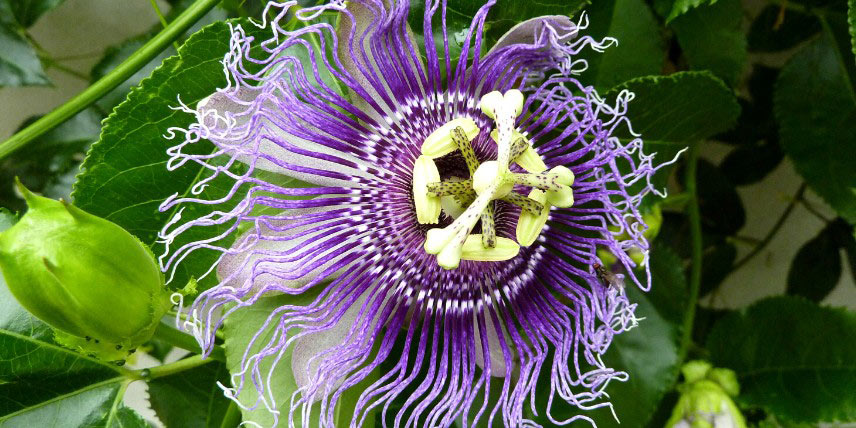
Passiflora 'Byron Beauty'
The Passiflora ‘Byron Beauty’ exhibits early, from June, its large violet flowers all fringed about 10–12 cm in diameter. The crown of long filaments that begin with dark violet at the base, evolving to a pearly white fringed at the tip, almost entirely hides the pale collar of sepals and petals. The heart of the flowers bears prominent green stamens, and emits a delicate fragrance. The flowers produce edible yellow fruits when ripe. Relatively frost-tender, hardy to 5°C, this passionflower should be grown in a pot in our most exposed-to-cold gardens. In milder regions, it will settle in any well-drained, light, fairly deep soil, remaining fairly cool, in full sun and sheltered from the wind. Vigorous, with its 3–4 m height and its spectacular flowering, it will flower on a pergola or trellis in the company of blue clematis or white clematis to give your garden or terrace a touch of romance and bohemian charm.
Read also
Passion flower: the hardiestPassiflora ‘Anastasia’
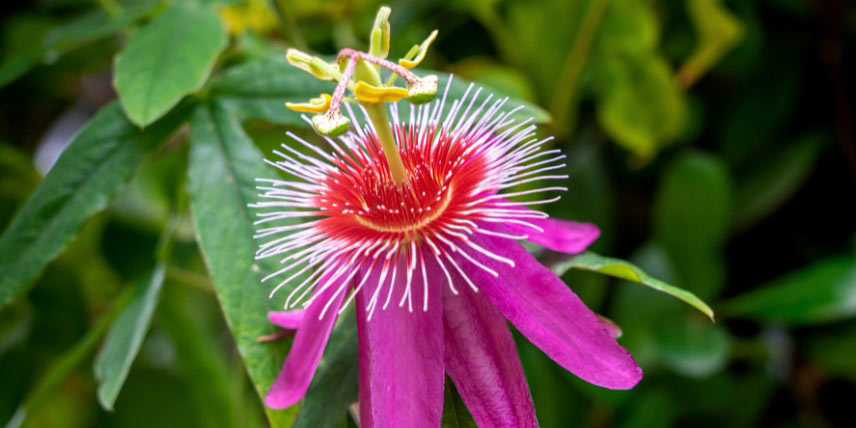
The flowers of Passiflora ‘Anastasia’ are stunning, with vivid pink tepals washed with paler pink, elegantly contrasting with a crown of white filaments that extend into raspberry red toward the centre. The vivid pink heart is occupied by yellow stamens splashed with red. All summer, from July to September, the large radiant flowers, 10–12 cm in diameter, bloom continuously. Its long shoots clad in luxuriant dark green glossy foliage, more or less evergreen, climb up to 2–3 m in height. Its compact size makes it suitable for planting in a pot to dress a terrace or a veranda. It is an excellent climbing plant for a southern garden, for its stellar beauty is matched only by its considerable frost sensitivity as this passionflower fears temperatures below 5°C. Under our mild climates, it can be planted in a sheltered exposure, under a thick protective mulch. This is its only drawback, because it manages to grow in any deep and well-drained soil. Thanks to its modest size, it will easily find a place in a small garden beside a trumpet creeper, another vigorous and cheerful climbing plant.
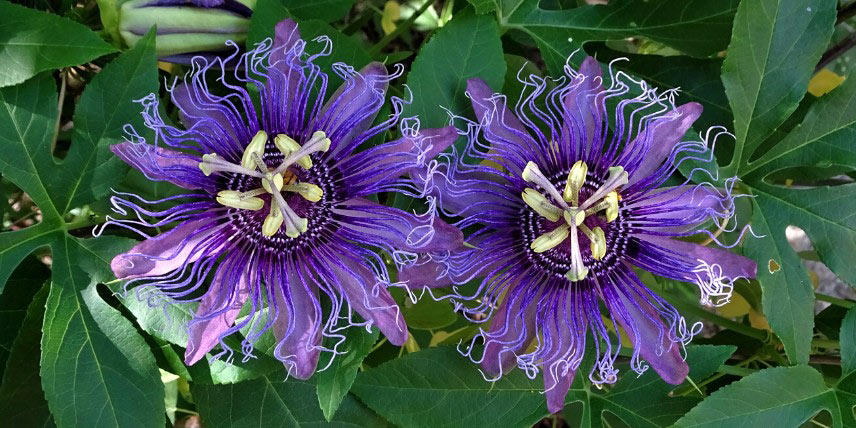
Passionflower ‘Incense’
Passiflora ‘Incense’ stands out for its remarkable flowering, with large blue-violet flowers which measure about 10 to 12 cm in diameter. Each flower opens with sepals and petals in a deep violet, almost purple, framing a spectacular crown of bicolour filaments. These white-striped filaments near the centre display shades of purple and blue, evolving toward a softer sky blue at the tips. The centre of the flowers is accentuated by prominent stamens and a white pistil, adding to their exotic appearance. The flowering exudes a fruity, subtle and pleasant fragrance. The flowers give way to small edible, ovate fruits with delicious and fragrant flesh. This vigorous climbing plant, alas not very hardy, bears large scented flowers from the end of summer to the approach of winter. Exotic and lush, it tolerates short spells of frost around -8°C in a sheltered position. Climbing up to 5 m in height, it flowers on walls, fences, lattices and trellises. You will create a permanent winter display by pairing it with an Clematis cirrhosa in white, cream or purple.
- Subscribe!
- Contents

Comments