





























Maintaining a garden pond through the seasons
Our tips for a well-maintained water feature that stays healthy all year round.
Contents
Having a water feature in the garden is beneficial in several ways. Beyond aesthetics, it promotes biodiversity and adds a refreshing touch by increasing humidity.
From the smallest pond to the largest water feature, it is important to maintain the balance of this ecosystem throughout the year. This involves a few maintenance tasks across the seasons. Discover our tips for keeping a water feature functional, as beautiful as it is healthy.

Why maintain your pond all year round?
The balance of a pond rests on an ecosystem that can sometimes be put under strain. Certain weather conditions can affect how it functions, particularly during abrupt temperature changes, frost, and heatwaves.
The health of your water feature will also depend on other factors: volume, exposure, presence of fish or other animals (amphibians, insects…), growth of plants, etc.
An overly fluctuating environment will create imbalances: wildlife may disappear, unwanted vegetation may spread, and ornamental plants may wither. To keep a pond as beautiful as it is healthy, a few seasonal actions are all that are needed.
In spring: the season of renewal and awakening in the pond.
Temperatures are gradually rising, daylight is lengthening as the day goes on, fauna and flora are waking up.
Aquatic plants
Vegetation is waking from its slumber, so it’s the ideal time to tend to aquatic plants.
When the last frosts have passed (from March to mid-May depending on the region), you can remove your frost-tender plants from their winter quarters and replant them in the pond.
This is also the time to check that your plants have enough space and substrate in their containers, if any. Don’t hesitate to repot or add a supplement of potting compost suitable. Alternatively, resume fertilisers.
Finally, you will be able to carry out your divisions or cuttings. Take the opportunity to plant new aquatic plants in your water feature.
Fish
Fish will also gradually come out of their resting period. Resume feeding gradually, as soon as temperatures again approach 10°C.
Monitor their population, to prevent them from becoming too numerous and upsetting the water quality.
Spring is also the season for the return of predators, such as herons. If necessary, place a scare device or a protective net over your water feature.
Managing pests
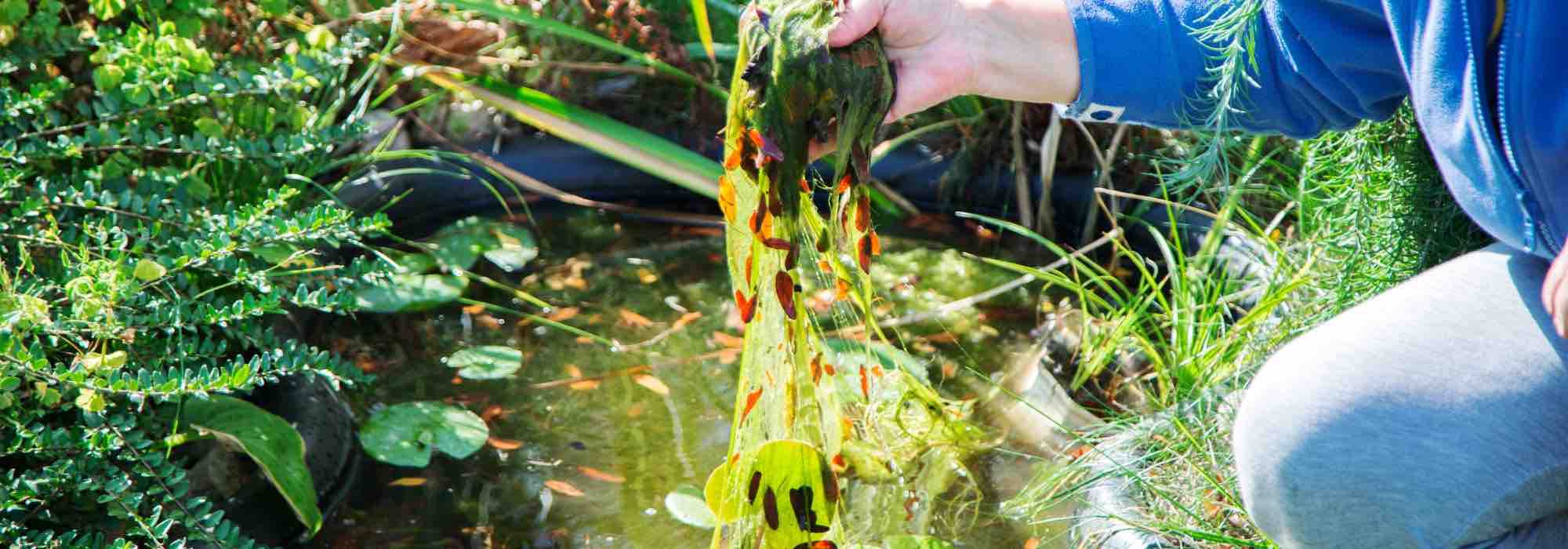
As the warmth returns, some unwanted plants will take the opportunity to proliferate. These include filamentous algae or duckweed. If your pumps and filters were switched off over winter, now is the time to restart them and ensure they are operating properly. Avoid excessive additions of organic matter.
Regularly remove overly expansive plants using a pond net or a surface skimmer (surface vacuum), before they become unmanageable. If you use an anti-algae treatment, ensure that it is compatible with aquatic life in your pond.
To learn more:
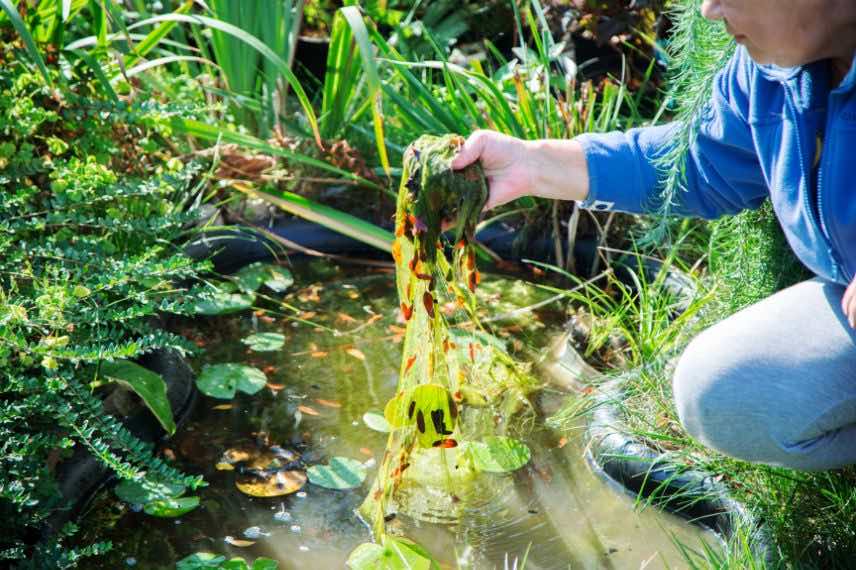
Cleaning algae in spring
In summer: maintain water level and water quality.
With the heat and the summer drought, the water in your pond can evaporate. Check its level, and don’t hesitate to top it up if needed. Prefer rainwater at room temperature to chlorinated tap water.
Check the water quality and ensure it is well oxygenated: if the fish have to rise to the surface to take a breath, that means it is not sufficient. Make sure your filtration system is still running smoothly. If necessary, add fountains, cascades or an aerator.
Also inspect your plants to quickly spot any parasitic infestation. Aphids, for example, will be washed away with a simple jet of water. Pruning faded flowers will also stimulate the production of new buds.
Apart from that, summer is a season that requires less pond care: life goes on.
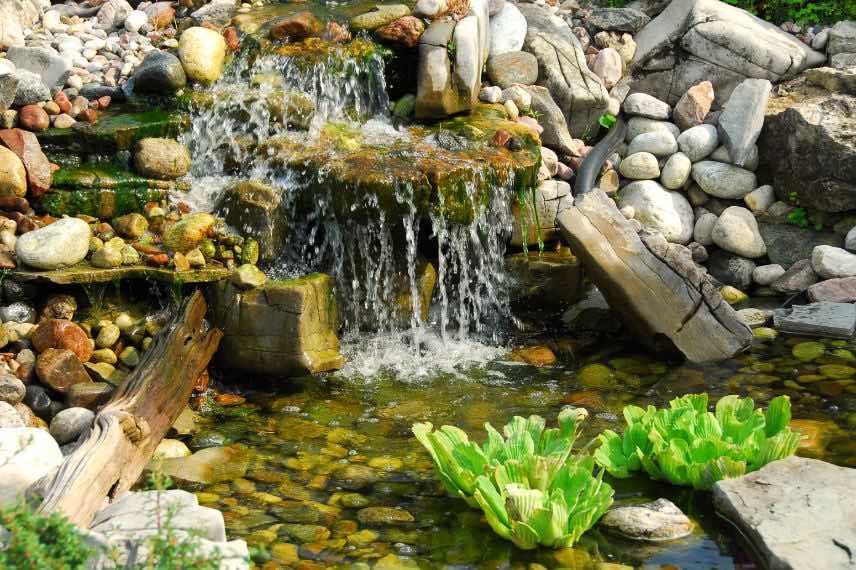
Cascades contribute to the oxygenation of ponds
Autumn: cleaning and storage of the water feature
Autumn brings changes in temperature, the return of rain, and even the first frosts, which gently usher in the coldest season of the year. It is therefore the ideal time to carry out cleaning and tidying of the pond.
The cleaning
With the arrival of autumn, most plants will enter dormancy. Their above-ground parts may disappear; the leaves of trees and shrubs fall, the flowers wither. All these organic wastes can affect the balance of your water feature. As they decompose, they exhaust oxygen reserves and can even clog the filtration system. Moreover, they increase the amount of nutrients, which will favour the growth of algae when the fine weather returns.
Therefore remove regularly dead leaves and other plant debris using a pond net. Do this before they have time to decompose and place them on the compost. If you have a large pond or water garden, we recommend wearing rubber boots and suitable equipment. A pond vacuum will help remove sediments and debris from the bottom of the pond.
To limit the accumulation of dead leaves and other debris, you can place a protective net over your pond at the very start of autumn.
It is also the ideal season to clean all movable elements of your pond. Take the opportunity to dismantle your filtration and treatment systems to clean them in clear water. Rinse all components (foams, beads…) carefully.
Take the opportunity to check the condition of your equipment, for any signs of wear and tear and possible leaks in pipes, pumps or electrical components.
We recommend applying the same approach to decorative items installed in and around your water feature: fountain, sculpture, rock, etc. Clean them, switch off the fountains and place the most fragile decorations in a frost-free sheltered place.
The protection of aquatic plants
At the end of autumn or the start of winter, prune the Aquatic plants: remove faded flowers, take out the foliage and damaged stems, as well as rotten rhizomes.
The hardiest plants can be left in the pond. This is usually the case for native plants that grow naturally in our regions. For others, depending on their frost resistance, you may:
- Immerse them deeper, where the water is warmer;
- Bring them indoors under frost protection, in a container filled with water.
Proceed as soon as temperatures drop below around 8°C. Do not fertilise during this period any more.
For more information:
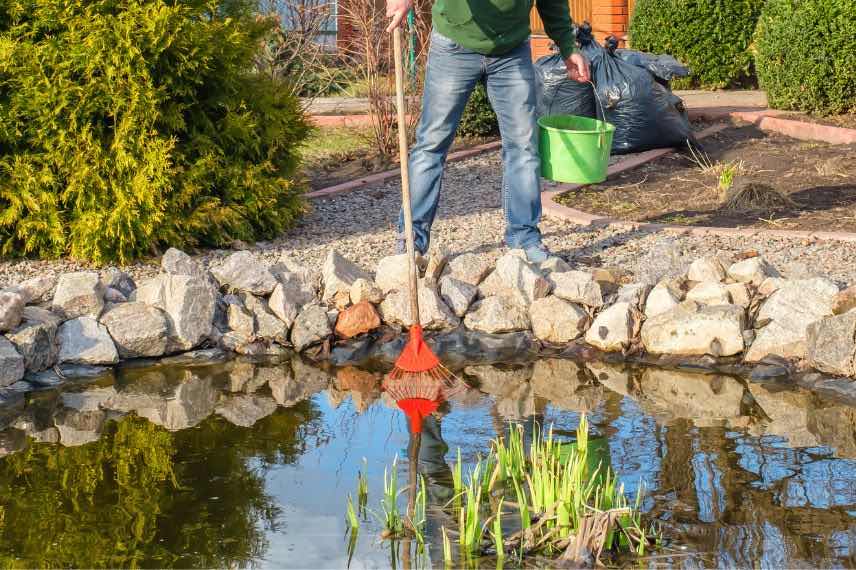
Prune the plants and remove debris in autumn
In winter: prevent frost damage
In this cold season, the pond is most at risk from falling temperatures and frost.
Water management
Several factors can influence water quality. This includes the cold settling in this season, which can lead to changes in pH, water hardness, nitrate levels, but also the amount of oxygen available.
During this period, don’t hesitate to test the water regularly and carry out any necessary rebalancing. There are very handy kits, which you can easily find online or in shops. For reference, pH should ideally be around 7.
Avoid any agitation of the pond, which would mix the cold surface water with the warmer water at depth.
Protecting the pond against frost
To help fauna and flora, it is best to stabilise the water temperature as much as possible and to proceed with a gradual reduction. To do this, you can use a pond heater, especially in regions with harsh winters.
Moreover, it is essential to ensure that your pond is never completely covered with ice in winter, in order to maintain good oxygenation (gas exchange between air and water). It is essential for maintaining aquatic life. You have several options: installing a pond heater, setting up a float (water bottle, balloon…) or an anti-ice bell, adding an aerator, protection of above-ground walls, etc. Choose according to your budget, but also the severity of your climate.
If your pond is entirely covered with ice, act quickly by placing a container filled with warm water on the surface. This will gently reopen an opening to allow oxygen to circulate again. Never break the frozen surface of your water feature with a hammer or any ice pick: the noise and vibrations stress aquatic animals and can cause irreversible damage.
Fish
A drop in temperatures will slow the metabolism of the fish. Ideally offer them season-specific feed, which will be easier to digest. Gradually reduce the amounts of food, until feeding ceases when temperatures fall below 6°C. The fish naturally fast during winter.
The other animals in your pond will be delighted to enjoy some hiding places and shelters against the cold: consider leaving piles of stones, logs or evergreen foliage nearby.
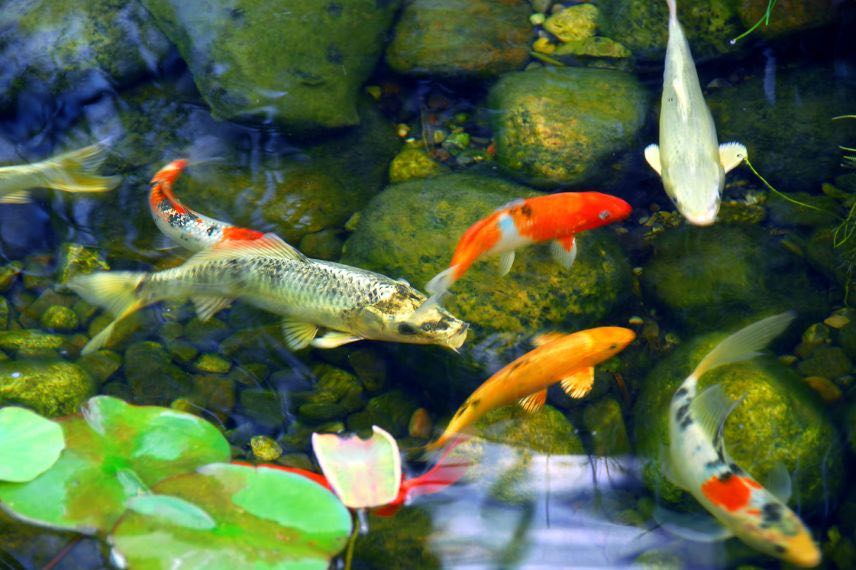
Adjust fish feeding in winter
- Subscribe!
- Contents
Comments