





























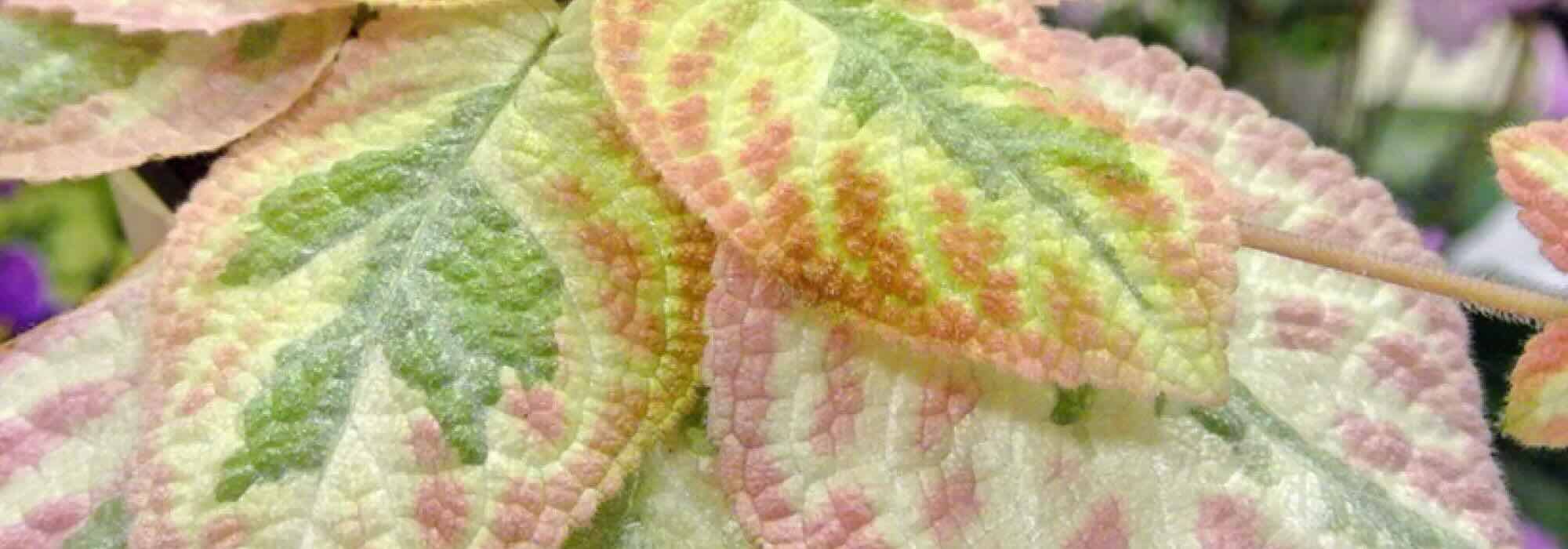
Indoor plants with colourful foliage: brighten up your decor!
Indoor plants with vibrant colours.
Contents
If flowers have long been the stars of green interiors, colourful foliage now asserts itself as a graphic, original and durable alternative. Some plants indeed offer leaves in shades of pink, purple, red or even black, with patterns sometimes more expressive than the loveliest flowering.
These decorative foliages have the advantage of staying attractive all year round and help to structure interior decor by bringing colour, texture and depth, even in the darker corners of the home.
In this article, discover a selection of indoor plants with truly colourful foliage, as well as tips on how to pair them well. To create a living focal point in your living room or to enliven a quieter corner with a touch of subtlety, there’s bound to be a plant that will find its place in your home.

Houseplants with coloured foliage that enjoy light
Some plants with intensely coloured foliage require a good level of light to fully express their colours. Without sufficient light, their vivid colours may fade, or even disappear. These species are ideal near a well-exposed window (without direct, scorching sun) or under intensified artificial lighting.
Coleus (Solenostemon scutellarioides)
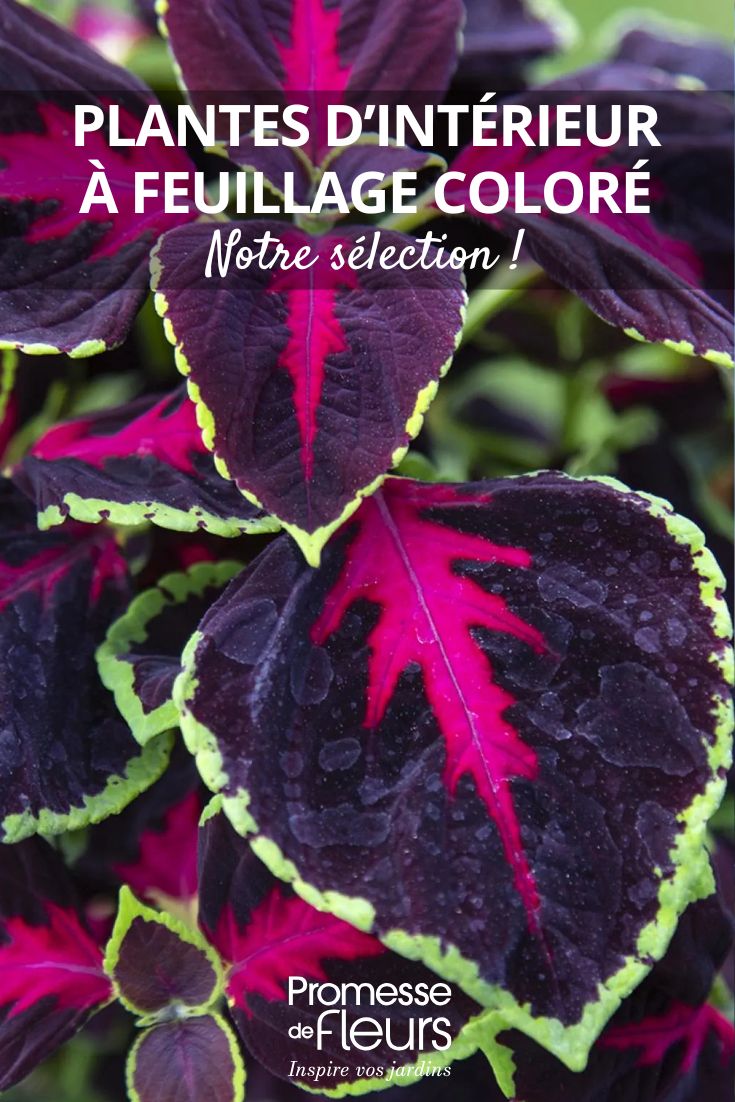
The Coleus is a genuine plant palette. It offers a wide range of vivid colours: purple, fuchsia pink, lemon yellow, lime green, sometimes combined on a single leaf. It grows quickly, but beware of letting it dry out completely.
- The most colourful varieties: Coleus Mezmerize Chocolate Rose, in deep purple, neon pink and soft green, ‘Spacecake’ in green, yellow and fuchsia pink, Copinto ‘Bloody Mary’ in cherry red and pale yellow.
Croton (Codiaeum variegatum)
The Croton is known for its thick, glossy leaves, often veined or speckled with red, yellow, orange and dark green. Don’t hesitate to give it direct sun in the morning or late afternoon to intensify its colours. All varieties are well coloured.
Aeonium
Aeonium is a rosette succulent that is grown indoors near a south-facing window and ideally outdoors in fine weather. Some varieties stand out for their intense colouring such as the famous ‘Schwarzkopf’ which forms an almost black or deep purple rosette that immediately catches the eye or ‘Garnet’ with red rosettes. ‘Medusa‘ develops superb carmine, green and yellow tones.
Caladium
Grown from bulbs, Caladiums offer translucent leaves and spectacular patterns of marbling, veining or speckling in pink, red, white or pale green. They require high ambient humidity. It is a seasonal plant that goes dormant in autumn.
Iresine
With its bright red, purple or magenta foliage, Iresine is one of the boldest plants for colour, nicknamed the blood plant for this reason. It grows quickly and can be pruned to maintain a compact habit. Learn more in our comprehensive feature on Iresine.
Hypoestes
Hypoestes is a small plant with speckled leaves of bright pink, red or white on a green background. The brighter the light, the sharper the colours. It can lose its colours if it lacks light or becomes too etiolated.
Tradescantia
Tradescantias are beautifully coloured and feature striped or bi-coloured leaves with metallic sheen: violet, silvery, green, pink. Some varieties are very intensely coloured.
The most intense varieties: Tradescantia zebrina ‘Pink Paradise’, T. pallida ‘Purple Heart’.
Episcia
Less well known, the Episcia, a cousin of the African violet, is distinguished by velvety foliage, often coppery, chocolate or olive green, with metallic highlights. Not easy to grow, it needs high ambient humidity.
- The varieties to discover for their intense colours: ‘Malayan Gem’, ‘Pink Brocade’, ‘Silver Shield’.
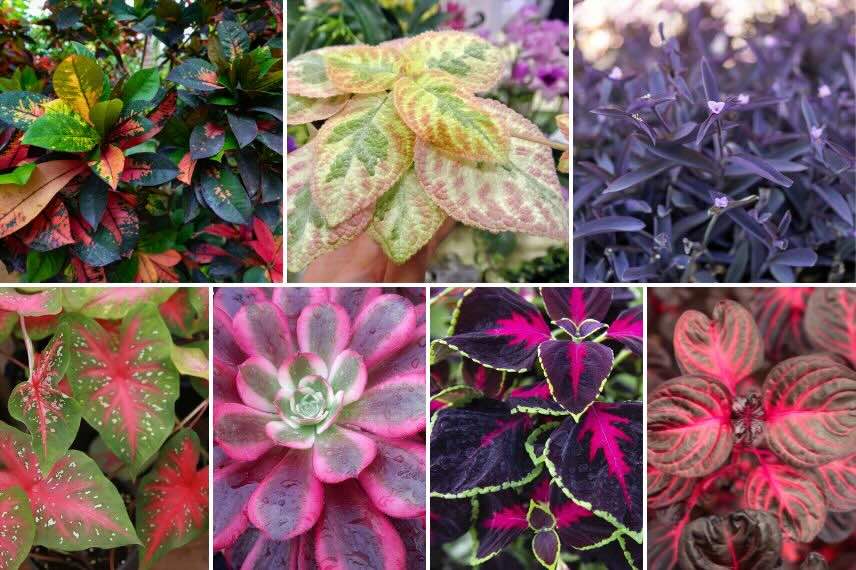
In clockwise order: Croton, Episcia ‘Pink Brocade’ Tradescandia ‘Purple Heart’, Iresine, Coleus Mezmerize Chocolate Rose, Aeonium
Read also
Ideal indoor plants for a conservatoryHouseplants with colourful foliage for medium light.
Not all colourfully coloured plants need full sun to shine. Some species are perfectly happy in soft or indirect light, which makes them ideal for north-facing rooms, shaded corners or dim interiors.
Calathea
The Calathea is a champion of graphic foliage: contrasting veins, purple undersides, satin reflections… These plants are also known for their leaves that fold up in the evening. They prefer soft light, a humid atmosphere and regular, not excessive, watering.
- The very colourful varieties: Calathea ‘Misty Red’ and ‘Crimson’ in pink and purple almost black, Calathea roseopicta ‘Rosy’,
Fittonia
Also known as the “mosaic plant”, the Fittonia is a small trailing plant that features leaves with strong veining in white, pink or red depending on the varieties. It is ideally grown in a terrarium, because its humidity requirements are high.
Begonia Rex
Rex begonias are the indoor begonias the most colourful, cultivated for their foliage in spectacular tones: metallic pink, silver, purple, deep green, with undulated or spiralled textures.
- Varieties to discover for their intense colours: ‘Red Kiss’, ‘Dark Mambo’, ‘Red Heart’.
Peperomia
Some Peperomias display shades of burgundy, silver or copper, with a compact habit ideal for small spaces. Look especially at the caperata-type wrinkled-leaf Peperomias. Peperomias with succulent leaves mainly have green leaves. They tolerate medium light well and require little maintenance, provided you avoid standing water.
- Varieties with shimmering tones: Peperomia caperata ‘Quito’, ‘Montevideo’, ‘Luna’.
Hemigraphis
The Hemigraphis plant with embossed and glossy foliage takes its name from its violet and metallic reflections. It is particularly decorative in hanging baskets or shade arrangements. Prune regularly to encourage a dense habit.
Oxalis triangularis
The purple shamrock is an elegant plant with triangular leaves that open and close with the light. It also produces small pink or white flowers. It is a bulbous plant that can be placed into dormancy so that it re-emerges more strongly in the warmer season.
Aglaonema
While some aglaonemas are simply variegated, many modern varieties showcase superb pink, red or silver tones. Not particularly demanding, they tolerate moderate light.
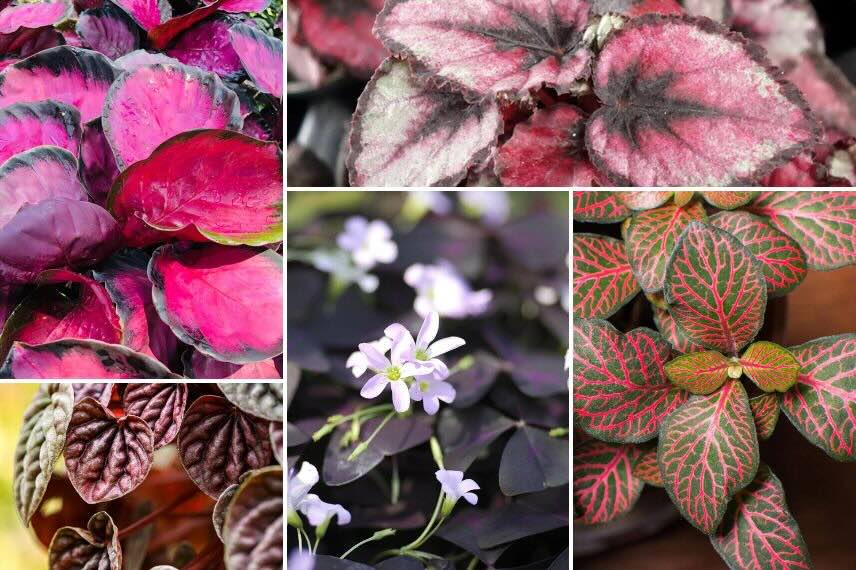
Calathea ‘Misty Red’, Begonia ‘Red Kiss’, Fittonia, Oxalis triangularis, Peperomia caperata ‘Quito’
Creating a plant display with colourful foliage.
Colourful foliage plants are expressive by nature, but combining them tastefully allows you to create a true plant display, living and evolving. By playing with colour, textures, heights and containers, you can transform a simple grouping of plants into a strong focal point, as decorative as a piece of furniture or a painting.
Pair colours with intention
Rather than amassing colourful plants at random, it’s worth thinking in harmonies:
- Vivid contrasts: pair purple foliage with bright green or silvery tones.
- Soft hues: vary the shades around pink.
- Pops of colour: make a very colourful plant stand out amidst others with plainer foliage, such as a Coleus at the centre of a dark-green display.
Play with leaf textures and shapes
Contrast isn’t limited to colour. Leaves can be textured, smooth, thick, fine, glossy or matte.
Pairing different leaf types adds depth to the display.
Vary heights and growth habits
For a dynamic display, think about mixing growth habits: combine low-growing or creeping plants with those with a vertical habit or forming a rosette, alongside trailing or hanging plants.
Use risers, shelves, hanging baskets or pots of differing heights to create depth.
Choose containers that showcase them
Pots play an important role in overall harmony:
- Neutral or natural colours (terracotta, white, grey) to let the foliage express itself fully.
- Dark pots to make light or variegated foliage stand out.
- Coloured pots only if they coordinate with the plants’ colours; otherwise risk a look that is too busy.
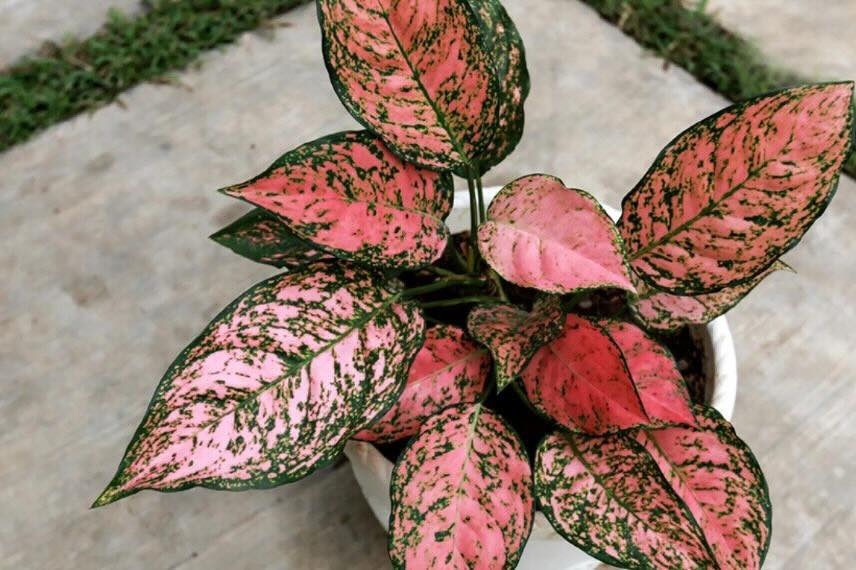
Aglaonema ‘Red Valentine’ in a white pot, to avoid visual noise with this very colourful plant
Read also
Ideal indoor plants for dimly lit roomsMistakes to avoid with coloured foliage plants
Underestimating the importance of light
Insufficient lighting is one of the most common causes of colour loss. Many colourful plants see their foliage turn green or pale when they lack light.
It is essential to position each species according to its specific needs. Indoor light is much lower than outdoors; a medium-light plant should not be placed 5 m from a window in a room with few openings, for example.
Too much or not enough water
Poorly managed watering can quickly compromise the vitality of the foliage, especially for plants with fine roots or sensitive to standing moisture.
It is preferable to check the soil moisture before each watering and to use a well-draining substrate.
Ignoring ambient humidity needs
Some plants suffer quickly from overly dry air, which shows as brown or curled leaf edges. In dry air, it is advisable to humidify the environment, by misting or using a humidifier.
- Subscribe!
- Contents
Comments