






























How to winter jasmine?
In the garden or in a pot
Contents
Jasmine is an ideal climbing plant for dressing walls, pergolas, wrapping around a fence, or climbing up a tree. We appreciate the sweet and heady fragrance of jasmine flowers, but not all offer the same hardiness. Most are quite tender or moderately hardy and rarely withstand severe frosts. It is an easy plant to grow in the ground in regions with mild winters, in well-drained soil, in full sun, and sheltered from winds. In regions with harsh winters, it can be grown in a large pot on the terrace, to be stored indoors or in a cold greenhouse during winter, protected from severe frosts. Discover all our tips to protect your jasmine from the cold, whether you grow it in a pot or in the ground!
Also read our complete guide on jasmine.
Hardy varieties
Most jasmines are quite tender and can be easily grown in the ground in regions where temperatures do not drop below -10°C for short periods, as they are susceptible to frost when it settles in for the long term. Native to Egypt, Africa, and Asia, they thrive in warm exposures and very mild winters. Below -10°C, the aerial parts of the jasmine suffer. They freeze and blacken. However, if the stump is well established, it will regrow in spring, producing new shoots. Except for winter jasmine (Jasminum nudiflorum), which is perfectly hardy in all our regions but lacks fragrance, other jasmines rarely tolerate temperatures dropping below -5°C. The most common species in our gardens are the hardiest and easiest to care for, including:
- The Common Jasmine: it is the hardiest of all jasmines, one of the most fragrant and easiest to grow! Once well established, it can withstand cold down to -15°C in well-drained soil and for short periods.
- The Jasminum nudiflorum: it is also one of the hardiest in the genus! Commonly known as winter jasmine, it blooms in the heart of winter even under snow, sometimes as early as January. Its yellow flowers are not fragrant. It adapts to all gardens, can remain in the ground during winter, and tolerates temperatures down to -12°C without issue.
- The Trachelospermum jasminoides (Star Jasmine or false jasmine): once well established, it can tolerate short frosts of around -10°C.
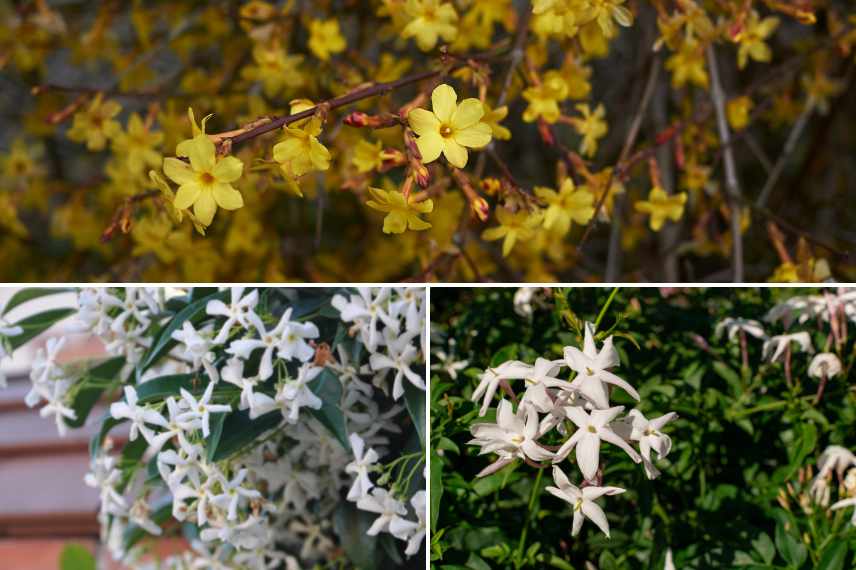 Among the least tender jasmines: Jasminum nudiflorum, yellow, at the top: false jasmine at the bottom left and Jasminum officinale at the bottom right[/caption>
The more tender species (around -5°C), such as Jasminum grandiflorum (Grasse Jasmine) and Jasminum azoricum, (or “Azores Jasmine” or Madeira Jasmine) are often grown in greenhouses or conservatories as houseplants.
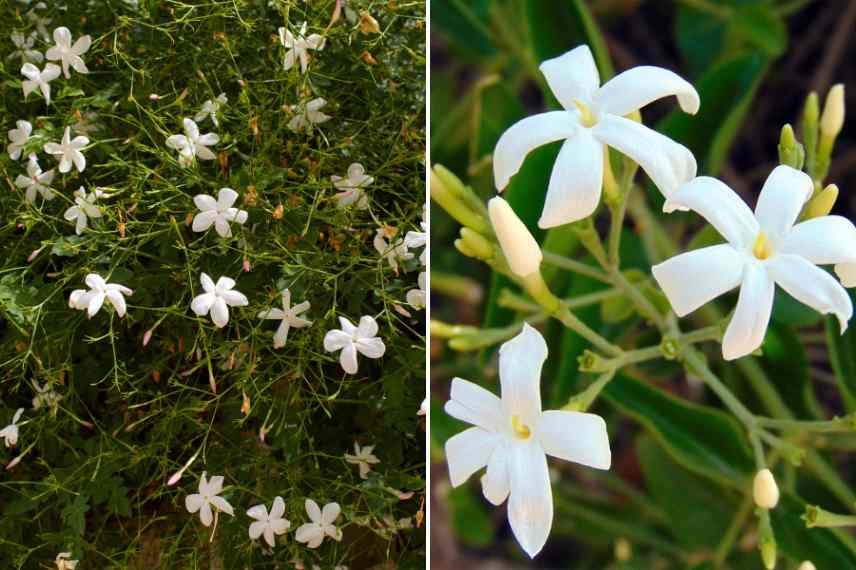 Jasminum grandiflorum and Jasminum azoricum[/caption>
→ Learn more in our advice sheet: Which jasmine to plant according to your region?
→ Read to get an overview: “Hardy plants and hardiness”
Read also
Jasmin : planting, pruning and careProtecting a jasmine in the ground
The jasmine prefers a sheltered spot away from cold winds. In colder regions, it’s best to plant it against a south-facing wall. It withstands frost better if the soil is relatively dry. In the first few years, it is more fragile; once well established, it will be somewhat less vulnerable to the cold.
When to protect it?
As long as the weather remains mild and dry, your jasmine has nothing to fear. In regions with mild winters, it can stay in the ground all winter. In the first years of cultivation, especially if you live in an area that experiences significant frosts, it is essential to protect it by providing winter protection. It’s better to be cautious, and a few actions will help it survive the winter in the garden.
- Before the first frosts: mulch the stump with a thick layer of mulch to protect from the cold, straw, or dead leaves. This helps keep its roots warm.
- In case of severe cold forecast: wrap the aerial parts, without breaking the branches, with a fleece that will also protect it from rain, snow, or even frost. Ventilate regularly on sunny days when it’s not freezing, lifting the fleece for a few hours. Close it before nightfall. As soon as temperatures rise and the risk of frost has passed, you can remove this protection.
- Reduce watering and do so when it’s not freezing. Stop all fertiliser applications.
Discover other Jasmine
View all →
Available in 0 sizes

Available in 0 sizes

Available in 0 sizes
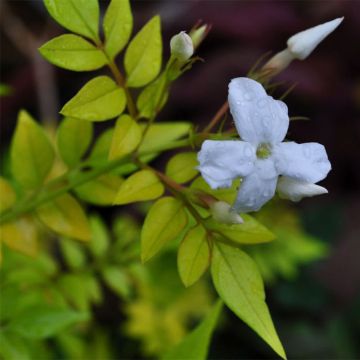
Available in 1 sizes
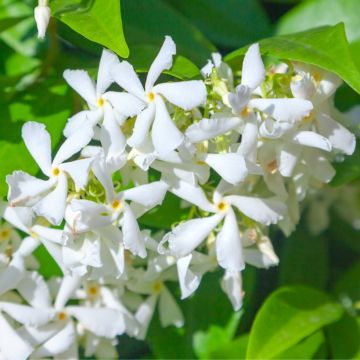
Available in 3 sizes
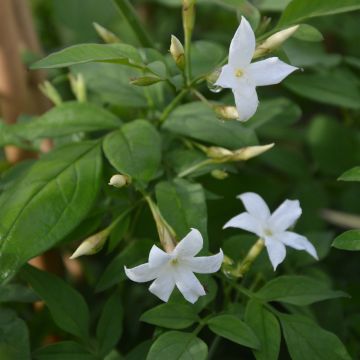
Available in 3 sizes
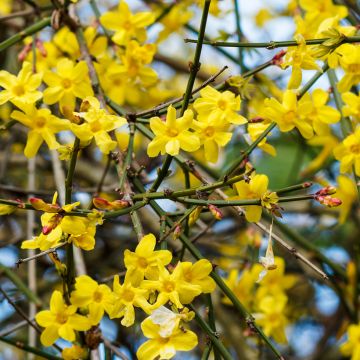
Available in 3 sizes

Available in 2 sizes
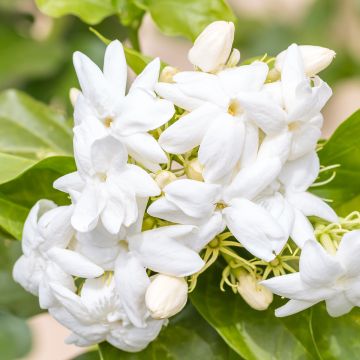
Available in 1 sizes
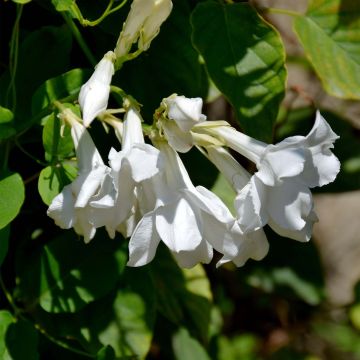
Available in 1 sizes
Wintering a potted jasmine
When and where to bring the pot indoors in winter?
As soon as the weather turns cold and damp, even if it hasn’t yet frozen. Potted jasmines should be sheltered before frost occurs, that is to say, around mid-October in northern France, and around mid-November in the south of the country.
How to protect it?
In regions with harsh winters, jasmines will be easy to grow in a large pot that can be stored away from severe frosts during winter. Bring your pots indoors to a frost-free greenhouse, conservatory, or a very bright room. The temperature should ideally be around 16°C. Regularly mist the foliage with non-calcareous water to prevent attacks from red spider mites.
- In mild regions, if temperatures do not drop below about -10°C, you can leave your potted jasmine outside for the winter. Place it at the foot of a well-exposed wall. As a precaution, protect the pot with cardboard, bubble wrap, or hessian to insulate the roots from the cold, which are more exposed to frost than in the ground. You will remove these protections in spring.
- At the end of winter, apply organic fertiliser and gradually resume watering. You can take your potted jasmine outside after the frosts, from March to May depending on the regions.
- Repot every two to three years in spring or autumn in a well-draining, rich, and light substrate.
- Subscribe!
- Contents
![[protect_plant plant="jasmin" season="winter"]](https://www.promessedefleurs.ie/blogwp/wp-content/uploads/2022/12/Comment-hiverner-le-jasmin-.png "[plant id=\"jasmin\" care=\"wintering\"]")
Comments