





























How to save garden plants after a drought?
Dried and thirsty plants... what to do?
Contents
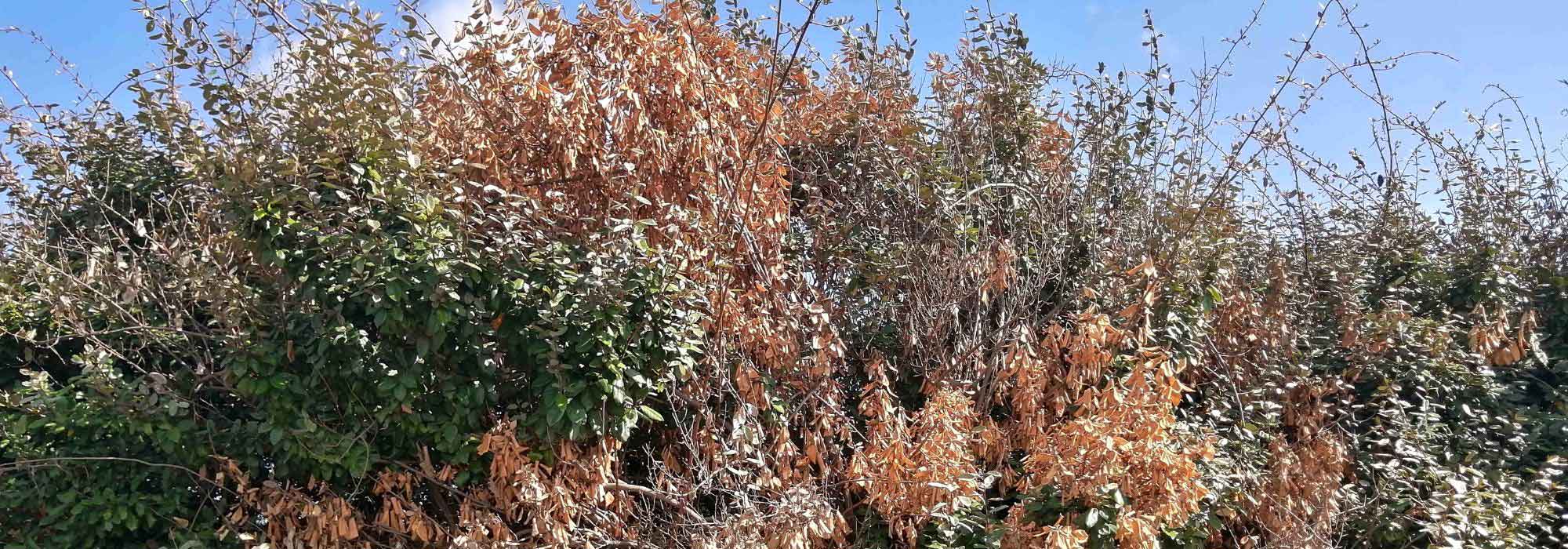
For many gardens in France, summer has become a trial; drought spares neither our trees, bushes, perennials, nor climbing plants, some of which are showing undeniable signs of what is somewhat detachedly referred to as “water stress.” This technical term for the drying out of plants due to a shortage of water corresponds to biological mechanisms that are interesting to understand in order to know how to act when they affect our favourite plants, cultivated through our hard work, and which we sadly see withering away.
So how do plants react to a lack of water and what rescue plan should be implemented in the garden after summer? Follow our explanations: often, it is not too late to act!

Plant responses to water stress
To withstand drying out—whether occasional or recurrent—and attempt to survive, plants have various responses; either suffering or corresponding to “strategic” survival mechanisms:
- By stopping their growth, directly linked to the absorption of water by the cells. In times of drought, you may have noticed a slowdown, or even a halt, in the growth of some of your plants.
- By losing their leaves and drying out: it is, of course, under a blazing sun, sometimes combined with a dry wind, that plants lose the most water. When this water is lacking, leaves and flowers wilt, dry out, and sometimes, unfortunately, the plant dies. However, they can also “choose” to drop their leaves to avoid excessive transpiration and thus enter survival mode.
- By sacrificing part of their branches: plants, particularly trees, are true natural pumps, capable of drawing up hundreds of litres of water from the soil daily. When the soil dries out, they draw in air bubbles. Just like in humans, the phenomenon of gas embolism also occurs in plants with the harmful presence of air in their sap. This embolism limits the circulation of sap, resulting in overall drying of tissues and a decline of branches, ultimately leading to the death of the plant. Some trees “sacrifice” part of their affected aerial parts to preserve others and avoid dying.
- By fruiting excessively: trees, annuals, bushes, perennials… some plants fruit more than ever during heatwaves and droughts, as if they know they are in danger of death. They reproduce as much as possible to ensure their offspring.
- The lack of water in the soil leads to the disappearance of microorganisms living in symbiosis with the roots of plants. Prolonged drought leads to the reduction and then the cessation of root activity, which can result in the death of the plants.
Our garden plants have been experiencing repeated droughts for several years, which increasingly weaken them. Their growth and development over the seasons can be degraded and some are more vulnerable to diseases and pests.
It is therefore important to intervene appropriately and at the right time to help them recover from these very difficult periods.
What to do for trees, shrubs, climbing plants, or roses?
Dryness causes a curious reaction in trees: by the end of August, it feels as if autumn has already arrived and their leaves begin to fall. By shedding their leaves, most plants are merely anticipating the slowdown in growth that typically occurs in autumn. Shrubs and hedge plants are not in better shape: total or partial desiccation and leaf drop are common, leaving our little patches of nature quite sad at the end of summer.
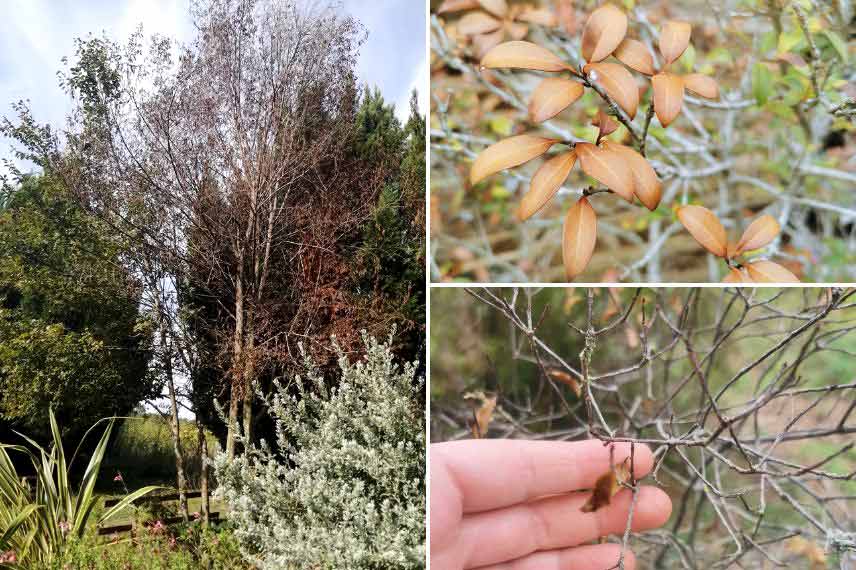
Trees, shrubs, and climbers all suffer from the heatwaves and droughts that follow one another
A basic rule: do not rush to prune deciduous woody plants after summer. Remember that pruning further weakens trees, shrubs, and climbers during drought; wait for cooler weather to intervene. First, conduct a small diagnosis: if you see green on the stems, it means there is a chance to revive them. If in doubt, simply scratch the bark on the leafless branches. If it’s dry, you can cut. Otherwise, come next spring, the plants will likely start to revive, and with a bit of rain, they may even begin to show signs of life.
For those plants that have prematurely lost all their leaves, you will need to cut all branches to 50 cm above the ground in autumn, hoping they will regrow. In the meantime, simply remove the unsightly dried flowers and spread dry leaves at the base as mulch; this will give the garden a less sad appearance and boost your morale! For the most affected plants, such as certain hydrangeas, you will need to cut them back to 10 cm above the ground by the end of October.
If the leaves have dried on the stems without falling, this is a worse sign: the entire plant tissue has then dehydrated. This occurs more frequently in evergreen shrubs and climbers, which do not easily shed their leaves. When temperatures become milder, lightly prune them to shorten the stems by a third of their length and water at the base if rain is delayed. In the best-case scenario, you will see new leaves appear quickly; otherwise, wait until spring before declaring them definitively lost.
In the case of conifers, however, significant browning of the foliage is often a sign of mortality to be feared. The dried and scorched branches will not green again, so as soon as temperatures return to normal, cleanly cut the dry branches with a branch cutter and/or well-sharpened and disinfected pruning shears to give them a more presentable appearance. Conifers that have completely dried out cannot unfortunately be saved and will need to be uprooted. If you wish to replace them, consider more resilient varieties, inspired by our article featuring 7 conifers for a Mediterranean garden; some of them are perfectly hardy!
If your roses have suffered from the heat: do not panic! Like many plants, they have gone into “survival” mode but are likely to bounce back and become beautiful again. Cut the faded flowers and perform a slightly longer pruning than the winter pruning. Then, add compost and mulch at the base before watering.
Finally, in your flower beds, at the base of hedges, under trees, shrubs, and anywhere else it is possible and necessary: hoe the soil to break the crust formed by the drought. Take advantage of rain to intervene right after, add compost and mulch where it is not yet done. Even if the damage is done, the goal is to do what is necessary to help trees and shrubs recover in good conditions.
Perennials and bulb plants
Are your perennial plants and grasses looking a bit sad after this scorching summer? They have suffered greatly, and it’s time to relieve them. If you can, and if the rains are still awaited, water them with the equivalent of a watering can per plant, always ensuring to hoe the soil and then apply mulch. To help them, and if they are plants that easily regrow from the base (like hardy geraniums, Japanese anemones, nepeta, hostas, or astilbes), cut them back to the ground. New stems will soon form, and in a few weeks, the drought will be just a bad memory. Moreover, to anticipate water shortages, you can favourably pinch certain plants in early summer, such as dahlias, asters, gauras, or lysimachia… The plants will be less demanding, and their flowering will be more abundant.
With less leaf surface area (fewer leaves), the perennials will have more energy to survive and regrow. So, cut off the dried and burnt leaves while keeping some foliage to ensure the plants can continue their photosynthesis… you will remove the dead plants in a few weeks or in spring if no regrowth is observed. If your garden looks sad and is depressing you, you can place pots of late-flowering plants in your beds to fill the gaps.
Regarding summer bulbs, avoid cutting the yellowing leaves. Indeed, this foliage allows them to continue their photosynthesis and replenish the bulb’s reserves. Don’t worry, they will likely be beautiful again next year.
Have your grasses dried out prematurely due to the drought? As usual, do not cut them back in autumn or early winter, but in February or March, after the severe cold and just before the growth starts. Cutting too early removes the natural protection of the foliage. Find our detailed advice on when and how to prune grasses.
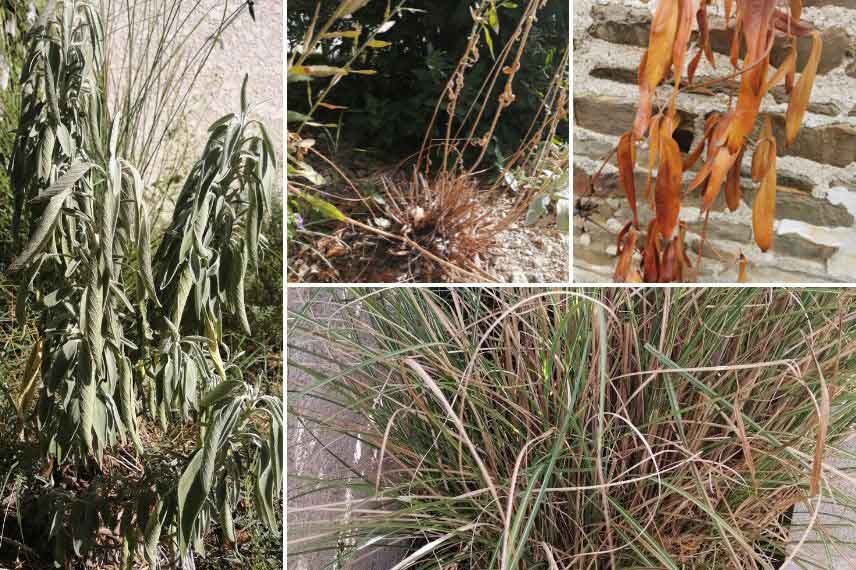
Perennials and grasses can show different stages of water stress: drooping leaves due to reversible dehydration, or complete drying indicating the death of the plants.
From now on, the most fragile and water-hungry plants will no longer have a place in the garden. Simplify your gardening by favouring plants that can withstand dry spells while maintaining their beauty and flowering without relying on your help and hundreds of litres of water! Reserve those that prefer moist soils for shaded areas and choose from our range of Mediterranean plants to replace those that will not recover. Our tool “Plantfit” will allow you to input your garden and bed profile to find those best suited for your region.
A quick hoeing at the base of the perennials and grasses will make rain or watering more effective, and do not throw away the pruning waste: spread it on the ground to create a thick and beneficial mulch. Adding compost will help them regain strength after this ordeal.
Read also
7 Cold and Drought-Resistant TreesBamboos
Bamboo watering should normally be monitored regularly, depending on the climate and type of soil. From the third year in the ground, many varieties withstand drought well, but exceptional conditions of prolonged drought put them at risk. If all the leaves are curled inwards, dry, or fallen, but there is still greenery on the culms, new shoots are emerging from the soil, or the rootstocks are still white-yellowish and appear vigorous, it is likely that your bamboos are not completely dead and there is hope for recovery.
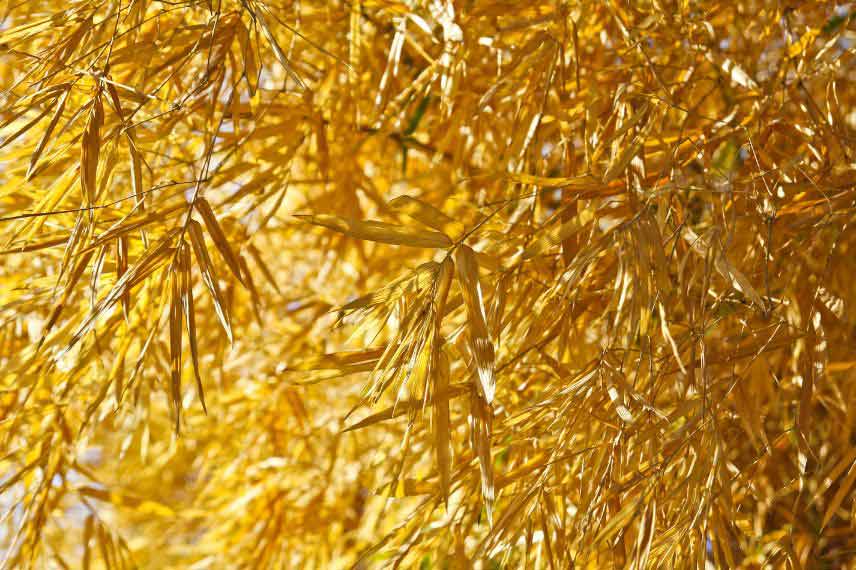
Dried bamboo
Action is therefore required to prevent matters from worsening: water in small amounts every day or every other day if rain is delayed, and shower the foliage to humidify it. Do not overdo it and be cautious of excess water: ensure that the soil remains cool and moist without being waterlogged. Add mulch if not already done. In autumn or winter, you can cut back the completely dry or damaged culms at the base.
A quick reminder: if you cut a bamboo culm, it will remain permanently at the cut height. The new shoots will take over in spring.
Ornamental planters and pots
Regarding container and pot plants, cut and prune faded flowers and dried branches. To help them regain colour quickly, soak wilted plants in a bucket of water.
Pull out completely dried plants and replace them with late-flowering annuals. You can also take advantage of the freed-up containers to plant biennials that will bloom at the end of winter or, if you want to simplify your life in the future, replace them with succulents, champions of low maintenance!
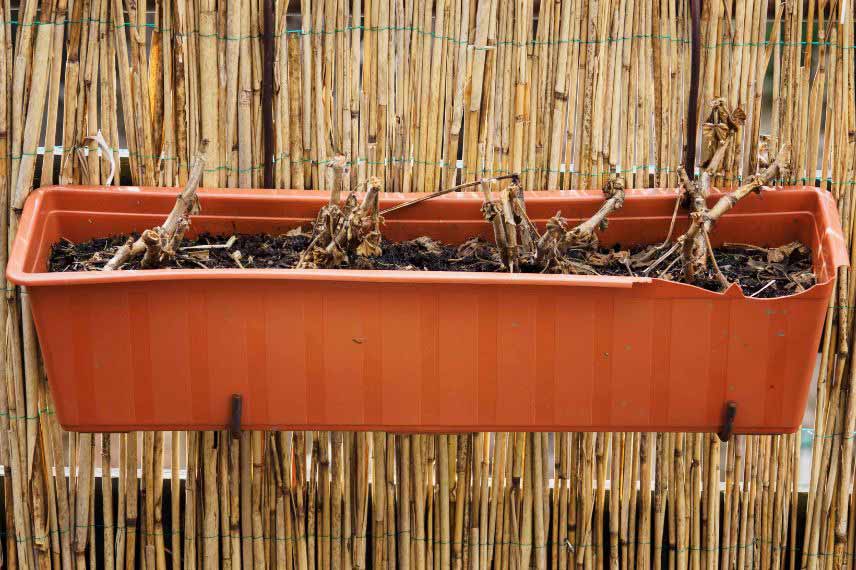
Geranium container with no hope of recovery
Lawn
At the end of summer, sun-exposed lawn resembles a true doormat. If the lawn isn’t dead, the question is when it will green up again. The less exposed areas will surely regain vigour with the first autumn rains (if there are any!), and it would be beneficial to let it grow for a high cut before winter arrives.
As for the areas that have suffered the most, they will need to be scarified and reseeded with a special grass for dry ground. Find some wise tips on how to reseed a lawn.
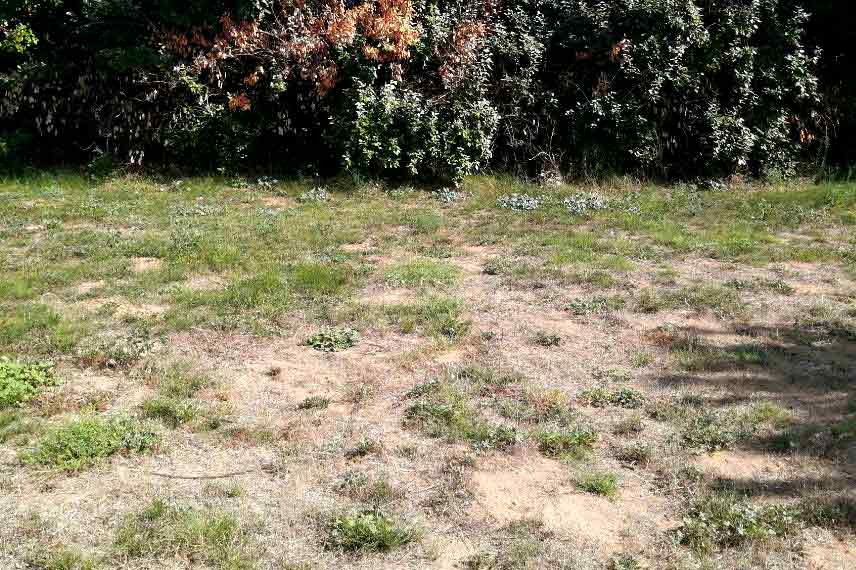
It is highly likely that in the coming years the situation will not improve and that grassed areas will be doomed to yellow or disappear in summer. Let’s ask ourselves the right questions: it may be time to consider replacing the lawn with alternative groundcover plants. Our site offers numerous interesting plants as alternatives to grass. You will also find a selection of 10 groundcover alternatives to grass to replace the lawn.
In the vegetable garden
Burnt leaves, split tomatoes, wilted salads, and prematurely bolting aubergines… unfortunately, if your vegetables have suffered too much during the summer, you won’t be able to revive them. It is therefore best to pull out what is lost and pamper your soil by adding compost and mulching, and to replant seasonal vegetables. Remove diseased and split fruits and take out plants that have bolted while saving seeds for next year. Water and mulch the squashes so they can reach ripeness, and make way for new plantings!
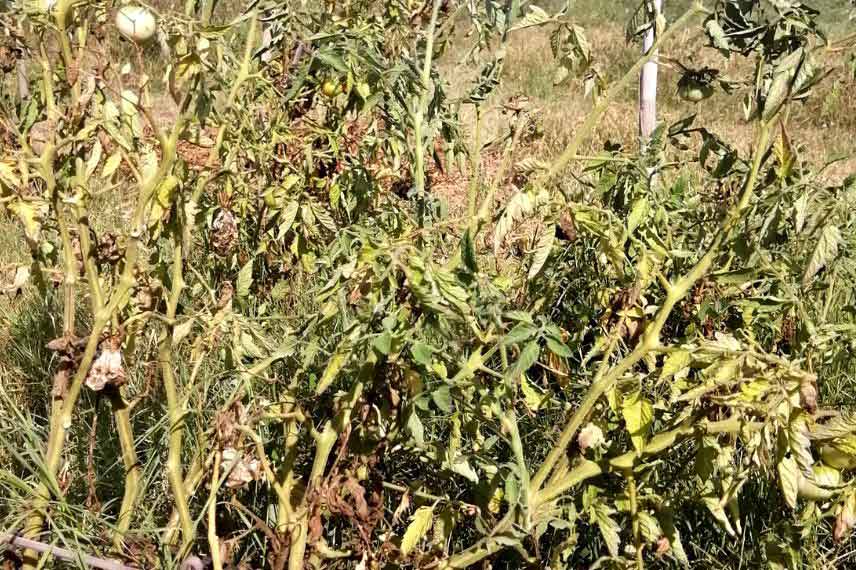
The soil is cracked due to drought, especially if you haven’t mulched. Wait for the rains and sow green manures (mustard, phacelia…) in the autumn in areas where you won’t be replanting right away. Otherwise, after cleaning and the first rains, hoe, mulch, and plant seasonal vegetables.
For the upcoming seasons, consider perennial vegetables, which are less water-hungry, and select varieties known for their resilience. An essential addition: plan for shading and mulching!

- Subscribe!
- Contents
Comments