





























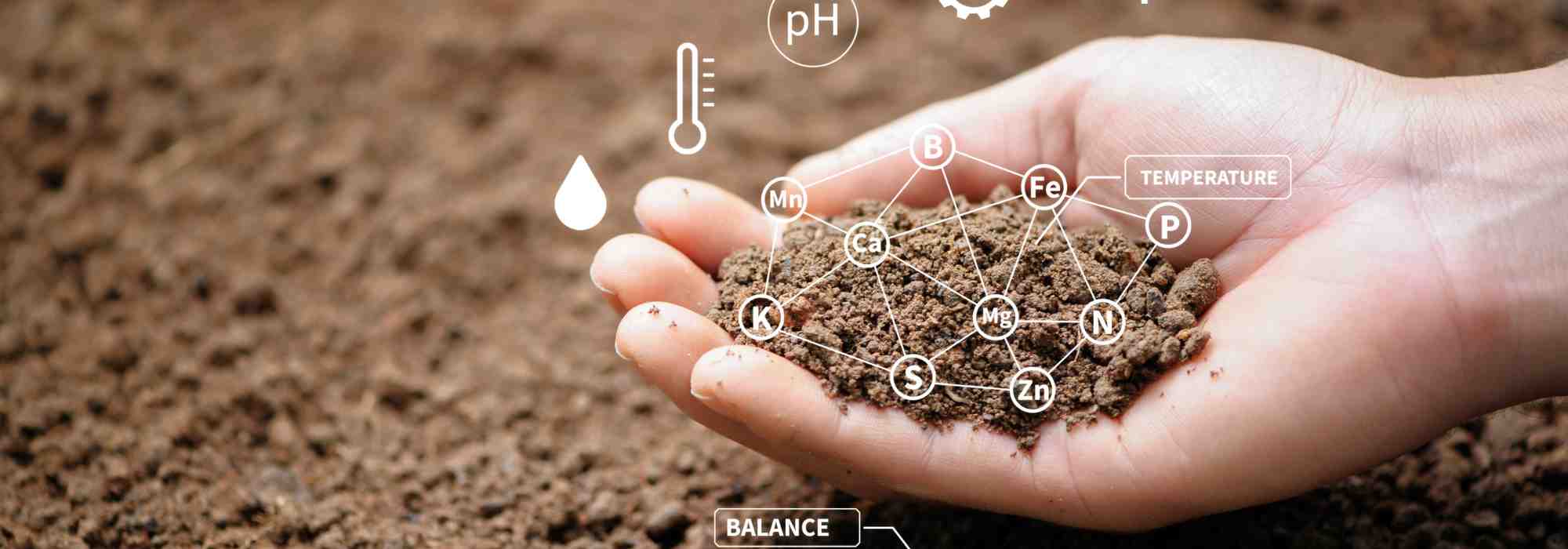
How to recognise a polluted soil in your garden?
A question that concerns many gardeners
Contents
Creating your vegetable garden and producing your own fruits is one of the most rewarding aspects of gardening. However, we do not always know if the fruits and vegetables we produce are truly healthy. Indeed, soil contaminated with heavy metals, pesticidal substances, or other types of pollutants is problematic for human health, as well as for the environment. This pollution can be found in plants and, consequently, in our fruits and vegetables too. Therefore, it is essential to know precisely what our soil contains and whether it is possible to grow our food there.
→ How can you tell if you are not growing your vegetables and fruits in contaminated soil? What should you do if that is the case? We provide some guidance in our advice sheet.
What is soil pollution?
A piece of land free from all human activity is very rare. Our gardens often develop on former agricultural plots, old wastelands, sites that once housed industrial activities, fill soil from unknown sources, or on a previous garden where the former gardeners may have been less scrupulous than you. In short, the soil is rarely as healthy as one might think. However, there’s no need to panic; the pollutants present are not always in very large quantities.
Soil pollutants are numerous, but they can be classified into four categories:
- Heavy metals: Heavy metals (Lead, Cadmium, Mercury, Copper, Nickel, Arsenic…) can be present in the soil and subsoil (rock). Ingestion of heavy metals can lead to serious debilitating diseases, such as neurological disorders (Parkinson’s, Alzheimer’s…) or pulmonary conditions. However, heavy metal poisoning mainly depends on the dose and frequency of absorption.
- Pesticides: They are everywhere, as they have been extensively used by farmers and producers, but also (often at even higher doses!) by gardeners. These pesticides remain a scourge for biodiversity, as well as for human health. Pesticides encompass all biocides (“that kill life”) such as herbicides, insecticides, fungicides, algicides, rodenticides…
- Hydrocarbons: In addition to petrol or diesel spills, we should also be concerned about PAHs, or Polycyclic Aromatic Hydrocarbons. These are produced from the incomplete combustion of fuels, as well as from the burning of tobacco, coal, or wood. They are implicated in the development of numerous cancers (lung, urinary tract, skin…). PAHs can be found in tar and… ash, which is sometimes overused in gardens.
- Used mineral oils: This refers to engine oils (tractor, thermal gardening equipment). They can end up in the soil either accidentally (leaks) or intentionally when used oils are dumped into nature. The components of used mineral oils remain in the soil for a long time. This can lead to skin cancers and pulmonary diseases.
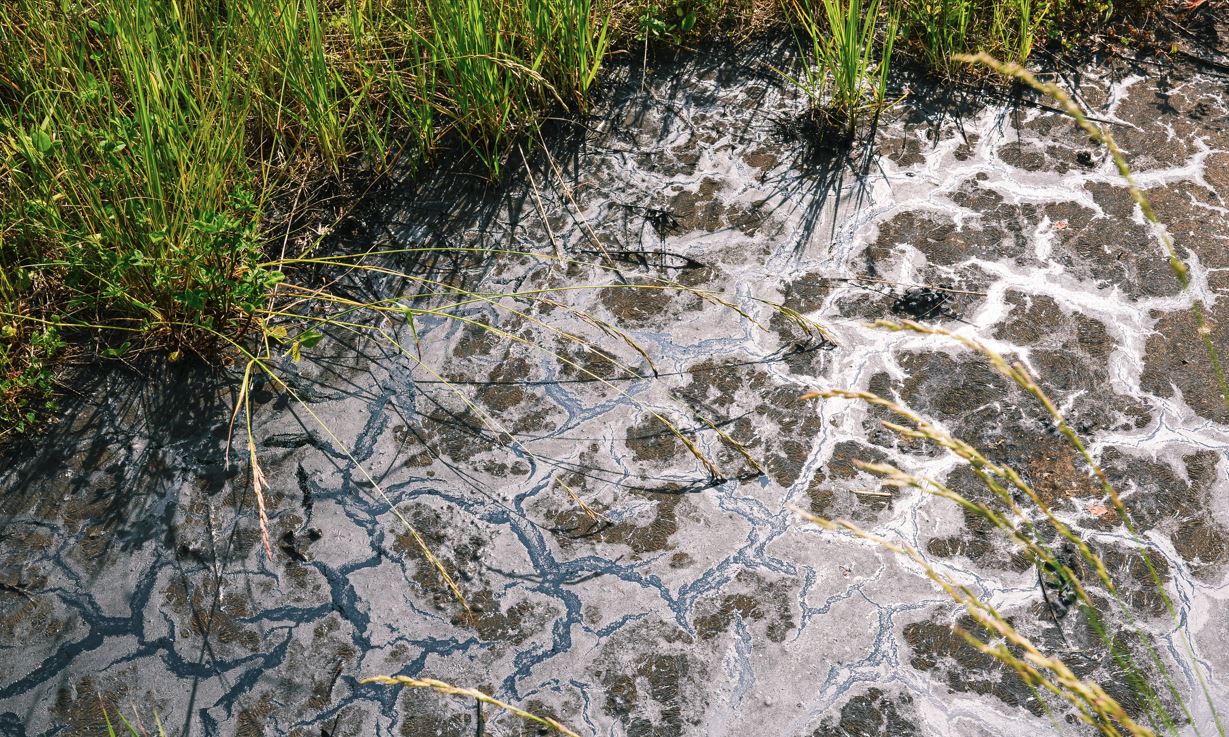 A soil damaged by the presence of oils and hydrocarbons
Read also
The eco-anxiety of the gardenerHow to tell if your soil is polluted?
It is difficult to assess soil pollution simply by looking at the vegetation, although an area where absolutely nothing grows may raise alarm bells. Several factors can, however, give you a clue:
- if the garden is located within an industrial area, near a vehicle maintenance garage or a petrol station, or surrounded by agricultural plots engaged in intensive farming. Former railway land is often polluted as well, due to buried ashes;
- if waste is present, particularly old oil drums, solvent containers… as well as scrap metal, sheets of metal, asbestos sheets…
- if an oil film appears on the surface of a puddle: this confirms pollution from oils and hydrocarbons.
But to know for certain if your soil is polluted, there is only one solution: an analysis in an accredited soil laboratory.
→ In France, INRA will help you find a soil analysis laboratory near you via the directory of Laboratories and Research.
→ In Belgium, here is the list of accredited laboratories under the Soil Decree.
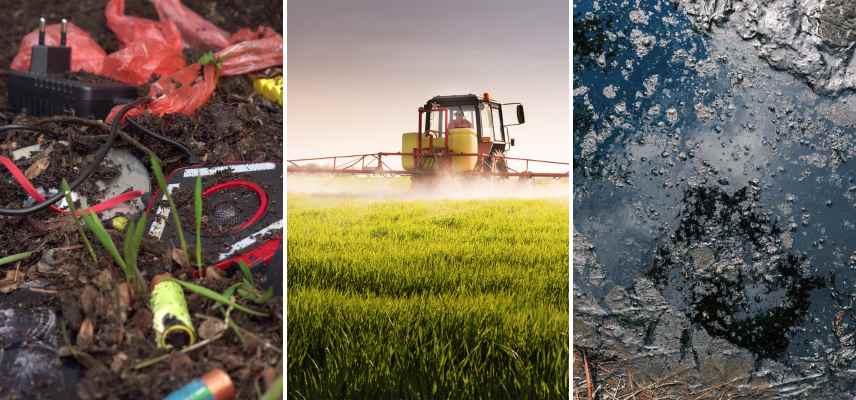
Industrial residues, areas near intensive agriculture using pesticides, presence of oil: all indicators that the situation is at risk
What to do if your soil is polluted?
Firstly, it is essential to thoroughly wash the vegetables and fruits harvested, as well as your hands after gardening. Also, ensure that your vegetable garden and fruit trees are placed in an unpolluted area or at least one that is not suspect. To determine this, several soil analyses will be necessary.
You can also add compost to your soil and organic matter if your soil is naturally acidic. This will help to regulate the soil pH. Indeed, the more acidic the soil, the more certain pollutants, particularly heavy metals, will rise to the surface. Consider mulching or keeping a plant cover on your soil, as this will prevent the leaching of pollutants.
As a last resort, you can also grow in containers or pots. However, be careful to use a healthy substrate and untreated materials for the container.
Alternatively, there are companies specialised in soil decontamination: hydrocarbons, heavy metals, pesticides… These soil remediation companies will work to decontaminate the soil using various techniques: biological, physicochemical, or thermal treatments. The soil can also be cleaned on-site by washing with water or using solvents.
Good to know: agronomic research, ongoing for years, offers a completely natural decontamination solution. This solution involves using plants: miscanthus, trees (willows, poplars…). Some plants will “pump” pollutants, while others will prevent them from being leached away by keeping them close to their roots. This is a gentle way to decontaminate soils. The biomass produced will then be repurposed as biofuel or mulch.
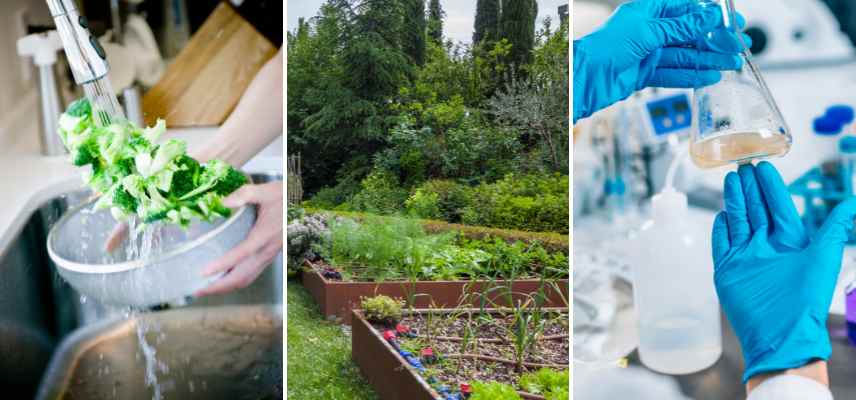 In addition to thoroughly washing vegetables and establishing raised beds, analysis proves essential beforehand.</caption]
Are there any fruits or vegetables that concentrate pollutants more than others?
Soil type (acidic or not) and the type of pollutants should be taken into account, but overall, it is the fruits, fruiting vegetables, bulbs, and seeds that fare the best. In slightly polluted soil, there will therefore be no risks in consuming your production of tomatoes, peppers, squashes, pumpkins, corn, beans, onions, apples, pears, strawberries…
Root vegetables (carrots, beetroots, potatoes, turnips, radishes, parsnips…) absorb pollutants on the surface, but should be consumable without worry if you wash them well with water.
It is the leafy vegetables (lettuces, spinach, chard, cabbages…) and herbs (thyme, sage, rosemary…) that concentrate the most pollutants. When in doubt, grow them in containers!
- Subscribe!
- Contents
Comments