






























How to protect your vegetable garden from chickens?
Our tips to prevent your hens from taking over.
Contents
If you take a few minutes to watch a hen roaming in a garden, you’ll be surprised at how effective she is. Effective at turning the soil with her feet, effective at pecking at every blade of herb, and at uncovering the tiniest earthworm… But this effectiveness, understandably, you would prefer to avoid in your vegetable garden where, in just a few hours, hens can destroy what you have patiently sown, planted, hoed, or mulched. However, you don’t want to deprive your hens of the joy of enjoying a bit of greenery. As a “keeper” of five healthy hens and an amateur gardener, I’m sharing some tips and tricks to protect your vegetable garden from your hens.
Chickens in a vegetable garden, guaranteed disaster!
Every chicken owner has experienced the unfortunate situation of forgetting to close their chickens’ enclosure. Those little hens rush to invade the vegetable garden! And that’s when disaster strikes… Indeed, a chicken scratches the soil incessantly in search of insects, larvae, or mites, invisible to our eyes, to put under its beak. It also loves greens and makes little distinction between a young lettuce shoot and an adventive. Finally, a ripe tomato is a treat that it will simply peck at with its beak. Not to mention the dust baths in your freshly worked soil that hosts your sowings.
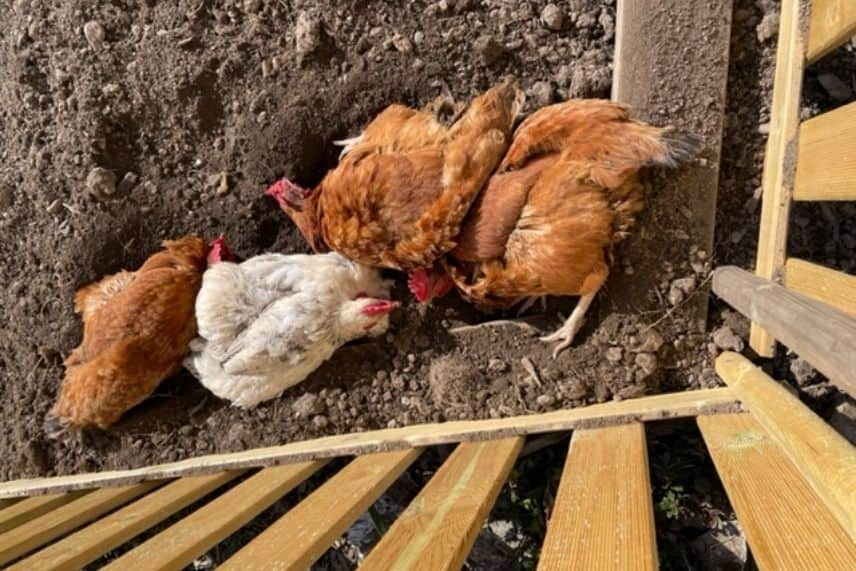
Chickens love to take dust baths in freshly loosened and worked soil
So, a chicken is acceptable in an ornamental garden or on a lawn. But the vegetable garden should be off-limits (or allowed when you decide).
If your vegetable garden is open and you want to let your chickens roam occasionally, you’ll need to protect your vegetable plots. However, your vegetable garden can still be accessible to them…
In winter, let your hens loose in the vegetable garden.
In winter, the vegetable garden only hosts a few cabbages or leeks in the ground. This is therefore the ideal (and only) time to let your hens into your vegetable garden. They can only do it good and be exceptional assistants.
Firstly, by scratching the soil with their feet, a hen will aerate it. With their sharp-clawed feet, a hen acts as a hoe, provided the soil is not too wet.
Next, by scratching, a hen will uncover well-buried pests. Admittedly, it will enjoy a few earthworms along the way, but it will only reach those on the surface. And certainly not more than the blackbirds, which also do not hesitate to scratch the soil of the vegetable garden or even the lawn. However, your hens will feast on the larvae of cockchafers, wireworms, and a multitude of harmful insects well buried in the soil. Not to mention the slugs and other snails that might be lurking around.
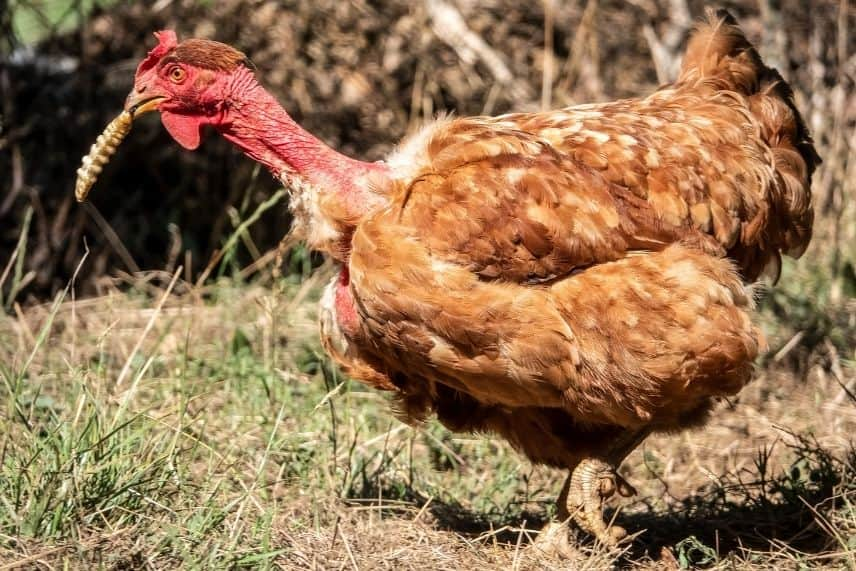
In winter, hens released into a vegetable garden clear it of buried pest insects.
If you have an orchard, let your hens roam there too. They will not only feed on insects and fruits that hibernate in the soil but also help limit the growth of weeds.
As good omnivores, hens enjoy the greenery of plants, particularly the few adventive species still growing in your vegetable garden. Again, your hens will act as lawnmowers, clearing the vegetable garden of the “weeds” that are still growing.
Finally, a hen that feeds is a hen that defecates. Its (very) numerous droppings will have time to break down and nourish the soil, as they are rich in nitrogen, phosphorus, and potassium.
From experience, prefer dry days to let your hens into the vegetable garden, or you risk turning the surface of your soil into a hard slab. As for your hens’ feet, they will be literally covered in mud, which will end up in the henhouse, in the nests, and on the eggs, which, let’s remember, should never be washed. Indeed, washing them removes the protective coating that covers them and makes the egg porous. This opens the door to bacteria, including the most dangerous ones.
A fence around the vegetable garden to keep the chickens out.
The fence is obviously the simplest solution to isolate your vegetable garden from the curiosity of your hens. You can either install a permanent fence and focus on aesthetics, or set up a temporary and removable fence. Barriers, hurdles, and other wooden fences between 1 metre and 1.20 metres high are perfect for isolating a vegetable garden and are easy to install. The installation of a gate is obligatory for accessing the vegetable garden. This wooden fence solution remains the most expensive.
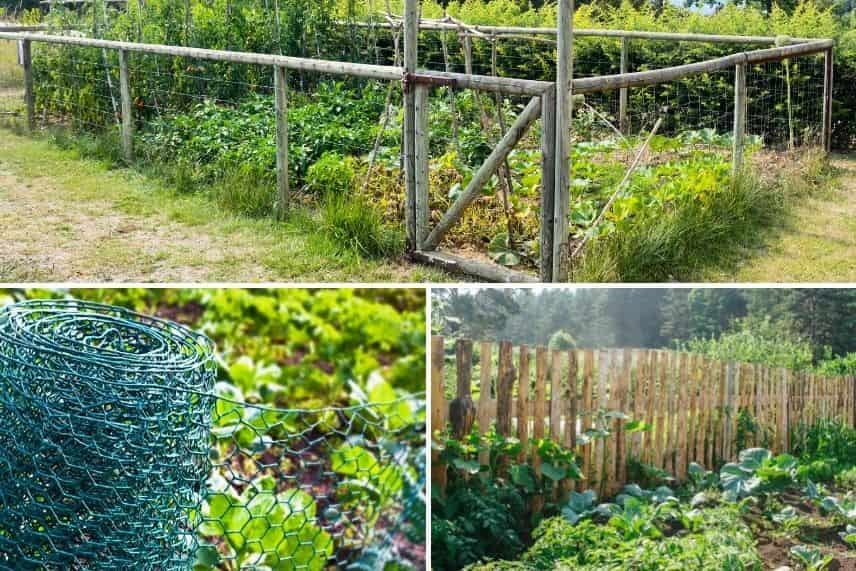
Permanent or temporary, the fence is the best protection for the vegetable garden against hens
You can also opt for fine mesh fencing that can be temporarily installed around the vegetable garden using rebar or stakes. The advantage lies in the fact that you can move this fencing. Just remember to think of a functional system for entering and exiting the vegetable garden.
Read also
Forbidden foods for chickensRaised beds to be out of reach of chickens
To keep your sowings and plantings out of reach of your chickens’ hungry beaks, you can also opt for raised vegetable beds. They come in all sizes, but with a bit of patience (and without being a seasoned DIYer), you can make a few models yourself.
Focus on squares measuring 1.20 m by 1.20 m to have your plantings within easy reach. As for the height, it can vary. If you stick to boxes that are 30 cm high, you will always have the option to place a mesh on the surface to isolate your plantings from your chickens. For peace of mind, aim for a height of at least 1 metre.
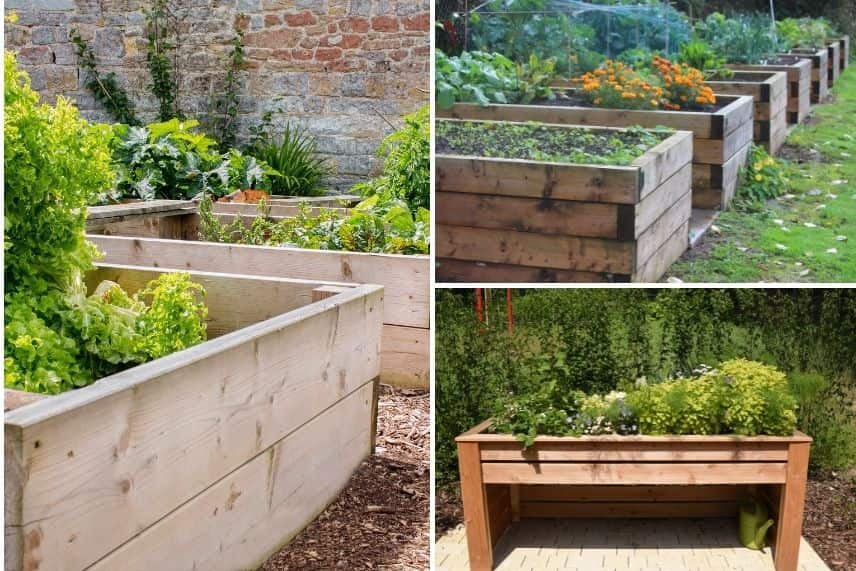
Whatever the model, the raised vegetable bed is a solution to protect your vegetables.
All you need to do is fill your vegetable beds with a mix of garden soil, potting compost, and compost. These beds will allow you to grow all the vegetables that chickens love, such as salads, spinach, beetroots, lamb’s lettuce, and tomatoes…
The construction of mobile metal enclosures or tunnels
If you don’t have the option (or the means) to fence your vegetable garden because it’s too large, you can also purchase or make small movable enclosures or tunnels. A few boards, nails, and some reclaimed mesh (or a simple bird protection net) are enough to create these portable enclosures that can be placed over sowing areas. They can also be placed over young plants just transplanted or your vegetable patches that are favoured by chickens.
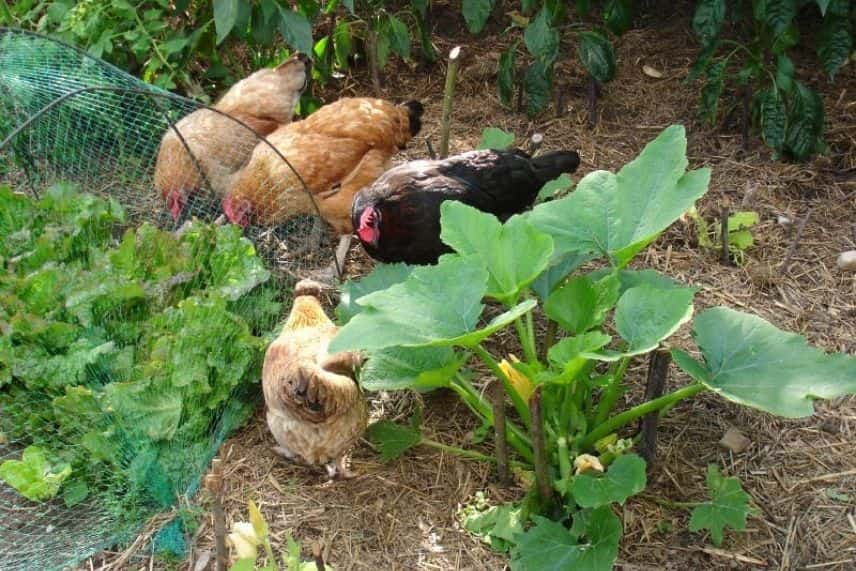
The installation of mini movable enclosures or protective tunnels can deter chickens
Make sure to construct these enclosures in various sizes, square or rectangular, to fit your planting or sowing spaces. And don’t forget that they will be moved regularly, so they should be easy to handle.
What about repellent plants?
Certain perennial or aromatic plants are presented as repellent to chickens. Thyme, lavender, oregano, rosemary, mint, lemon balm, and sweet woodruff emit varying strengths of scent, and it’s a fact that chickens avoid them.
However, forget the idea of creating a separating barrier solely with these plants; it will not be sufficient to protect your vegetable garden. Chickens will easily weave between the plants without any difficulty.
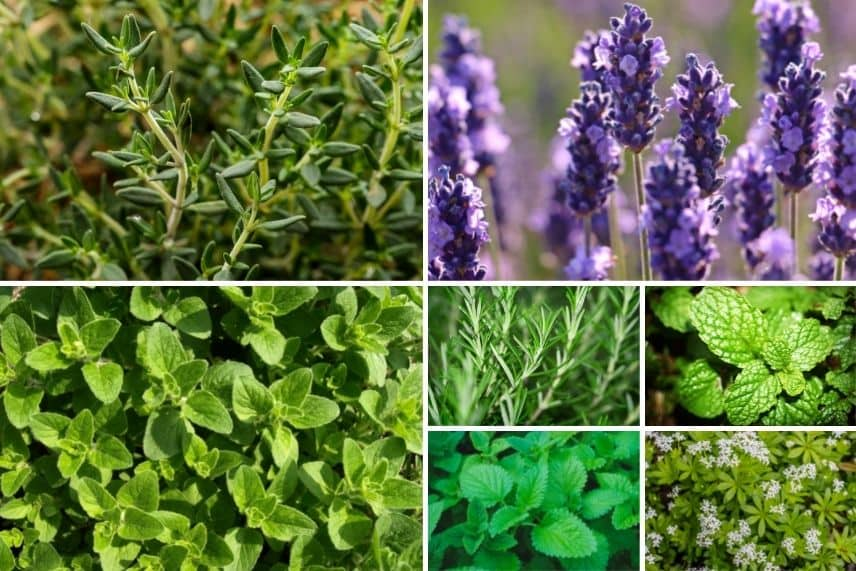
Thyme, lavender, oregano, rosemary, mint, lemon balm, and sweet woodruff do not attract chickens, but they do not deter them from the vegetable garden either.
As for defensive hedges made up of spiky perennials like pyracantha, holly (Ilex), mahonia, and berberis, they stop many intruders like wild boar or deer, but not chickens, especially if they detect tender salads to peck at.
- Subscribe!
- Contents

Comments