





























How to look after daffodils after flowering?
What to do after flowering
Contents
Narcissi, or daffodils or jonquils are pretty spring-flowering bulbs, yellow or white, often fragrant. Their flowering is a magical sight. When the narcissi flowering season comes to an end, many gardeners wonder how best to care for these charming bulbs to ensure their health and abundant flowering in the years to come. So, what should you do once your narcissi have brightened your garden with their vibrant colours? Here are our practical tips to look after them and help keep them floriferous! And to learn all about narcissi and their cultivation, do not hesitate to consult our full guide: “Narcissi or daffodils: planting, growing and maintaining”

Deadhead faded flowers.
After flowering, narcissus flowers begin to fade. At this stage, it is crucial to cut the spent inflorescences to prevent the plant from spending energy producing seeds. This helps to strengthen the bulb for next season. Use a clean pruning shear to cut the flower stem gently as close to the base as possible, without damaging the remaining leaves. This simple, yet essential, action prolongs the bulb’s vitality for future seasons.
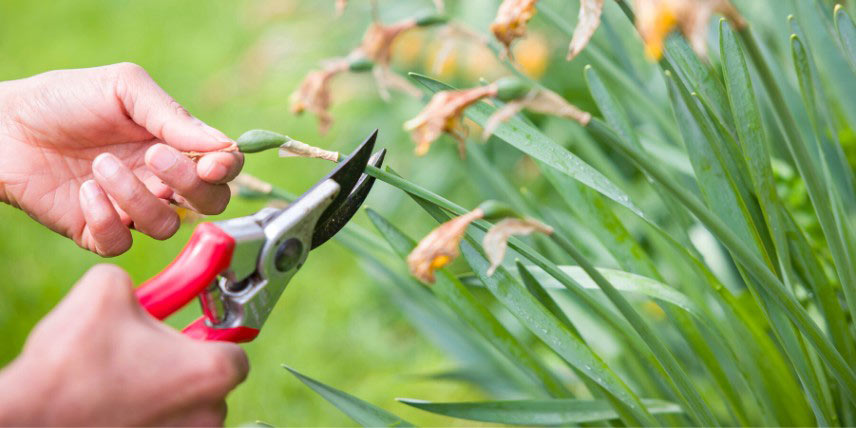
Once the flowers have faded, remove the floral stems so that the plant avoids producing seeds. Cut them preferably at the base of the stem, as close to the soil as possible.
Let the leaves turn yellow before cutting them.
The foliage of Narcissus plays a crucial role in photosynthesis, nourishing the bulb for the next season. It is therefore important not to cut the leaves immediately after flowering. Let them yellow and die back naturally, which may take several weeks. During this period, the bulb absorbs the nutrients it needs for its survival and for future flowering. Once the leaves are completely dry, you can remove them to keep your garden neat and tidy.
With a clean pruning shear, cut the leaves about 2–3 cm above the base of the plant. Avoid shaving the clump down to soil level to avoid damaging the bulb. After cutting, spread a light mulch to retain soil moisture.
Could you confirm the intended meaning? Do you mean: - Fertilisers (the fertilisers) - To fertilise (to fertilise) them
Fertilising your daffodils during flowering and just afterwards helps to strengthen the bulbs for the next growth season. We recommend using a potassium-rich fertiliser, low in nitrogen to promote bulb health.
Do not water them.
Daffodils do not need to be watered after flowering, on the contrary, the bulbs should stay dry as soon as they enter dormancy, or they could rot.
Prepare them for winter dormancy.
As winter approaches, it’s important to prepare your daffodils for their dormancy period. Once the foliage is completely dry and removed, you can add a light layer of mulch to protect the bulbs during the cold months. This mulch will help maintain a stable temperature around the bulbs and prevent frost damage.
Dividing bulbs
Every 3 to 5 years, it is advisable to divide Narcissus bulbs to give them more space, rejuvenate the clumps and encourage vigorous flowering. This will also help prevent your bulbs from becoming depleted. The division should be carried out in summer, when the leaves are completely dry. If you plan to move or divide the bulbs, wait until the leaves have completely yellowed. Carefully dig up the bulbs, separate them and replant them at a distance sufficient to allow optimal growth. Bulbs can be stored in a cool, dry place until replanting.
Further reading
- Subscribe!
- Contents
Comments