





























How to grow Hardenbergia in a pot?
Our tips for planting and maintenance
Contents
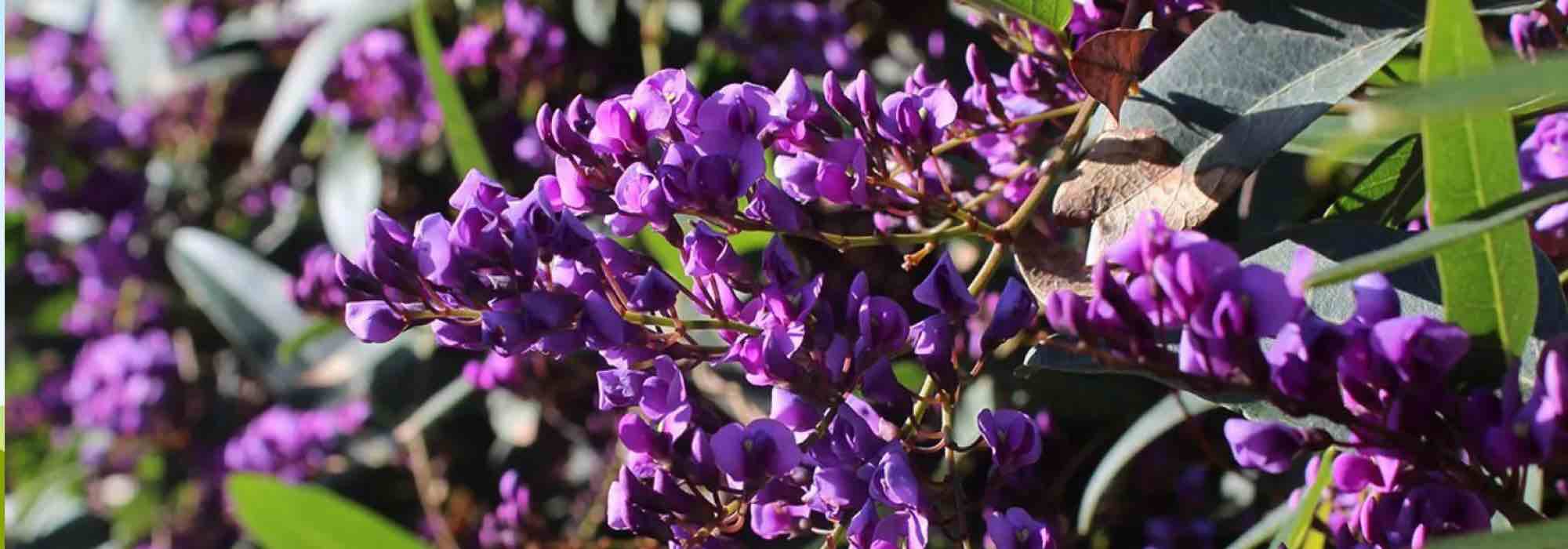
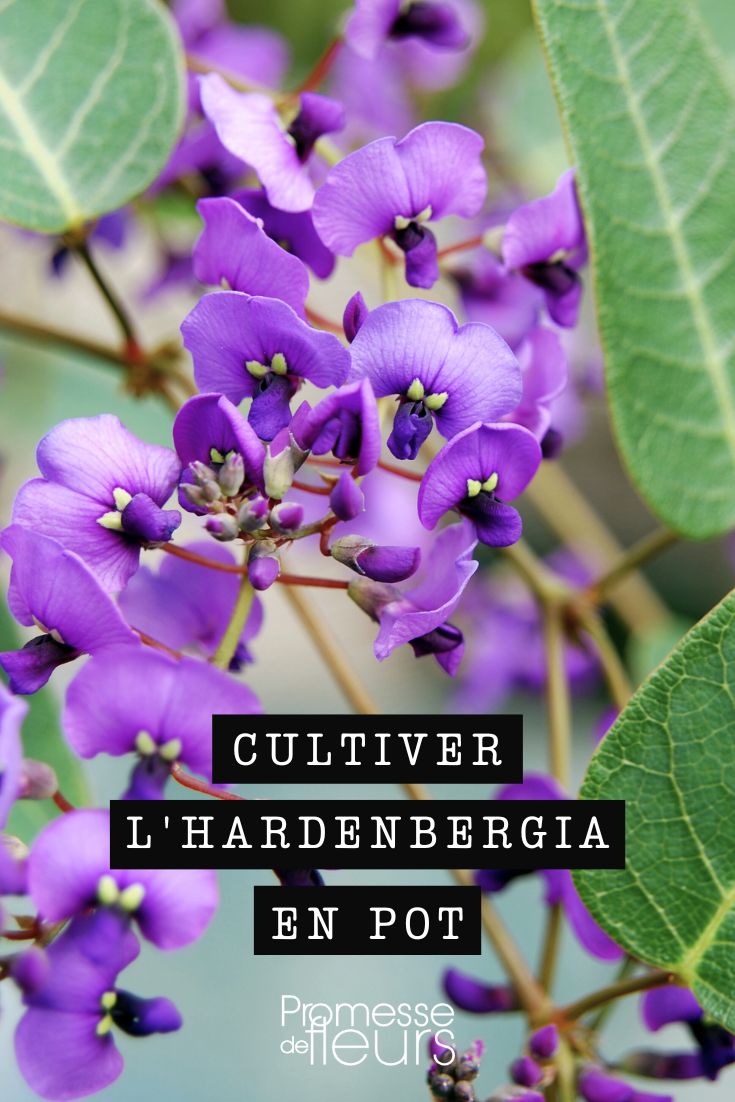
Hardenbergia is an attractive climbing plant with abundant and spectacular flowering from winter onward. It is also known as Glycine or Australian sarsaparilla and belongs to the Fabaceae family. The melliferous flowering attracts pollinating insects. It can appear from February and March depending on the climate of the regions. It develops in clusters of small pea-like flowers in violet, pink or purplish, white or bluish. Flowering begins at the top of the plant and descends towards the base. Drought-tolerant, it is not very hardy and is grown in mild, sunny climates in the ground. In other regions, it lends itself well to pot culture, which allows it to be brought indoors for winter protection. It is planted in soil enriched with potting compost and sand, in sun or partial shade. Discover our tips for successful pot culture of Hardenbergia and enjoy its generous winter flowering on your terrace or in your conservatory.

Which Hardenbergia varieties are suitable for growing in pots?
Hardenbergia comprises three species. The best-known is the Hardenbergia violacea, which bears mauve-purple flowers. Native to eastern and south-eastern Australia, it occurs in woodlands and heathlands. This climbing or creeping habit depending on the intended use can grow up to 2.5 metres in height. It bears clusters of flowers and long dark-green leaves with pale veins, which are evergreen. The flowering, reminiscent of wisteria, extends from February to June and is followed by the appearance of small flat brown pods containing 6 to 8 seeds each. Its brown branches bear quadrangular stems that can be somewhat brittle. Not very hardy, it can withstand temperatures down to -5°C. Cultivation is delicate; plant in sun or partial shade in non-calcareous, slightly acidic, well-drained, cool soil. Grow it in a non-heated conservatory or greenhouse.
Hardenbergia violacea ‘Regent’ is a cultivar with a more compact size, reaching 50 cm in height at maturity and a spread of 30 cm. It takes the form of an erect, branched shrub and between January and March it bears spikes of blue-violet flowers adorned with long leaves that are oval and lanceolate, dark green with paler veins and evergreen. The flowers are nectariferous and followed by the appearance of small flat pods in dark brown. Also not very hardy, it tolerates temperatures down to -4°C and prefers non-calcareous, well-drained, cool soil.
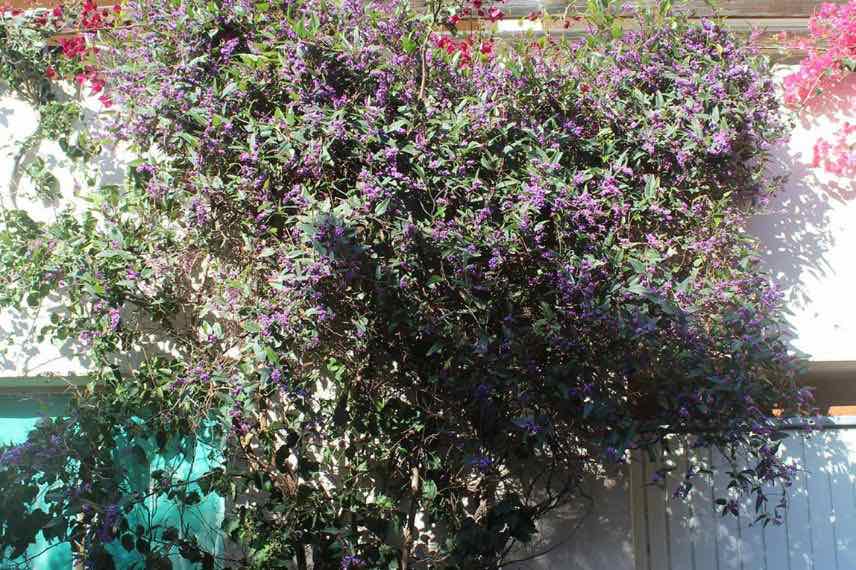
Hardenbergia violacea is a medium-sized climbing plant
Read also
The ABC of Pot PlantingWhen and where to plant?
- Hardenbergia is best planted in spring, between March and April, but it is also possible to plant it in September and October, outside the frost period.
- Hardenbergia thrives in full sun but can also be planted in partial shade in hot, very sunny climates. In terms of soil, it requires an acidic, well-drained soil that remains cool.
How to grow Hardenbergia in a pot?
What type of pot?
Hardenbergia can be grown in any type of large pot or tub, with clay pots providing better aeration for the roots.
What substrate?
Use a mixture of turf, garden soil, sand and leaf mould. It can also be planted in heather soil mixed with garden soil
Planting
- Take a large pot or large tub with a drainage hole in the bottom
- Place at the bottom a layer of clay pebbles to ensure good drainage
- Soak the root ball in a basin of water before planting
- Place a mixture of heather soil and garden soil at the bottom of the pot
- Position the plant in the centre of the pot and cover with the remaining substrate, pressing down well to expel air pockets and ensure good contact between the roots and the soil
- Water at the base and, preferably, place in full sun.
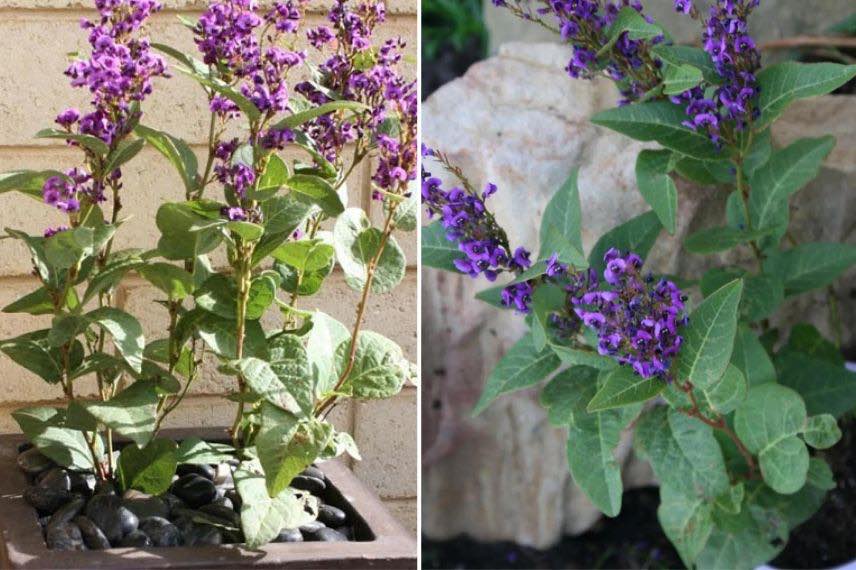
Hardenbergia violacea ‘Regent’ is a small, bushy, non-climbing cultivar.
Read also
How to propagate Hardenbergia ?Care
Watering
Hardenbergia appreciates regular watering, especially during the flowering period. In a pot during flowering, you can stand it in a basin of water once a month and alternate with watering at least once a week. Let the soil dry out between waterings.
Fertilising
You can apply compost to the soil by scratching the surface.
Pruning
It is not necessary to prune Hardenbergia, but you can prune after flowering to encourage the following year’s flowering. To encourage flowering, remove spent flowers as they fade.
Diseases
Hardenbergia has excellent disease resistance.
Overwintering
As Hardenbergia is not very hardy, it should be protected from frost and brought indoors to a sheltered place in winter, such as a greenhouse or an unheated conservatory. It can also be protected, depending on the climate, with a winter cover.
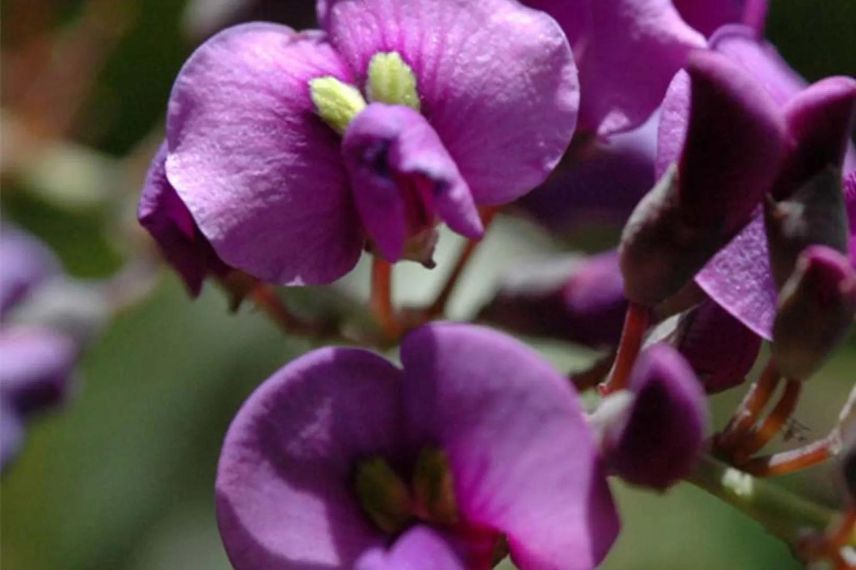
Close-up of the Hardenbergia flower
- Subscribe!
- Contents
Comments