





























How to get rid of goutweed?
Identification, prevention and natural solutions
Contents
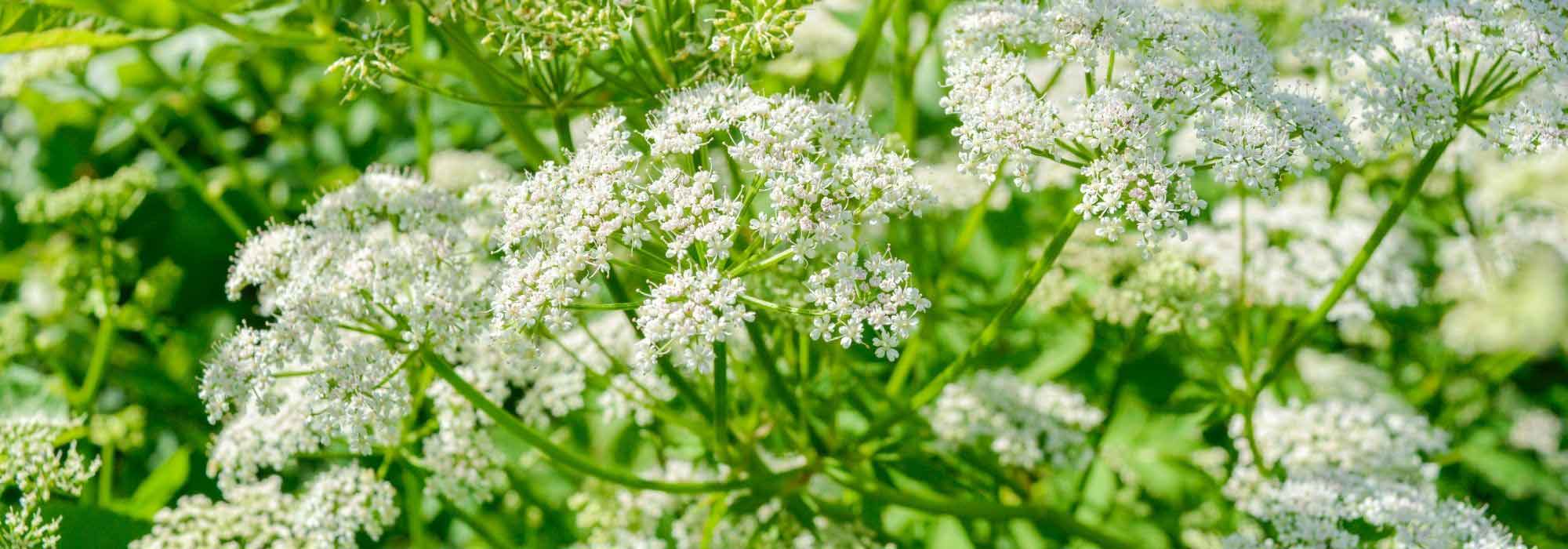
Aegopodium or Ground Elder does not have a very good reputation. It is indeed classified by many gardeners as an adventive or “bad” invasive herb, similar to bindweed, couch grass, or creeping buttercup.
Its ability to quickly colonise an area, combined with a tough and unfriendly nature, makes it a tenacious plant that can end up smothering all other forms of vegetation.
First, let’s see how to properly identify this unwanted plant. We will then provide our tips to limit its spread, as well as natural solutions to attempt to eliminate Ground Elder sustainably and effectively.

Identify the herb for gout.
Recognising the Unwanted
The Ground Elder (Aegopodium podagraria) is also known as goutweed. It earned this nickname due to its use since antiquity for its medicinal properties that were believed to treat gout, a condition causing inflammation of the joints.
Ground Elder belongs to the Apiaceae family (formerly known as Umbelliferae), which includes celery, parsley, carrot, and hemlock, and is thought to be native to Eurasia.
The plant typically grows to a height of 60 cm to 1 metre. Its leaves, resembling the shape of a goat’s hoof, are the origin of its name derived from Greek (“aigos” meaning “goat” and “podion” meaning “foot”).
The foliage is highly dissected and usually grows in threes once mature: it consists of three dentate leaflets, each divided into three parts. The leaves emerge directly from the ground, attached to the rhizome by a triangular, glabrous, and hollow petiole.
The foliage can be green, but also variegated, as seen in the ornamental variety of Aegopodium podagraria ‘Variegata’. While this variety is reputed to be less invasive, it remains a significant coloniser, and we recommend growing it in pots instead. The leaves emit a scent reminiscent of carrot or celery when crushed.
The small white flowers are gathered in flat and light umbels. They appear from mid-spring to late summer. The flowering resembles that of other plants in the same family, such as wild carrot. This is followed by small fruits, elongated and ovoid achenes containing the seeds.
Goutweed is a perennial groundcover that quickly forms colonies and takes over space in no time. With rapid growth, it can indeed become invasive, spreading in all directions from its underground running rhizome.
Multiplication also occurs through spontaneous sowing after the flowers appear, further increasing its proliferation strength.
In addition to its invasive nature, its rhizomes tend to compete with the root systems of surrounding plants, including bushes or perennials, which weaken, suffocate, and eventually perish.
This tenacity is complemented by great hardiness, resistance to diseases, and no known pests, making it a particularly difficult plant to dislodge.
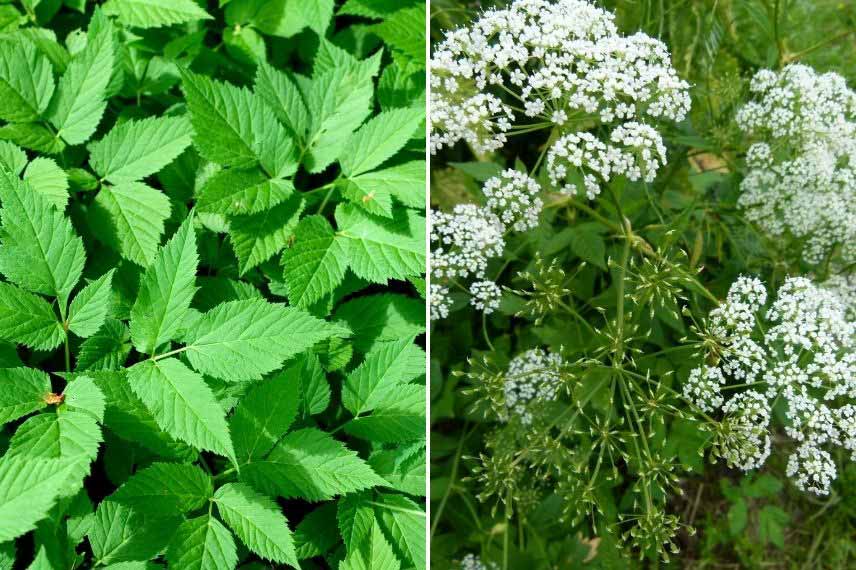 Detail of the leaves and flowers of Goutweed[/caption>
Its Natural Habitat
Not demanding, Ground Elder can thrive under various light and soil conditions. However, it prefers semi-shaded, cool, and slightly moist areas, in well-drained, nitrogen-rich soil.
It can easily be found in fallow land, uncultivated areas, woodland edges, and along paths, as well as, of course, in gardens. The plant even thrives under trees with a developed root system.
Read also
Bindweed: how to get rid of it?Limit the proliferation of goutweed.
We have seen that the creeping buttercup is difficult to eradicate. However, it is possible to control its spread with a few natural solutions.
Remove Aerial Parts
By regularly removing all the aerial parts of the plant, you can weaken it gradually, depriving it of some of its nutrient sources and limiting its photosynthesis. If the buttercup is located in the middle of a lawn, the foliage should be cut short regularly during mowing. It will take several passes and patience to sustainably limit its proliferation.
Similarly, you can cut the aerial parts by trimming them close to the ground, using a pruning shear or shear. Proceed regularly as soon as the foliage regrows.
Systematically remove the flowers before they wilt and can produce seeds. This way, the plant will not be able to reseed itself.
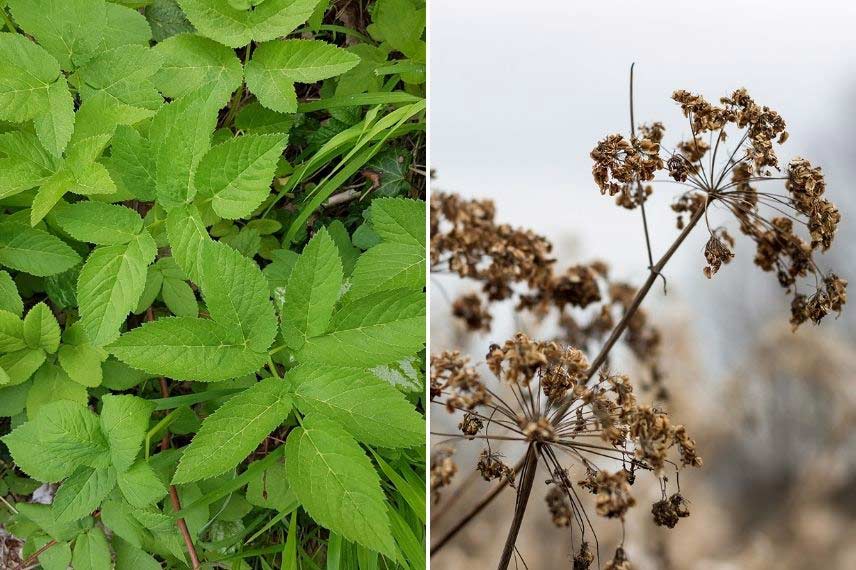
Systematically cut the aerial parts and do not let the inflorescences spread their seeds to the winds
Grow Competitive Plants
A ruthless coloniser, the creeping buttercup leaves little room for competition. However, some plants can be almost as tenacious. This is the case, for example, with the nasturtium, which, if it lacks support, transforms into a lush flowering groundcover in just a few weeks.
You can also rely on the Bellecour ivy, a creeping variety that can reach nearly 10 metres in spread. Its evergreen foliage will dress the shaded areas of the garden all year round. Vigorous and dense, this plant is ideal for limiting the development of adventive plants.
Also consider the box honeysuckle Lonicera pileata, a shrub that forms a true green carpet, or the large periwinkle ‘Vinca major’, a vigorous perennial with a creeping habit.
Consume the Wild Plant
While we mainly discuss the drawbacks of the creeping buttercup, let us not forget that it remains an edible plant, appreciated as a vegetable in some cultures.
So why not try tasting it? The young tender shoots with a delicate flavour can be cooked like spinach or cabbage. Incorporate them raw into salads, gazpachos, or pestos. More mature, they can be cooked and used in tarts, stir-fries, gratins, soups, or even sauces.
The leaves used in herbal tea are said to have diuretic medicinal properties, beneficial for the joints, hence their use in natural medicine to treat gout.
Get rid of goutweed naturally
The goutweed (Aegopodium podagraria) is almost impossible to eradicate completely, but some natural solutions can help eliminate a large part of it. These actions will require patience and perseverance to be effective.
As always, we advise against using chemical weedkillers and herbicides. In addition to being non-selective and harmful to the environment, both plants and living beings, they are often ineffective against goutweed. Thermal weeding also seems to have no effect.
When to act?
The earlier you act to get rid of goutweed, the more effective it will be. Young plants are indeed always easier to eliminate than those that have been established for several years.
Preferably carry out the removal in autumn, to weaken the plant before the cold season, or at the beginning of spring, before the growth resumes.
For uprooting, choose dry weather following good rain, when the soil is well-drained, making it easier to remove as many roots as possible.
Manual uprooting
Manual uprooting is undoubtedly the most laborious solution. It is a physical task that requires diligence and patience, but it is also the most effective way to get rid of goutweed.
The goal is to dig to unearth and remove the entire root system and rhizomes, which have a nasty tendency to cling deep down.
Be careful: any fragment of rhizome left behind is likely to regrow. To extract as many rhizomes as possible, dig to a depth of at least 50 to 60 cm, using a digging fork.
For more precision, use a sieve to spot even the smallest segments.
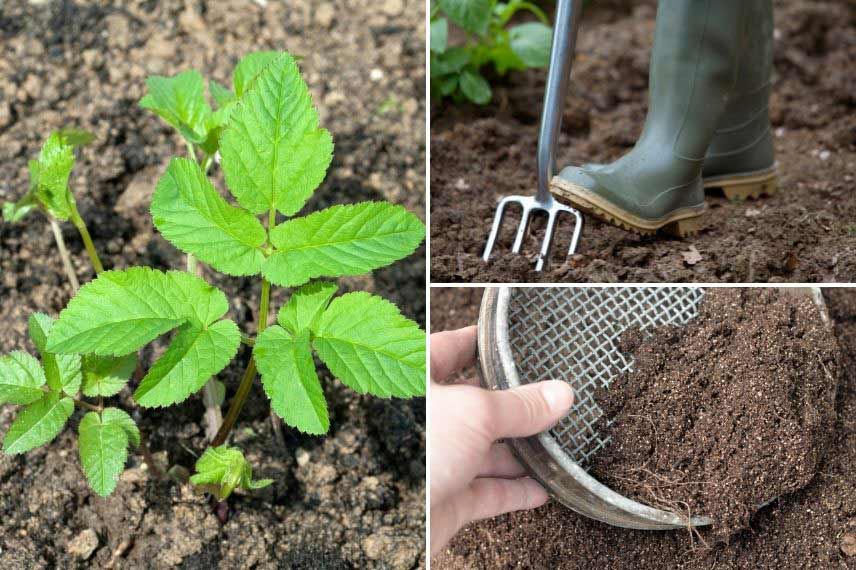
Preferably uproot young plants with a digging fork and sieve the soil to remove rhizome fragments.
Do not use a rotavator or spade, as these will shred or cut the rhizomes. These tools would only multiply and spread the fragments, which will quickly regrow.
Do not compost either the aerial parts or the rhizomes, but dispose of them quickly at a waste facility to avoid any risk of regrowth in the garden.
If goutweed is found in a flowerbed near other plants, you will unfortunately need to remove all the plants in the area. Fragments of rhizomes can indeed colonise the root systems of other plants. If you wish to keep the neighbouring crops, be sure to carefully inspect their root systems before replanting. You can also pot them for a few months to check that no goutweed shoots resurface, or propagate them by cuttings.
If goutweed grows at the property boundary and may have colonised an inaccessible area, do not hesitate to additionally use a vertical rhizome barrier, as with bamboo.
Discover all our tips in the dedicated article: “How to install a rootstock barrier?”.
Finally, a more radical solution in case of severe infestation is to excavate the area. The removed soil can then be completely replaced with topsoil. This will, of course, require suitable equipment or the intervention of a professional.
Covering
By depriving the plant of natural light and oxygen, covering weakens it and, ultimately, can cause it to wither.
Opt for a tarpaulin or thick cloth of good quality, completely opaque, resistant to weather and UV.
Cover an area slightly larger than the infested part, to have a margin of “safety”. Weight it down securely with stones, bricks, or thick mulch, especially in windy conditions. You can also place planters and pots on it for a more aesthetic touch.
Then, arm yourself with patience: this area will be “condemned” for at least one, if not two years, while you work to eliminate the plant’s reserves.
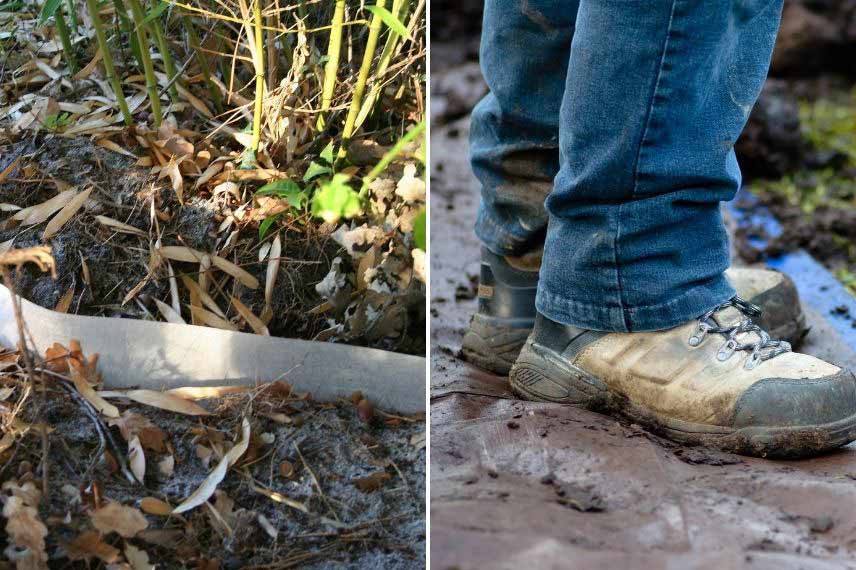
Installing a rhizome barrier to isolate infested areas and covering can be effective solutions to eradicate Aegopodium podagraria.
Once the tarpaulin is removed, remain vigilant and immediately eliminate any new regrowth. Note that seeds can also retain their germination capacity even after several years.
Good luck!
- Subscribe!
- Contents

Comments