





























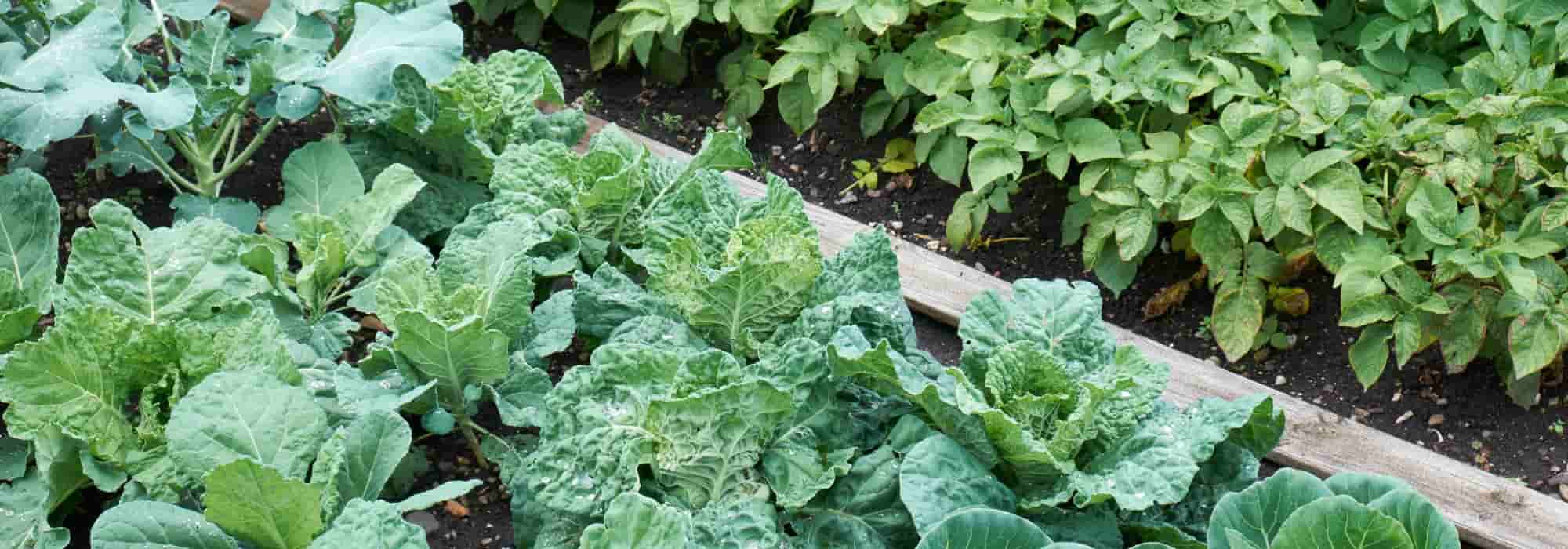
Heatwave: how to maintain (save) your vegetable garden?
Some tips to apply in the vegetable garden during a heatwave
Contents
When the thermometer cheerfully flirts with 40 °C for several days and weeks on end, when a scorching heat descends upon the vegetable garden, and when the relentless rays of the sun scorch every blade of vegetation, the gardener tends to stay in the shade. Meanwhile, the vegetables and soft fruits in the garden suffer, wilt, and fade, halting their growth to struggle or even giving up in the face of the heatwave that prevails.
Have you ever experienced this catastrophic scenario? And you may find it happening again and again, due to the climate change that becomes more pronounced year after year, summer after summer…
So, in the event of a heatwave, it’s best to know how to react in time to save what can be saved. Here are some tips for maintaining and preserving your vegetable garden during extreme heat, or even during a heatwave and drought.

Watering your vegetable garden, the foundation of maintenance
If there is one truth about watering the vegetable garden, it is to never water during the hottest hours of the day. The risk of burning the foliage of your vegetables is at its peak. It is therefore better to water early in the morning or late in the evening. This way, you limit water evaporation.
In hot weather, you should prioritise and regularly water water-hungry vegetables such as cucumbers, aubergines, courgettes and squashes, melons, peppers and tomatoes, leafy vegetables (salads, chard, cabbages…), and radishes. Similarly, some vegetables like beans need to be watered generously but less frequently.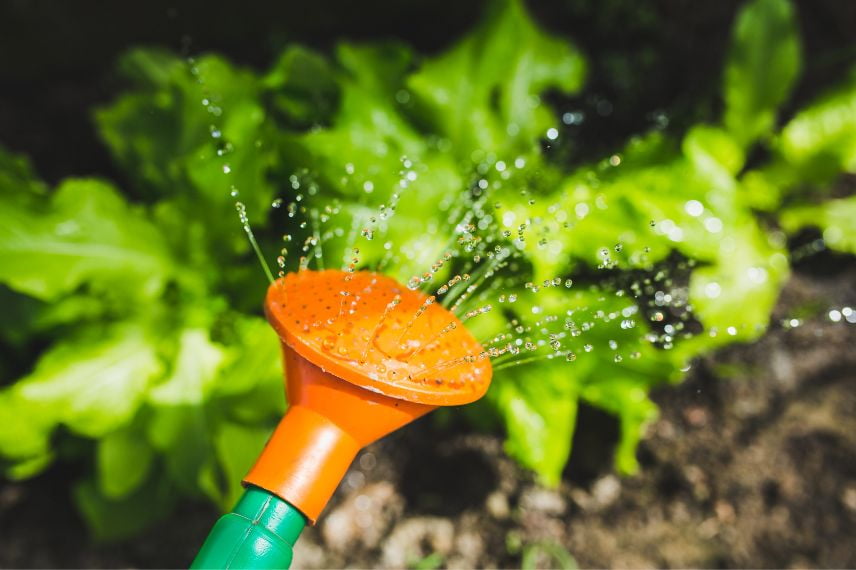
Of course, for the planet and your wallet, it is preferable to collect rainwater throughout the year using water butts placed around your garden, but never too far from the vegetable garden. The water will be at room temperature, which is ideal for watering vegetables. If you use tap water or well water, allow it to warm up before using it to water your vegetables.
As for the choice of watering system, it should be considered ahead of a heatwave, starting in spring. A watering can is perfect as it allows you to water at the base of the vegetables without wetting the foliage or to water with the rose for salads, radishes, and spinach. However, over time, these watering cans may seem heavy… Other watering systems such as drip irrigation, micro-porous hoses, or oyas can be considered.
Jean-Christophe explains the advantages and disadvantages of all automatic watering systems.
I invite you to discover more tips in my article Watering the vegetable garden: our tips
Shade your vegetables to protect them from heat.
Providing shade for your vegetable garden may seem surprising. However, this shade can limit the harmful effects of heatwaves, such as wilting foliage, leaf burns, and halted growth…
There are various solutions to temporarily provide shade for the vegetable garden and help reduce the temperature by a few degrees. However, in spring and autumn, sunlight will be welcome to germinate your sowings or warm the last vegetables. Therefore, opt for reversible alternatives:
- Installing shade cloths or shade structures
- Creating wooden structures to shelter vegetables with screening
- Setting up windbreaks or privacy screens
- Using overturned crates on young plants or sowings
- Employing parasols
- Planting annual plants (sweetcorn, sorghum, sunflowers…) or even deciduous trees or bushes with rapid growth.
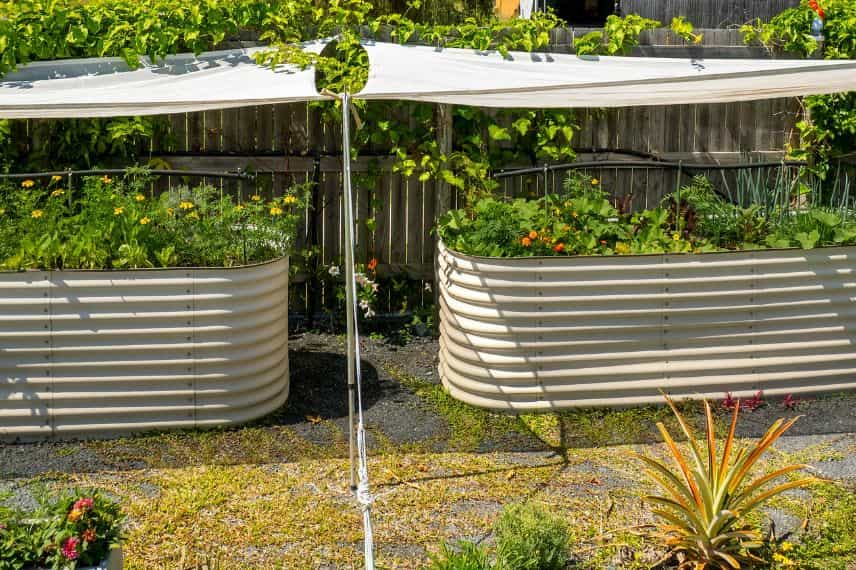
I detail these solutions and provide planting examples in my article: Shading the vegetable garden and its vegetables in summer
If you do not have mulch or prefer not to use it for fear of pests, be sure to hoe the soil in your vegetable garden. This will break up the surface crust that forms during intense heat, allowing watering to penetrate better.
Mulch to retain a certain level of moisture
If, in your eyes, mulching has the main benefit of avoiding the chore of weeding, it is also very useful for retaining a certain degree of moisture. This allows you to space out watering and keep the soil cooler during hot weather. Simply because the evaporation of watering on warm soil is limited. So, when the heatwave devastates your vegetables, don’t hesitate to increase the layer of mulch.
This mulching also has the advantage of preventing soil from drying out. The water provided by watering will penetrate better to reach the deepest roots.
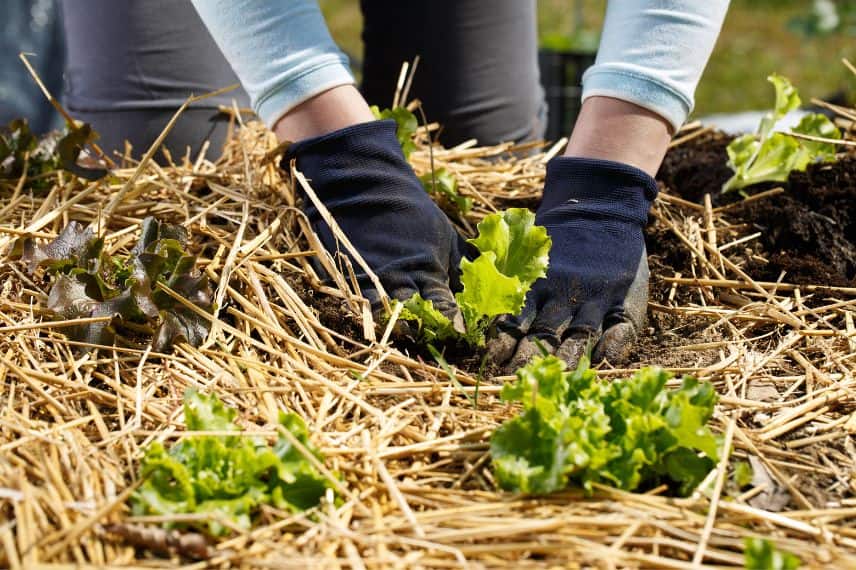
During hot weather, favour certain mulches:
- Grass clippings, rich in nitrogen, that have been dried beforehand (which become rare in mid-summer, as the lawn scorches under the sun’s rays)
- Straw is ideal in mid-summer, especially if you take the precaution of mixing it with grass clippings
- Chopped prunings from bushes and perennials
- Chopped dead leaves collected and stored over winter
- Commercial mulches such as RCW, lin flakes, miscanthus, or hemp… but they represent a significant cost for the vegetable garden
- Leaves from nettles or comfrey collected from the countryside
To learn more: What mulch for the vegetable garden?
Pruning your vegetables to limit evapotranspiration
Certainly, I agree that the pruning of certain vegetables during periods of intense heat requires a certain finesse. It’s essential to find the right balance.
Which vegetables are affected by this summer pruning? Squashes, trailing courgettes, melons, cucumbers… and also tomatoes. All cucurbits have large leaves and will spread if not controlled, multiplying the stems. As a result, over a larger area, evapotranspiration is greater and dehydration looms. By cutting some stems, this issue can be mitigated. However, it is necessary to leave some leaves to shade the developing fruits.
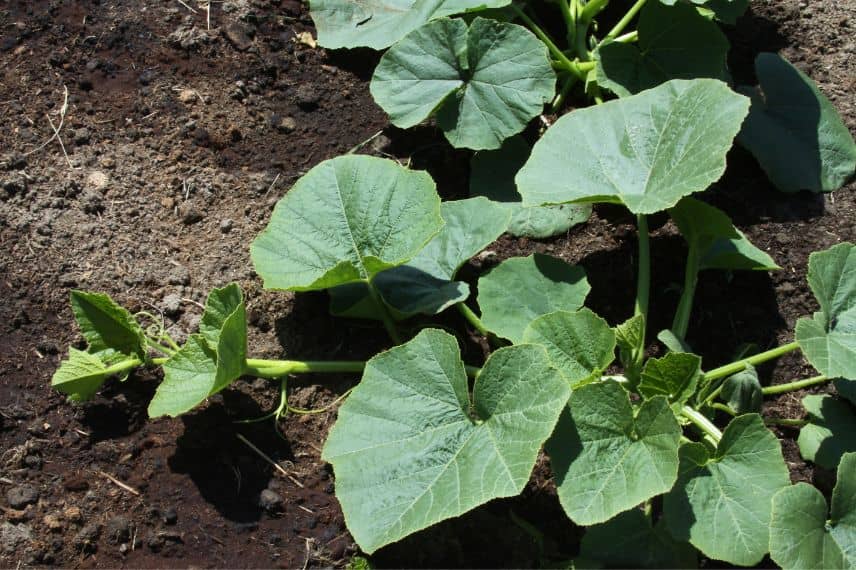
The same applies to tomatoes. If too much foliage is removed, the tomatoes are exposed to the harsh rays of the sun and may scorch.
So, pruning is beneficial, but not excessively!
Avoid sowing and planting.
During a heatwave, it is futile to sow. Indeed, vegetable seeds require a certain temperature to germinate. If it is too cold, they won’t germinate. If it is too hot, they won’t germinate either.
Similarly, transplanting young plants during a heatwave is not a good idea. They will struggle to establish themselves. Transplanting is already a trauma in itself, as plants must adapt to new growing conditions. And they will not be able to mobilise enough resources to cope with the extreme heat, being fully occupied with establishing themselves.
Therefore, postpone the sowing and planting planned for summer. Some even go so far as to grow their vegetable garden in spring and autumn-winter, skipping the two summer months altogether. This means missing out on juicy tomatoes or wonderfully sweet melons!
And for raised vegetable gardens?
All the advice mentioned earlier applies to raised bed vegetable gardens as well. It should even be implemented more rigorously. Thus, daily watering will be necessary for certain vegetables, mulching will be essential, and shading will be easier to establish…
- Subscribe!
- Contents
Comments