





























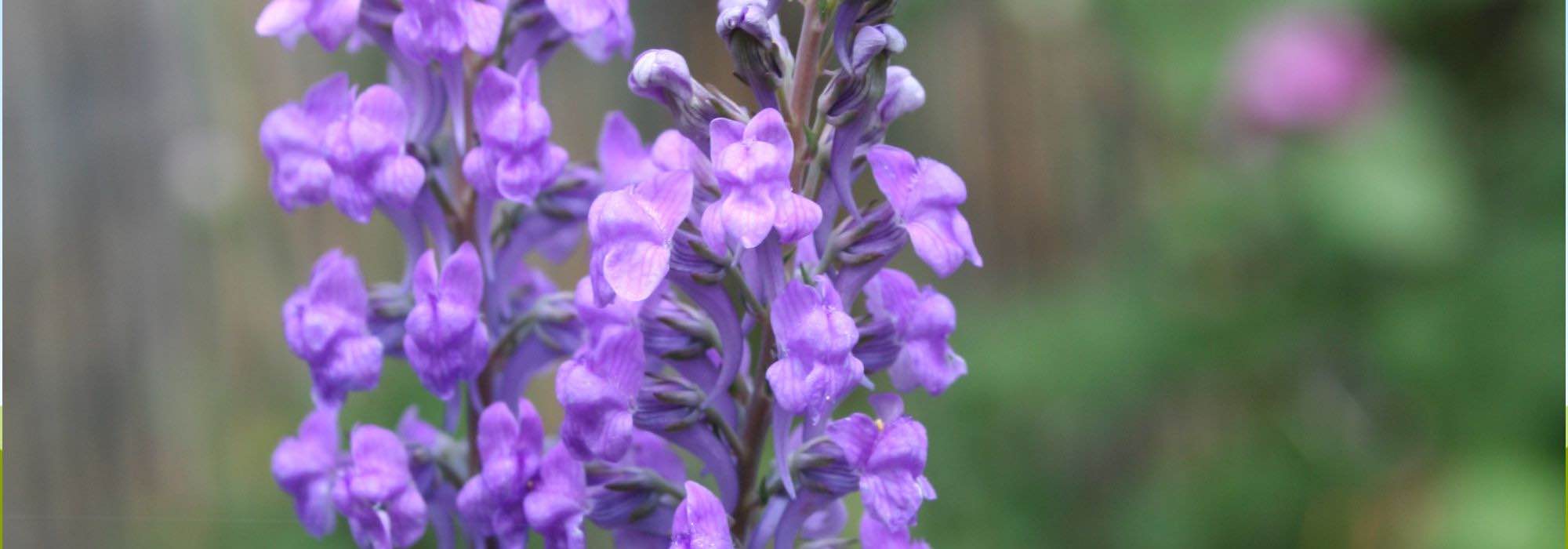
Growing Linarias in pots: elegance and verticality of a country flower
Our step-by-step guide
Contents
Linarias, or linarias, are summer perennials with long, slender clusters of flowers in soft or bright colours depending on the variety. With rapid growth, they are undemanding and readily self-seed in well-drained soil, even sandy, fertile and moist. You can grow them in pots to enjoy their fine grey-green foliage and their elegant, cottage-garden silhouette. They lighten all mixed displays. Here are our planting and maintenance tips to help these beautiful and easy perennials thrive in pots.

Why grow Linaria in pots?
Linaria plants have a slender, upright habit with a small footprint on the ground. They can be grown in moderately sized pots quite easily. As they are undemanding, they require little maintenance.
Another advantage of growing Linaria in pots is the possibility of creating custom flower displays. By pairing different Linaria varieties or by combining them with other plants with a denser or more rounded habit, or with equally slender grasses, you can design unique and creative displays.
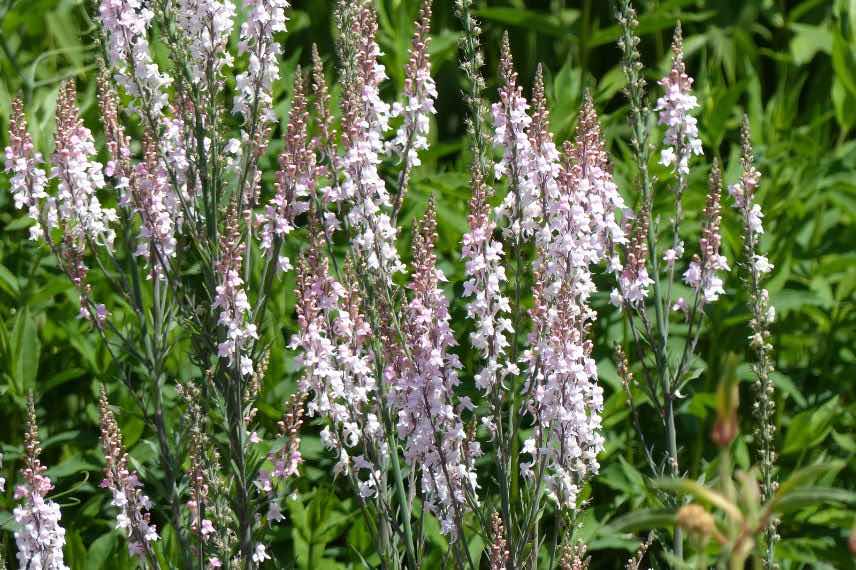
Linaria ‘Canon J West’, a variety of Linaria purpurea
What type of pot? What size?
The material of the pot plays an important role. Terracotta pots are appreciated for their ability to let the roots breathe and to shed excess water, thereby reducing the risk of over-watering. However, potting compost dries out more quickly in a terracotta pot, requiring particular attention to watering during hot periods. Plastic pots, on the other hand, retain moisture better and are lighter, but provide poorer aeration. The choice of material will therefore depend on your watering habits and your aesthetic preferences.
Drainage is another essential aspect to consider. Proper drainage is essential to prevent water from accumulating at the bottom of the pot, which could cause root rot. It is essential to choose a pot with adequate drainage holes or to create them if necessary.
Which substrate?
A suitable substrate is essential: it should provide a good balance between water retention and drainage, while supplying the nutrients required for optimal growth of the plants.
For Linaria, a light, well-drained substrate is preferable.
It is advisable to use a blend of quality potting compost, specifically designed for container plants, to which coarse sand or perlite can be added to improve drainage.
The addition of well-decomposed compost or manure can enrich the mix with essential nutrients, thereby promoting vigorous growth and abundant flowering.
Also plan for clay pebbles or gravel for the bottom of the pot and a organic mulch to retain the substrate’s moisture between waterings.
Read also
5 Ceanothus to grow in potsWhen and how to plant?
Plant Linaria in a pot in spring, ideally in April.
Here’s how to proceed:
- Pour a drainage layer of a few centimetres at the bottom of the pot in the form of clay balls, gravel or pouzzolana.
- In a separate container, mix the various components of the potting mix if necessary.
- Pour some potting mix into the pot.
- Plant Linaria.
- Top up with the potting mix, pressing down gently and evenly.
- Fill up to within a few centimetres of the rim and firm down again.
- Water thoroughly.
- When the water has been absorbed, add a little more potting mix if necessary, if air pockets have appeared.
- After a few minutes, water a second time.
- Apply a mulch layer about 3 cm deep.
Exposure
Linarias generally appreciate a good amount of light to thrive and provide abundant flowering.
They need direct sun exposure for several hours per day. A sunny location promotes vigorous growth and stimulates flower production. For regions with a particularly hot and sunny climate, protection during the hottest part of the day may be necessary to prevent plants from suffering stress due to excessive heat. In this case, choosing a location that benefits from partial shade during the hottest hours can help protect the linarias.
It is important to monitor the plants’ response to their sun exposure. If the leaves begin to show signs of scorching, or if the plant seems to languish despite proper care, this may indicate an excess of direct light. Conversely, a lack of light can manifest as stretched stems, reduced flowering, or less vibrant colours of flowers.
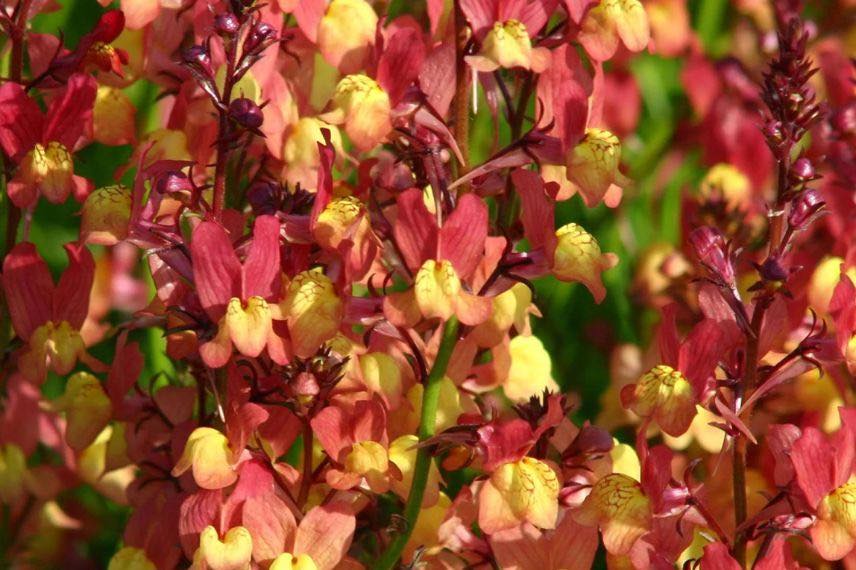
Moroccan linaria, like all linarias, appreciates the sun
Watering and fertilisers
Linarias in pots require regular watering, but it is crucial to avoid overwatering to prevent the risk of root rot. The watering frequency will depend on climate conditions, sun exposure and the type of substrate used. As a general rule, water Linarias when the top centimetres of the substrate are dry to the touch.
During hot, sunny periods, increase the watering frequency, as pots tend to dry out more quickly than soil in the ground. It is important to adjust the watering according to the plant’s specific needs and environmental conditions.
Linarias do not need fertiliser. A dressing of compost or manure at planting is sufficient for their needs.
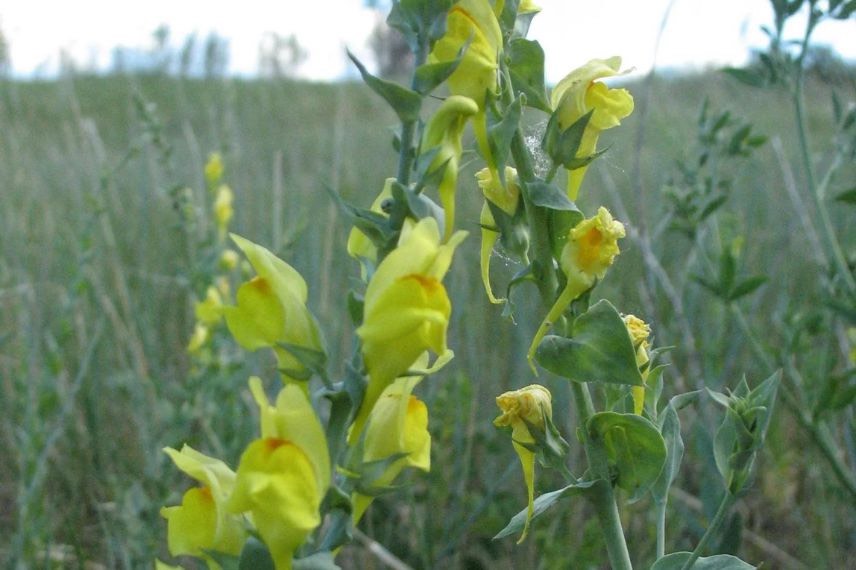
The beautiful Linaria dalmatica
Care
Linaria are very low-maintenance.
We recommend cutting back spent flower spikes, as this encourages the appearance of a new flowering. Prune the spent flower spikes in August to encourage a new flowering in September–October.
The Linaria purpurea species and its varieties are short-lived. If you are growing this species, we advise collecting the seeds to sow (or to let the plant self-seed) so that you can keep the plant in the garden.
That said, the varieties are not true to seed, but they root very easily and it is therefore possible, with a little effort, to keep these plants in the garden for a long time.
Plan to repot every one to two years, when the plant is crowded in its pot. Choose a slightly larger pot and refresh the growing medium. This process stimulates growth by giving more space to the roots and providing a fresh, nutrient-rich medium.
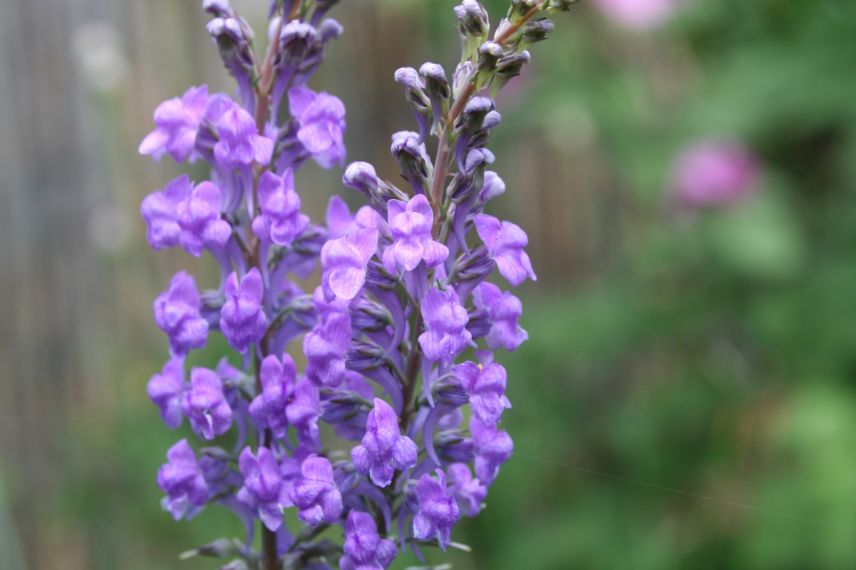
Linaria purpurea, a short-lived species that self-seeds naturally
- Subscribe!
- Contents
Comments