





























Growing Croton
Our guide to a radiant plant.
Contents
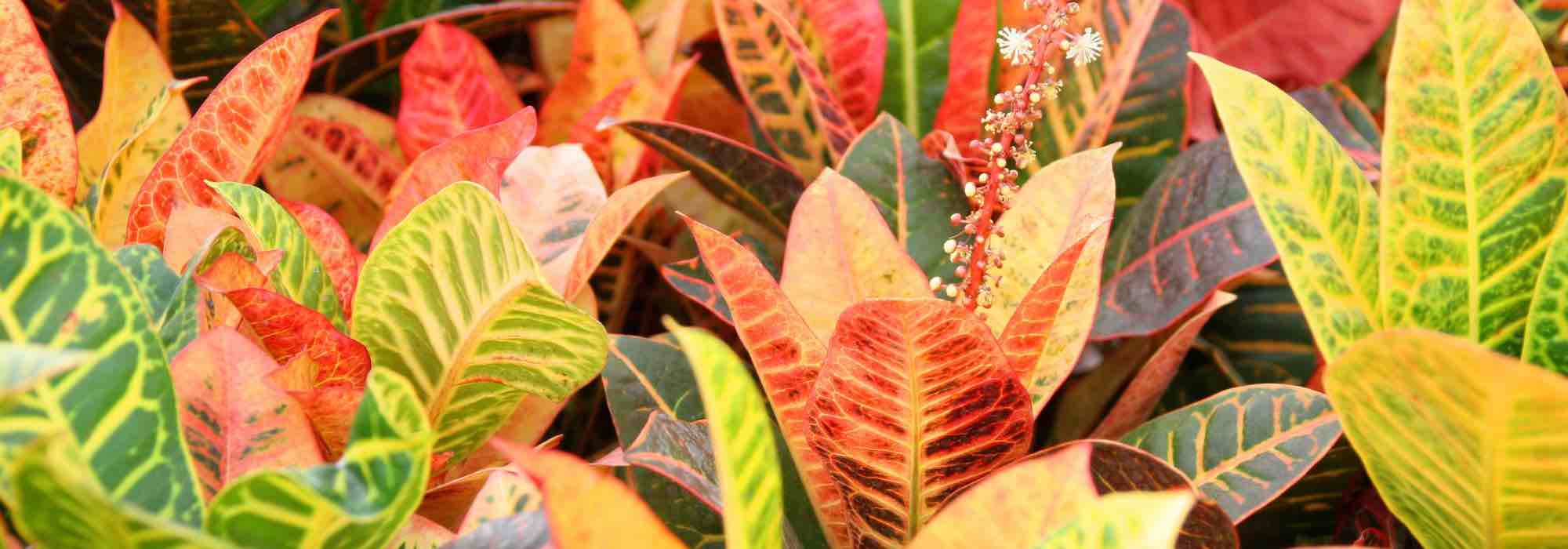
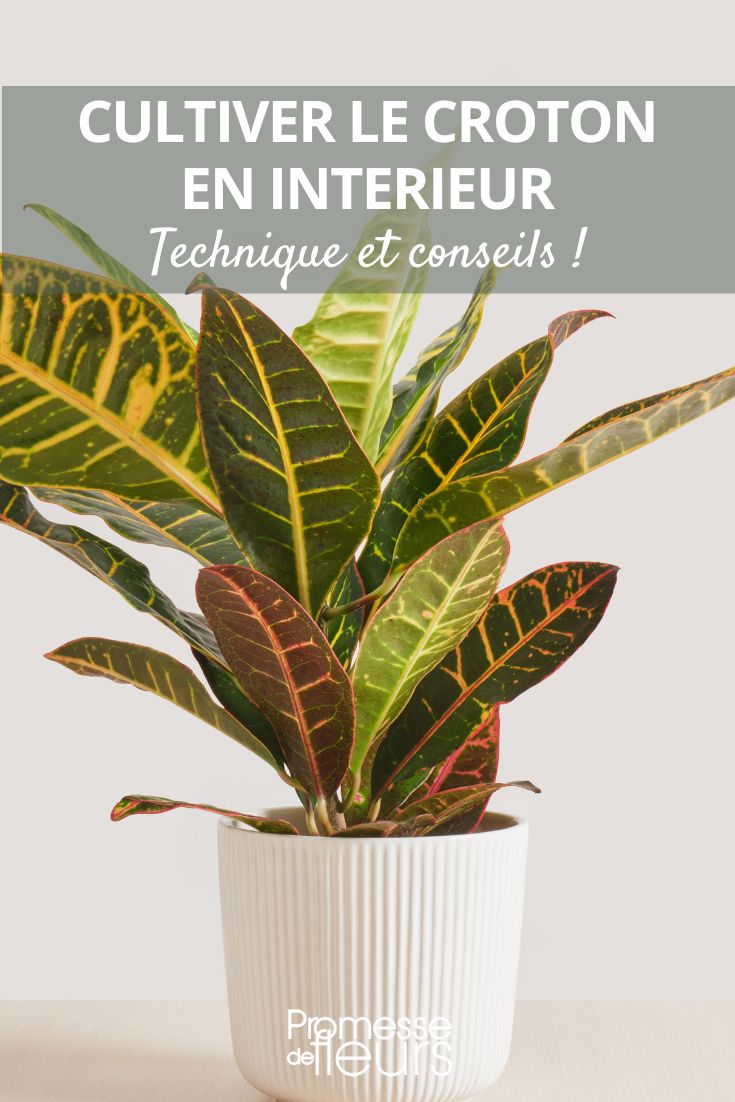
The Croton, known by its Latin name Codiaeum, is a remarkable houseplant for its glossy, vividly coloured, varied and iridescent leaves. Originating from the tropical regions of Asia and the Pacific islands, this plant brings exotic flair and colour to interiors, but also vitality, with its leaves in a range of colours, from yellow, red and orange to deep green.
In this article, let’s explore in detail how to grow and care for the Croton, focusing on crucial aspects such as choosing the pot, the right substrate, the ideal light and temperature conditions, and maintenance methods to ensure its growth and vitality.
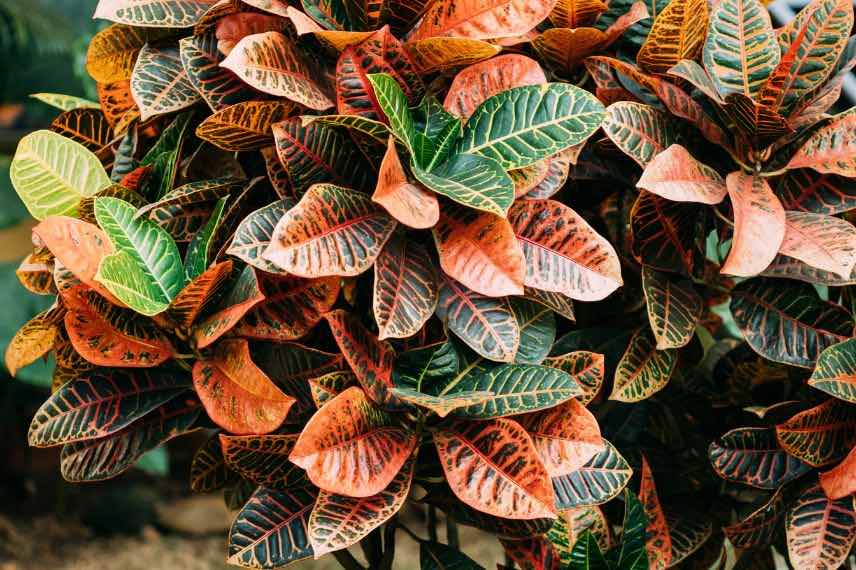
Croton develops striking coloured foliage

Pot selection
Ideal pot size
Croton prefers to be slightly snug in its pot, which stimulates the growth of its coloured leaves. A pot that is too large can lead to excessive water retention, detrimental to the roots. Choose a pot that is just a little larger than the current root mass. In general, a pot 2–3 cm wider than the previous one is ideal when repotting.
Recommended materials
Terracotta pots are particularly suitable for Crotons. Their porosity allows better root aeration and natural evaporation of excess water, thereby reducing the risk of root rot. Plastic pots are also possible, provided they have drainage holes and you are careful not to overwater.
What substrate?
The choice of substrate is crucial for the Croton’s health and growth, as it is a demanding indoor plant when it comes to soil. A well-chosen substrate promotes healthy root development, vigorous growth and vibrant leaf colour.
Ideal substrate composition
The Croton thrives in a substrate that is rich, well-drained and slightly acidic to neutral. A mix of potting compost, of perlite and of turf in equal parts is recommended. Perlite improves drainage and aeration, while turf helps to maintain a slight acidity and good moisture retention without saturation. This mix ensures a balance between the necessary water retention and effective drainage, thereby preventing root rot.
Importance of drainage
Good drainage is essential for the Croton. In addition to choosing a well-drained substrate, it is advisable to place a layer of gravel or clay balls at the bottom of the pot to facilitate water flow. This prevents water from stagnating at the root level, a key factor in avoiding root diseases.
Do not underestimate the importance of a properly chosen substrate. By selecting an appropriate substrate and ensuring effective drainage, you provide your Croton with the ideal conditions for healthy and robust growth. This careful attention will be reflected in the beauty and vitality of your indoor plant.
How to plant or repot?
Planting steps
During the initial planting of the Croton, choose a pot of suitable size as shown above. Fill the bottom of the pot with a layer of gravel or clay pebbles, then add the recommended substrate. Gently place the plant in the pot, ensuring the soil surface is level with that in its original pot. Top up with the substrate, firm gently, and water well.
Frequency and tips for repotting
The Croton should be repotted every 1 to 2 years, or when you notice the roots starting to protrude from the drainage holes. Repotting is also an opportunity to refresh the substrate and give the plant more space to grow. When repotting, choose a pot slightly larger than the current one. Handle the plant with care to avoid damaging the roots. After repotting, water the plant generously.
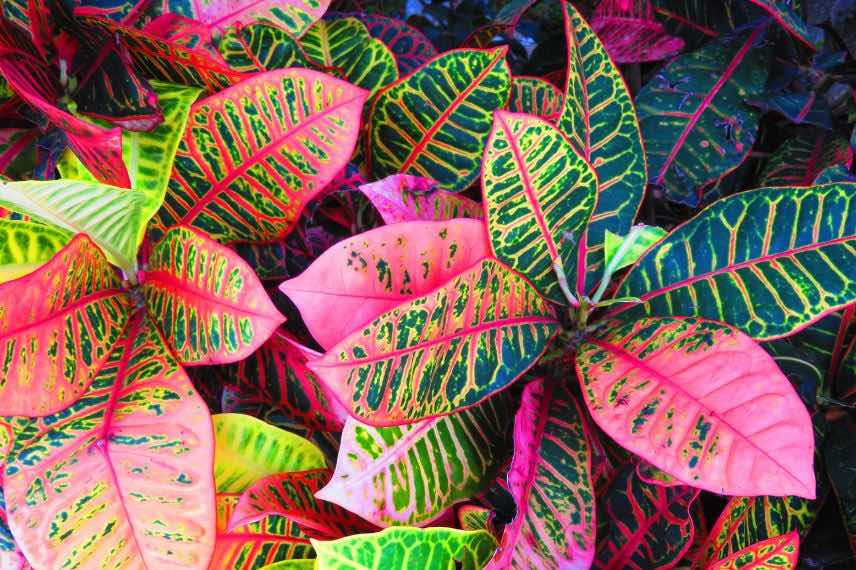
Some Croton varieties have leaves in colours that are almost fluorescent
Read also
Mist indoor plantsPosition
Light requirements
Croton needs bright, indirect light, but also tolerates a few hours of direct sun to maintain the colour intensity of its leaves. A location near a window facing southeast or southwest is ideal. Direct sun that is too intense, during the hottest part of the day and in summer, can burn the leaves, while too little light can lead to a loss of their vibrant colour. If you notice the leaves becoming greener and less coloured, this may indicate a need for more light. If, on the other hand, there is too much direct sun, do not hesitate to filter the light with sheer curtains.
Favourable temperatures
Croton prefers a steady temperature, ideally between 16 and 27°C. Avoid placing your plant in cold drafts or near sources of direct heat such as radiators. Sudden temperature fluctuations can stress the plant, causing leaf drop. In winter, ensure that the plant stays warm and away from cold draughts, which may mean moving it away from a window, as if it is too close it can suffer from the cold, particularly at night.
Care
Frequency and method of watering
Croton watering should be balanced. It is important to allow the substrate to dry slightly on the top few centimetres between waterings. But not more. Too much water can lead to root rot, while a lack of water can cause wilting and leaf drop. Use room-temperature water to avoid shocking the roots. In summer, water the plant more frequently, while in winter, reduce the frequency.
Managing ambient humidity
Croton, native to tropical climates, prefers high humidity levels. In dry environments, especially in winter with heating, it can be beneficial to use a humidifier. Regularly mist the leaves with soft water can also help maintain the necessary ambient humidity.
Fertilising tips
Fertilise the Croton every two months during the growing season (spring and summer) with a balanced fertiliser for houseplants. In autumn and winter, reduce fertilising, as the plant enters a rest period. Excess fertiliser can damage the roots and affect the plant’s health.
Also read our tips in Croton: Caring for this houseplant through the seasons.
Diseases and pests
Identification of common problems
The Crotons can be affected by parasitic pests such as scale insects, red spider mites and aphids. These pests feed on the sap of the plants, weakening the plant and causing damage to the leaves. Signs of infestation include sticky patches on the leaves, tiny webs, or small insects visible on the plant. Fungal diseases, often due to excess moisture, can also affect the Croton, manifesting as spots or mould on the leaves.
Solutions and prevention
To combat pests, regularly wipe the leaves with a damp cloth to remove dust and any pests. In case of infestation, use a natural treatment. The black soap is your friend; it almost invariably features in effective mixes to use to get rid of pests. To prevent fungal diseases, ensure that your Croton is not overwatered and that the pot and the substrate allow for good drainage. If signs of disease appear, reduce moisture around the plant and remove the affected parts.
→ Read our articles to learn about the treatments suitable in case of red spider mite attacks, mealybugs or aphids, and our in-depth article: Croton indoors: parasites, diseases and common problems.
Showcasing the Croton in your home
The Croton is an indoor plant that naturally draws the eye with its coloured leaves and exotic appearance. To showcase this green indoor plant, consider its placement and its pairing with other decorative elements. Place the Croton in a spot where its colour palette can really shine, such as near a window with a light-filtering curtain to create a bright and warm effect. Choose a pot that complements both the plant and the style of your interior decor. Neutral-coloured pots or pots with natural textures such as ceramic or terracotta highlight the Croton’s vivid hues without competing.
Consider creating a verdant corner by pairing the Croton with other indoor plants. Choose plants with contrasting foliage in terms of colour and texture for a dynamic visual effect. For example, pairing the Croton with plants with dark-green leaves or ferns creates an interesting contrast that emphasises its unique colouring.
Finally, don’t forget the lighting. Soft, indirect light will bring out the colour nuances of the Croton, especially in the evening. Well-thought-out lighting can transform your Croton, adding a touch of elegance and vitality to your living space.
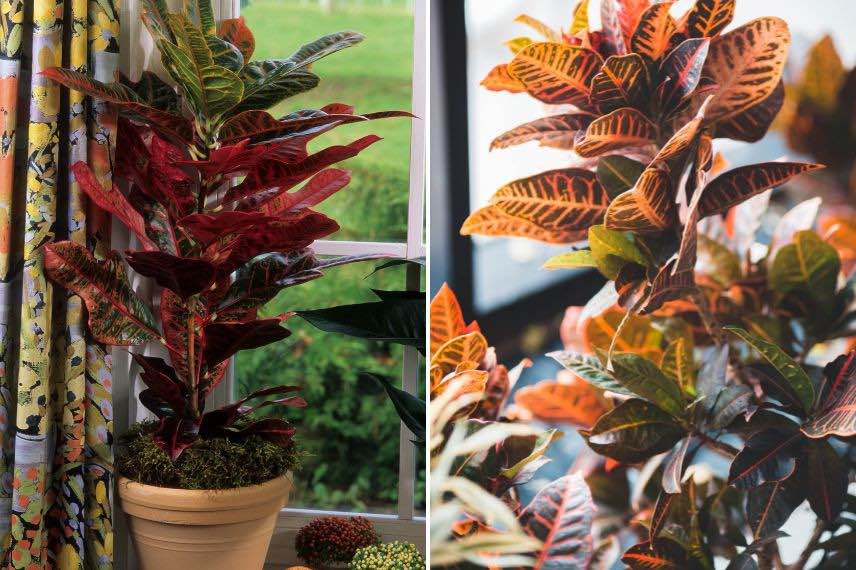
Choose neutral-coloured pots so as not to compete with the plant’s colours
Find out more
Also read our article: The Croton: Planting, Cultivation and Care.
- Subscribe!
- Contents
Comments