





























Growing Echiums in pots
Tips for planting and caring for Viper's Bugloss in a pot or tub.
Contents
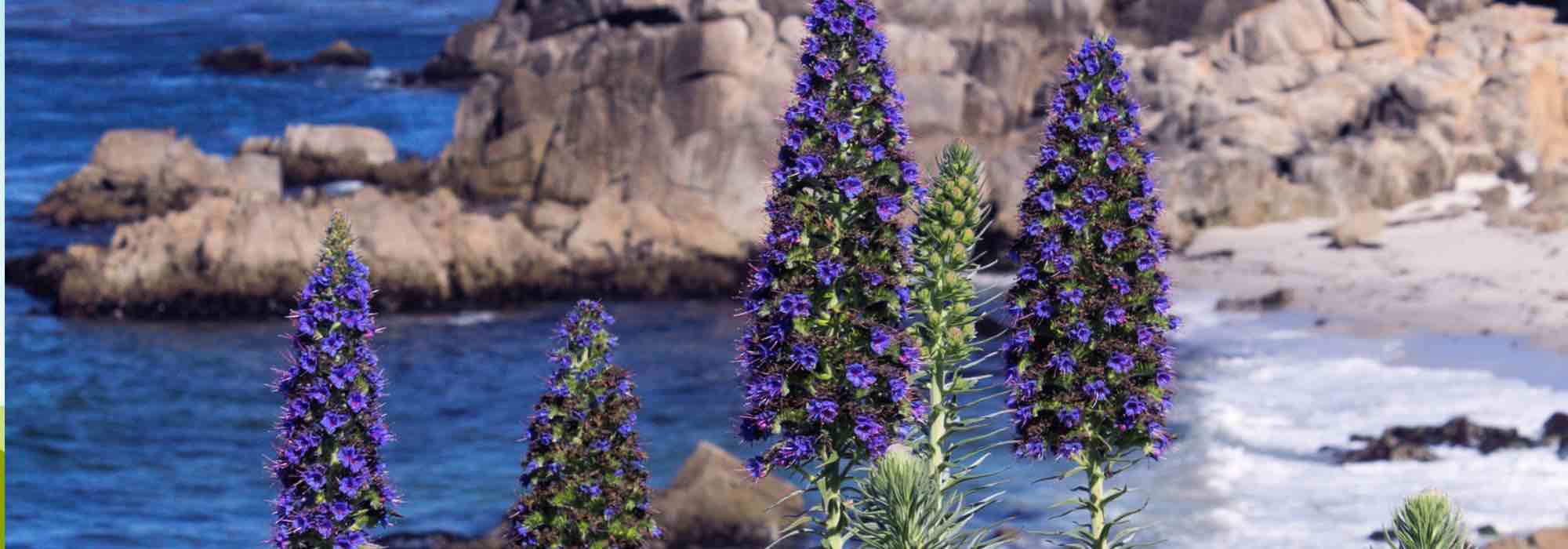
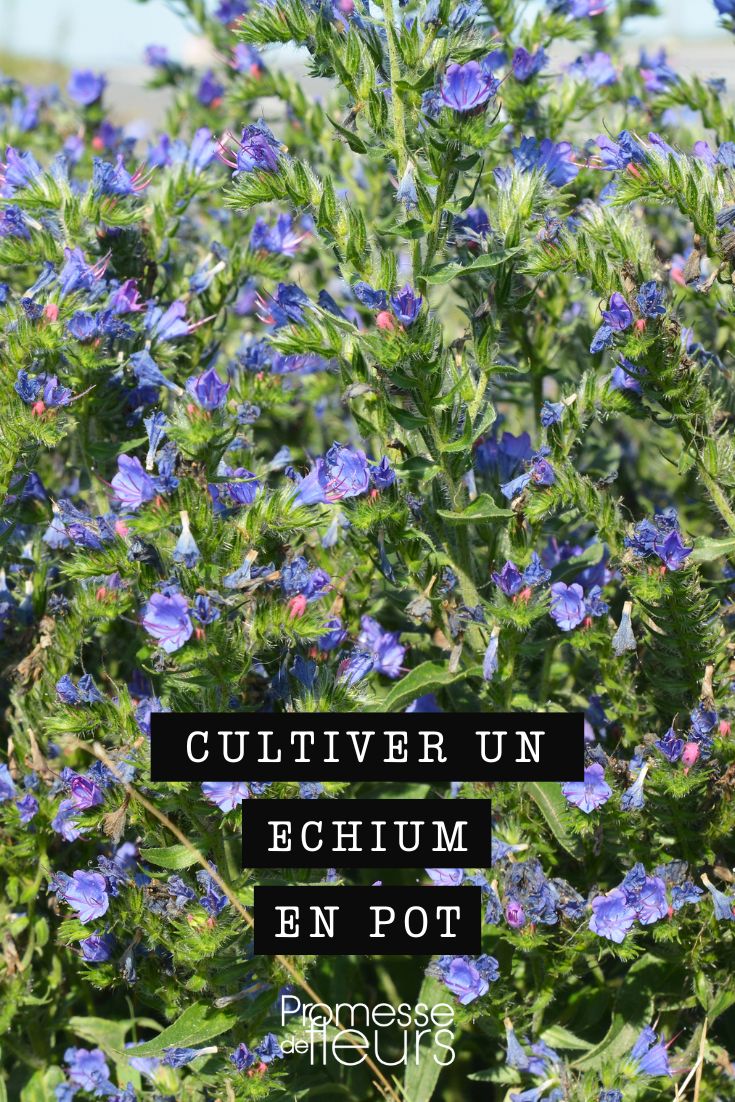
Echium or Viper’s Bugloss is a spectacular plant with spike-like flowering, usually blue, but which can also be pink or white. It bears a rough, woolly down that makes it wind- and drought-tolerant, and its foliage is green-grey, silvery. There are herbaceous or shrubby viper’s bugloss, the shrubby forms, such as Echium pininana, also known as Canary Islands viper’s bugloss, can reach up to 3–4 metres tall in open ground. Echium is an easy-care, short-lived plant. It grows well and self-seeds in mild, coastal climates. It is more or less hardy depending on the species and is suitable for pot culture for the more compact varieties, which allows it to be brought indoors to protect it from the cold if required. The larger species can also be grown in pots in a large, bright glasshouse. Discover our tips for growing Echium in pots and admiring its exotic and distinctive beauty.

Which Echium varieties are suitable for growing in pots?
For container growing, you can grow compact Echium, but also larger species, if you place them in a large, well-lit greenhouse.
Echium amoenum, also called ‘Red Feathers’ is a Viper’s Bugloss with crimson-red flowers, native to Iran, the Caucasus and Russia. From May to September, it offers a spectacular flowering with dense spikes rising from a rosette of narrow, velvety grey-green leaves. Hardy, it is biennial or perennial. Reaching a height of 40 cm, it can be grown in a pot.
L’Echium candicans (syn. fastuosum) or Viper’s Bugloss of Madeira is also suitable for pot growing. It is a spectacular plant species that can reach up to 1.5 metres tall and, from March to June, produces large spikes of blue flowers. These spikes rise above dense, grey-green, silky foliage. It dies after 3 to 5 years. Not very hardy, it enjoys sun, heat, well-drained arid soil and a coastal climate.
Large Echium species, such as the Echium pininana or Canary Island Viper’s Bugloss, can be grown in pots in a large greenhouse or a bright conservatory, where they will be protected from frost. Echium pininana is biennial, forming a rosette of foliage in the first year and flowering only in the second year before dying. Impressive, it can grow up to 3 metres tall. It bears gigantic inflorescences of small blue and pink flowers, punctuated by silvery leaves.
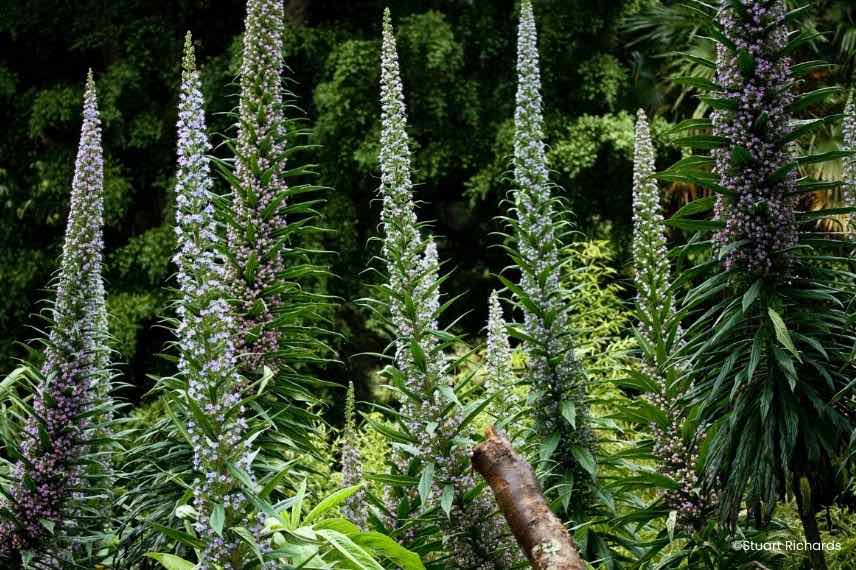
Even the towering Echium pininana can be grown in a pot
When and where to plant viper's bugloss in a pot?
Echium, or Viper’s Bugloss, is planted in September and October in warm-climate regions, and in early spring north of the Loire or in the mountains.
In open ground, Echium is grown in full sun, in soil that is dry, poor and very well-drained. The substrate can even be sandy, stony or calcareous, but not too acidic. The Echium fastuosum and russicum appreciate a cool and rich soil, which allows them to have a more generous flowering.

Echiums thrive in dry, poor, sandy soil and full sun. They tolerate salt spray.
How to grow Echium in a pot?
What type of pot?
Echium plants can be grown in any type of pot, but terracotta pots promote aeration of the roots and thus better drainage.
What growing medium?
Plant Echium in a mixture of potting compost, sand and garden soil
Planting
1- Take a large pot or a large tub.
2- Soak the rootball in a large bucket of water.
3- Place a layer of clay pebbles at the bottom of the pot to promote drainage.
4- Fill the pot halfway with the substrate (a mixture of potting compost, coarse sand and garden soil). You can add a little compost or horn meal to enrich it.
5- Place the plant in position and cover with the remaining substrate, ensuring the soil is well firmed and not to bury the neck of the plant.
6- Water.
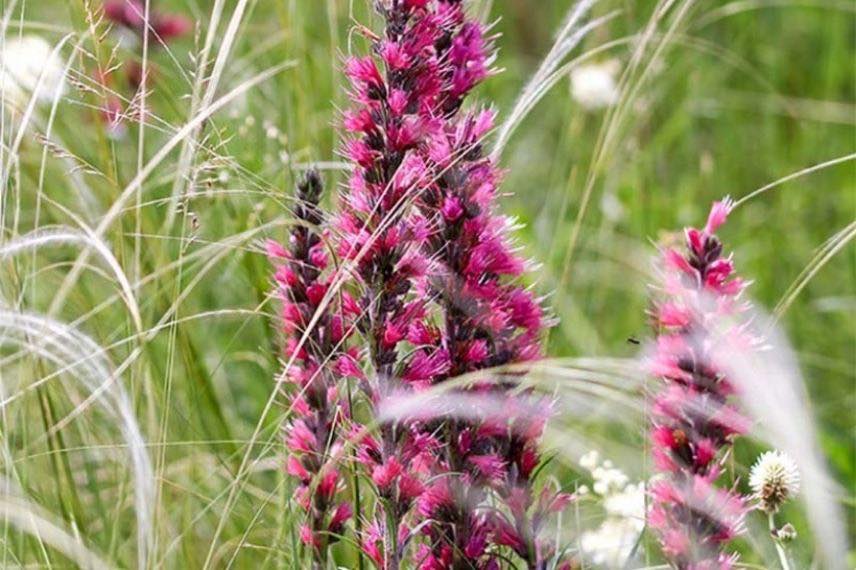
Echium russicum
Read also
How to sow Echium pininana?Care
Watering
Water once or twice a week during the plant’s development. Watering is more important in summer. In winter, keep the plant in a pot in a frost-free location and water sparingly.
Pests and diseases
Echium is not particularly susceptible to diseases or pests. Young shoots can however be attacked by slugs. In this case, scatter ash or wood chips at the base of the Echium to deter slugs.
In a greenhouse, Echium can be, in confined conditions, the target of whiteflies (aleurodes) or red spider mites. The solution is to improve air circulation by moving the plant outdoors into the sun as soon as the weather is fine.
Overwintering
Most Echiums are frost-sensitive, bring them indoors before the first frosts arrive. Pay close attention to the temperatures for Echium fastuosum and Echium pininana, which will not tolerate temperatures below -5°C, or even down to 0°C.
For everything you need to know about this plant, see our complete guide dedicated to the culture and care of Echium.
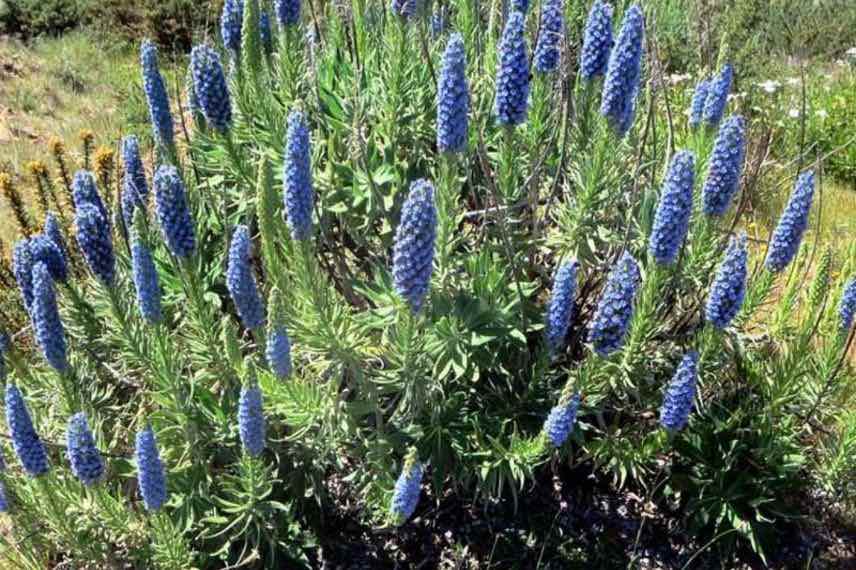
Echium fastuosum
- Subscribe!
- Contents
Comments