





























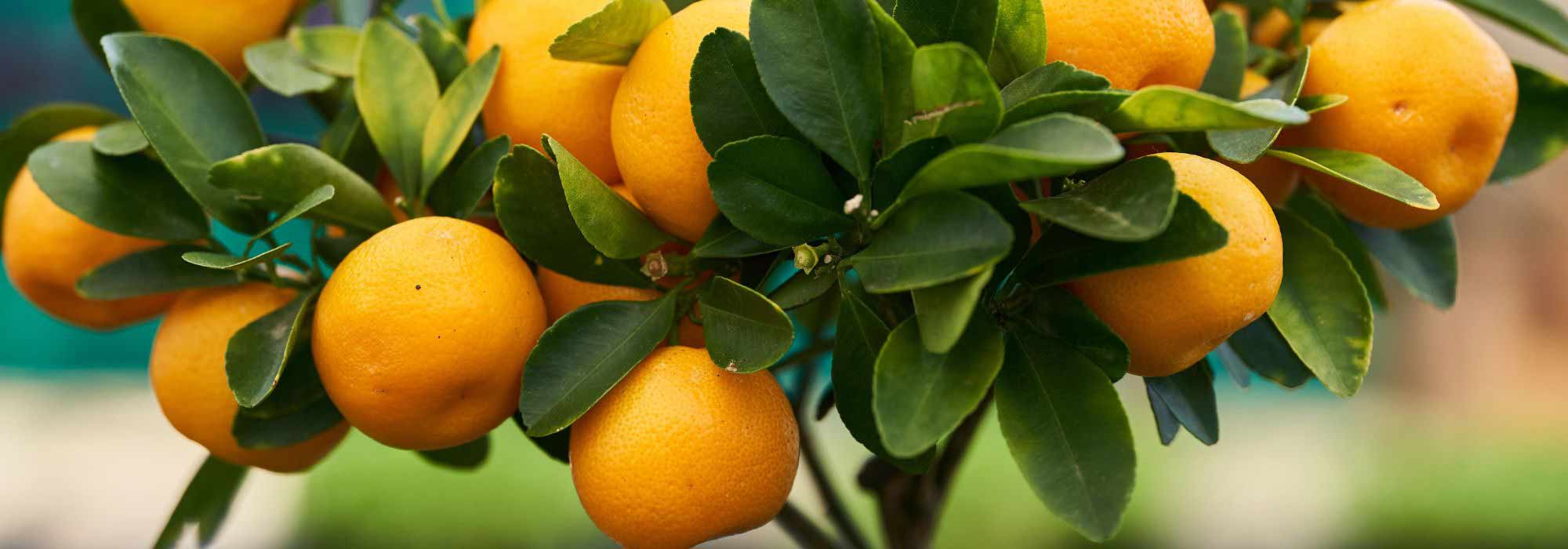
Growing a mandarin tree or a clementine tree in a pot
Everything you need to know
Contents
In the large family of citrus trees, both mandarin trees (Citrus reticulata) and clementine trees (Citrus clementina) are highly regarded for their vitamin-rich and fragrant fruits, boasting a vibrant orange colour, enjoyed in the heart of winter. You don’t need a garden on the Côte d’Azur to enjoy these delightful bushes that grow very well in pots, in suitable growing media, allowing them to be sheltered from frost in winter in a conservatory or a minimally heated greenhouse.
It is therefore entirely possible to grow them in many regions, provided you follow a few tips regarding the choice of plant, type of pot and substrate, planting, and maintenance. Let us guide you; we’ll explain everything about growing mandarin and clementine trees in containers or pots!

What is the difference between a mandarin tree and a clementine tree, and which varieties are suitable for pot cultivation?
Mandarins and clementines look very similar, but they differ in taste, skin, and fruiting time, with one being a hybrid of the other.
Mandarin or clementine tree?
- The Mandarin Tree, also known as Citrus deliciosa or Citrus reticulata, is a small, highly ornamental tree native to China, fragrant and vigorous, well-suited for pot cultivation. Its fruit, the mandarin, was offered to the Mandarin, hence its name. With its spreading, rounded habit, it showcases its beautiful dense, evergreen foliage. It produces small, highly fragrant white flowers that give way to round mandarins, slightly flattened at the ends, with flesh that is particularly sweet, juicy, and tasty, making it one of the least acidic citrus fruits. They acquire their lovely orange hue thanks to the first frosts and are harvested from November to January, reaching ripeness a month later than its hybrid, the clementine. The mandarin is slightly larger than the clementine and contains many pips. It is a self-fertile bush, meaning a single individual is sufficient for complete pollination and fruiting. While the common mandarin has been dethroned by the clementine on our tables due to its pulp full of pips, many hybrids have emerged, all more interesting than the last: ‘Satsuma’, ‘Keraji’, ‘Clemenvilla’, ‘Ortanique’, ‘Minneola’…. There is also the Chinese Mandarin Tree (Citrus myrtifolia) whose small orange fruits, known as “chinottos“, resemble small mandarins but have the scent and taste of bitter orange. They are more commonly used for making delicious jams.
- The Clementine Tree (Citrus clementina) is also a small, highly ornamental tree well-suited for pot cultivation, producing sweet, juicy fruits with soft flesh and virtually no pips. Clementines are harvested from October to March, at ripeness, and their thin skin peels easily. The clementine tree is a hybrid derived from the mandarin tree. It is self-fertile, so a single plant is also sufficient to produce fruit.
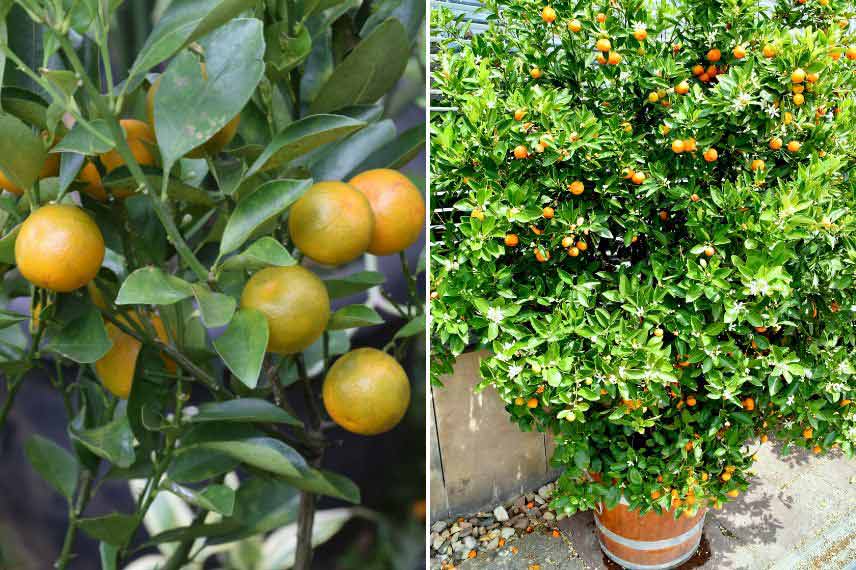
Mandarin or Citrus deliciosa and clementine or Citrus clementina (Wikimedia Commons)
Read also
Citrus trees: planting and maintenanceChoosing the pot and substrate
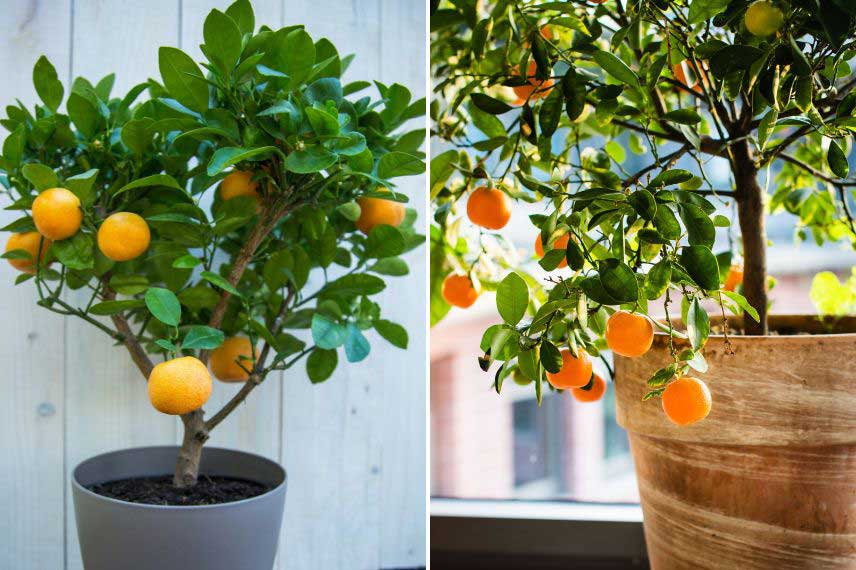
- The choice of pot is a matter of taste! Terracotta has the advantage of being porous, allowing the substrate to breathe, and it regulates temperatures better. Wooden pots may have a shorter lifespan due to watering and the pressure from the roots. Finally, plastic or resin pots are lighter, but they are not eco-friendly at all. Match the style of the pot with the style of your home: a lovely stone farmhouse does not suit brightly coloured graphic resin pots, and classic terracotta vases may not fit well in a modern decor. So, to each their own taste, to each their own style! Mandarin and clementine trees integrate really well into any decor style. Choose a pot that is slightly larger than the root system, as citrus trees do not like to feel cramped. Always keep in mind that the diameter of the pot should be at least as wide as the above-ground part of the bush.
- What is important is the substrate in which your citrus tree will be planted. They generally prefer rich and light soils: choose a Citrus and Mediterranean Plant Compost, specifically designed to promote growth, resilience, flowering, and fruit production. You can use it on its own or mix it with good garden soil.
Discover other Mandarin trees
View all →
Available in 1 sizes
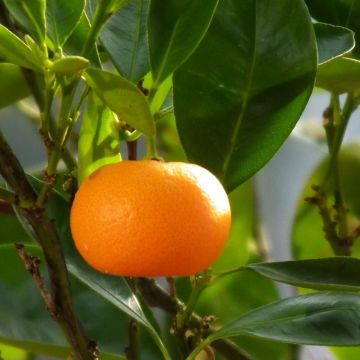
Available in 3 sizes
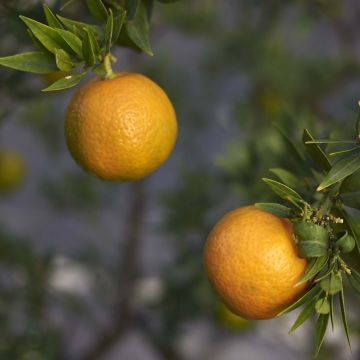
Available in 2 sizes
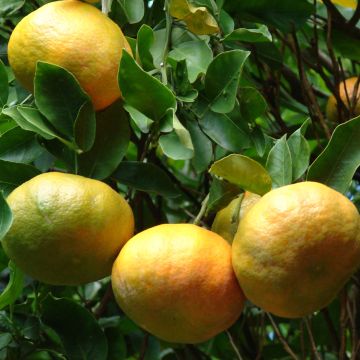
Available in 2 sizes
Planting tips for mandarin and clementine trees in pots
When to Plant a Mandarin or Clementine Tree in a Pot?
Unlike most fruit trees, it is advisable to avoid the dormant period (which is mostly from October to February) for planting citrus trees. Pot planting or repotting ideally takes place in spring, around April, or late summer.
Planting
- Start by filling the bottom of the pot with clay balls or gravel to a depth of 2 to 5 cm to promote drainage, preventing water from stagnating and causing the roots to rot.
- Thoroughly moisten the root ball by soaking it in a basin or large bucket of water for about ten minutes.
- Loosen the root ball slightly and gently untangle any root-related bun.
- Mix two-thirds garden soil with one-third citrus compost, or use pure compost if you do not have any soil available.
- Cover with part of the mixture or compost.
- Place the bush, with the top of the root ball a few centimetres below the rim of the pot.
- Fill in with the remaining mixture.
- Gently press down by hand around the base.
- Water generously.
- We recommend adding a layer of mulch around your mandarin or clementine tree to keep the soil fresh for longer and to space out watering. This will provide additional protection against the cold.
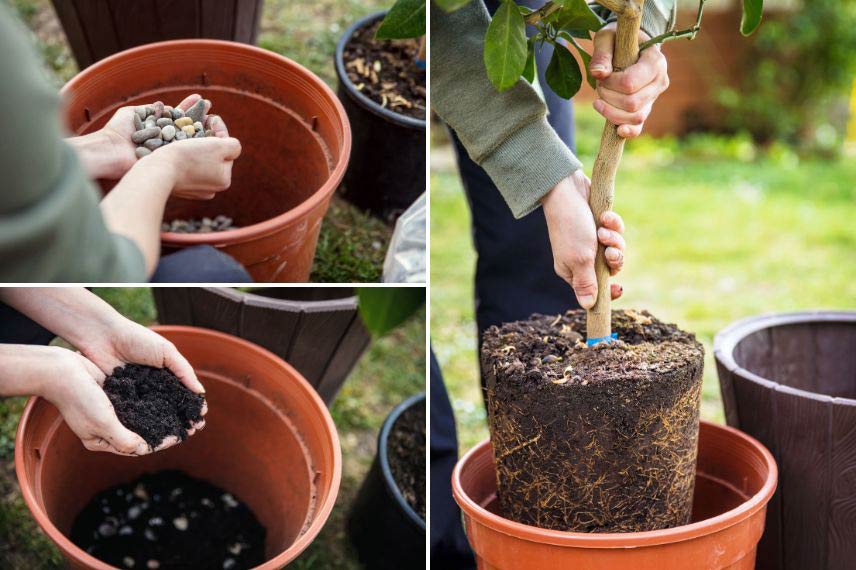 Add a drainage layer to the bottom of the pot, add compost, and plant your citrus tree.
Repotting
- We recommend repotting your citrus trees every three to four years, preferably at the end of winter or the beginning of spring. Each time, place them in slightly larger pots, taking care to gently untangle any root-related bun that may have formed at the bottom of the root ball.
- In years when you do not repot, perform surface treatments to provide mineral elements: for this, scrape the surface of the substrate to remove the top three or four centimetres and replace it with fresh compost. Be careful not to damage the roots of the citrus tree, as they are shallow and close to the surface of the soil.
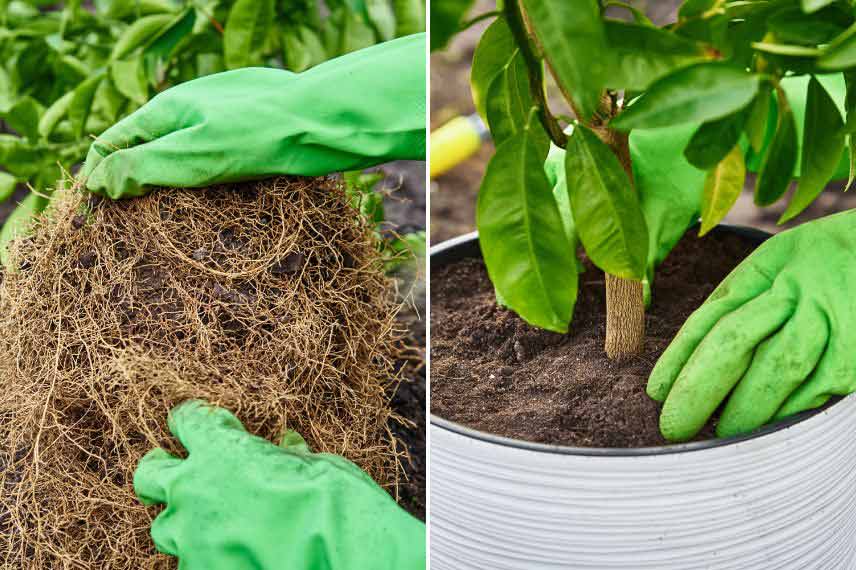 When planting and repotting, remember to gently untangle any compacted roots. A surface treatment can replenish nutrient losses without needing to repot, which will still be necessary as the plant grows.
Read also
Citrus trees: when and how to prune?Exposure and location for potted mandarin and clementine trees
Place the pot outdoors, for example on your terrace, in a sunny spot, as both need light to bloom and bear fruit properly. Also, ensure they are placed out of the wind, which dries out the soil, causes flowers to drop, can damage foliage and fruit, and exacerbates temperature drops. For this, choose a sheltered location from prevailing winds against a wall, a hedge, or among other generous potted plants that will protect them.
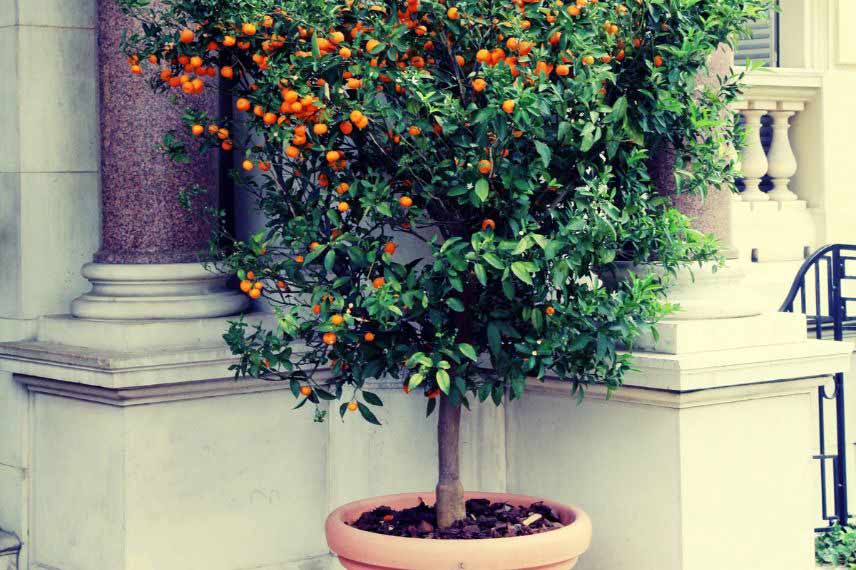
Wintering of the mandarin and clementine trees in pots
Hardy mandarin and clementine trees start to suffer from the cold at -5 °C. Bring your citrus trees into a frost-free shelter for winter, such as a conservatory or an unheated greenhouse. Choose a bright and airy location, ideally at a temperature around 8 °C.
This should not be too high, so avoid the inside of houses or flats: citrus trees prefer a certain coolness. When indoors, feel free to mist their foliage, as they do not like overly dry atmospheres. Take the pots outside in spring, when there is no longer a risk of frost, placing them on your terrace, in the sun.
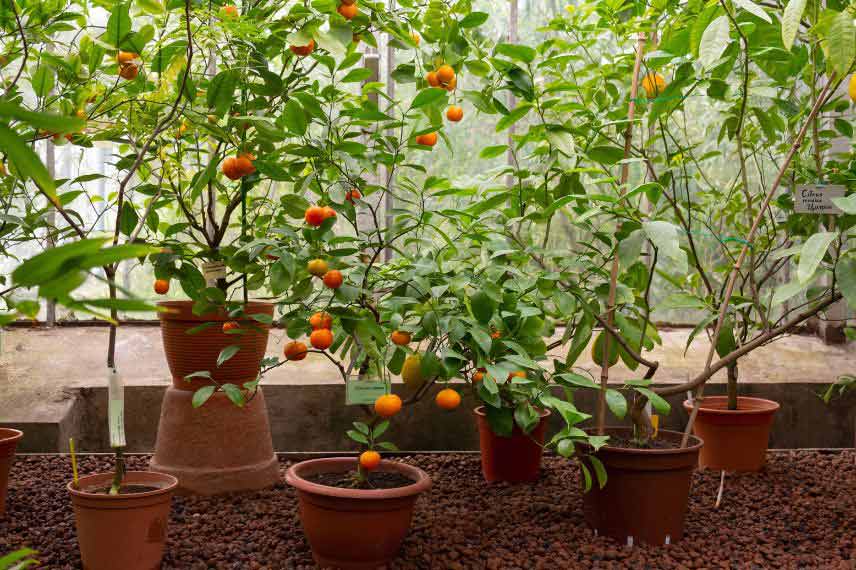
Like most citrus trees, mandarin and clementine trees need to be protected from winter cold
If you live in a region with little frost, in the milder coastal Mediterranean areas (the famous “orange zone”) or Atlantic regions, as well as in the Basque Country and Languedoc, you may consider leaving them outside in winter. However, remain vigilant and prepare a fleece to wrap them in several layers to protect them from the cold if temperatures were to drop. Similarly, the bush will withstand the cold better if you have placed a layer of mulch at its base and sheltered it from the wind. Remove the saucer and elevate the pot on wooden blocks to insulate it from the cold and avoid stagnant moisture. You can also wrap the pot in bubble wrap to insulate the root system.
Caring for Potted Mandarin and Clementine Trees
When and how to water?
Citrus trees need plenty of water to thrive, especially when potted, as the substrate dries out more quickly. Avoid excessive dehydration, particularly if you have used a peat-rich potting mix for planting, as it can be difficult to rehydrate. It should remain cool, even moist.
However, be cautious of overwatering; water frequently in summer, but reduce watering in winter. Avoid letting water stagnate at the bottom of the pot or in the saucer (empty it after each watering).
Citrus trees need to be watered regularly from spring to autumn. You can reduce watering in winter. Avoid using hard water; it is preferable to water with rainwater. If you want to save time and have many plants to water, you can install a drip irrigation system.
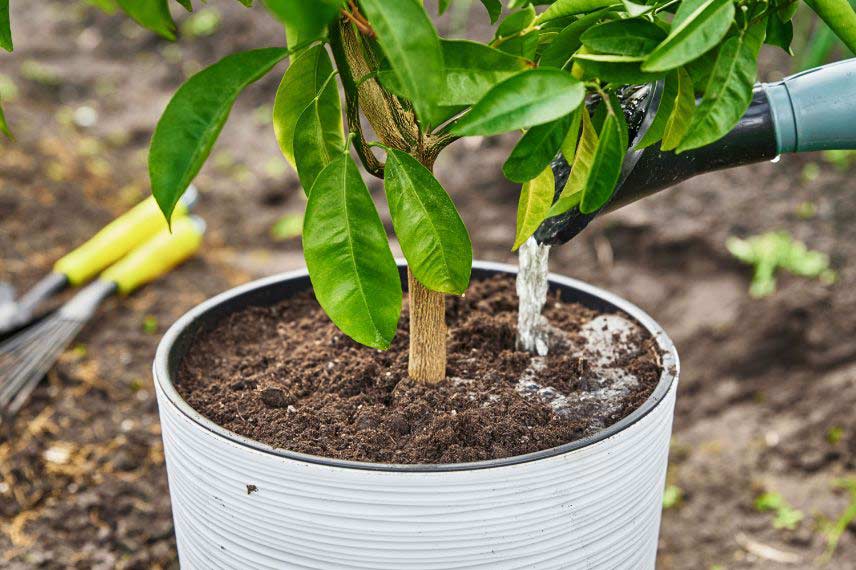
Fertiliser applications
Citrus trees are hungry plants, requiring significant amounts of mineral elements. From spring to autumn, during the growing season, it is best to fertilise regularly. A nutrient-deficient plant will have yellowing foliage and produce far fewer fruits. Apply well-decomposed homemade compost or commercial compost at the base of the bush, and incorporate it into the soil with light scratching. You can also add fireplace ashes or ground horn.
Additionally, ensure you regularly provide the fertiliser it needs: spaced applications for slow-release granules or sticks, or more frequent applications for liquid fertiliser.
Pruning
- At the end of winter or the beginning of spring, carry out light pruning with a pruning shear on new shoots to maintain its lovely rounded habit and stimulate flowering and fruit production. In pots, citrus trees will need to be pruned more frequently than in the ground, to better control their growth. You can prune them several times a year, lightly each time.
- Make clean, neat cuts, keeping them light, and remember to disinfect your tools to avoid transmitting diseases. Also apply a healing paste on the wounds. This will limit the risk of fungal diseases, such as Mal Secco.
- During the first few years, carry out formative pruning to give the bush its general shape. You can, for example, give it a rounded shape or prune it into a stem. In subsequent years, perform maintenance pruning to aerate the centre of the bush and maintain a balanced shape. Remove dead, damaged, or poorly positioned branches, and cut back suckers.
How to encourage fruiting?
The mandarin and clementine trees flower in November and December and bear fruit from October to March. They are self-fertile shrubs, meaning a single individual is sufficient for complete pollination and fruiting. However, if your citrus tree remains indoors (in a greenhouse or conservatory), you will need to occasionally allow pollinators to work, or, if you feel delicate enough, perform pollination with a brush.
Diseases and pests of the mandarin and clementine trees
Citrus trees are susceptible to numerous diseases and pests. Suitable growing conditions help limit the risks of their appearance:
- frequent watering, but without excess moisture
- placement in sunlight
- wintering under cover if necessary
- clean pruning with the application of healing paste, etc.
Citrus trees can be affected by Mal secco. This fungal disease blocks the circulation of sap, leading to the drying out of branches. The disease primarily affects those located at the tips of the plant, ultimately resulting in the total decline of the bush. Cut and burn the affected branches as soon as you notice the onset of the disease.
They are also sometimes affected by gummosis. This is identified by the secretion of a translucent amber-coloured substance at the site of a wound. Moniliosis is a fungal disease that causes the fruit to rot while still attached to the bush. Remove the affected fruit. As for Tristeza (or CTV, Citrus Tristeza Virus), it is a virus, primarily transmitted by aphids, that causes citrus trees to decline.
Regarding pests, in greenhouses, citrus trees are often affected by mealybugs, whiteflies, and red spiders. Mealybugs and whiteflies pierce the plant tissues to extract sap, secreting a honeydew that can lead to the appearance of sooty mould. To eliminate them, we recommend spraying black soap on the foliage. As for red spiders, they suck the sap from the plant, causing the leaves to yellow, then dry out and fall off. They thrive in dry conditions: do not hesitate to mist the foliage.
Aphids also attack citrus trees by piercing the leaves, causing them to curl in on themselves. You can use black soap. The Mediterranean fruit fly lays its eggs in the fruit. The larvae feed on them, leading to premature drop. The caterpillars of the citrus leaf miner nibble on the flower buds of citrus trees, as well as the young leaves. Finally, the leaf miner burrows galleries within the thickness of the leaves. These white, sinuous galleries are visible to the naked eye. The leaves tend to curl, yellow, dry out, and eventually fall off. We recommend cutting and burning the affected leaves.
→ To learn more, also check our article: “The most common diseases and parasitic pests of mandarin trees.”
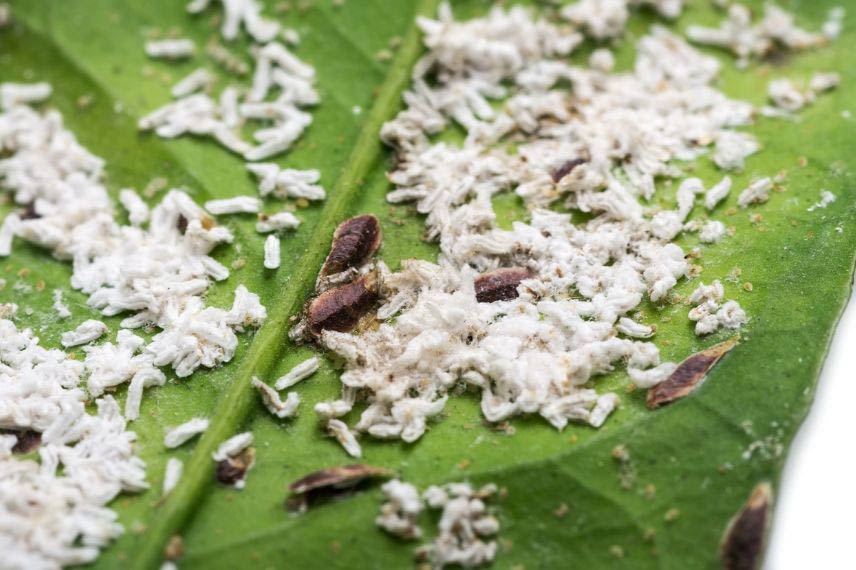
Mealybugs pierce the plant tissues to extract sap
For further reading...
Discover our selection and all our growing tips to successfully cultivate your citrus trees, both in the ground and in pots:
→ “Citrus trees: 15 questions and answers about growing them in pots or in the garden“

- Subscribe!
- Contents
Comments