





























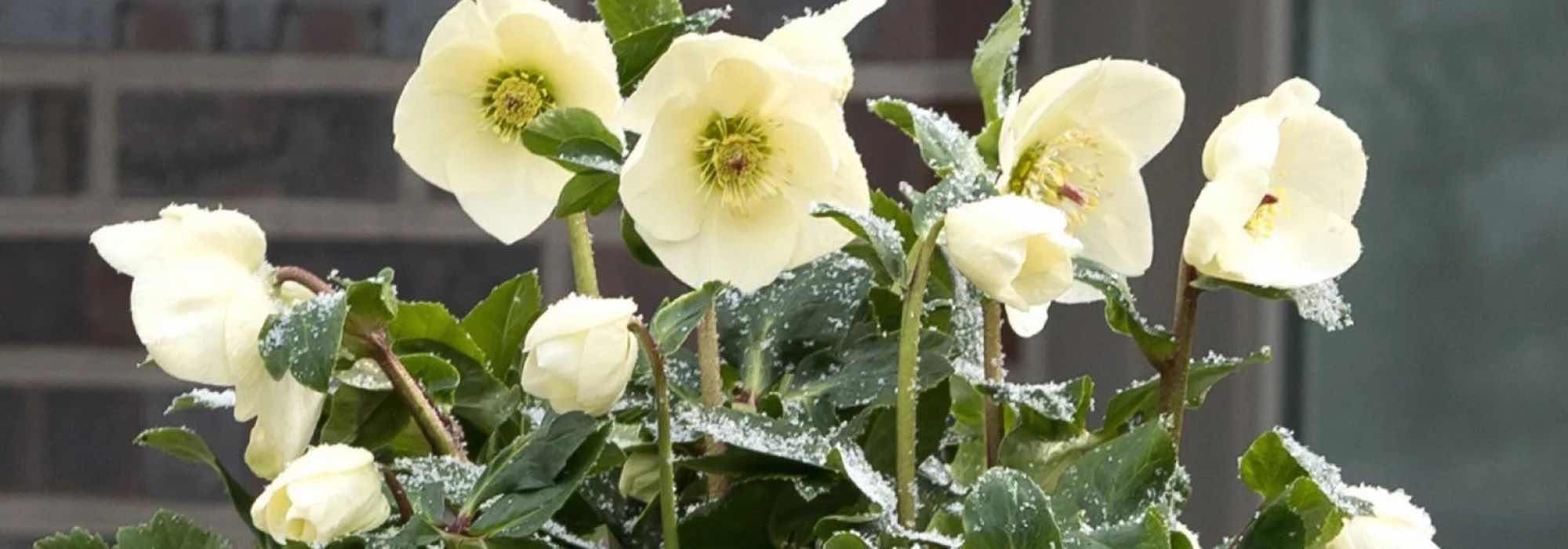
Grow yellow-flowered hellebores to brighten up winter!
Perennials with bright and warm flowering, for the garden, terrace, or balcony.
Contents
It is undeniable that hellebores, also known as “Christmas roses”, have multiple qualities. They are first appreciated for their flowering, which occurs in winter, when the garden is significantly less lively. Next, they reward us with a wide range of colours, from pink to white, including green, purple, and yellow. When the sun is scarce and with the decrease in light, this last colour will be ideal for bringing brightness and a touch of vitality to the darkest areas of the garden. It comes in many shades, from very soft pale yellow to vibrant bright yellow that will catch everyone’s eye.
Discover here our favourite yellow-flowering hellebores, based on various criteria: flowering period, flower shape, or foliage. Adopt them without hesitation in your borders, beds, or winter containers.
To learn more about growing hellebores, check out our dedicated guide Hellebores: how to plant and grow them.

Early flowering yellow hellebores
These are varieties that do not wait for the heart of winter to flower. They begin to reveal themselves as early as November or December, ensuring a perfect transition between autumn flowering and the cold season. They will be particularly ideal alongside bulbous plants.
Among them, let’s start with the Helleborus nigercors ‘Scrat Ice’ (45 cm in height and 40 cm in spread). This is a very generous hybrid that shows the tips of its petals as early as December, but will then flower until the onset of spring, around March. It produces large flowers of a soft pale yellow contrasting with a green centre. They take on lovely purplish tones as they fade. Very easy to care for, this hellebore has the advantage of tolerating even dry soils in summer.
Next, let’s mention the oriental hellebore ‘ViV Clarissa’, with its compact habit ideal for small spaces (40 cm in height and 30 cm in width). It flowers even earlier, from November, revealing pale yellow cup-shaped flowers. The prominent stamen centre is also yellow.
The Helleborus lemperii ‘Linda’ is also among the early, very floriferous varieties, which will provide a display from November to March. A very long flowering period that will brighten the entire cold season, thanks to its large flowers of a very soft and luminous cream yellow. It measures 45 cm in all directions.
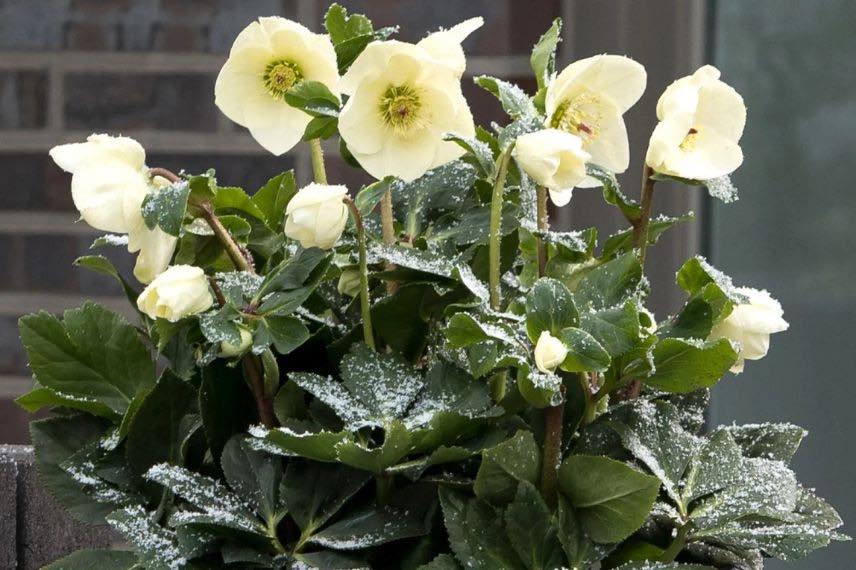
Hellebore lemperii ‘Linda’
Read also
7 hellebores with green flowersLate-flowering yellow hellebores
Among these varieties, flowers typically appear in late winter and can last until mid-spring.
For example, this is the case with Helleborus hybridus ‘Yellow Strain’, which heralds the return of fine weather with its flowering occurring between March and April. It produces beautiful, bright lemon-yellow flowers. It is a perfect candidate to accompany spring bulbs in borders or pots. Expect a height of 40 cm in all directions.
‘Yellow Lady’ is also a late variety, producing lighter yellow flowers. They appear as early as February but will continue to bloom until mid-spring, in May.
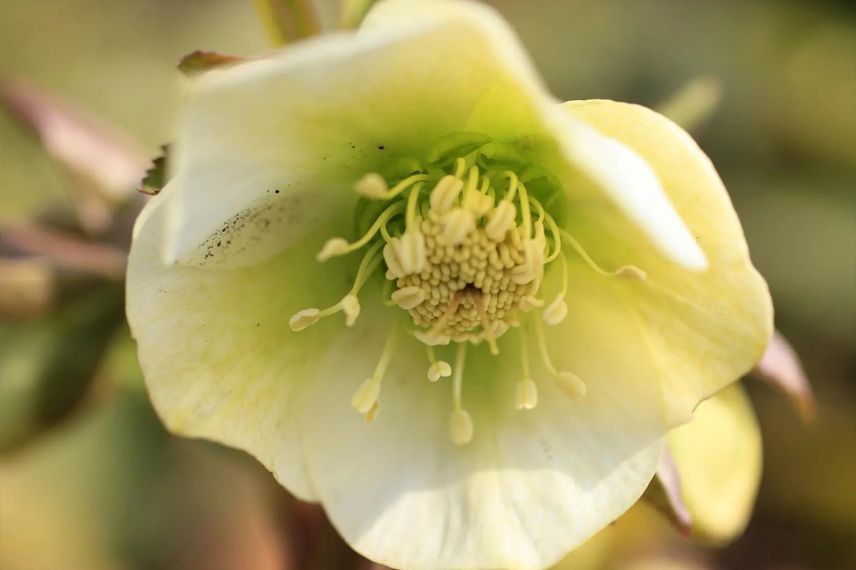
Helleborus hybridus ‘Yellow Strain’
Original yellow-flowered varieties
Let’s first discuss the varieties with double flowers, which have more petals than their single-flowered counterparts. This gives them an extra touch of originality. This is the case with the Oriental hellebore ‘Double Primrose Yellow’, which produces double flowers of a pale yellow tinged with cream. They have a slight resemblance to water lilies due to their numerous imbricate petals, which have a somewhat undulating appearance. This variety reaches a height of 40 cm and a spread of 30 cm.
Among the originals, we can mention the Oriental hellebore ‘Magic Apricot Guttatus’. It graces us with a rather late flowering, occurring from February to April. It is considered magical due to its variable colouration among the flowers. They display pastel apricot-tinged yellow tones, but are randomly punctuated with red and enhanced by a border of the same colour. A true little work of art that will brighten the cold season!
For its part, the Oriental hellebore ‘Anemone Yellow Guttatus’ produces flowers of a vibrant yellow, punctuated with purple. An uncommon colour that will bring a lot of light. In terms of shape, they feature a frilled central collar surrounding a heart of white-cream stamens. This variety flowers from February to April.
Let’s also mention the Oriental hellebore ‘Anemone Apricot’, which has the same type of frilled flowers. However, as its name suggests, it features a colour that leans towards pale apricot.
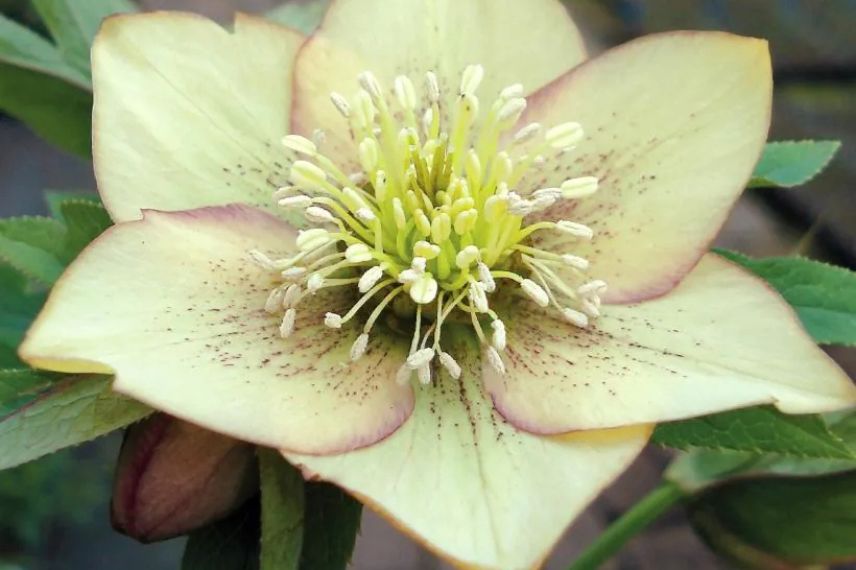
Oriental hellebore ‘Magic Apricot Guttatus’
Read also
Hellebores: 7 successful pairing ideasBicoloured hellebores
To warm up winter even more, adopt the Helleborus x hybridus ‘Super Yellow Red Center’. This variety produces yellow flowers that contrast beautifully with a bright red centre. From February to April, it will brighten up all the slightly dark areas of the garden, whether in borders, beds, or containers. Also, enjoy its beautiful flowers to create cut flower arrangements that will brighten your home.
In a similar style, the oriental hellebore ‘Super Yellow’ graces us with yellow flowers featuring a maculate centre of purplish red, enhancing its bright appearance. They are semi-double and appear between February and April.
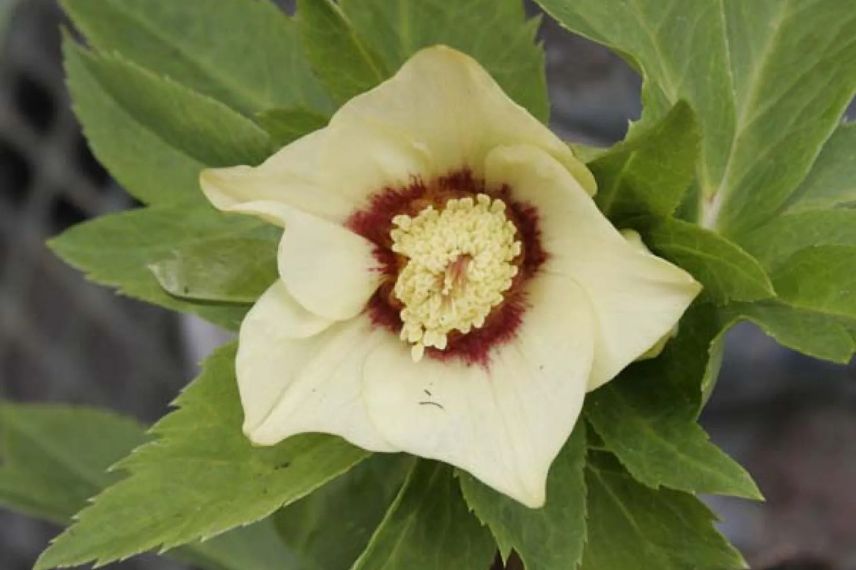
Oriental hellebore Yellow with red centre
Ornamental foliage
Hellebores are all interesting for their evergreen foliage, which remains decorative in all seasons. While the leaves seem to stay in place all year round, they are actually regularly renewed, giving the impression of foliage that never disappears.
Some varieties stand out even more: this is particularly true for Helleborus foetidus ‘Yellow’. It produces yellow flowers that turn to chartreuse green, surrounded by golden green bracts. Its foliage has the unique characteristic of being golden yellow when young, before turning to a more classic green. A true ball of light to brighten up winter! Slightly more imposing than its relatives, it will reach 60 cm in height and 45 cm in spread. This variety has the advantage of tolerating dry, calcareous soils, allowing it to be grown in rockeries as well.
‘Super Yellow’ also produces young leaves tinged with acid yellow, which will turn green at ripeness.
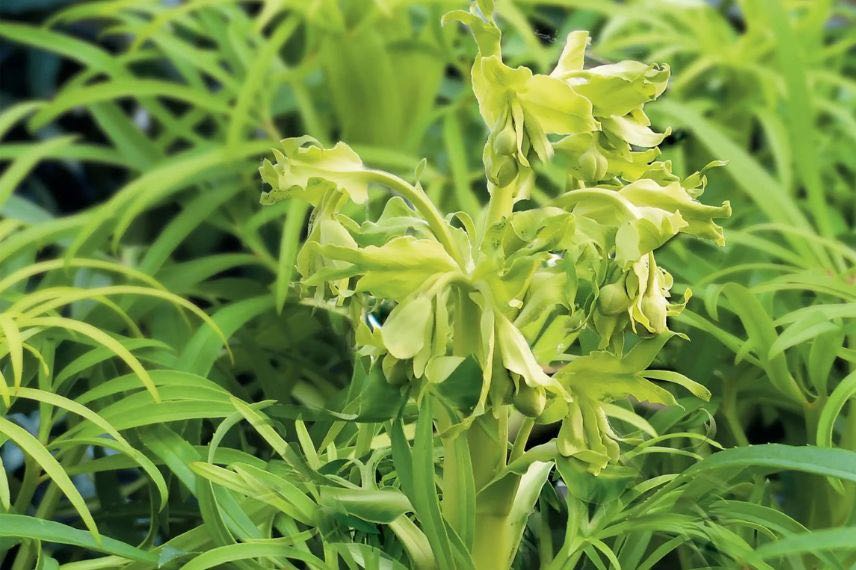
Helleborus foetidus ‘Yellow’
- Subscribe!
- Contents

Comments