





























Grow delphiniums in pots for spectacular flowering
Tips for planting and maintenance
Contents
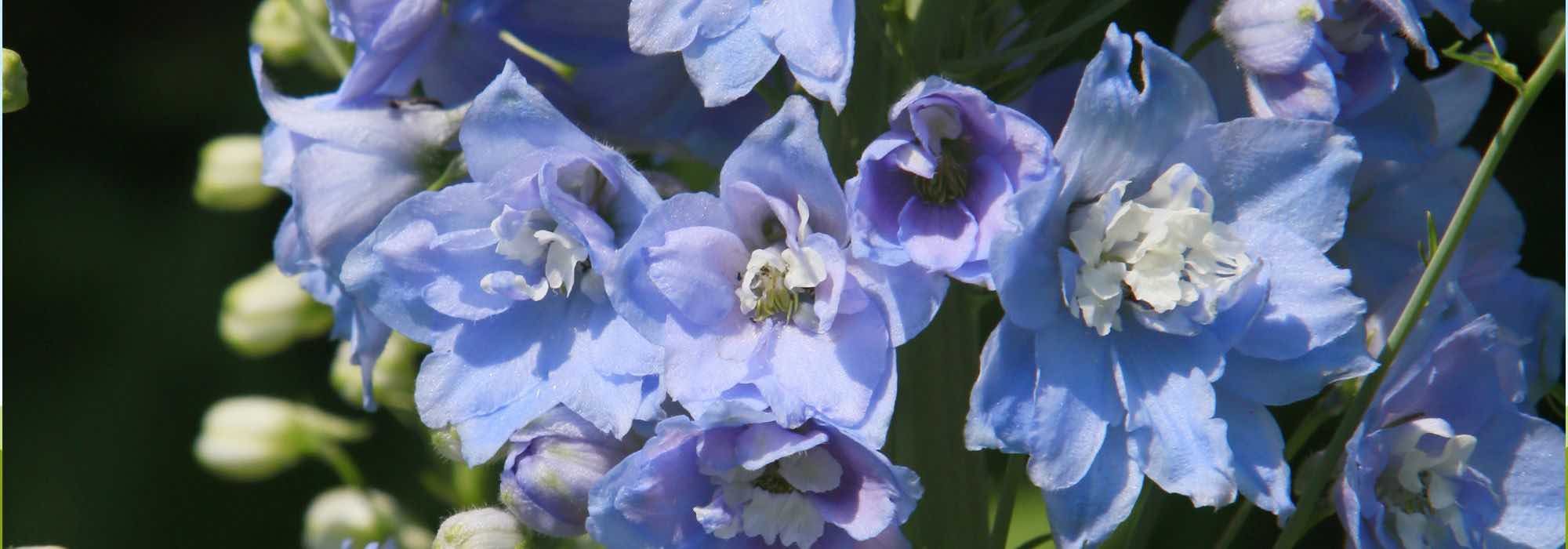
Also known as ‘larkspur’, the Delphinium delights with its spectacular flowering in tall flower spikes reaching up to 2 metres tall and bearing stunning blue hues. They flower from June to October depending on the species and come in a palette of blue, as well as violet, mauve, pink and white. These plants, often perennials and sometimes annuals, provide structure and vertical interest to borders. They are widely used in English gardens, in naturalistic or cottage-style designs. The Delphinium can be planted in open ground, but also in pots, provided you take a few precautions. It grows best in full sun in rich, deep, well-drained and cool soil. Discover our tips for growing delphinium in pots and enjoying its beauty and its rare colours on your balcony or terrace.
Which delphinium varieties are suitable for growing in pots?
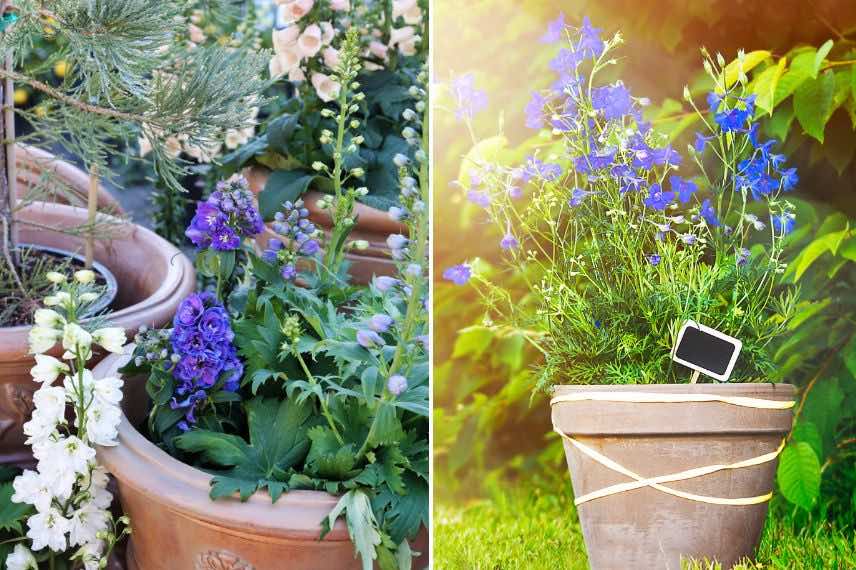
To successfully grow delphiniums in pots, we recommend opting for the most compact varieties.
You can, for example, choose:
- the Delphinium ‘Dark Blue-White Bee’ – perennial larkspur, which reaches 80 cm in height at maturity and offers flower spikes of 50 cm, semi-double, of a very dark blue-violet with a white centre. The flowering lasts from June to August and the plant is hardy to -29°C. You can also choose the Delphinium ‘Deep Rose-White Bee‘ in a lilac pink colour, or the Delphinium ‘Sky Blue-White Bee’ with its superb sky-blue colour.
- the Delphinium belladonna ‘Völkerfrieden’ – perennial larkspur can climb up to 1.20 metres tall and offers simple, yet refined flowers in a deep gentian blue. It flowers from June to September and does not require staking. It is fairly disease-resistant and tolerates frost down to -34.5°C.
- the Delphinium ‘Highlander Bolero’ – perennial larkspur reaches a height of 75 cm and bears spikes of double, frilled flowers, mauve and white on dark, sturdy stems. The flowering period runs from June to July, then again in September.
- the Delphinium grandiflorum ‘Blauer Zwerg’ – dwarf larkspur ‘Blauer Zwerg’ has the advantage of its small size, reaching 25 cm in height at maturity. It offers lighter flowering spikes, in a magnificent gentian blue, and allows easier cultivation. It flowers from June to July and shows greater resistance to diseases and pests.
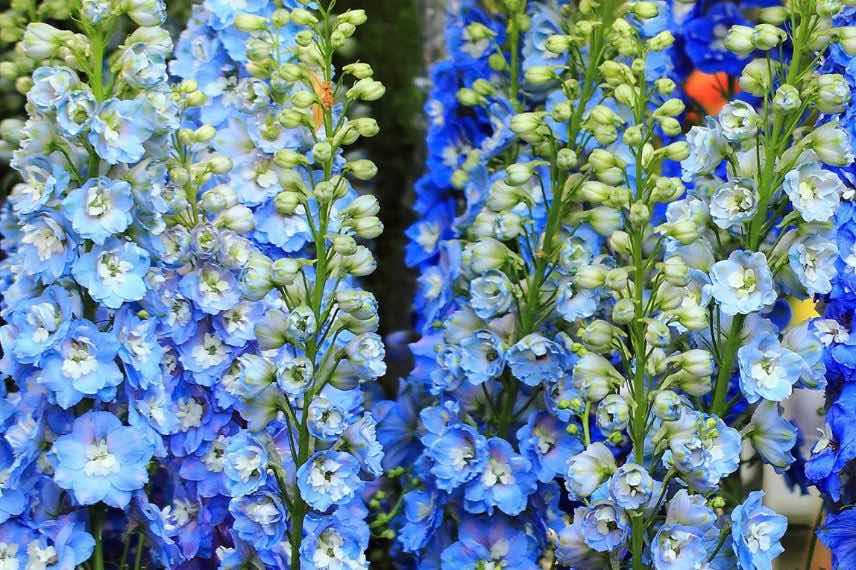 The Delphinium Sky Blue-White Bee is a compact variety well suited for pots[/caption]
When and where to plant a Delphinium in a pot?
Delphinium is a plant with particular needs in order to thrive.
- Plant it preferably in autumn or in March–April, when frosts have passed.
- It grows in sun, sheltered from the wind, in a well-exposed, open area. It will not thrive in a region that is too windy or in poor, dry soil. Plan for a site where it receives at least 5 hours of sun per day.
- Delphinium prefers fertile, deep, cool and well-drained soil.
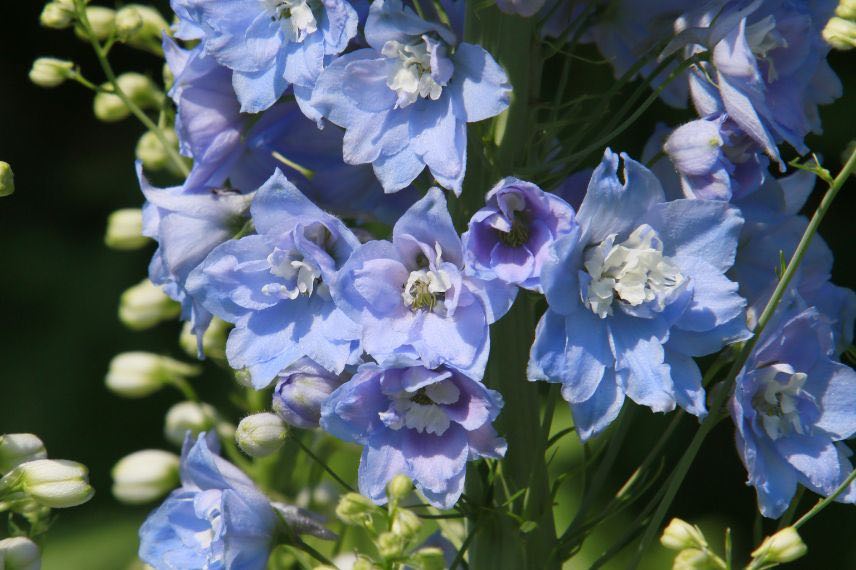
Delphinium needs a sunny, sheltered exposure
How to grow a Delphinium in a pot?
Growing Delphiniums in pots is not recommended, but it is possible provided you take a few precautions.
What type of pot?
The pot must be deep, with a depth of at least 30 cm, up to 50 cm. Any type of pot will do, however a terracotta pot provides better aeration for the roots.
What growing medium?
In pots, use a good potting compost, enriched with compost or well-rotted manure, to which you can add sand to ensure good drainage.
Planting
- Choose a deep pot at least 30 cm deep
- Place a bottom layer of clay balls to ensure good drainage
- Fill the pot with the mixture of potting compost and compost.
- Place the crown of the Delphinium in the centre and cover with the remaining growing medium
- Firmly press the soil down
- Water well
Care
Watering
- A regular watering regime is necessary to keep the soil cool.
- Count at least once or twice a week.
- Mulch around the base to keep it cool
Feeding
- Apply a liquid fertiliser every two to three weeks at the start of growth
- In subsequent years, apply fertiliser and compost in spring and autumn
Pruning and staking
- It is best to stake the tallest Delphiniums.
- In spring, prune the stems back to ground level as the foliage begins to regrow
- During flowering, remove faded flowers as they appear to encourage a second flowering
- After flowering, prune the stems back to half their height to prevent the plant from tiring itself.
Division
Every five years, divide the roots and replant the recovered roots in another pot or another location.
Diseases
Delphiniums are susceptible to snails and slugs, as well as powdery mildew and oïdium.
- To prevent snails and slugs from reaching your Delphinium plant, you can raise it up or scatter ash or wood chips on the soil. For more on natural ways to combat these gastropods, see our slug-control guide.
- In case of powdery mildew attack, also known as the white disease, ensure good air circulation between your potted plants and treat with a sulfur-based fungicide. Discover all our tips for treating your Delphinium in case of a powdery mildew attack.
- Against downy mildew, you can treat the plant with Bordeaux mixture or horsetail manure.
For everything you need to know about delphiniums, see our comprehensive guide to growing and caring for delphiniums.
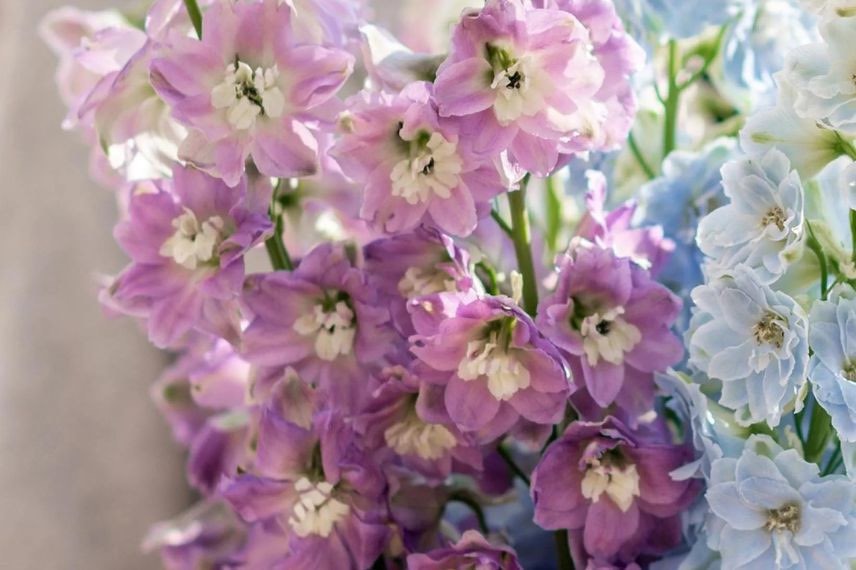
Another compact variety for pots: Delphinium Deep Rose-White Bee
- Subscribe!
- Contents
Comments