





























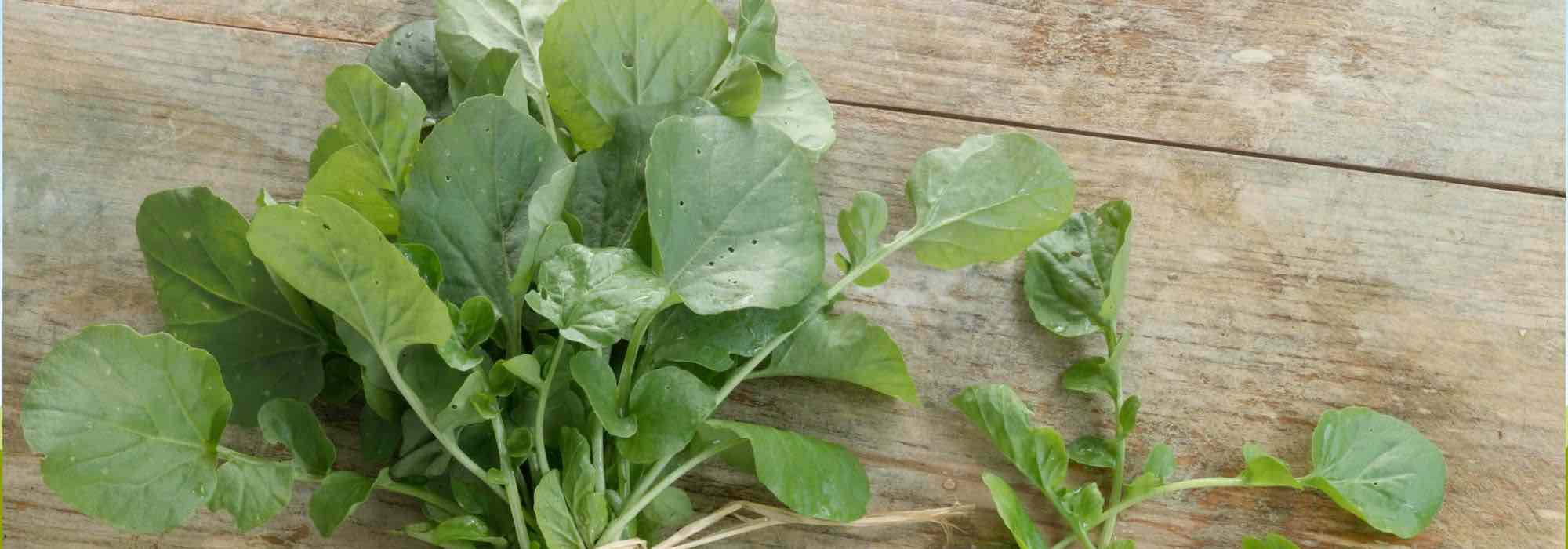
Growing cress in a pot on your balcony
Tips for planting and aftercare
Contents
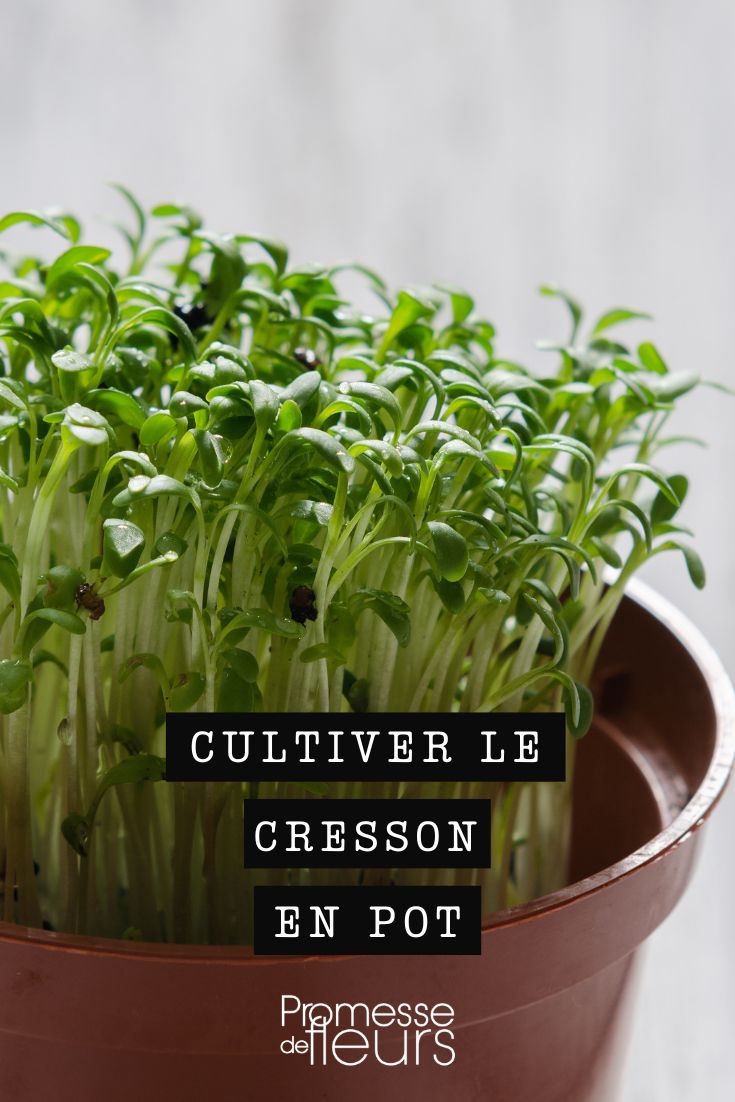
Appreciated for its peppery flavour, watercress is a vegetable plant whose leaves are eaten in salads or soups. It is indeed renowned for being rich in beta-carotin, vitamins, antioxidants and minerals. Watercress actually comprises terrestrial watercress and semi-aquatic watercress. Wake up your taste buds with home-grown watercress! Learn to grow it easily in a pot on your balcony or terrace and enjoy its peppery flavour and its nutritional benefits.

Which varieties of cress to grow in pots?
Watercress is a herbaceous plant in the Brassicaceae family.
For pot culture, you have a choice between soil-grown cress and semi-aquatic cress. The cultivation will, of course, be different.
Among soil-grown cress, you can grow:
- the garden cress or Lepidium sativum. It produces leaves that are finely divided and with a sharp flavour. It is an annual plant that is sown from March to late September in damp potting compost. With rapid growth, harvest occurs three weeks after sowing.
- the garden cress or land cress. It is a biennial plant. Its flavour is more peppery than watercress. Sow it between March and August in a moist substrate to harvest from May to October.
Among semi-aquatic cresses, you can grow:
- watercress. Also known as Nasturtium officinale, it is an annual plant that produces tender, juicy and slightly peppery leaves. It can be grown in a planter or tub in a very damp substrate with regular watering and a system that allows the water to be renewed. Sowing is carried out in March–April under cloches or in a greenhouse with a harvest two months after sowing.
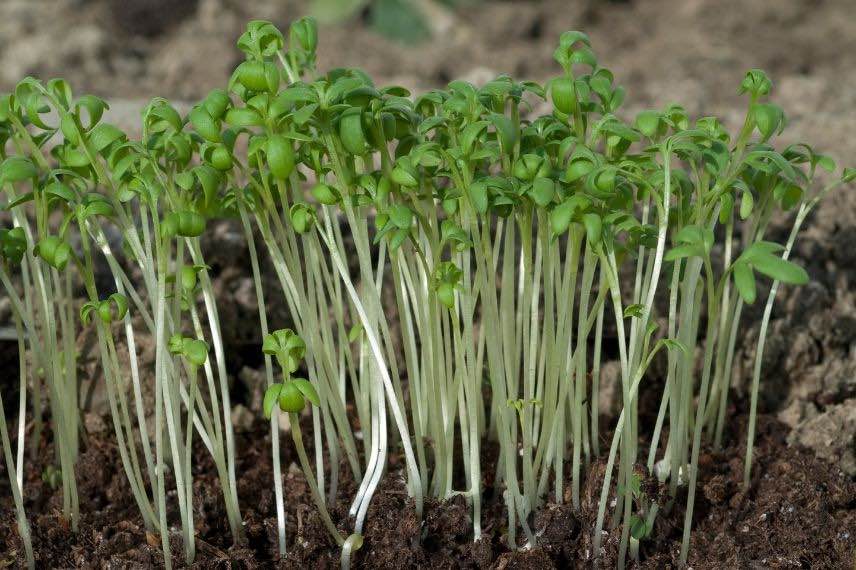
Lepidium sativum or Algerian cress
When and where should you sow cress in a pot?
Sowing differs depending on whether you are growing land cress or watercress.
- For land cress, sow between March and October, depending on the species, in moist soil, in a sunny position or partial shade depending on the region you live in.
- For watercress, sow between March and April under frames or a greenhouse, or directly in the bed between May and June, in a floodable tray preferably in the shade.
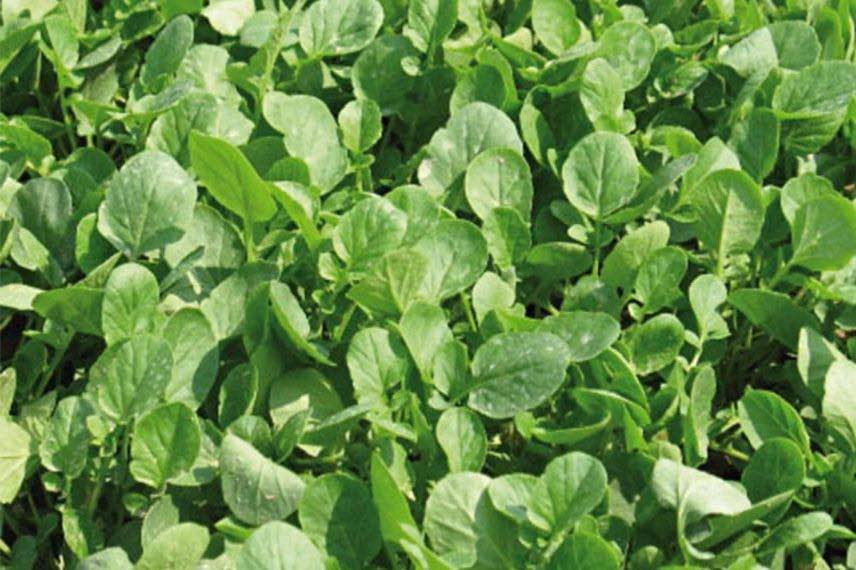
Barbarea verna or garden cress
How to grow cress in a pot?
What type of pot?
Grow soil-grown watercress in a deep pot, as it has large roots. For water-grown watercress, use a watertight container such as a plastic tub.
What substrate?
- Soil-grown watercress is grown in a fresh, rich and well-drained mix of potting soil and sand.
- Aquatic watercress is grown in a turf and compost mix.
The planting
For soil-grown watercress:
- Take a deep pot and fill it with a mix of potting soil and sand.
- Sow broadcast or in rows, spacing each seed 10 cm apart.
- Place your pot at 18°C and water with a watering can or spray bottle to obtain a fresh substrate moist, but not waterlogged.
- The soil should remain moist during the entire germination period.
- When the seeds have germinated, usually after 2 to 3 days, thin the young plants by spacing them 15 cm apart.
For aquatic watercress:
- Take a shallow tray filled with a turf and compost mix that must be very damp.
- Sow under a frame or in a greenhouse, barely covering the seeds with soil.
- When the plant reaches 2 cm, transplant it into a watertight container or a pond 40 to 50 cm deep.
- Fill the trough to a depth of 20 cm with a mix of soil and potting soil, or compost.
- Then fill with water to create a muddy bed in which you will transplant your young plants.
- Ensure the water is regularly renewed.
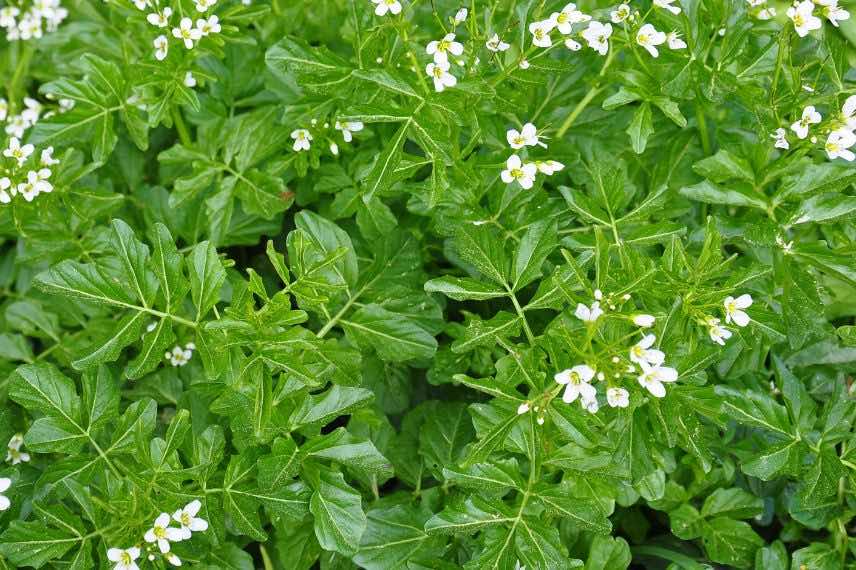
Nasturtium officinale or fountain watercress
Care
Watering
- Regular watering is essential, watercress loves water.
- You can mulching around the base of soil-grown watercress to keep it moist.
- Make sure the water is regularly refreshed for watercress cultivation.
Fertiliser
There is no need to fertilise watercress.
Harvest
Harvesting takes place about three weeks after sowing.
Regularly cut the plants at the base of the leaves to obtain young leaves for eating.
Cold protection
If you are growing watercress, protect the water-filled container with a frost cloth or bring it indoors during frosts.
Pests and diseases
Watercress is fairly resistant to diseases, but it may be attacked by snails, slugs, aphids and flea beetles.
- To combat snails and slugs, regularly aerate the substrate by forking it, or spread ash or wood chips on the soil. In addition, see our guide on slug control.
- To combat aphids, plant a nasturtium near the watercress to attract insects and deter them from your plant. You can also use aphid-eating beneficial insects such as ladybirds. In addition, see our guide on aphid control.
- For flea beetles, a small black beetle that appears when temperatures reach around 20°C and holes the leaves, water the watercress regularly and mulch the base if possible.
For all you need to know about watercress, see our comprehensive guide to growing and caring for watercress.

Watercress is nutritious and delicious; it is used in soups or in salads.
- Subscribe!
- Contents
Comments