





























Greening to cool the ambient air
Plants: a natural air conditioning system for the garden and home
Contents
Climate change and rampant urbanisation go hand in hand. Exposed to an unfavourable micro-climate, cities are overheating, but unfortunately, the countryside is not spared either. As the first warm days approach, a simple solution presents itself: GREENSCAPING! Yes, planting trees and greening walls to cool the ambient air and make this overheated atmosphere more liveable.
How do trees cool the air? Which plants can help climate homes and outdoor living spaces? Shade, evapotranspiration, and air cooling—follow our explanations and tips to discover how plants can be true natural air conditioners for your home and garden.
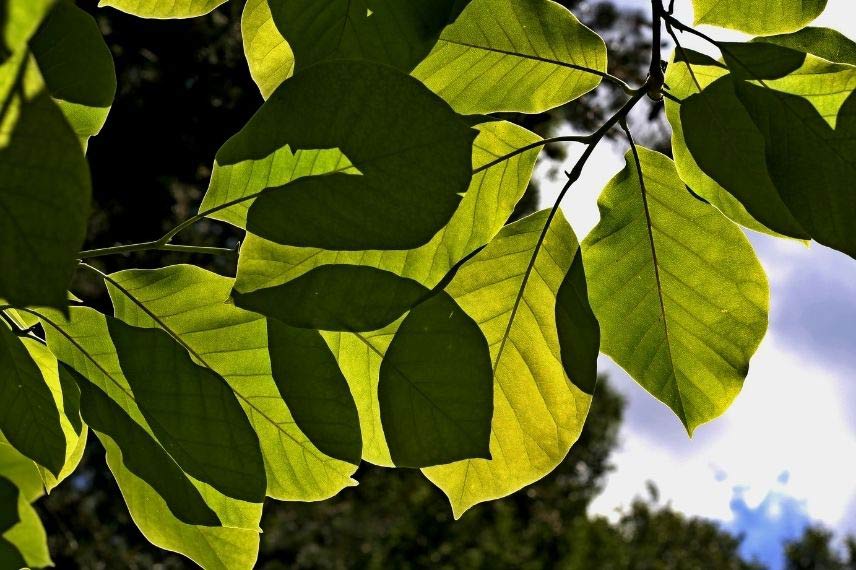
Evapotranspiration, shade: plants are perfectly suited to temper the atmosphere.

Why greenify?
The expansion of urban areas necessarily leads to the artificialisation and sealing of soils and a dramatic reduction in vegetated surfaces. Even lawns are becoming artificial, accelerating the warming of an already overheated atmosphere. In cities, this is referred to as heat islands. The materials (concrete, asphalt, steel, etc.) found everywhere in urban areas have thermal inertia (they store heat), further exacerbated by human activities that generate heat. Air conditioning units running at full capacity as soon as the thermometer rises by a few degrees, thereby warming the atmosphere, are a glaring example.
Going beyond mere aesthetic effects, vegetation helps counteract warming and pollution in the urban microclimate, providing thermal comfort to residents, especially during heatwaves. The link between vegetation and cool islands is well established, even evidenced by satellite images: parks, riverbanks, and tree-lined streets exhibit cooler surface temperatures.
Vegetation thus allows us to cool our living spaces, and what is true in cities is also applicable in rural areas: greening the surroundings of houses, village streets, and schoolyards can lower temperatures by a few precious degrees, making life more pleasant during these extremely hot periods, which will soon become the norm.
In addition to its effects on temperature, vegetation offers:
- a protection against UV
- interception of rainwater
- modification of prevailing winds and air currents
- air purification through oxygen production, CO2 sequestration, and capture of atmospheric particles and pollutants
- soil decontamination and protection of watercourses
- habitat for wildlife (insects, birds, small mammals, bats)
- noise moderation
- beneficial effects on health and psychological well-being
- aesthetic and economic added value
So let’s not hesitate any longer: let’s plant!
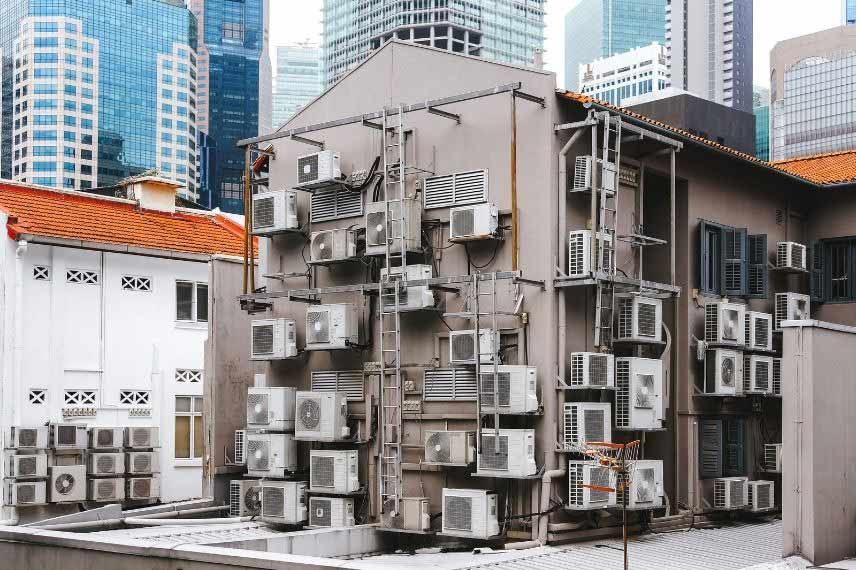 Air conditioners replace trees in cities… but why not the other way around?[/caption>
How do plants cool the air?
The effects of vegetation, particularly trees, on atmospheric temperature are both:
- direct: plants reflect part of the solar radiation back into the atmosphere, using a significant proportion for photosynthesis, and cast shade on surrounding surfaces
- indirect: plants cool the ambient air through evapotranspiration (the transpiration phenomenon of plants) which creates an “oasis” effect. For example, a mature tree can extract more than 450 litres of water from the soil and then release an average of 98% of it into the air as water vapour.
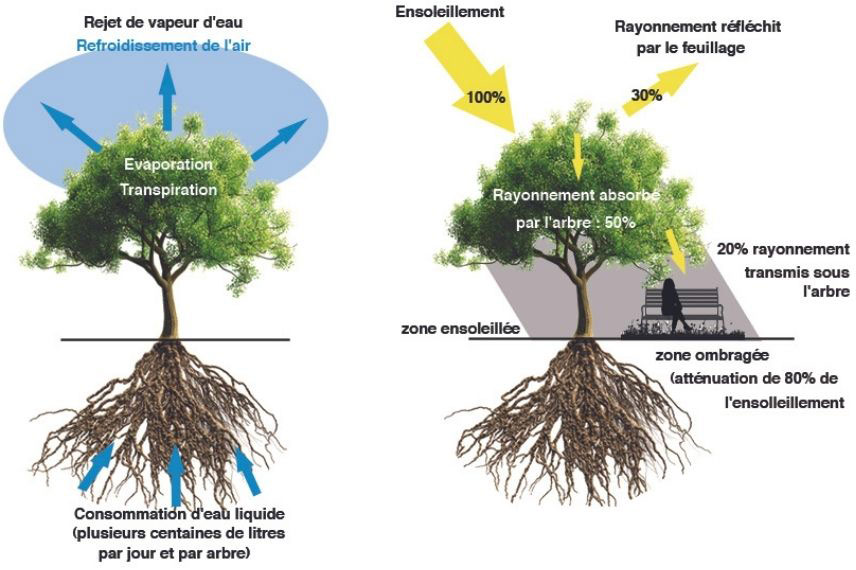 The direct and indirect effects of a tree on ambient temperature[/caption>
Thanks to this combined effect, the benefits of increased vegetation cover become fully apparent. Temperature differences in urban areas can vary from 4 to 8 °C depending on whether it is an open site or a location situated under the tree canopy.
It is worth noting that not all plants have the same efficiency. For instance, a tree with a light canopy intercepts between 60 and 80% of sunlight, while a tree with a dense and thick canopy can intercept up to 98% of it.
A reduction of about 5 °C through the judicious use of vegetation (shade trees, green walls, and green roofs) could reduce the energy consumption of air conditioners by 50 to 70%!
→ Good to know: Trees cool the air in summer, but they also warm it by more than 2 °C in winter!
Trees: Natural Air Conditioners
Armed by millennia of evolution to filter rising temperatures, trees play a true role as natural air conditioners by cooling the surrounding air. In warm regions such as California, studies have shown that three well-placed trees around a house can reduce annual energy consumption related to air conditioning by 53%. This is a great incentive to embrace trees in urban areas and green the surroundings of your home!
Which trees to cool the air?
Be careful with the choice of species planted and their placement. Choose deciduous trees if you want to benefit from maximum light in winter, anticipate the pruning of the tree at ripeness so that it fits the space you have, and consider potential root damage to foundations and various networks if you plant it near a building, terrace, or pool.
Trees with abundant foliage and large flat leaves, such as mulberries (Morus alba and Morus nigra), Paulownia tomentosa or conifers such as umbrella pine, to name just a few, will be ideal for large spaces, while Albizia or Pride of India (Koelreuteria paniculata) will be better suited for small gardens.
Choose trees suited to your local climate and known for their drought resistance. Opt for standards for maximum shading and plant them in a way that provides shade during the hottest hours of the day over the area you have determined (south-facing room, terrace, etc.).
Finally, if you want maximum natural air conditioning effect and have the possibility, plant groves for a multiplied oasis effect, with larger specimens protecting smaller ones from the sun’s intensity, as well as yourself!
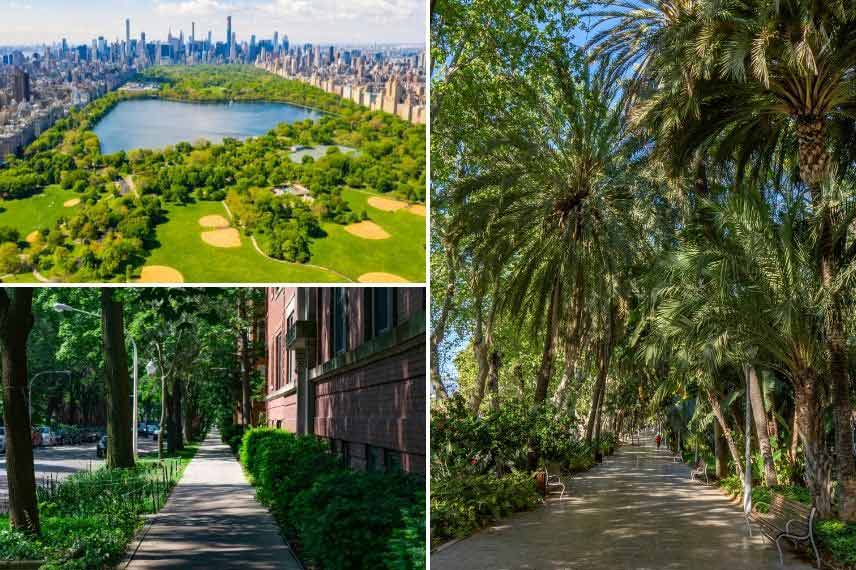 Urban parks and trees are the green lungs and air conditioners of cities
→ To guide you in your choice, find our selection of 8 umbrella-shaped trees as well as Jean-Christophe’s articles offering 10 shade trees for large gardens and parks and 10 trees to shade a small garden
Read also
10 shade treesClimbing plants and green roofs as natural insulation
Trees are not the only plants capable of cooling the atmosphere and buildings. In addition to bushes playing this role to a lesser extent, climbing vegetation is also interesting, especially in places where ground space for planting is limited, as well as groundcover plants planted on green roofs.
Climbing plants and green roofs contribute to the thermal insulation of buildings through:
- Evapotranspiration: by “sweating”, they cool their own leaves and the surrounding air.
- The “cover” they provide on the façade and roof of the building, creating shade. Shaded areas prevent the surface from absorbing solar radiation. South and west-facing walls and roofs should be prioritised for shading to avoid overheating.
- The air contained within the mass of the plants, which acts as an insulator.
The effect of a green wall will be even more effective the larger the covered surface area.
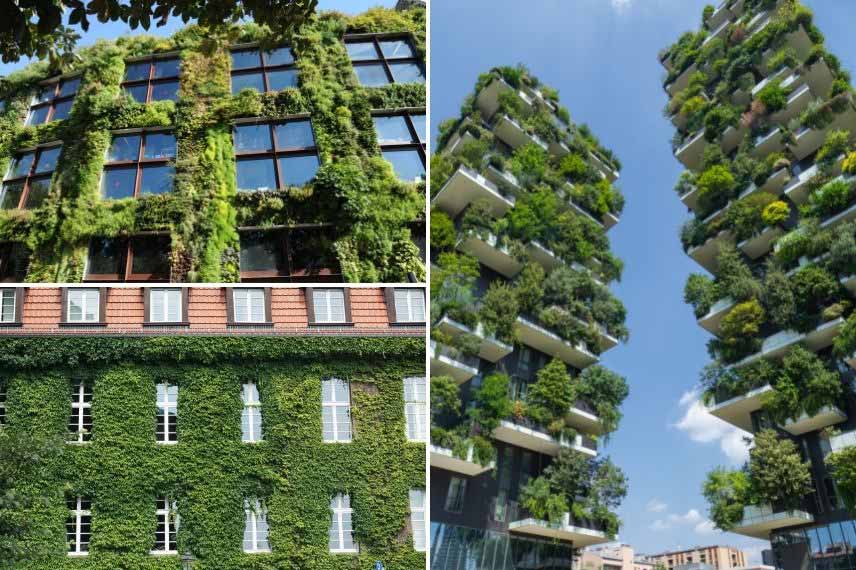 Greening your façades will allow you to insulate your buildings naturally and effectively[/caption>
Which plants to cool the air?
Your choice will first be guided by the planting conditions: in pots or in the ground, the type of support available, exposure, soil quality, etc. It is always preferable to plant in the ground, but for greening a façade, for example, this may prove impossible. Installing a planter at the base of your wall is a solution to consider, knowing that container gardening limits the plant’s growth and requires more regular watering. These points should also be taken into account:
- Evergreen or deciduous plant (consider the issue of leaf collection)
- Hardiness: resistance to cold is an important parameter depending on your local climate
- Height and width of the plant and support: plan for the dimensions of the plant after 5 years of growth to adapt the support
- Vigor: growth rate can vary
- Distance from the wall: to avoid dislodging the support due to the growth of the stems
- Maintenance: water and nutrient needs of the plant
- Associations: which other plants can be grown with the chosen plant?
- Ecological interests: habitat for biodiversity, role in depollution…
- Check the condition of the wall and know its nature
- Avoid proximity to utilities
Honeysuckles, climbing roses, clematis, wisterias or Star jasmines (Trachelospermum)… indulge yourself by beautifying your home while surrounding it with welcome freshness! There is no shortage of choice among climbing plants. And know that it is also possible to create seasonal shade at windows, which will prevent solar energy from entering directly and will thus have a marked effect on indoor warming.
To make your selection, find our articles:

- Subscribe!
- Contents

Comments