





























Garrya: 4 Successful Pairing Ideas
Garrya: a rare and beautiful bush all year round
Contents
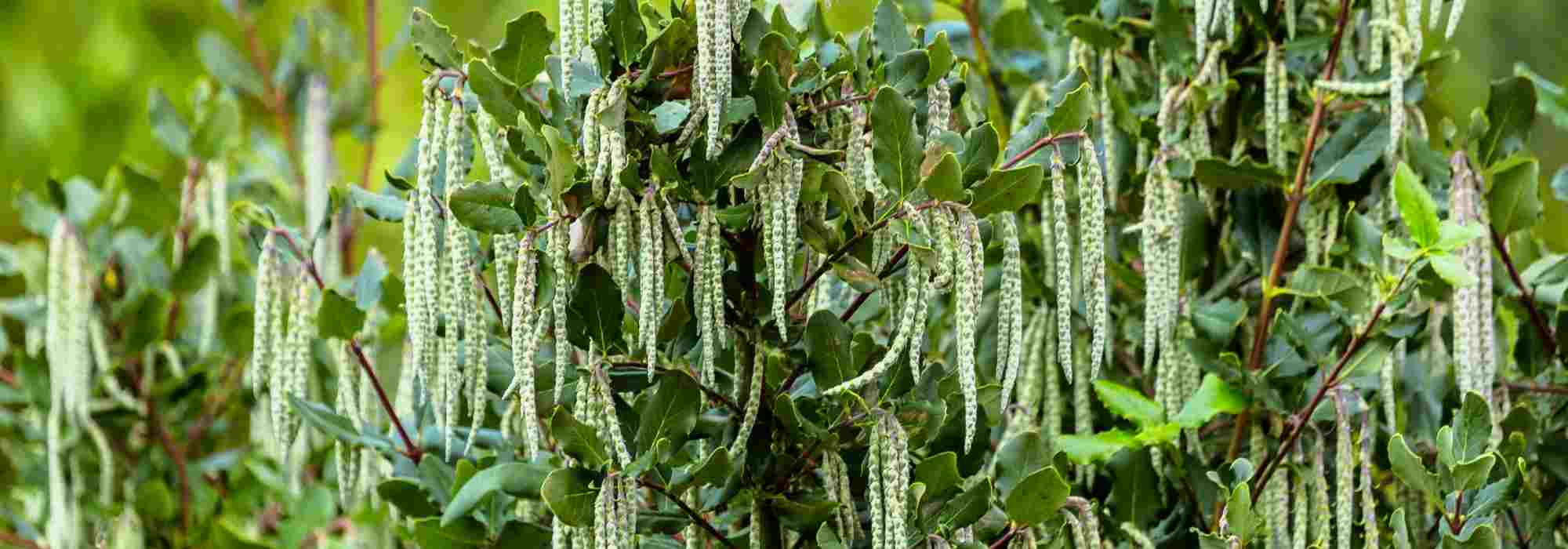
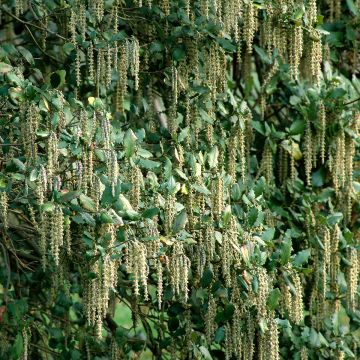
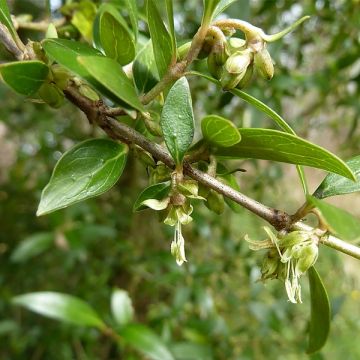
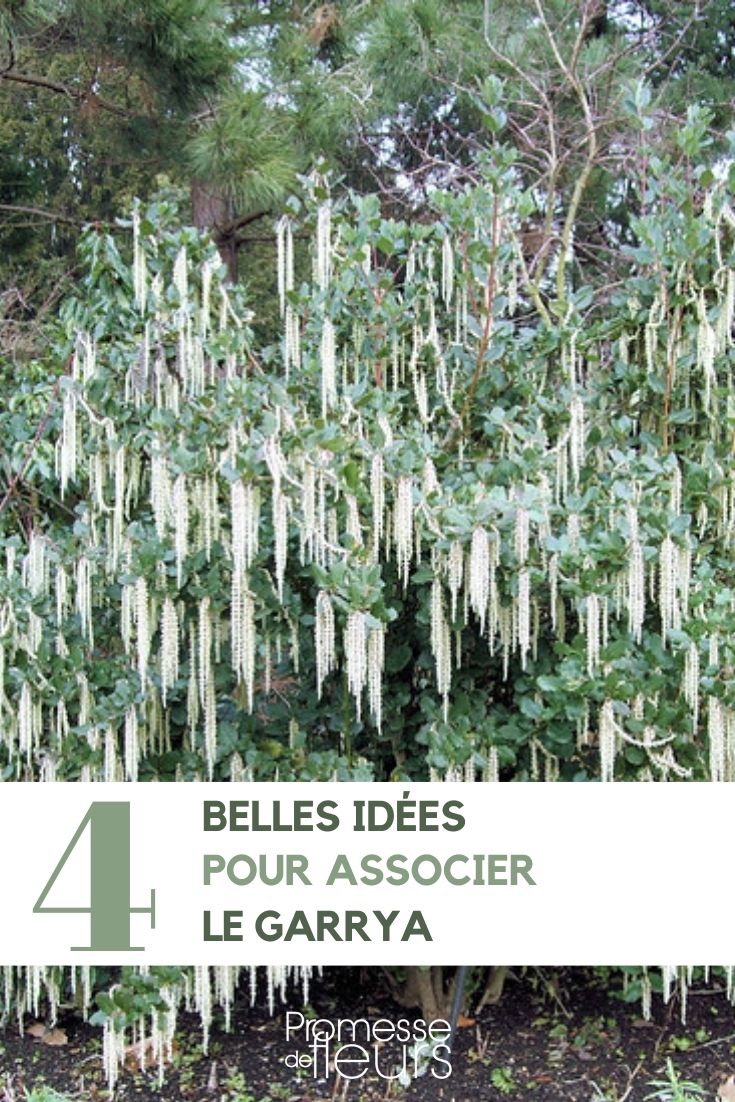
The Garrya elliptica, also known as the Silk Tassel Bush or Quinine Bush, is a fascinating bush, particularly due to its winter flowering with long pendulous cream-white aments. Its second asset is its evergreen foliage that is green with a grey velvet touch. Due to its relative hardiness (-12 °C), the Garrya elliptica is best suited for gardens in oceanic climates, such as in Brittany or the South-West. This bush prefers sun or partial shade, a position sheltered from cold winds, and well-drained soil. With a relatively slow growth rate, the Garrya can be grown in a free-standing hedge alongside other bushes, in a border, or as a specimen plant to fully enjoy its flowering.
→ Let’s discover 4 ideas for pairing Garrya in the garden!

In isolation (or almost) to enjoy its presence
What could be better than planting your Garrya in isolation near the house to fully enjoy its flowering? We will choose the Garrya elliptica ‘James Roof’ whose pendulous aments in white-pink-silver are longer and more spectacular than those of the species type.
To accompany it, let’s keep it simple and understated! Sarcococcas are evergreen bushes that flower in winter with a multitude of discreet yet delightfully fragrant flowers. At the foot of the Garrya, one or two Sarcococca hookeriana ‘Purple Gem’ will serve as a backdrop. To complement them, we will stick to subtle notes in relatively neutral tones: a few bulbs of Galanthus (snowdrop) from Corsican Hellebores with green flowers and dark green foliage, and two or three Oriental Hellebores with black flowers will provide a strong contrast with the silver aments of the Garrya. To be tested in mild climates, the Christmas Clematis ‘Advent Bells’ can climb into the Garrya ‘James Roof’ and flower at the same time as it. The flowering of this cream-white clematis speckled with purple will perfectly echo the aments of the Garrya.
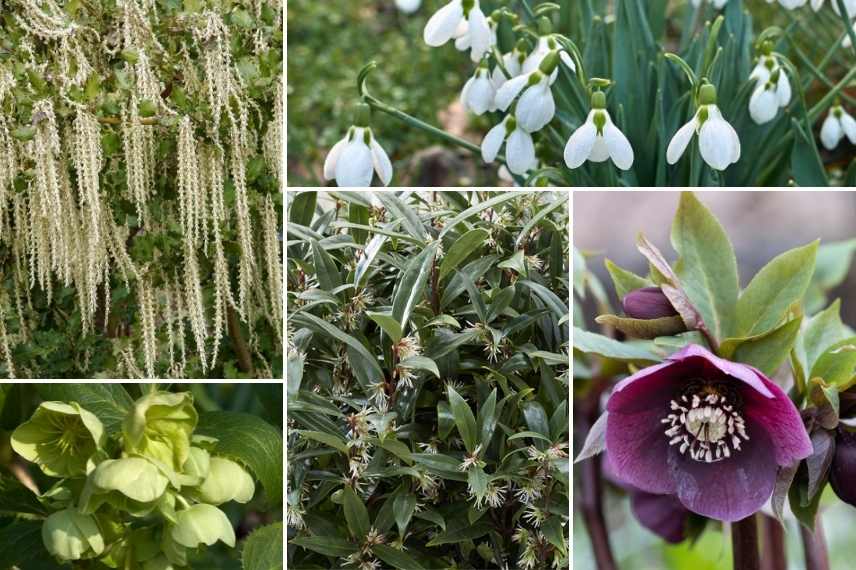
Garrya elliptica ‘James Roof’, Galanthus nivalis, Helleborus argutifolius, Sarcoccoca ‘Purple Gem’ and purple Oriental Hellebore
Within a winter flowering bush bed
Winter is not always synonymous with gloom in the garden. If you have taken care to choose certain winter-flowering bushes and a few others with colourful stems, you can certainly create a stunning winter display. Let’s take our lovely Garrya elliptica ‘James Roof’ and place it at the centre of our display! Its flowering and evergreen foliage will ensure a beautiful presence all year round.
The trap in creating a seasonal display is to plant only those plants whose interest will be limited in time. Let’s avoid this pitfall by choosing wisely! Decorative-stemmed Cornus (red, orange, or yellow) are stunning in winter, but not only then: they flower in spring and provide superb foliage during the beautiful season and often also in autumn. For a visually pleasing effect, it’s best to opt for a single shade (you can mix colours, but on a large surface and for very large groups for a more natural look): two small Cornus sanguinea ‘Anny’s Winter Orange’ with stems changing from yellow-orange to red over the weeks in winter will be perfect. Not all dogwoods have decorative stems; some are trees displaying large bracts (like Cornus kousa, for example), and others flower in winter like our male dogwood. This is also the case for Cornus officinalis whose yellow flowering is slightly earlier (from February). Let’s complete the picture with a classic, yet nonetheless stunning, Hamamelis ‘Feuerzauber’ with its orange-copper winter flowering and a Hedgeworthia ‘Nanjing Gold’ with very bright, fragrant yellow flowers.
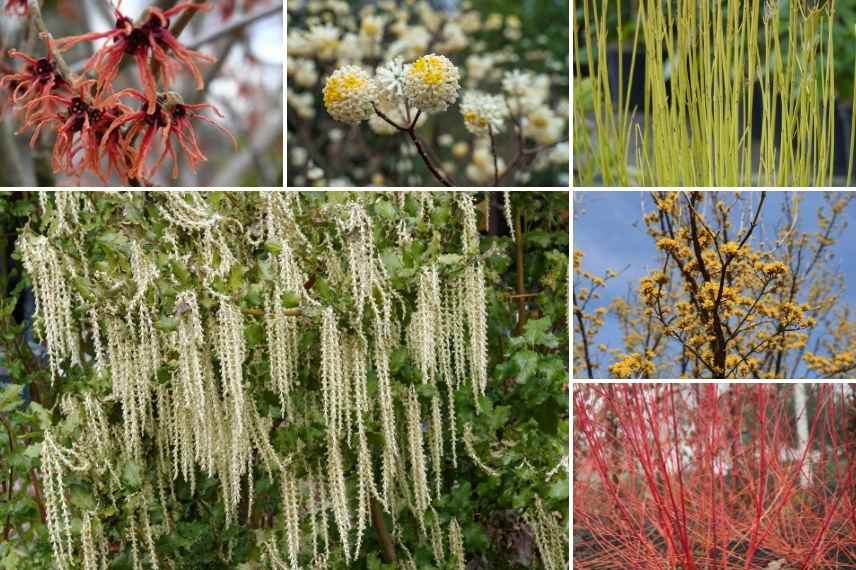 Garrya elliptica ‘James Roof’, Hamamelis Feuerzauber, Edgeworthia chrysantha, Cornus ‘stollonifera Flavimera’, Cornus officinalis and Cornus sanguinea
Discover other Garrya
View all →
Available in 1 sizes
Available in 2 sizes
Available in 1 sizes
A free and flowering hedge during the bad season
Free or living hedges of mixed bushes can sometimes appear a bit dreary during winter and early spring, unless one has the good idea to incorporate interesting shrubs during this period. This time, we will focus on a rarity: the Garrya x thuretii (a hybrid partly derived from Garrya elliptica). This Garrya grows faster than its “cousin” and offers amusing grey-yellow aments between January and February.
The Stachyurus praecox also produces aments, but a bit later, in March (sometimes a tad earlier, however). It dislikes lime and prefers sheltered situations and partial shade. The purple twisted hazel, as its name suggests, has a twisted silhouette, produces purple foliage and purple aments between February and March. The classic yet effective laurustinus or viburnum tin has evergreen foliage, like the Garrya, and features a long flowering period with white, fragrant corymbs from December to March. Tired of the ordinary forsythia? In that case, try the “pink forsythia” or Abeliophyllum distichum ‘Roseum’. This is a deciduous shrub that blooms with a multitude of small pink flowers with an almond scent. All these ideas help create a beautiful hedge in winter and early spring, but feel free to incorporate other species that have flourishing periods throughout the year.
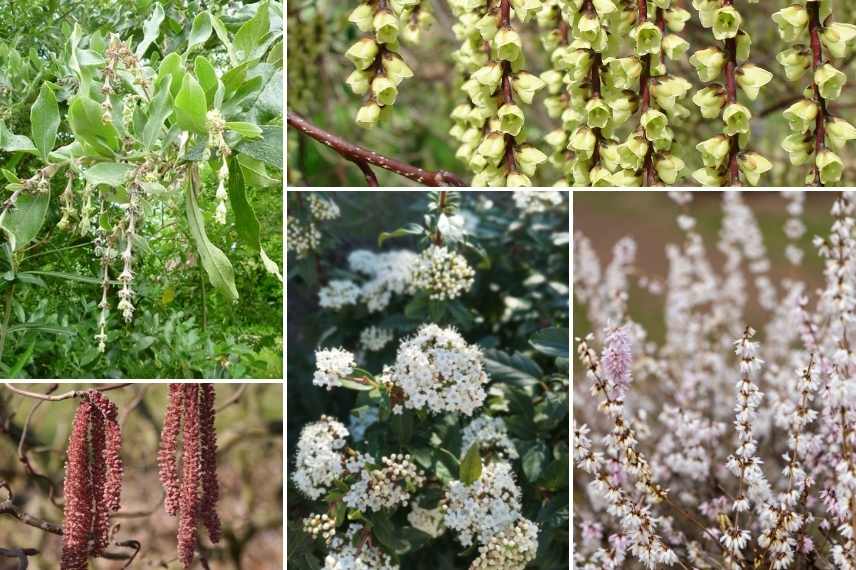
Garrya x thuretii, Stachyurus praecox, aments from a purple twisted hazel, viburnum tin, and Abeliophyllum distichum ‘Roseum’
Read also
The most beautiful winter floweringsGreening a north-facing wall
It is not always easy to green a north-facing wall. For this situation, it is better to choose hardy plants that prefer shade. However, in the warmest areas of the country (the South), one can attempt to grow semi-shade bushes that do not appreciate the scorching heat of full sun: Garrya elliptica is one of them.
For year-round presence, we will select various evergreen bushes. The Garrya elliptica, this time the typical species, will be accompanied by other interesting shrubs. A Mahonia X media ‘Winter Sun’ blooms in winter with large clusters of yellow flowers, and its very graphic foliage gives it a somewhat exotic look. In the same hue, but for a much later flowering period (between June and July), the Azara serrata is a shrub for mild climates whose flowers resemble those of Mimosa. We are familiar with Berberis, but very few know this astonishing Berberis iologensis ‘Apricot Queen’ with its bright orange spring flowers and foliage made up of small dark green evergreen leaves. To finish with a classic but sturdy and effective shrub, the Pyracantha ‘Orange Glow’ produces a flowering appreciated by insects, followed by a profusion of very decorative orange berries.
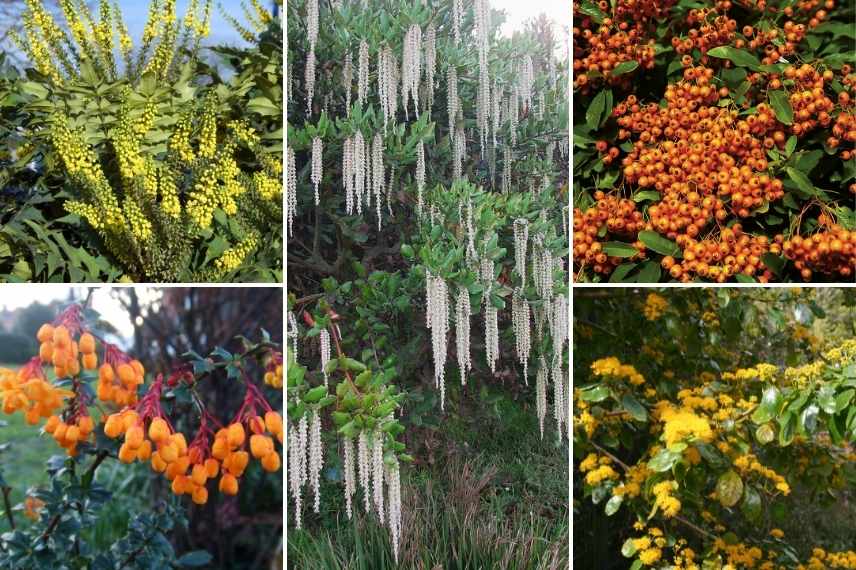 In the centre, Garrya elliptica, surrounded by flowering or vitamin-rich berries: a Mahonia x media ‘Winter Sun’, a Berberis iologensis ‘Apricot Queen’, a Pyracantha ‘Orange Glow’, and an Azara serrata.
- Subscribe!
- Contents
Comments