





























Gardening in Hot Weather: Our 8 Tips
Simple actions to help our plants survive during drought, heatwaves, or heatwaves.
Contents
When temperatures rise and the sun beats down, gardening can quickly become a challenge. Dry soil, stressed plants, exhausted gardener… the intense heat puts the entire garden ecosystem to the test. However, it is entirely possible to continue gardening effectively during a heatwave, provided you adopt a few good habits. What actions should you prioritise? What mistakes should you avoid? Here are our tips for taking care of your garden without risking heat stress or plant losses.
Prepare the soil in advance
The sun and drought will gradually create an impermeable surface crust, especially if your soil is naturally compact and clayey. Water from irrigation or rain will therefore struggle to penetrate properly to quench your plants.
Hoeing helps to break this dried crust so that water can seep deeply into the soil, reaching the roots of the plants. Experienced gardeners will always tell you that good hoeing is worth two waterings! Just remember to hoe before watering and not after.
You can also create small basins or channels around the base of certain plants, allowing the water to be absorbed by the soil before it runs off.
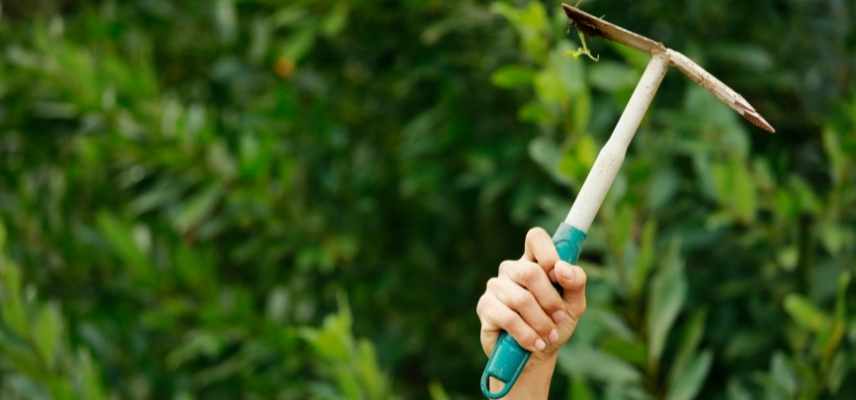
The hoe, an essential tool during droughts
Install a thick mulch
We regularly extol the benefits of mulching for plants. In addition to limiting the growth of adventive plants (“weeds”) that compete with vegetation, it indeed allows for:
- preventing soil overheating (the sun’s rays no longer hit the surface directly);
- reducing natural evaporation;
- retaining moisture in the substrate for a longer period.
To be effective during hot weather or heatwaves, the mulch should be at least 8 to 10 cm thick. Prefer natural mulches: flax, hemp, buckwheat, shredded plant waste, or dried grass clippings.
The mulch should be applied to moist soil, after thorough watering, and not on dry soil. Apply it both in ornamental gardens and in vegetable patches or at the base of potted plants.
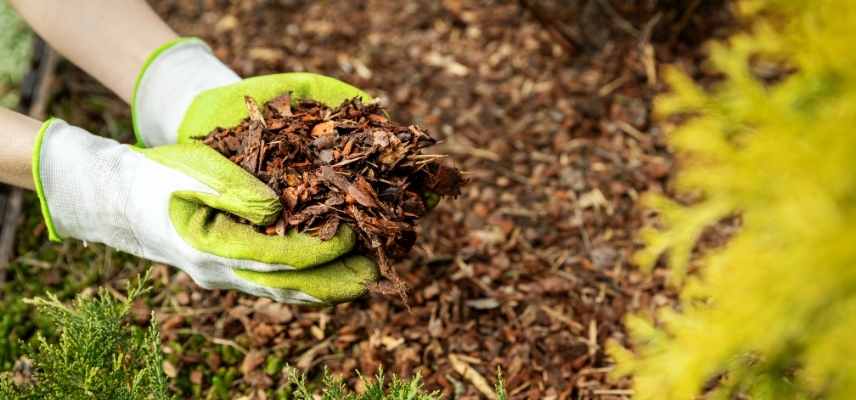
Mulching has a protective and heat-regulating effect
Water at the right time
For watering the garden when it’s hot, there are 2 schools of thought: one that recommends watering “in the cool” early in the morning before sunrise, or one that prefers watering in the evening when temperatures drop after sunset.
In any case, the aim is logically to water when temperatures are coolest and when the sun’s rays are no longer hitting the soil. Therefore, generally avoid any watering between 10 am and 8 pm.
This sensible action will limit natural evaporation and allow the soil to properly absorb the water to adequately hydrate the plants.
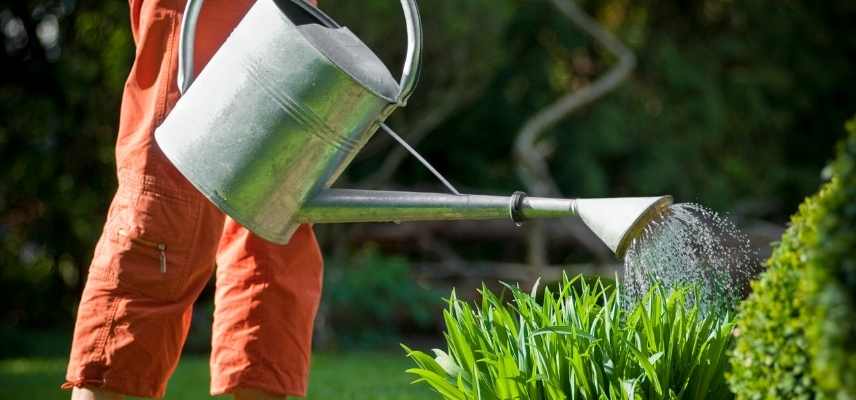
Water preferably very early in the morning, when temperatures are coolest
Water correctly
To help the garden during a heatwave, it is better to opt for less frequent but more abundant watering. Frequent watering in small amounts makes plants more dependent and less resilient to water shortages. Their roots will remain superficial instead of developing deeply in the soil to seek out natural moisture. Therefore, prefer a good watering every 2 to 3 days rather than a small daily watering.
Also remember to water at the base of the plants and not on the foliage to avoid:
- the “magnifying glass” effect that can intensify sunburn;
- the development of fungal diseases, encouraged by the heat + humidity cocktail;
- a temperature shock that would further weaken the plants.
Be also vigilant with the temperature of the watering water: if it comes from a hose left in the sun, an unprotected tank, or an outdoor tap, it may have heated up and cause burns or thermal shocks.
Finally, you can of course opt for automatic watering (do not hesitate to mulch the hoses as well to prevent them from heating up during the day). Some automatic models can even start based on light levels, once the sun has set or before it rises.
In addition, discover our articles:
- Watering a garden during a heatwave
- Water restrictions and watering, how to manage the crisis in the garden?
- Automatic watering: the different systems, which one to choose?
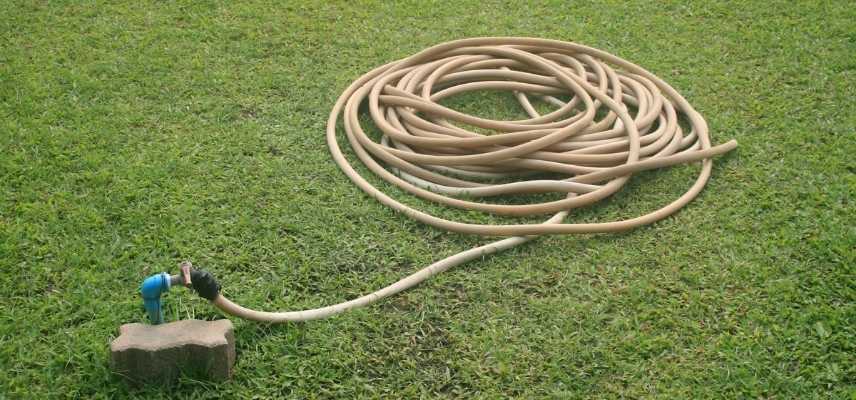 Be careful not to leave the hoses in the heat…
Relieve the plants
Some small pruning gestures will help plants waste less energy during hot weather.
- Remove faded flowers as you go, before they produce seeds or fruits that further deplete the plant’s reserves.
- In case of a heatwave, cut even one flower out of two or remove new buds to conserve the plants’ resources.
- Prune the branches of bushy perennial plants that bloom in summer to limit evaporation.
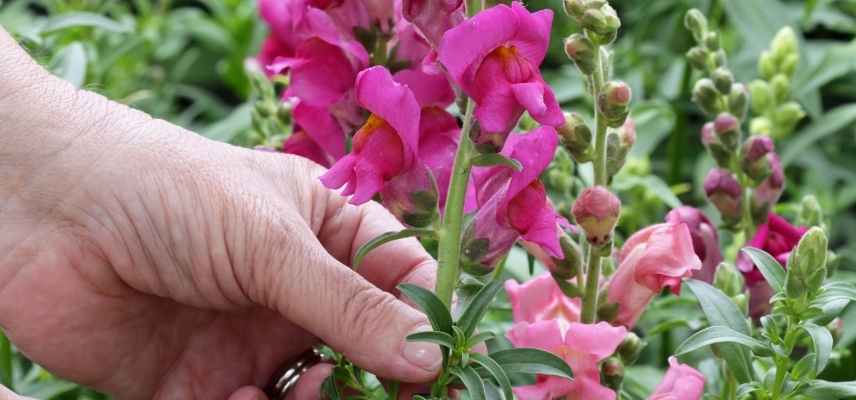
Removing some flowers helps plants suffer less from the heat
Provide shade
Whether in the vegetable garden, under a greenhouse, or in the ornamental garden, adding shade will help limit water evaporation and soil drying.
There are several solutions:
- turn a crate upside down over small plants or low-growing vegetation;
- stretch a shade cloth or, if not available, use frost protection fabrics, camouflage nets, or sheets to shade a large area;
- invest in shade tunnels;
- install a screen or bamboo fencing to protect plants from the hottest rays from the south and west;
- as a makeshift solution, plant a parasol to protect a particularly sensitive bush.
For the future, consider installing hedge bushes, which will provide natural shade. Prefer local varieties and diverse species.

At worst, a parasol often does the trick to protect a particular plant
Manage potted plants
Potted plants suffer more during drought and heat. The available substrate is more limited, water evaporates quickly, and pots tend to heat up rapidly. The roots of the plants also cannot reach deep into the soil in search of moisture.
- Start by moving the least cumbersome pots to the shade of trees or nearby structures (garden shed, pergola, etc.). If this is not possible, place them in a gentler exposure, to the north or east, but sheltered from drying winds.
- Group the pots so that each can benefit from natural evapotranspiration and a beneficial microclimate.
- If the substrate is particularly dry, opt for bottom watering rather than traditional watering. To do this, immerse the plant and its container in about 5 cm of water for 10 to 15 minutes, until the substrate is completely rehydrated by capillarity.
- Add a saucer under the pots so that water does not drain away too quickly and the plant has time to rehydrate deeply.
- Add natural material cache-pots (wicker, straw, etc.) to protect the containers from direct sunlight.
- Avoid metal containers (zinc, aluminium, iron, etc.) and dark-coloured containers, which absorb more heat.
- Add clay balls or water-retaining agents mixed into the substrate: they will capture liquid and gradually redistribute it to the plants for a longer period.
- Install ollas, these irrigation systems that save water and limit natural evaporation. For more information: Ollas or oyas: an efficient and economical watering system.
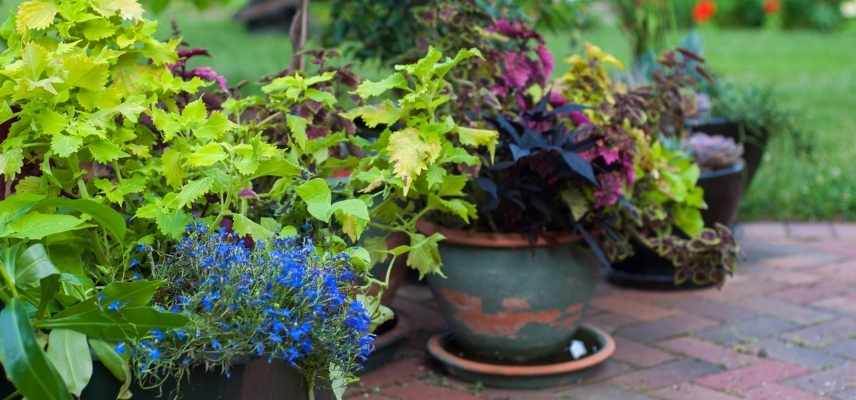
Maximise the grouping of potted plants
Stop planting and adding fertilisers.
Even plants known for being frugal and resilient to extreme conditions need time and watering to acclimatise. The ideal time for planting is often in autumn: temperatures are still mild, and plants have several months to develop their root system properly before facing potential drought and heatwaves.
If you’ve fallen for plants in summer, it’s better to wait until the end of a heatwave to proceed with transplanting or repotting. The same applies if you have seedlings to prick out: keep them sheltered for a few days.
Similarly, during periods of drought, the application of fertilisers will be halted, as it is unnecessary. Plants can no longer properly assimilate nutrients.
It is worth noting that growing in a substrate suited to their needs, of good quality and rich in organic matter, will help plants be more resilient to extreme temperatures.
- Subscribe!
- Contents

Comments