





























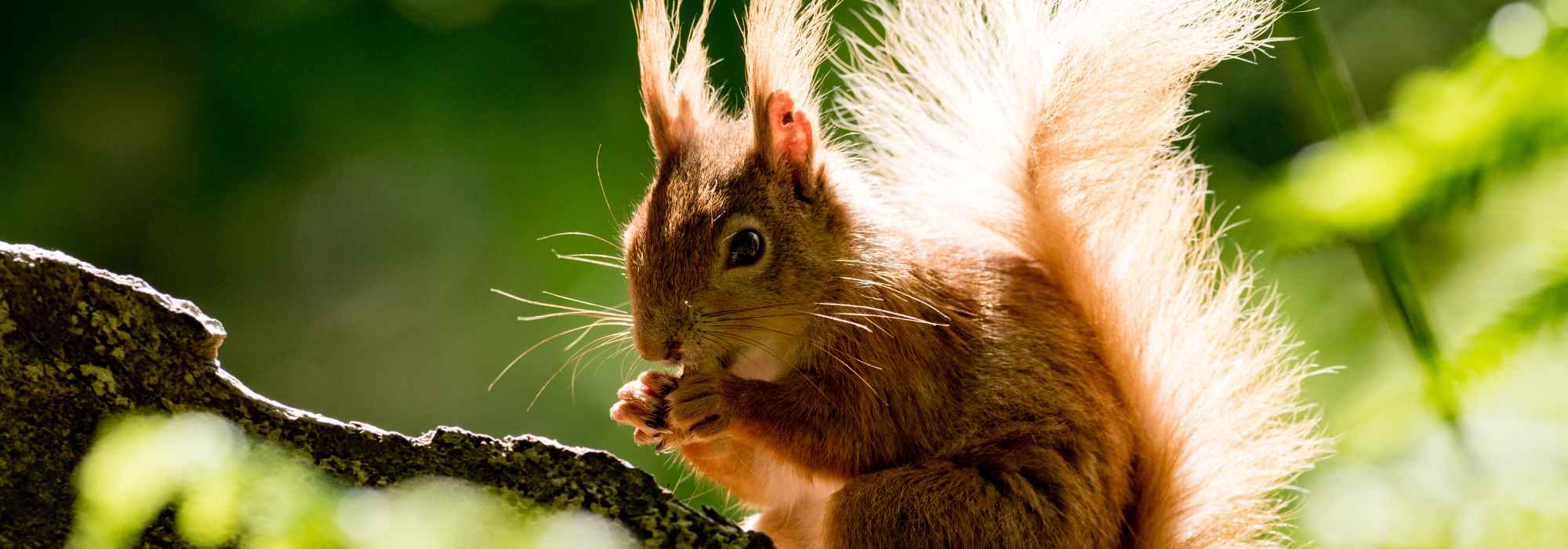
Garden visitor: the red squirrel
This curious redhead
Contents
The squirrel, that little acrobat of the trees, often brings a note of cheer and mischief to our gardens. With its reddish coat (or grey for “exotic” species) and its bushy tail, it is a visitor many find endearing. However, its presence in your green space is far from harmless. On the one hand, it plays an essential role in biodiversity and the balance of the ecosystem. It contributes to the dispersal of seeds and is a significant link in the food chain. On the other hand, it can also be the source of some nuisances such as emptied bird feeders or damage to your precious plants. So, how can you coexist peacefully with this little mischievous creature?
In this guide we offer a comprehensive exploration of the life of the likeable squirrel in our gardens, the benefits it brings, and the precautions to take to limit its minor nuisances. Whether you are looking to feed it or keep it away, follow our recommendations for harmonious coexistence.
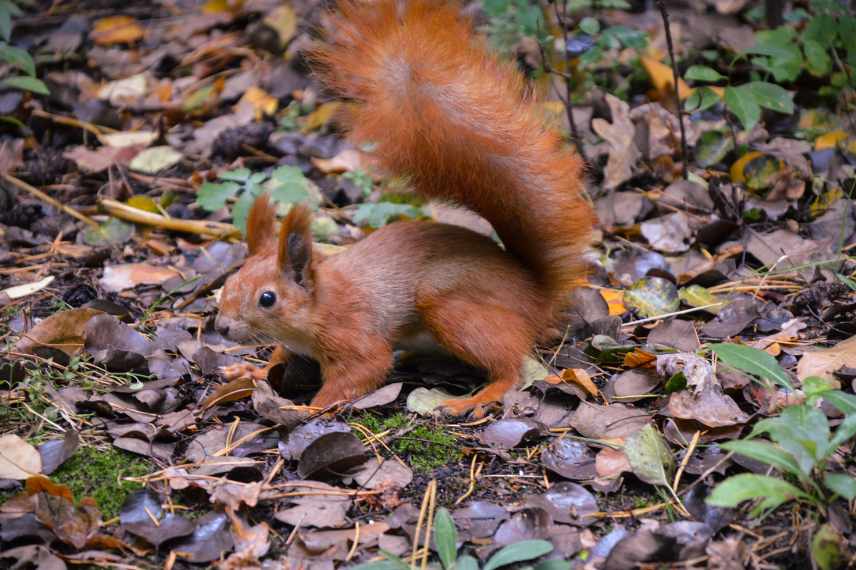
Sciurus vulgaris, the Latin name of the red squirrel
The red squirrel: its life and habits
The red squirrel, scientifically known as Sciurus vulgaris (family Sciuridae), is also commonly called the Eurasian red squirrel. This name comes from its range, which covers much of Europe and northern Asia. Living mainly in forests, it particularly favours wooded areas rich in conifers and deciduous trees where it finds shelter in the trees. Its nest, called ‘drey’, is a neat construction of branches and leaves, located high up.
Its diet is varied, ranging from conifer seeds to fruit and including some insects. It is not uncommon to see it store up for winter by burying walnuts or seeds in the soil, a practice that also promotes the dispersal of plants in its environment.
In terms of reproduction, the red squirrel is mainly active between December and July. After a gestation period of about 38 days, the female gives birth to a litter of three to six young, which will leave the nest after seven to eight weeks. The red squirrel can live 6 to 7 years in the wild, but it often dies long before that due to starvation, road traffic and numerous predators, such as the marten, diurnal and nocturnal birds of prey, and sometimes domestic dogs and cats.
Unfortunately, the red squirrel is now endangered by the destruction of its habitat due to urbanisation and deforestation. It also faces competition from its cousin, the grey squirrel (Sciurus carolinensis), an invasive species from America that proves more resistant to disease and more efficient at finding food. These combined factors make the red squirrel’s survival increasingly precarious and require particular attention for its conservation.
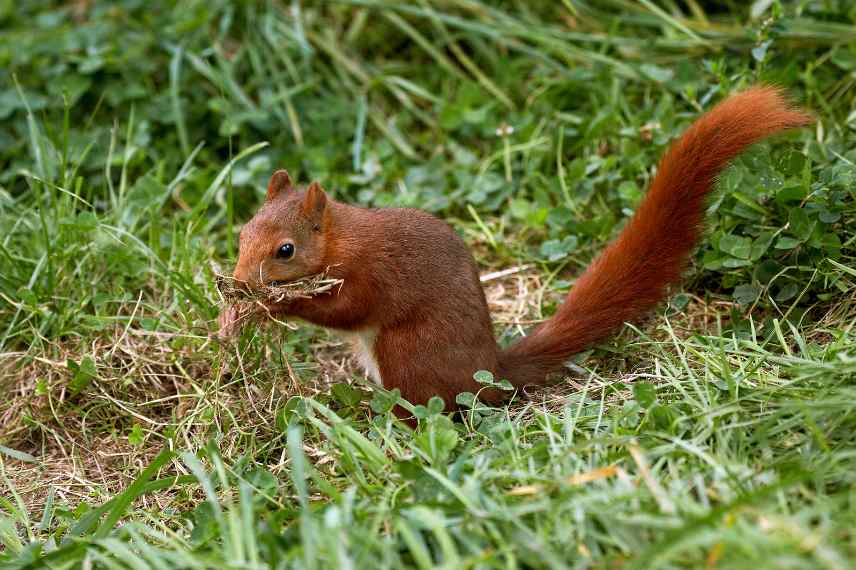
A squirrel gathering provisions to build its shelter in a tree
Read also
How to make a bat shelter?The red squirrel: a boon for biodiversity in the garden
The presence of the red squirrel in a garden is often seen as a delightful sight, but its role goes far beyond visual pleasure. Indeed, this small mammal contributes significantly to biodiversity and to the balance of the ecosystem. Thanks to its varied diet, the red squirrel actively participates in the dispersal of seeds. By burying nuts or other seeds for its winter stores, it promotes the growth of new plants, thus enriching the local flora. This action is particularly beneficial in gardens where plant diversity can sometimes be limited.
Not only does it help with the propagation of plants, but it is also a key element of the food chain. As prey for certain predators, such as birds of prey, it helps to regulate their populations, thereby ensuring a balance between species. Moreover, its ceaseless activity in searching for food creates dynamics that can positively affect the soil ecosystem, notably by contributing to soil aeration.
Far more than a mere visitor, the red squirrel is therefore a leading ecological actor. Its presence in gardens is an indicator of good environmental health, and its protection consequently becomes a priority for anyone wishing to maintain a rich and diverse green space. It embodies the symbiosis between fauna and flora, and attests to the richness and balance of a healthy ecosystem.
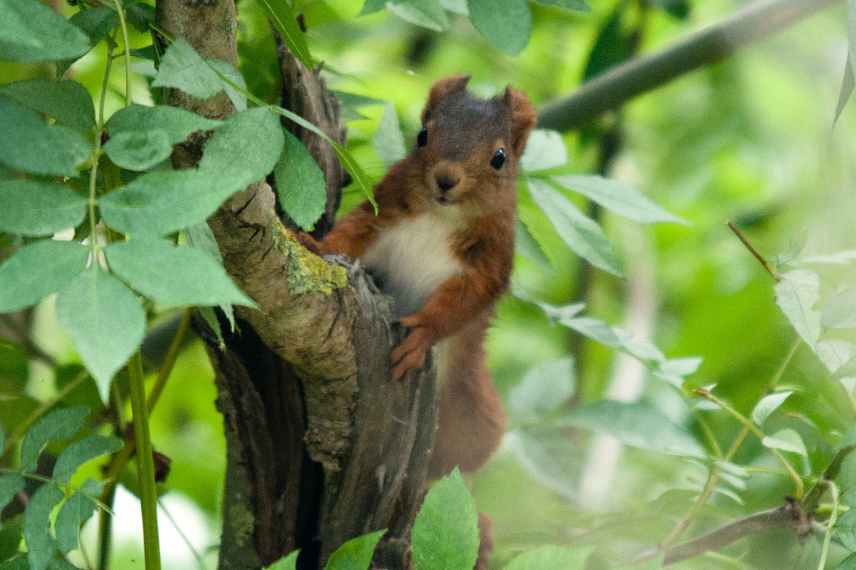
A little imp, sometimes mischievous...
The red squirrel, with its bright fur and agile movements, is often associated with the image of a mischievous little elf scampering happily through the trees. While its cute appearance and playful gait delight young and old alike, the potential damage it can cause in a garden should not be overlooked. Among the most common nuisances, emptying bird feeders is a recurring problem for birdwatching enthusiasts. With its great agility and sense of balance, the squirrel can easily reach feeders and consume their contents, much to the dismay of the garden’s birds who find themselves deprived of their food source.
Furthermore, this small animal can also damage plants by digging in the soil to hide its food stores. The bulbs of certain ornamental plants can thus be unearthed, compromising their future growth. Its taste for fruit can also be a problem, especially if your garden contains fruit trees. Partially eaten and then abandoned apples, cherries or peaches can quickly become a source of frustration for the gardener who had placed great hopes in their harvest.
Despite these inconveniences, it is important to remember that the red squirrel is a living being that is an integral part of our ecosystem. Before taking drastic measures to drive away this mischievous visitor, it is worth considering solutions that are more respectful of biodiversity, such as installing squirrel-proof bird feeders or choosing plantings that are less attractive to these small rodents. In this way, it is possible to coexist peacefully with this charming, but sometimes disruptive, resident of our gardens.
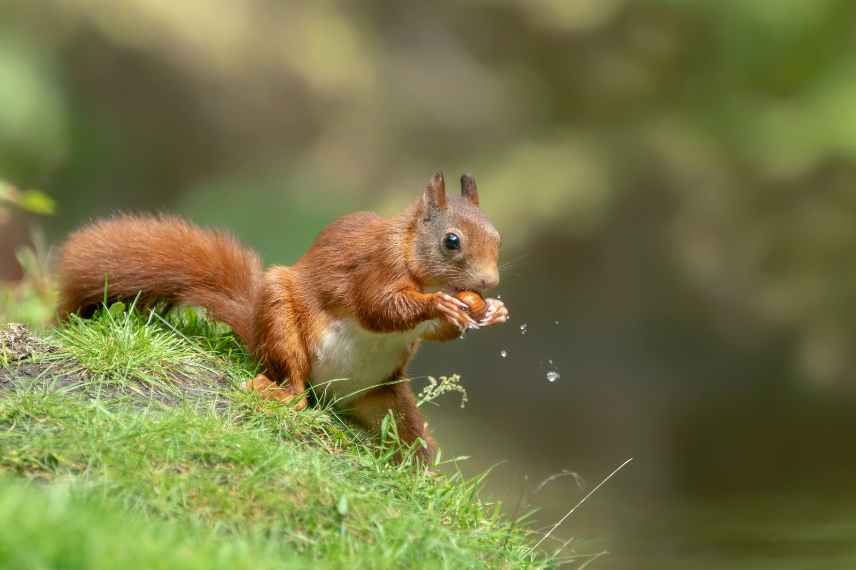
The squirrel will tend to enjoy the garden’s hazelnuts more than you will!
Read also
Cleaning a nest boxHow can you coexist peacefully with a squirrel?
Living peacefully with these little creatures is entirely possible with a few adjustments and precautions. To limit the “damage” to your plantings, you can opt for plants that are less attractive to squirrels. For example, strongly scented species such as rosemary or lavender tend to repel them.
To prevent your bird feeders from being raided, consider installing models specifically designed to be inaccessible to squirrels. These feeders often have mechanisms that close when a squirrel tries to access the food. You can also install guards around tree trunks to stop the squirrel from climbing.
If you want to feed squirrels rather than deter them, corn (preferably on the cob, but definitely not tinned sweetcorn!) is a good option, as they love it. Don’t overdo it, however, and try to vary the menu with hazelnuts, walnuts, sunflower seeds, but also fruits and vegetables such as apples, grapes, a carrot. Be sure to place them at a reasonable distance from the areas you want to protect and don’t forget a bowl of fresh water!
On the other hand, if your aim is to repel squirrels, capsaicin-based repellents can be effective. Capsaicin is a natural substance found in chillies that disturbs the animal’s senses without causing it harm. It will move on, probably cursing you for the slight detour you’ve forced it to take.
Ultimately, living with a squirrel requires a bit of thought and preparation, but the results are worth it. Not only will you protect your garden, but you will also contribute to a healthier, more balanced ecosystem.
- Subscribe!
- Contents
Comments