





























Garden Bird: the Tree Sparrow
this friendly garden visitor
Contents
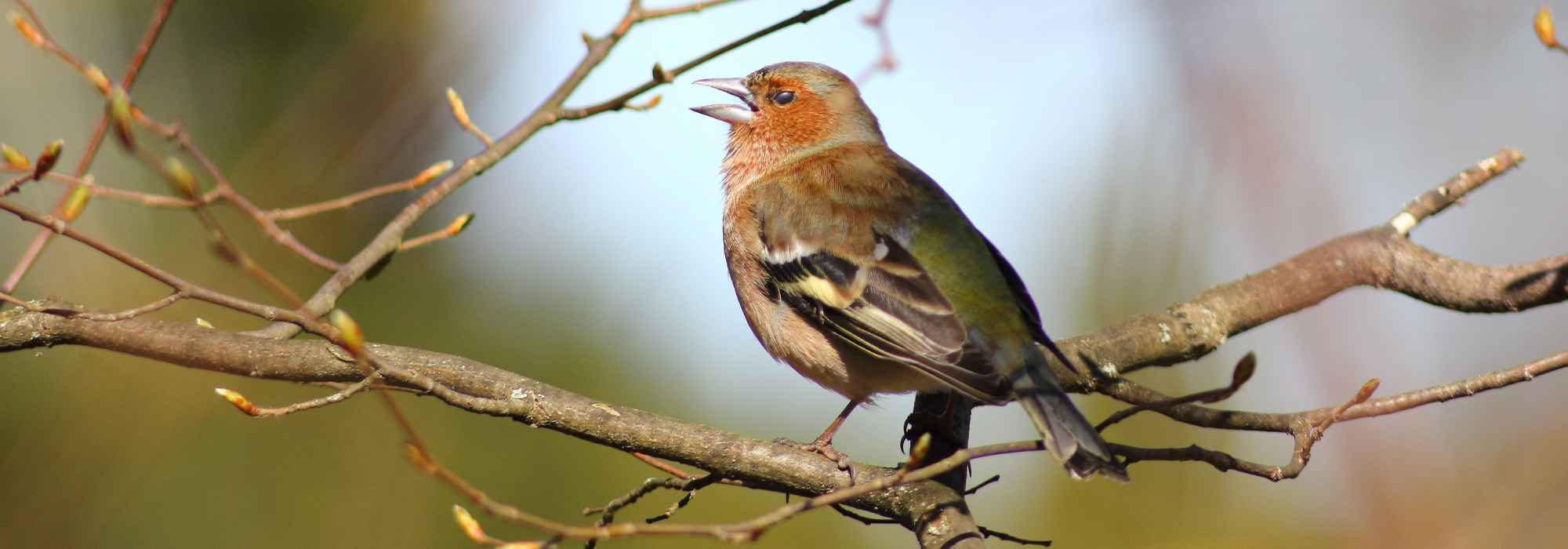
The Chaffinch, known by its Latin name Fringilla coelebs, is one of the most common birds in France and Belgium. This charming little passerine stays in our garden all year round as long as it is welcoming to biodiversity and planted with a good number of trees and bushes. Mostly granivorous, but insectivorous during the breeding season, the Chaffinch indeed needs a wide range of plants for its diet directly or indirectly (grasses, flowers, berry-producing bushes, seed-producing trees…), as well as a place to nest like a dense, living hedge.
→ Who is the Chaffinch? How can you protect and welcome it in your garden? We’ll tell you everything in this advice sheet.
How to identify a Tree Sparrow?
The Chaffinch or Fringilla coelebs is a small passerine bird from the finch family (Hawfinch, European Greenfinch, Goldfinch…). It is found throughout Europe up to Siberia (except Iceland) and is also present in North Africa and the Near East. Although partially migratory, it is a bird that can be found year-round in our gardens in France and Belgium. The Chaffinch is a protected species in France and Belgium, like all finches.
There are about ten subspecies found elsewhere in Europe (Portugal, Corsica, Ireland, Italy, Greece…) and in North Africa.
The Chaffinch weighs around twenty grams with a length from head to tail of 15 cm.
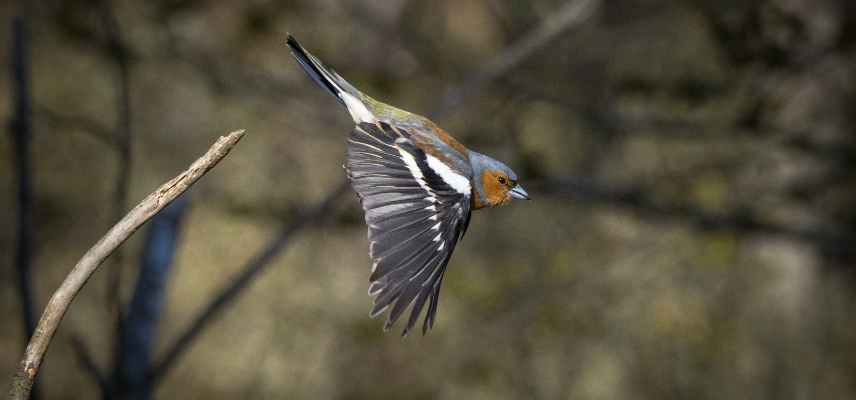
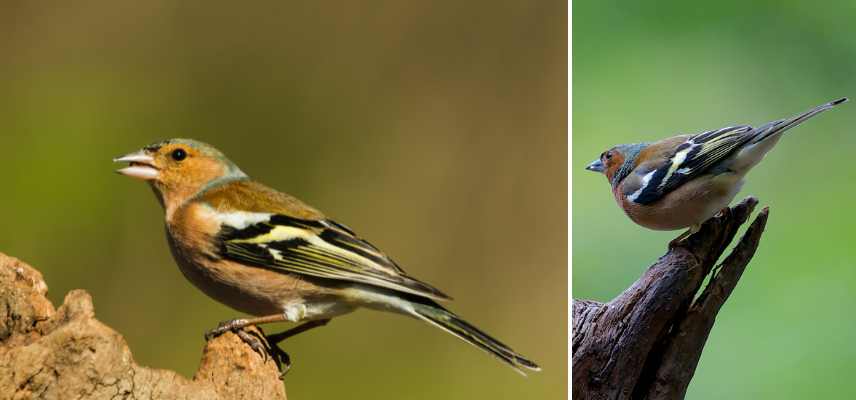
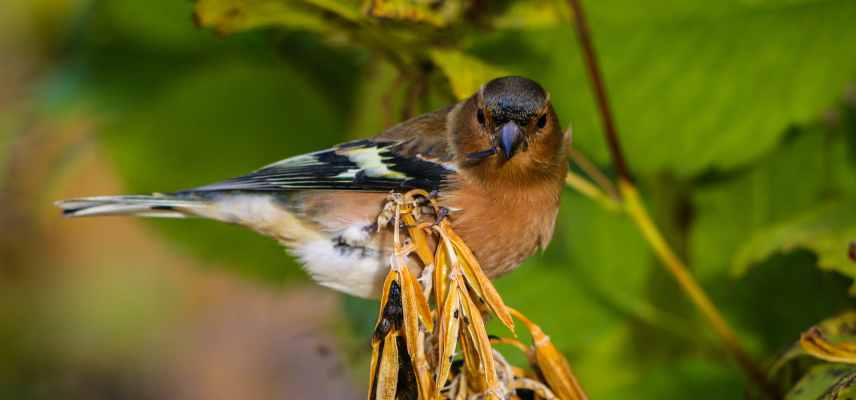
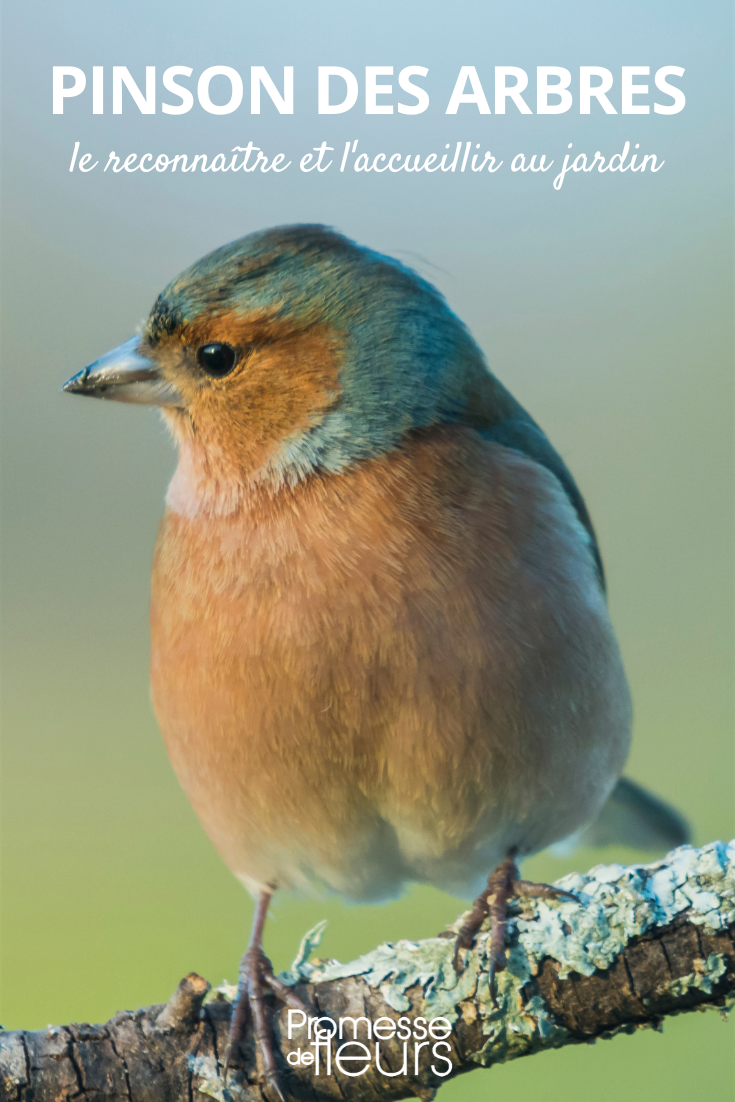
The tail feathers are slate grey, but the rectrices (the terminal feathers of the tail) are white. Chaffinches have two wing bars (two bands on each wing) that are white, clearly visible both on the ground and in flight. The eyes are dark brown. There is a significant difference in plumage between the male and the female.
The female Chaffinch has a duller plumage than the male: a very light belly and a pale olive-green back. The male, on the other hand, sports a pinkish belly and throat, a slate-grey head and crown, a brown-hazel back, and a black forehead. In winter, it is somewhat duller before regaining its colours in spring.
Please note: in winter, we may encounter another finch, the Brambling (Fringilla montifringilla). Of similar size and morphology, its plumage is, however, very orange and striated with black.
Habits and Habitat
Habitat
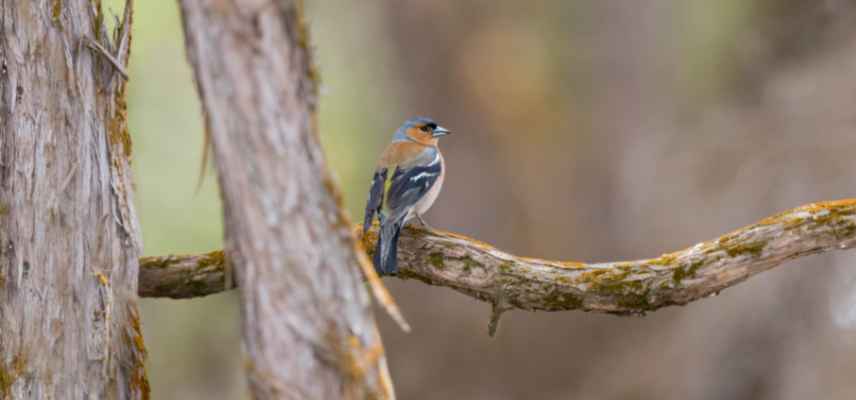
The Chaffinch, as its name suggests, loves trees. It can therefore be found in coniferous, deciduous, or mixed forests, as well as in gardens and parks that feature a good number of trees and bushes.
Food
The Chaffinch is primarily granivorous. Among its favourite seeds are those of alders, birches, beech, and resinous trees. However, it can also feed on the seeds of herbaceous plants and grasses, as well as buds and berries (Privet, Rowan, Bloodtwig Dogwood…).
During the breeding season, its diet shifts to become more insectivorous, and it does not shy away from the occasional earthworm. The young are fed with larvae and caterpillars.
In spring and summer, the Chaffinch can be found singing or foraging for food in trees and bushes. In winter, it tends to live in groups, sometimes with other species (House Sparrows, European Greenfinches…) and searches for food on the ground.
Reproduction
The male sings from February to mid-July. Generally sociable, the chaffinch becomes territorial during the nesting period, from mid-April to July (the timing may vary slightly depending on temperature and available food). The nest is built by the female in a bush or tree: it is a cup made of roots, stems, mosses, lichen, and even… spider silk to hold it all together.
The female will lay 4 to 6 eggs that are light brown or bluish-white marked with small red-brown spots and streaks. After an incubation period of about 14 days, it will take another 14 days for the young to be able to fly, and an additional 14 days before they can start feeding themselves. The pair of chaffinches will, if all goes well, have two broods in a year.
Welcoming the Tree Sparrow to the Garden
Like all birds, the Tree Sparrow is an essential element of the food chain and the balance of biodiversity in Nature and within your garden.
The eggs and chicks are sought after by some predators such as the Red Squirrel, the Carrion Crow, weasels, stoats, and sometimes even cats. At the feeder in winter, it is not uncommon for a European Sparrowhawk to try its luck, with varying degrees of success, at the Sparrows feeding there.
The Tree Sparrow also helps to regulate insect populations in the garden by consuming insects during the breeding season, but especially caterpillars and larvae to feed its young.
To welcome it to your garden, you will need a garden that is inviting for biodiversity and composed of a wide variety of plants: trees, bushes, a beautiful living hedge, flowers for insects, grasses, a pond… All ecocides (insecticides, weedkillers, fungicides…), even those marketed as “organic”, should also be banned.
In winter, a feeder filled with simple sunflower seeds will be appreciated. However, most of the time, Sparrows will prefer to stay on the ground near the feeder and consume the seeds that have fallen from it. A few shallow dishes of water, renewed daily and placed out of reach of potential predators, will also help Sparrows and other birds, such as tits for example.
- Subscribe!
- Contents
Comments