





























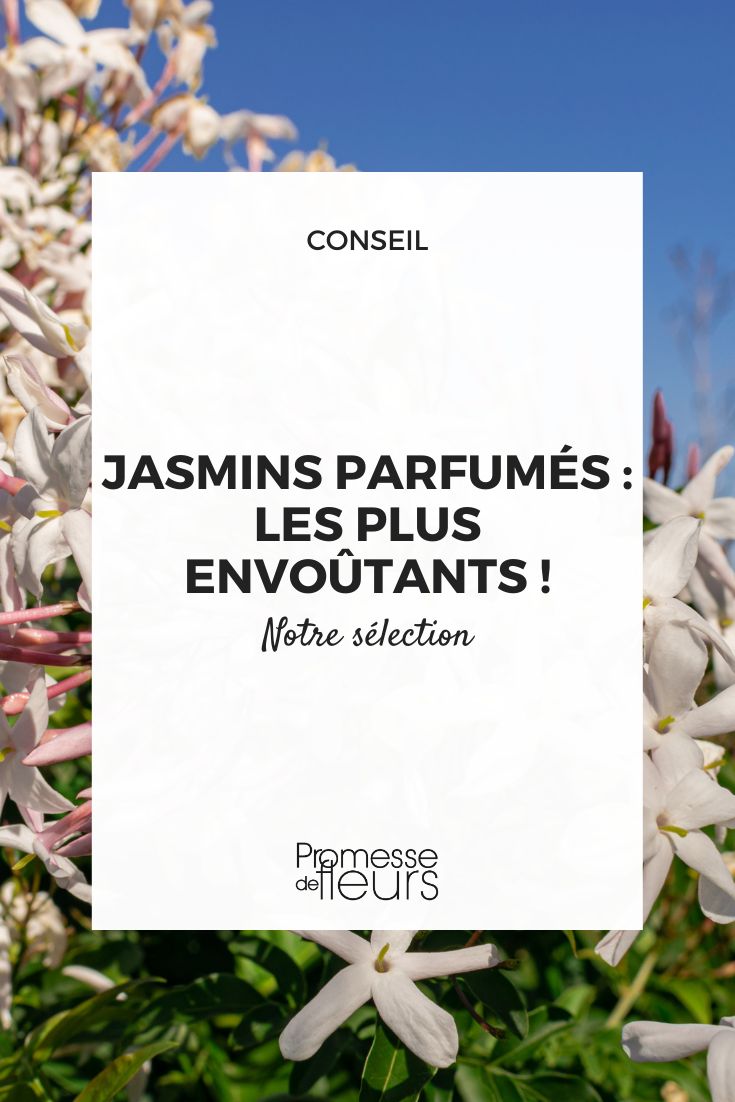
Fragrant jasmines: discover the most enchanting fragrances!
The most fragrant flowering species we recommend growing
Contents
We love jasmines for their generous flowering. These plants, often climbing, produce pretty star-shaped flowers that can appear in different seasons depending on the species concerned.
But it is also for their powerful fragrance, sometimes even heady, that they are appreciated. Jasmine flowers are, moreover, highly prized in perfumery, but not all have the same olfactory intensity.
If you would like to grow this plant in the garden or in a pot to enjoy its fragrance, here is our selection of jasmines with the most remarkable fragrances.
And to learn more about jasmine cultivation, discover our guide: Jasmine: planting, care, pruning.

The Jasminum polyanthum
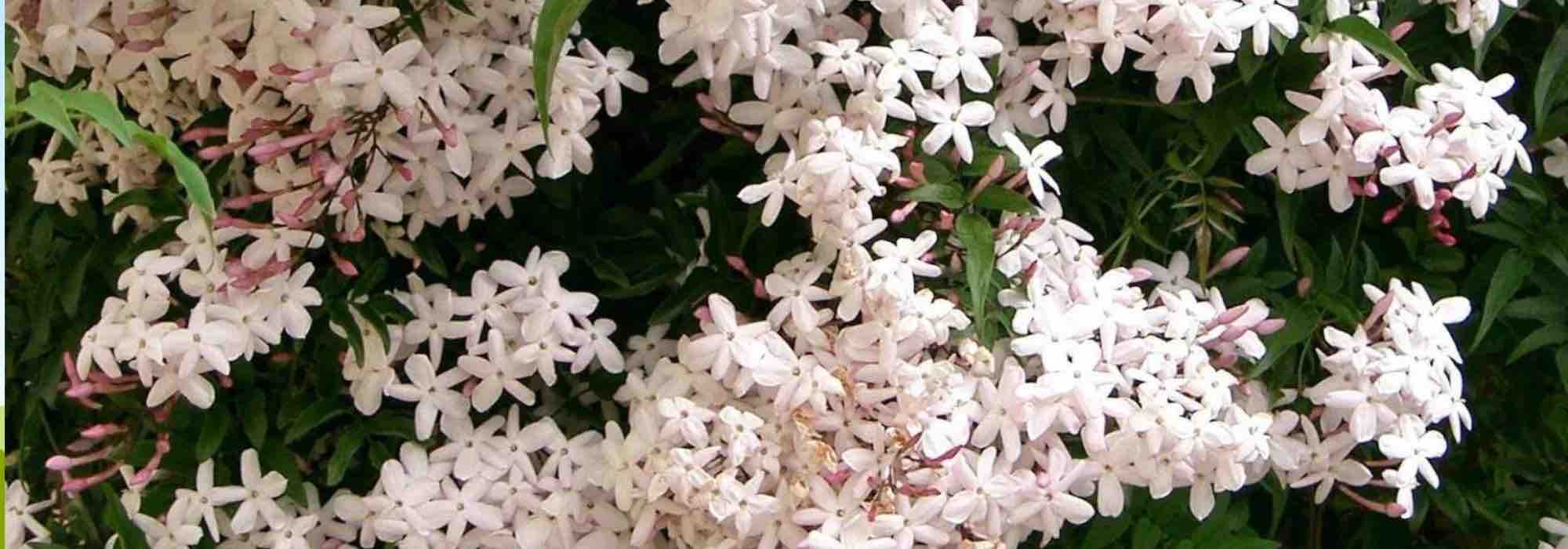
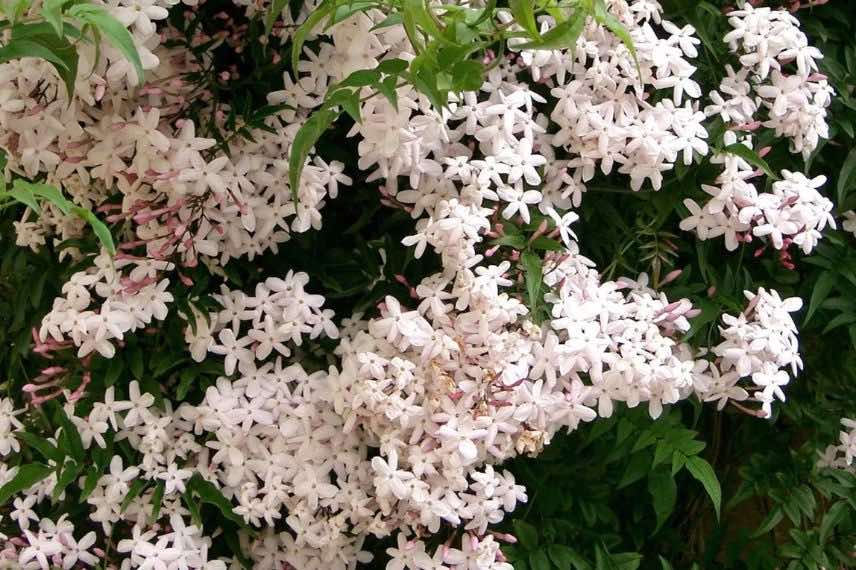
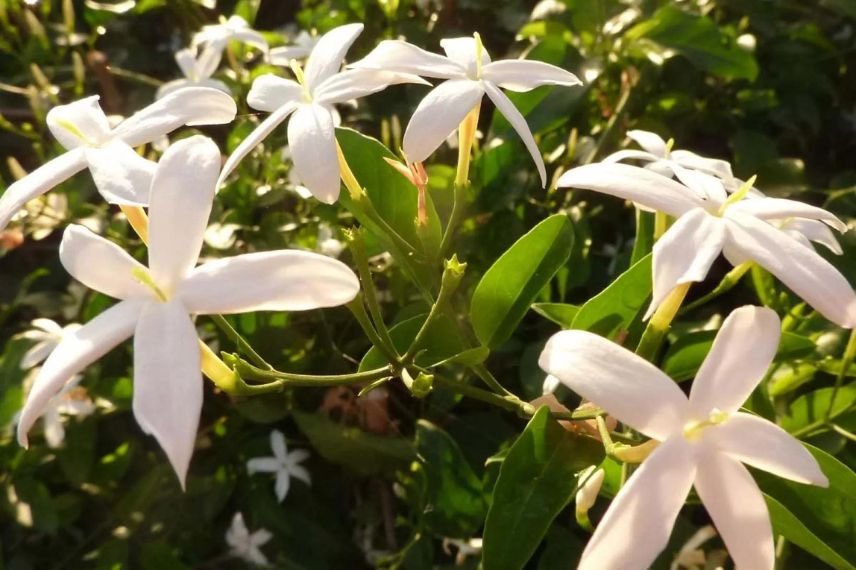
Jasminum polyanthum is a winter jasmine that flowers abundantly from February to April. Unlike Jasminum nudiflorum, which also brightens the coldest months of the year, this species is quite fragrant. This climbing plant with twining stems produces clusters of small star-shaped flowers, which measure 3 to 5 cm in diameter. The flower buds are pink at first, before the flowers turn white as they open as they unfold. Each one emits a strong floral fragrance.
Its modest habit will quickly reach 3 metres in height with a 1.5 metre spread.
Fairly frost-sensitive, this jasmine will not tolerate frosts above -6°C on average. But it is perfectly possible to grow it in a pot, protected from the cold over winter. Plant it in sun, in soil that remains cool (moist but not waterlogged), rich but well-drained.
Jasminum polyanthum will climb a trellis or railing, brightening it as it diffuses its intense fragrance.
Read also
Choosing a JasmineJasminum officinale
Jasminum officinale, also known as white jasmine or common jasmine, is undoubtedly among the most fragrant. Throughout the summer, from July to September with hardly any interruption, it unveils a multitude of small, fragrant white flowers. Flowering can extend into autumn if the soil stays cool.
The flowers emit a suave, powerful fragrance, almost heady in its floral scent. They are used in perfumery, but also to flavour tea.
This large climbing vine will reach 5 metres in height with a 2-metre spread, or more under particularly favourable growing conditions. It will coil around any supports at its disposal, thanks to its voluble stems.
In addition to the type species, discover its equally fragrant varieties, such as‘Clotted Cream’, with cream-yellow flowers and a powerful fragrance. For its part, ‘Affinis’ produces larger flowers, white with pink tinges, also well scented. ‘Aureum’ stands out for its golden-green foliage, but is also among the very fragrant jasmines.
Common jasmine is easy to grow, as it is one of the hardiest, it tolerates frosts down to -12°C, occasionally -15°C. It will thrive in full sun, in cool, well-drained soil.
This climbing plant will perfume a sizeable part of the garden. Place it near walkways to enjoy it to the full, for example to dress a pergola. It will also be wonderful in a scented garden, which will welcome roses, clematis or honeysuckles.
Jasminum grandiflorum
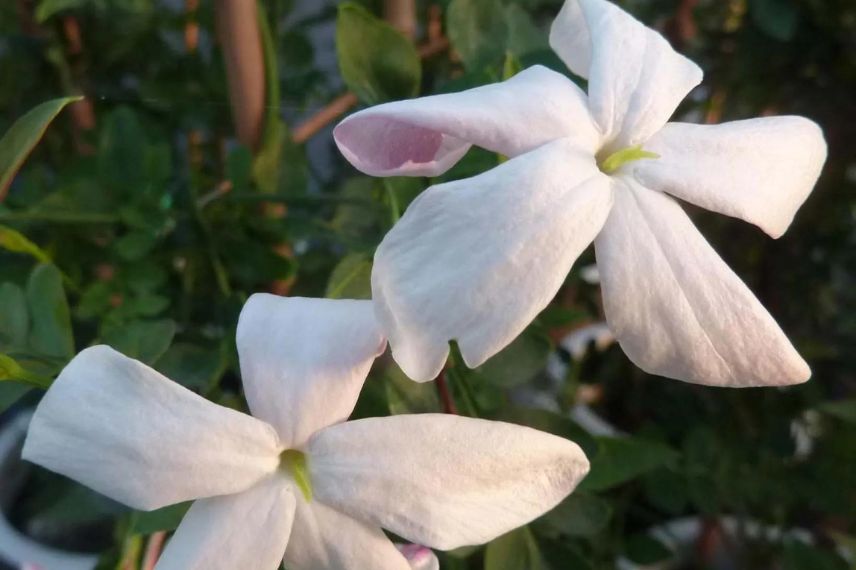
Jasminum grandiflorum is also known as ‘Grasse jasmine’, the emblematic flower of this French town renowned for its perfumery know-how. The flowers of this royal jasmine are in fact used to form the heart note of many prestigious perfumes. They exhale a floral, sweet and powdery fragrance, almost animalic. This is undoubtedly the jasmine of reference when it comes to perfume!
This summer jasmine flowers from May to September, or November if the climate is mild and the soil remains cool. It provides a display by almost continuously revealing large white flowers of about 4 cm, with a slightly pink underside.
Its habit is rather shrub-like, but can be trained as a climbing plant. It has bluish-green semi-evergreen foliage (which can stay on the plant if winter does not experience too intense and long-lasting frosts).
This jasmine would be wonderful in a white, romantically styled garden, for example beside a wisteria or a passionflower with immaculate flowering. It will dress up any unattractive structure. With a height of 2 to 3 metres and a spread of 2 metres, it can also be grown in a pot, to dress and perfume a terrace or balcony. This will be particularly true in regions with harsh winters, since this jasmine does not tolerate frosts above -9°C.
Plant it in full sun, in soil that stays cool, but can dry out from time to time. It will appreciate substrates rich in organic matter, well-drained.
Jasminum azoricum
The Azorean jasmine is still relatively little-known. Yet it is just as interesting as its peers. It even has a notable asset: its dark green, evergreen foliage stays year-round.
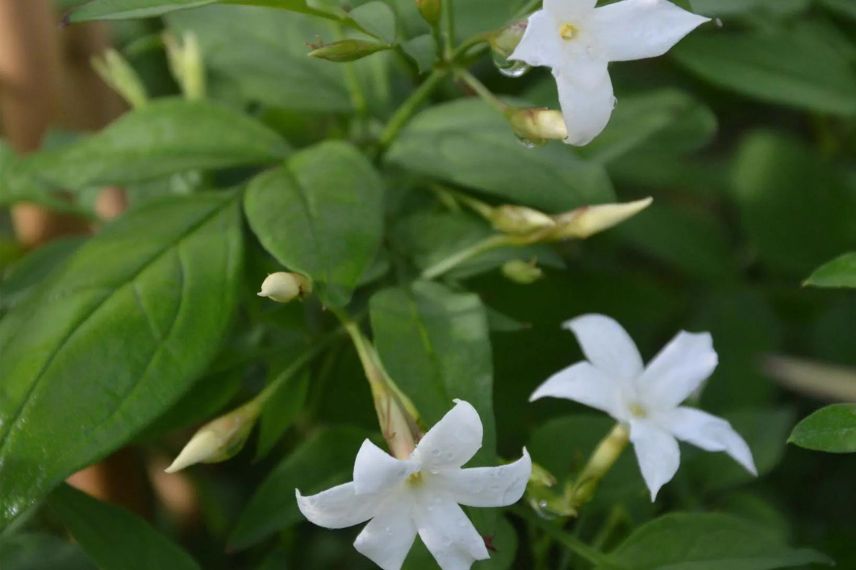
Throughout the summer, the Jasminum azoricum produces a multitude of small star-shaped flowers. Initially pink when in bud, they become white on opening. In terms of fragrance, this fragrant climber rewards us with a heady fragrance, with neroli and orange blossom notes.
At maturity, expect a height of 3–4 m with a 1–2 m spread. The canes of this jasmine will naturally scramble up a trellis or nearby railing.
Hardiness may be limited in regions with harsh winters, since this jasmine will not tolerate frosts above -6°C. Pot culture is perfectly possible, allowing you to keep it under a greenhouse, conservatory or other frost-free shelter during the cold season.
Plant the Azorean jasmine in the sun, in soil that remains cool and moist. In a hedge in a mild climate, it will sit alongside a Mexican orange blossom and a Grevillea.
Jasminum sambac
This Arabian Jasmine is another jasmine with evergreen foliage, perhaps the sole fault being its very low hardiness down to -4°C.
But its modest dimensions (2–3 metres in height by 1–2 metres in spread) will make it an ideal candidate for pot culture. This will allow you to enjoy its flowering and its exquisite fragrance.
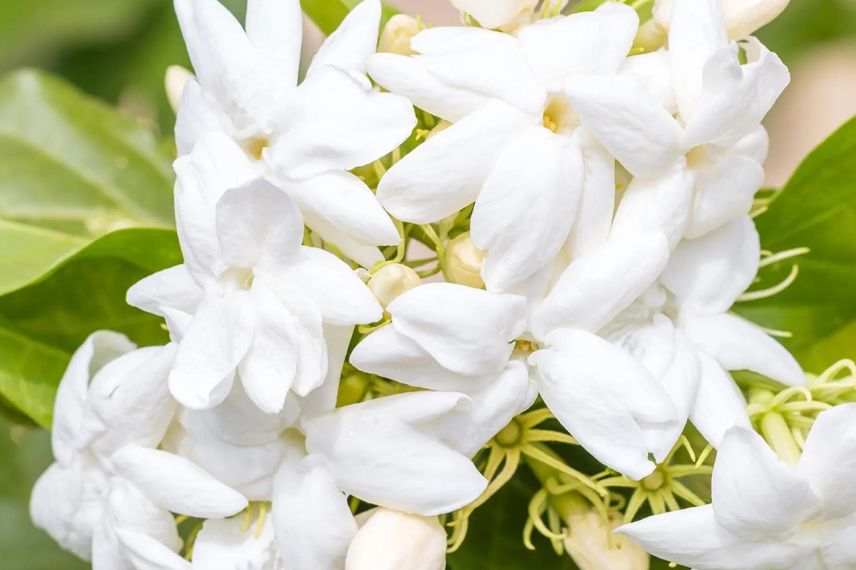
In summer, and even almost year-round if the climate is favourable, this jasmine graces us with large flowers of pure white. They are borne in generous clusters and appear to be double, thanks to their numerous petals.
Its woody climbing stems will need to be trained to climb.
They can be used to cover, for example, a sunny wall in mild regions. Grow this species in full sun, in well-drained soil that won’t retain too much moisture. Prefer a fertile and moist substrate.
Jasminum multipartitum
The Jasminum multipartitum, or starry wild jasmine comes from South Africa. Less well known than other species, it has a fairly compact, bushy habit, reaching 1.5 metres in all directions. This makes it possible to grow it in the smallest spaces, for example on a balcony or in a sunny courtyard.
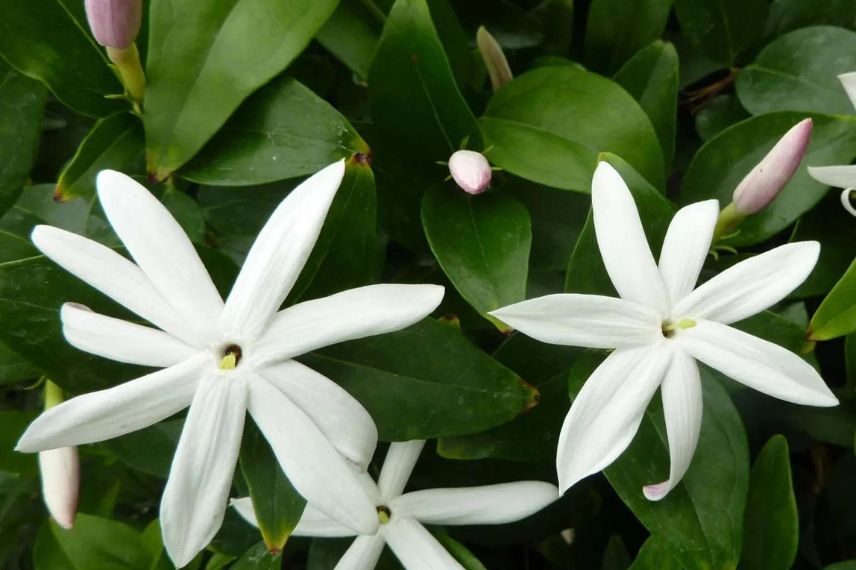
From late spring to mid-summer, admire its pink flower buds, which then reveal graceful and large starry white flowers, with a waxy appearance. They release floral notes, which are considered sweeter than those of other fragrant climbers.
The glossy green foliage will be evergreen if winter temperatures remain mild. In all cases, this jasmine is not very hardy (-5°C occasionally). Growing it in open ground will therefore be reserved for the mildest regions.
This jasmine will thrive in sun or partial shade, in cool soil.
For a contemporary feel, pair it with ornamental grasses, white Allium and Agapanthus.
Trachelospermum jasminoides
Trachelospermum jasminoides or star jasmine certainly has its place in this list of the best species renowned for their fragrance. But this false jasmine, native to China, is in fact related to periwinkles.
Its voluble stems will help cloak many supports. It can also be used as a creeping plant, for example to form a groundcover.
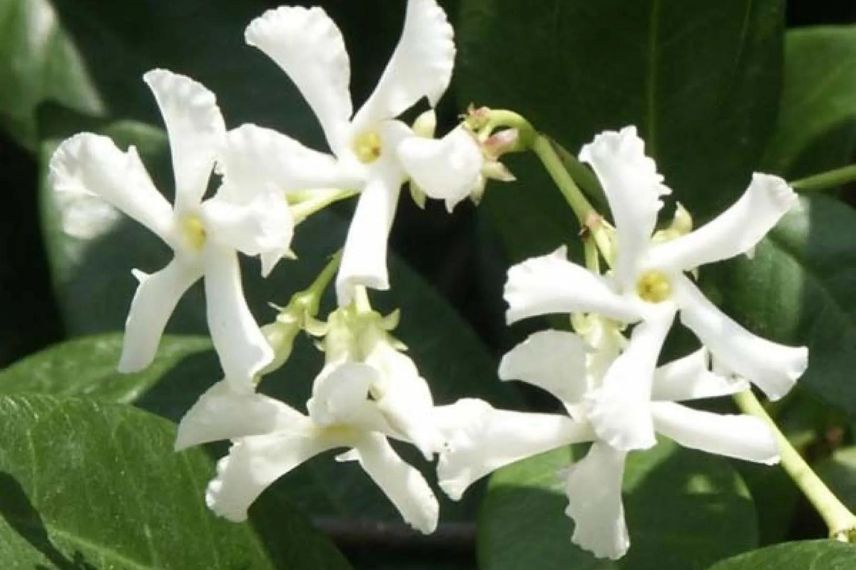
Its star-shaped flowers, which bloom all summer, are particularly fragrant throughout the day. They exhale spicy and sweet notes, less heady than those of true jasmine.
In terms of size, the Trachelospermum jasminoides reaches 6 to 8 metres in height with a 3-metre spread. The evergreen foliage is hardy. It can sometimes take on reddish hues in heat or cold.
Easy to grow, this star jasmine will thrive in full sun or partial shade. It will tolerate drought once established and will tolerate frosts down to -12°C, or -15°C if the soil is well-drained.
It will look superb when paired with blue or mauve flowering displays, for a cottage-garden vibe. Place it alongside salvias, Delphinium and agastaches.
Other fragrant jasmines
This list of the most fragrant jasmines is not exhaustive. Let’s also mention Madagascar jasmine (Madagascar jasmine (Stephanotis floribunda)), the yellow jasmine (yellow jasmine (Trachelospermum asiaticum)) and its various varieties, or Carolina jasmine (Carolina jasmine (Gelsemium sempervirens)).
- Subscribe!
- Contents
Comments