





























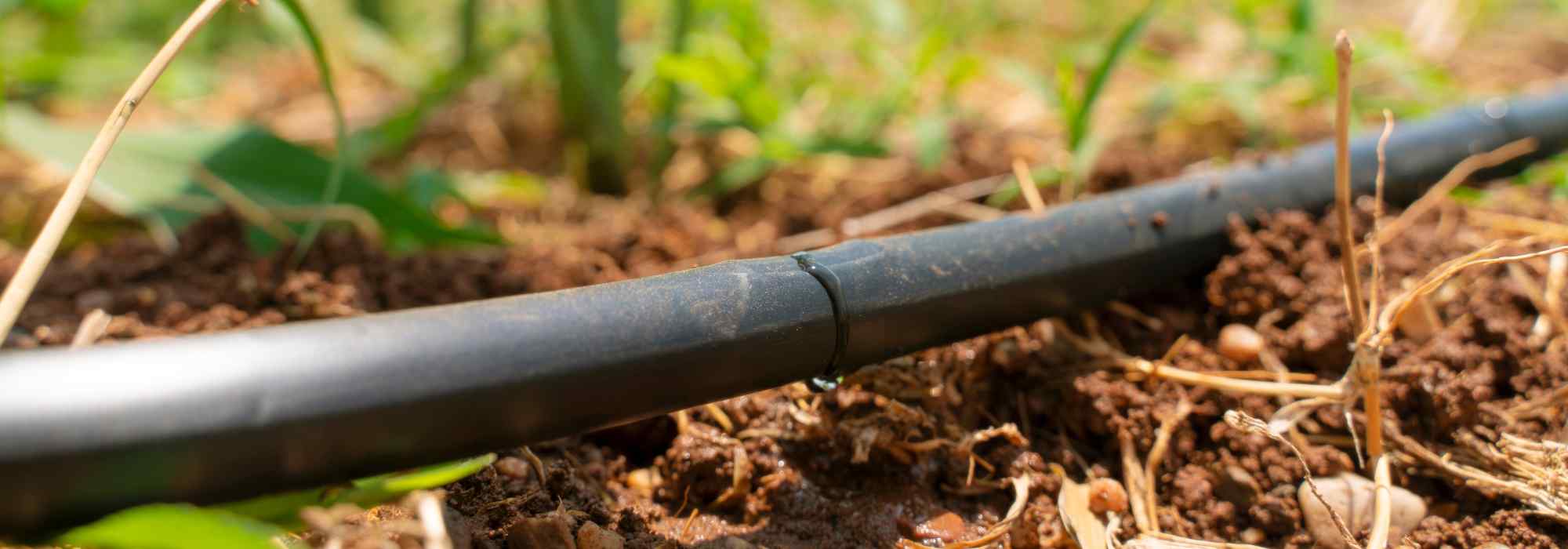
Drip irrigation: is it really the panacea?
Advantages, disadvantages and best practices
Contents

What is drip irrigation?
The drip irrigation system, also known as localised irrigation, is distinguished by its efficiency and precision. It relies on an ingenious network of pipes, drippers and micro-tubing that deliver water directly at soil level, close to the plant roots. This targeted approach offers several significant advantages over traditional irrigation methods.
System components
1. Main pipes : These are the conduits that carry water from the main supply to the different areas of the garden. They are generally wider and form the backbone of the irrigation network.
2. Secondary pipes and micro-tubes : Connected to the main pipes, these finer elements distribute water more locally, enabling precise irrigation tailored to each plant.
3. Drippers : These are small devices installed along the pipes that regulate the amount of water emitted. They can be adjusted to control the flow, thereby meeting the specific needs of each plant.
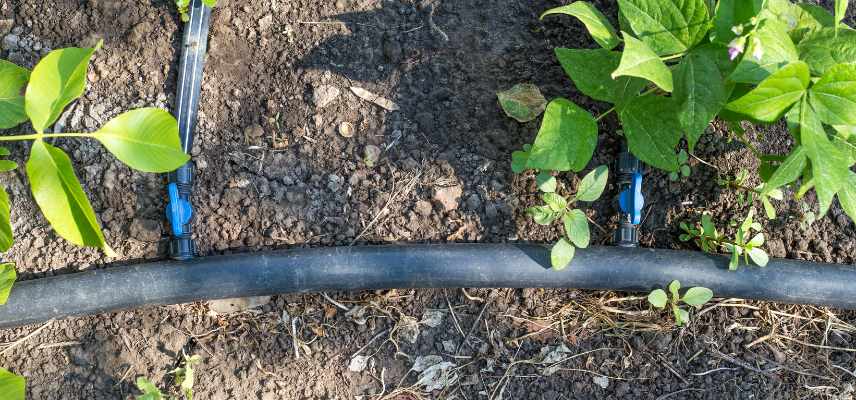
How the system works
- Targeted water distribution : Water is conveyed directly to the root zone of the plants, where it is needed most. This avoids water waste from evaporation or surface runoff, common in traditional irrigation methods such as sprinkler irrigation.
- Reduction of evaporation : By depositing water directly onto the soil, near the roots, drip irrigation minimises water loss due to evaporation. This is particularly advantageous in hot and dry regions.
- Adaptability to varied terrains : Whether your garden is flat, sloping, small or large, the drip system can be adapted. On sloping ground, for example, it helps prevent erosion and runoff, two common problems with sprinkler irrigation.
- Uniformity of watering : Unlike other methods, drip irrigation ensures an even distribution of water, thus avoiding overwatered or underwatered areas. This promotes homogeneous and healthy growth of plants.
How to install a drip irrigation system?
- System planning:
- Assess your garden’s needs in terms of the type of plants, layout and the size of areas to be watered.
- Draw a garden plan, indicating the location of the plants and determining the zones that require drip irrigation.
- Calculate total length of tubing required and the number of drippers based on your garden’s layout.
- Equipment selection:
- Buy a drip irrigation kit or individual components, including tubes, drippers, connectors, an irrigation timer (if desired) and a water filter.
- Ensure the selected drippers are suitable for the type of plants in your garden (some plants require more water than others).
- Installing the water supply :
- Connect the system to the main garden tap. If you use a timer, install it between the tap and the start of your drip irrigation system.
- Install a water filter to prevent clogging of the drippers.
- Laying the tubes :
- Unroll the tubes across your garden, following the plan you developed.
- Use stakes or staples to secure the tubes to the ground and keep them in place.
- Installation of the drippers :
- Make holes in the tube at the chosen location for each drip emitter.
- Insert the drippers into the holes. If your kit includes secondary tubes or micro-tubes, install them to route water from the drippers to the plants.
- Connections and testing :
- Once all drippers are in place, connect the ends of the tubes.
- Turn on the water to test the system. Check that all drippers operate correctly and adjust their positioning if necessary.
- Adjustment and automation :
- Set the water flow to suit your plants’ needs. You can adjust each drip emitter individually.
- If you have installed a timer, configure it to automate irrigation according to your garden’s specific needs.
- Regular maintenance :
- Regularly check the system for leaks or blocked drippers.
- Clean and service the system in accordance with the manufacturer’s instructions to ensure longevity and efficiency.
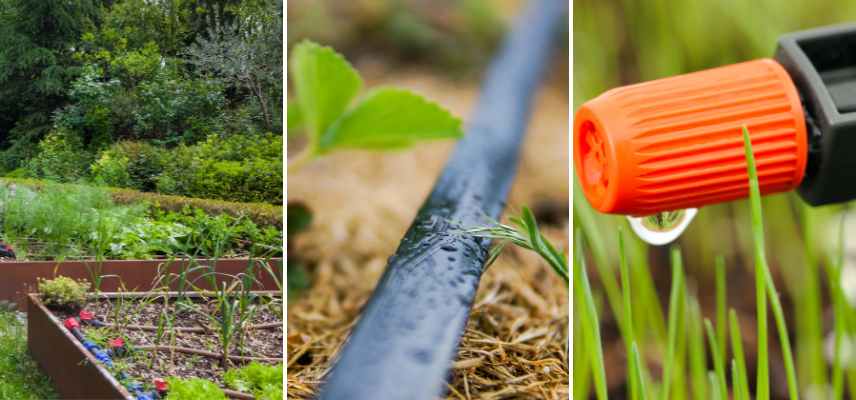
Advantages of drip irrigation
Water efficiency
Drip irrigation targets water delivery directly to the roots, thereby significantly reducing evaporation. Unlike traditional irrigation systems, where much of the water is lost to evaporation or runoff, drip irrigation ensures water reaches where it is most needed. This method is particularly beneficial in areas subject to water restrictions or in arid regions, as it allows the water available to be used more efficiently and sustainably. Drip irrigation systems allow fine control over the amount of water delivered, preventing waste and contributing to more eco-friendly water management.
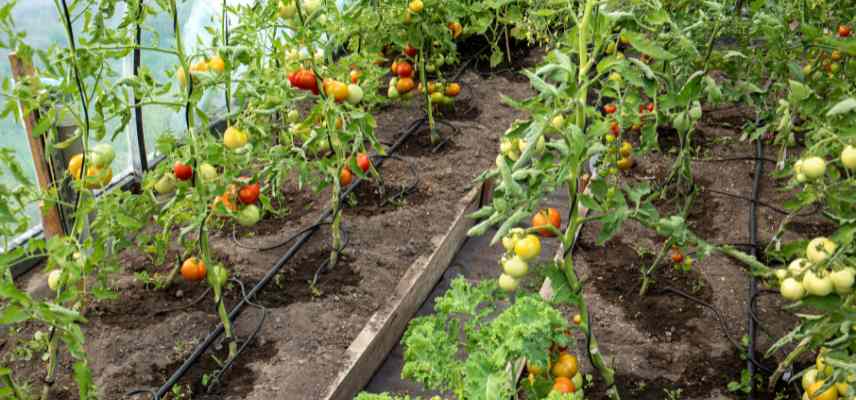
Water… just what you need
Reduction of plant diseases
By avoiding leaf wetting, this system significantly reduces the risk of fungal diseases, which thrive in humid environments. This is particularly advantageous for plants prone to diseases linked to excess moisture. Indeed, a drier growing environment less conducive to pathogen development.
Flexibility and adaptability
Each plant has specific water needs, and drip irrigation can be adjusted to meet these individual requirements. Whether for plants that require a lot of water or those preferring drier conditions, the system can be adapted accordingly. In the same vein, whether your garden comprises flower beds, vegetable plots, greenhouses or containers, the drip irrigation system can be configured to suit these different configurations. It is also ideal for areas with variable soil quality or irregular terrain. Moreover, the system can be easily extended or modified if your garden’s needs evolve. Adding new emitters or changing the layout of the tubing is straightforward, allowing great flexibility in irrigation management.
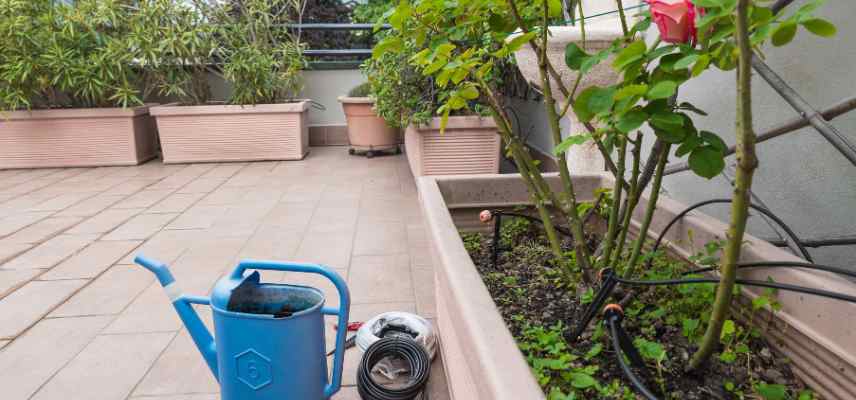
You can install a drip irrigation system almost anywhere: here on a roof terrace
Drawbacks of such an installation
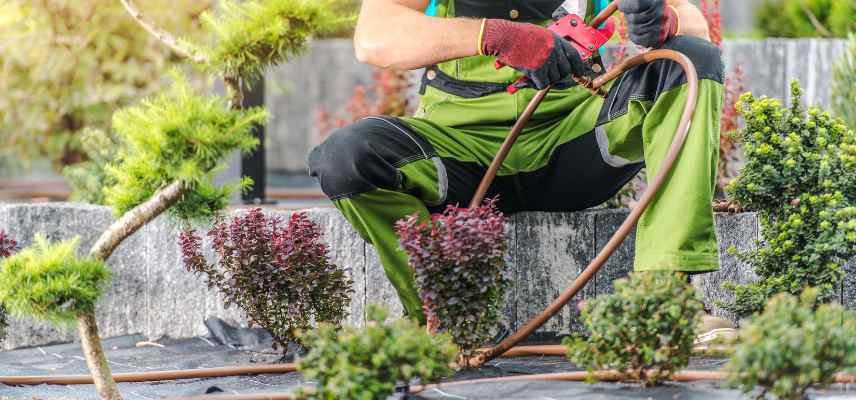
Practical tips for installation and maintenance
First of all, choosing the equipment is crucial. It is advisable to select high-quality components, designed to withstand outdoor conditions and suited to the size and type of your garden. Opt for pipes, drippers and connectors from well-known brands for their reliability. Also ensure that these elements meet the specific needs of your plants and the layout of your garden.
Planning the network is a key installation step. Before you start, it is advisable to draw up a detailed plan of your garden, identifying planting areas, the types of plants and their specific water requirements. This will help you determine where to place the drippers and how to arrange the pipes for optimal water distribution. Think about the arrangement of the plants, their size and their growth rate. A good plan should also take into account future changes to the garden, enabling you to adapt or extend the system over time.
Regarding maintenance, regular monitoring is essential to ensure the system operates correctly. Check and clean the emitters periodically to prevent blockages caused by debris or mineral deposits. This often involves dismantling the emitters to clean them or replace them if necessary. It is also important to check the condition of the pipes and connections to ensure there are no leaks or damage. During periods of non-use, such as winter, the system should be drained and protected to prevent damage from freezing.
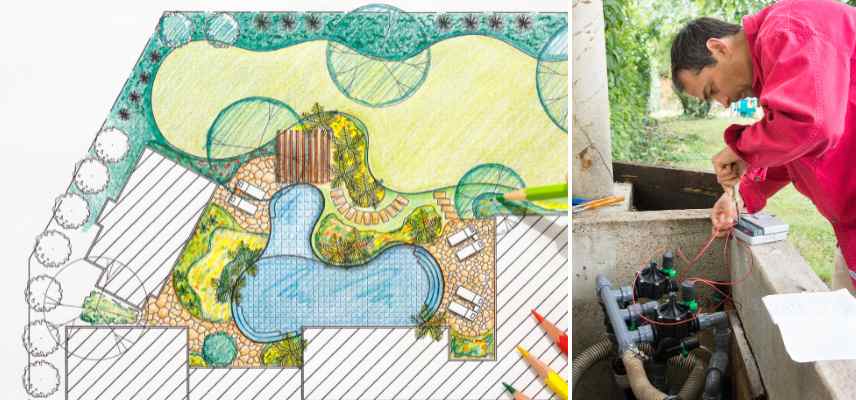
Plan ahead for your needs using a sufficiently detailed plan, and don’t neglect maintenance
Environmental impact
The environmental impact of drip irrigation is particularly positive, especially when compared with traditional irrigation methods. This technique is appreciated for its eco-friendly approach, mainly due to its ability to significantly reduce water consumption. In a global context where water is becoming an increasingly precious resource and water conservation is essential, drip irrigation represents a major advance.
The reduction in water consumption is achieved through the precise, localised delivery of water directly to the roots of the plants. This method avoids water wastage due to evaporation, runoff and uptake by areas of the garden that do not need it. As a result, it enables using less water to achieve similar, or even better, results in plant growth compared with traditional irrigation systems such as sprinkler irrigation or flood irrigation.
Moreover, drip irrigation has a positive impact on soil quality and the health of plants. By avoiding excess water on the leaves and at the soil surface, it reduces the risks of moisture-related diseases.
This irrigation method is also beneficial in reducing soil erosion. By applying water directly where it is needed, it avoids surface run-off, which can wash away valuable nutrients and degrade the soil structure. This is particularly important in erosion-prone areas, such as sloping terrain.
The reduced ecological footprint of drip irrigation is not limited to water use alone. By requiring less pressure and less water volume, it also requires less energy to operate than traditional irrigation systems. This energy efficiency helps to reduce the overall carbon footprint associated with gardening practices.
- Subscribe!
- Contents
Comments