





























Diseases and pests of flowering cherry trees
Identify, treat, prevent
Contents
Ornamental cherry trees, also known by the Latin name Prunus, are trees highly valued for their spectacular flowering in spring. They can be affected by the same fungal diseases as fruiting cherries and fruit trees in general. Identifying these problems and applying natural treatments as well as preventive measures is essential to keep your ornamental cherry trees healthy. This article explores the most common diseases and parasites affecting ornamental cherry trees.

Moniliosis
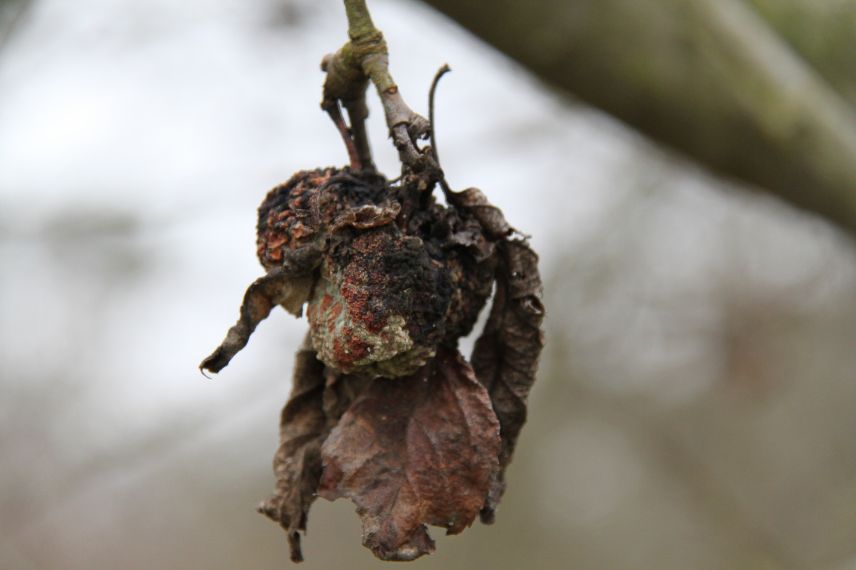
Monilinia blight, also known as fruit rot or blossom blight, is a fungal disease that can affect ornamental cherry trees. It is caused by the fungus Monilinia spp, and mainly manifests in spring, during humid periods, compromising the flowering and vigour of the tree.
Identification
The first signs of Monilinia blight are the wilting of flowers and young shoots, which take a brownish colour and look as if burnt by fire. The infected flowers become brown, wither and often remain attached to the tree, forming what are known as “mummies”.
Treatment
To combat Monilinia blight, it is crucial to act quickly as soon as the first symptoms appear. Start by removing all infected parts of the tree, including the flowers, fruits and affected branches. These parts should be burnt to prevent the spread of spores.
Prevention
You can apply sprays of Bordeaux mixture or nettle manure, which are effective natural fungicides, to protect the tree preventative. These treatments can be repeated at regular intervals depending on the climatic conditions favourable to the development of the disease.
→ Read the article Bordeaux mixture and other copper-based treatments in the garden and the article to learn all about Nettle manure tutorial.
Ensure good air circulation around the tree and remove dead or diseased branches. Otherwise, the flowering cherry does not require pruning, but if you do prune, apply wound sealant to the wounds. Also avoid excessive watering and stagnant moisture at the base of the tree. Maintain good hygiene in the garden by removing plant debris and fallen fruit from the ground to limit sources of infection.
Coryneum or speckling
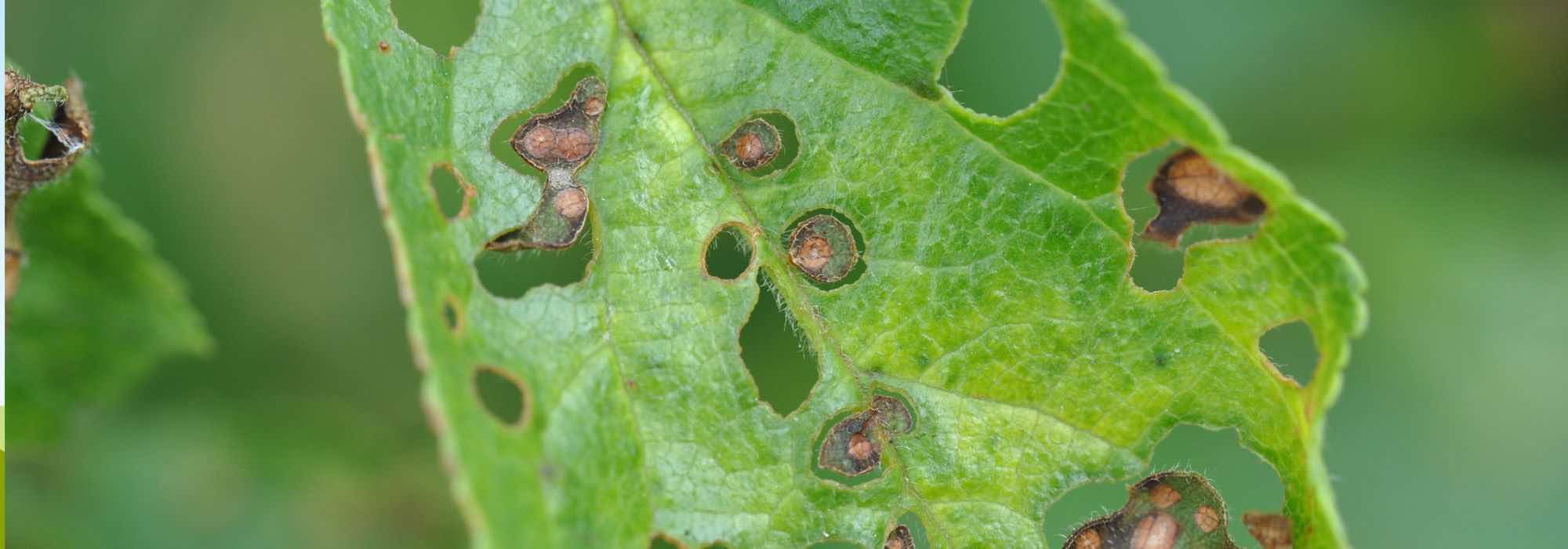
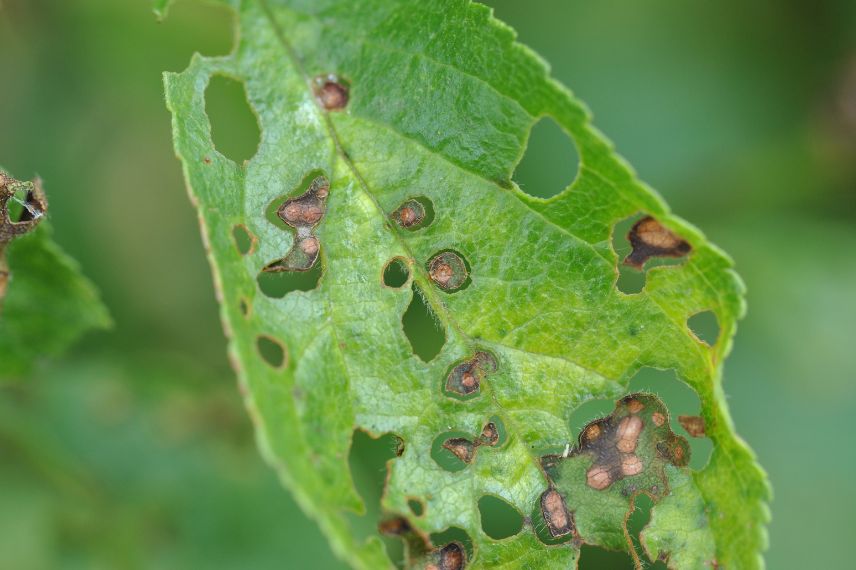
Coryneum, also called shot-hole, is a fungal disease caused by the fungus Stigmina carpophila and is characterised by the appearance of spots on the leaves and young shoots. This disease is particularly noticeable in spring and can significantly reduce the aesthetic appeal and vigour of the tree.
Identification
Shot-hole blight initially presents as small red or purple spots on the leaves, which enlarge and become holes, giving the impression that the foliage has been shot full of holes. The young shoots may also develop lesions, hindering their growth.
Natural treatment
Natural treatment of shot-hole blight begins with removing and destroying the infected parts of the tree as soon as the first symptoms appear. This action limits the spread of the spores of the fungus.
Then spray using a wettable sulphur treatment mixed with water. The dosage is 7.5 g of powder diluted in 1 litre of water for most plants.
Preventive measures
To protect the tree against future infections, Bordeaux mixture sprays can be applied from early spring and repeated according to the product instructions, especially after periods of rain that promote the spread of the disease. The use of horsetail manure, rich in silica, can also strengthen plants’ resistance to fungal attacks.
It is also recommended to keep the soil around the tree clean by removing fallen leaves and other plant debris that could harbour the fungal spores. Water well at the base of the tree, avoiding the foliage.
→ Read the article on Coryneum or shot-hole.
Bacterial canker
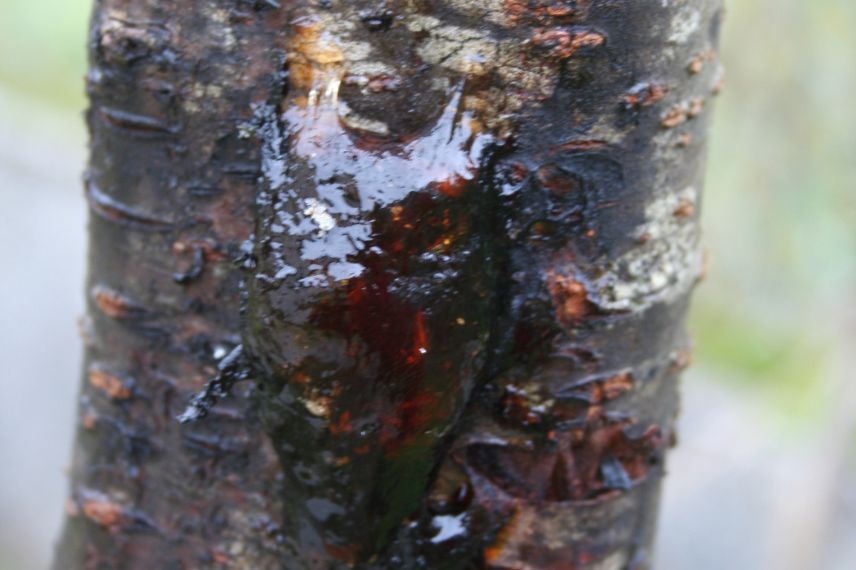
Bacterial canker is a serious disease affecting ornamental cherry trees and fruit trees. Caused by the bacterium Pseudomonas syringae, this disease is characterised by the appearance of open, oozing wounds on the trunk, the branches and, occasionally, the leaves. If not controlled, it can lead to the death of the tree.
Identification
Symptoms of bacterial canker include wet, oozing wounds on the trunk and main branches, from which a gum-like liquid exudes. These wounds can become black, hollow ulcers as the disease progresses. On the leaves and young shoots, black spots or deformities may appear. Rapid identification of these signs is crucial for managing the disease.
Natural treatment
Treatment of bacterial canker mainly relies on preventive measures and good sanitary practices, as there is no effective curative treatment once the tree is heavily infected. The first step is to remove the infected parts of the tree. Use sterilised pruning tools to cut well below the infected area, then disinfect tools after each cut to prevent spreading the bacterium. Cuts should be made during a dry spell to minimise infection risk. After pruning, wounds can be coated with a healing sealant to protect the tree and promote healing.
Preventive measures
As a preventive measure, you can apply in mid-winter a lime-based arboricultural whitewash, to dry bark. Apply with a brush, wearing appropriate protective clothing and gloves.
It is important to keep the tree healthy, as weakened trees are more susceptible to infection. This includes adequate irrigation, balanced fertilisation and prevention of mechanical injuries. Avoid injuring the bark during gardening work.
→ Read the article on fruit-tree canker.
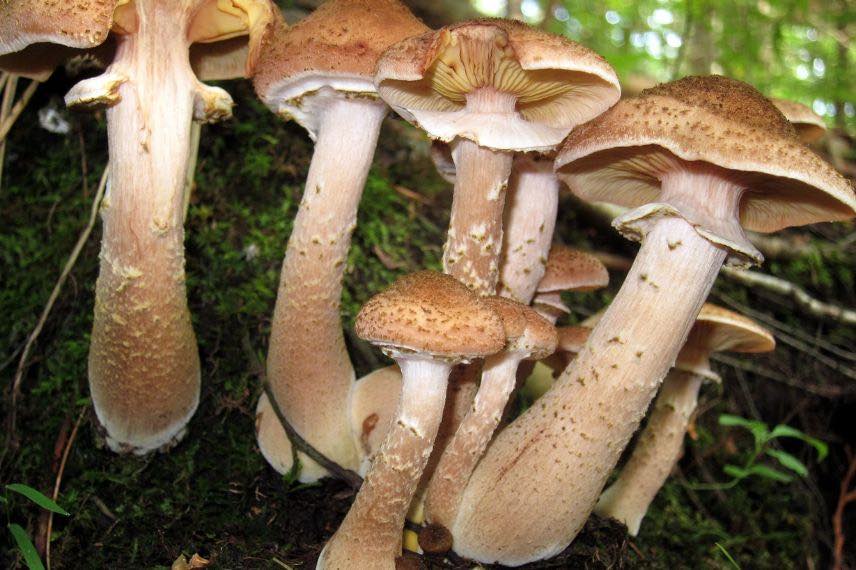
Possible translations: - Armillaire (as an adjective) → armillary - Armillaire sphere (if referring to the specific object) → armillary sphere - If it’s a brand or product name, you may keep it as “Armillaire” to preserve branding. If you can share a sentence or context, I’ll provide the exact translation in British English.
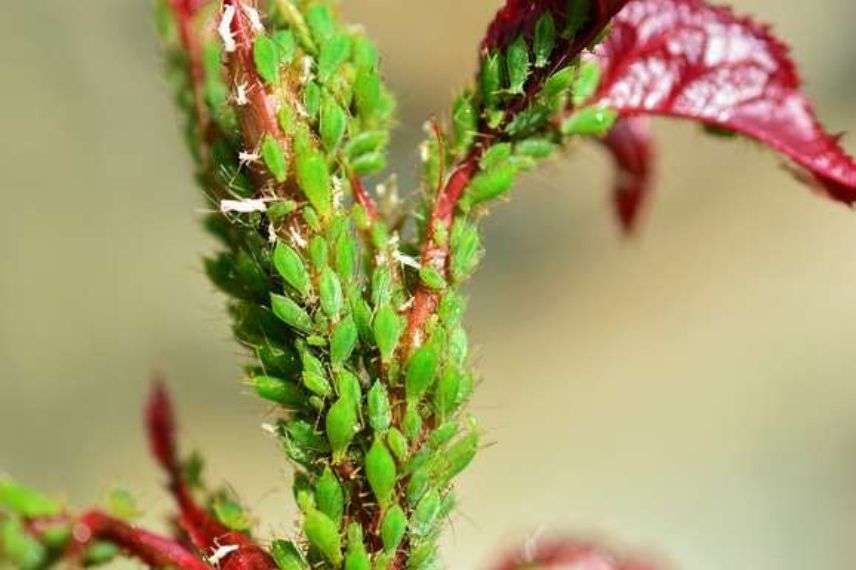
Aphids
These small sucking insects feed on plant sap, causing general weakness, yellowing of the leaves, and sometimes the transmission of viral diseases through sooty mould.
Identification
Aphids are easily identifiable to the naked eye. They are often found clustering on young shoots, leaves and sometimes flowers, where they can be seen as small moving masses of green, yellow, or black. The attacked leaves may curl, deform or yellow. Aphids also produce a sticky liquid called honeydew, which can promote the growth of sooty mould, a blackish fungus coating the leaves and reducing photosynthesis.
Natural treatment
A simple solution is to rinse them off with a strong jet of water, which dislodges them from the plants. The application of diluted black soap by spraying (15–30 g of soap per litre of water) is effective in eliminating aphids without harming the plant.
Preventive measures
Preventing aphid attacks relies on promoting an environment favourable to the natural enemies of aphids, such as ladybirds, hoverflies and lacewings. Encouraging biodiversity in the garden by planting a variety of flowers and herbs can attract these predators. Avoid excessive use of nitrogen fertilisers, which promote soft growth in plants, making cherry trees more attractive to aphids.
→ Read the article on aphids.
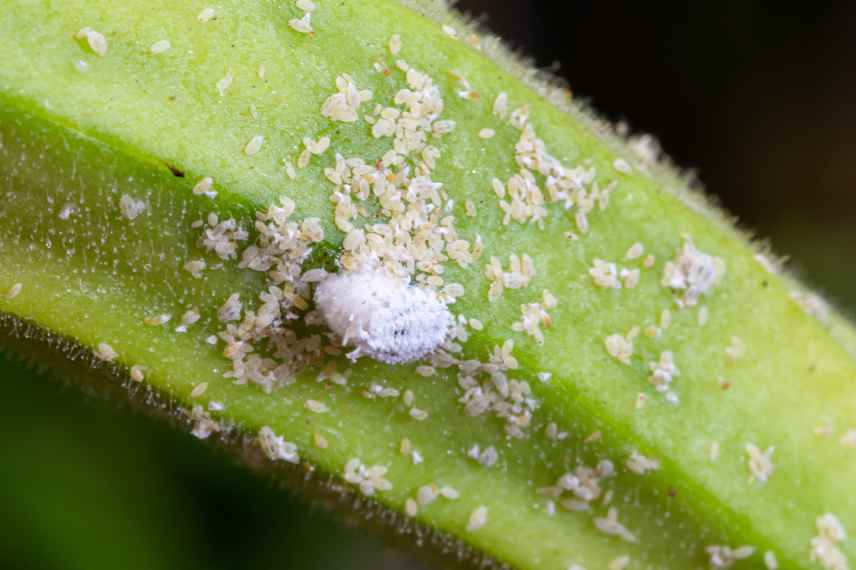
Mealybugs
Scale insects come in two main forms: armored scale insects, recognisable by their waxy protective shield, and mealybugs, which appear coated in a white cottony powder.
Identification
Armoured scale insects attach firmly to branches, stems and sometimes fruits, forming hard, bumpy clusters that can be difficult to remove. Mealybugs, on the other hand, prefer concealed areas such as the undersides of leaves or the junctions between branches, where they form cottony colonies. Scale infestations can cause leaf yellowing and slowed growth.
Natural control
To combat scale insects naturally, you can remove them by hand or with a jet of water for light infestations. Application of 90% alcohol with a cotton swab can be effective for killing scale insects on contact. Dissolve one teaspoon of each of the following products in one litre of water: soft soap, denatured alcohol, vegetable oil. Spraying this solution can help to control scale populations without harming beneficial insects.
Preventive measures
Encouraging the presence of natural enemies of scale, such as ladybirds, lacewings and certain parasitoid wasps, can contribute to naturally controlling their populations. Regularly inspecting plants helps to detect infestations early and to intervene before they spread.
- Subscribe!
- Contents
Comments