





























Diseases and parasitic pests of the Japanese quince
Symptoms, prevention and natural treatments
Contents
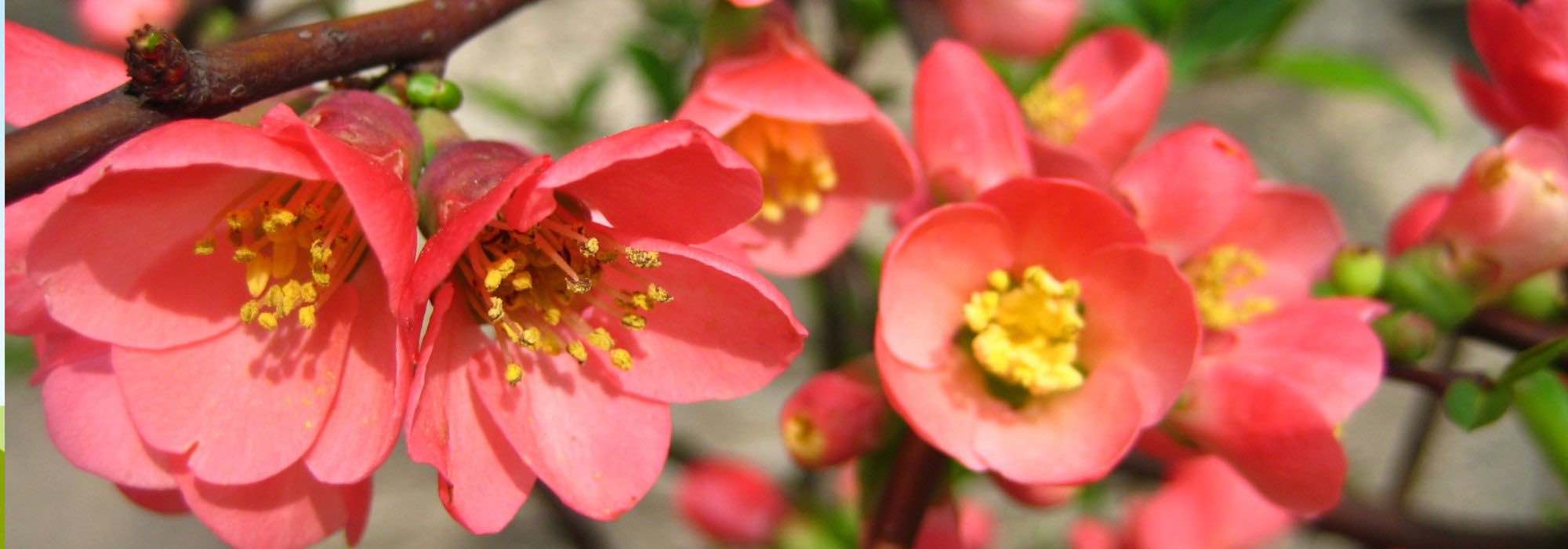
The Japanese quince, also known as Chaenomeles, is an ornamental bush prized for its early flowering in late winter and its decorative fruits that appear in autumn. The flowers can be red, pink, orange or white and grow on the shoots before the foliage appears. This decorative shrub has other advantages: it is easy to grow, vigorous and hardy to -20°C. However, like any bush, the Japanese quince can be susceptible to various diseases and parasites. Discover the diseases and parasites that may attack the Japanese quince, their symptoms, prevention methods and natural treatments to preserve the beauty and health of your bush.

Scab
Apple scab is a fungal disease caused by a fungus.
Symptoms
It manifests as dark olive-brown spots on the leaves, then on the fruits, and can lead to their premature drop.
Prevention
To prevent apple scab, it is advisable to plant the quince tree in a well-ventilated spot, to carry out regular pruning to promote air circulation and to remove branches whose bark appears scaly in autumn. Also avoid overwatering. Preventive treatments based on talc or willow bark infusion can also be used.
Treatment
In case of infection, several treatments based on copper or baking soda are possible. Remove and destroy also diseased leaves, shoots and fruits on the bush or fallen to the soil.
For further reading, consult our advice sheet on apple scab: apple scab.
Aphids
Aphids can attack the Japanese quince, particularly green aphids and the woolly aphids (which are brown).
Symptoms
These small green or brown insects feed on the sap of young shoots and leaves, causing their deformation. Sooty mould, a blackish coating produced by the honeydew from green aphids, or a white and cottony substance for woolly aphids, can cover the plant and give it a sticky appearance.
Prevention
Biological control, notably the introduction of ladybirds or lacewings into the garden, is a natural and effective way to manage aphid populations.
Treatment
Remove aphids by hand or with a strong jet of water. For green aphids, spray with diluted black soap at a rate of 15 to 30 g per litre of water. For woolly aphids, spray a vegetable oil on the branches and leaves.
For further reading, see our advisory sheet: Aphid: Identification and Treatment.
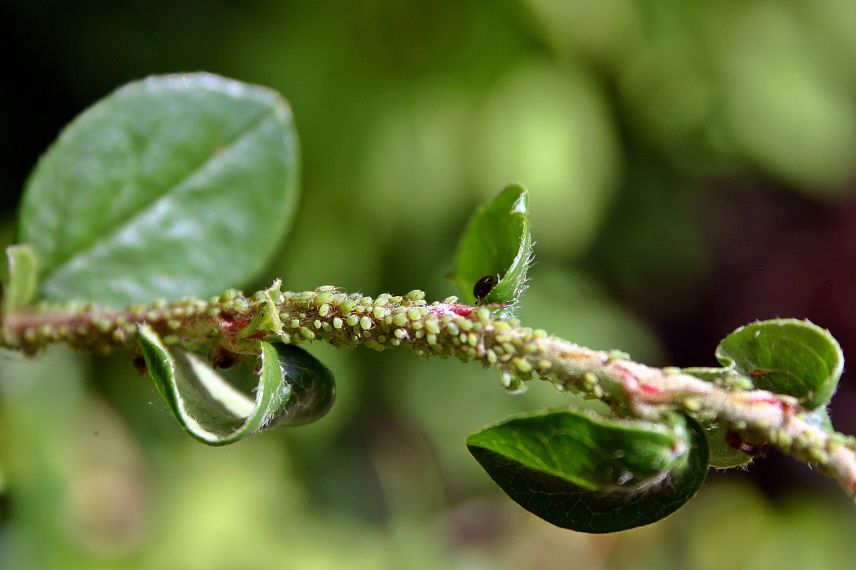
Green aphids, here on a rose
Moniliosis
Monilinia (moniliosis) is a fungal disease that causes fruit rot and also affects shoots, leaves, twigs and flowers.
Symptoms
You may notice cankers on the branches, and the leaves may become greyish. The fruits dry up, darken and appear mummified.
Prevention
As a preventive measure, spray a copper-based product such as the Bordeaux mixture or nettle manure (15 g per litre of dried nettles). You can also place horsetail stems on the soil by mixing them with mulch.
Treatment
To combat moniliosis, it is essential to collect and destroy the infected fruits, leaves and branches to reduce the source of infection. Bordeaux mixture sprays can be applied to treat the disease.
For further reading, consult our care sheet on the moniliosis

Moniliosis on leaves
powdery mildew
Powdery mildew, also known as white disease, is a fungal disease that appears on leaves and young shoots.
Symptoms
It is characterised by the appearance of a white, powdery coating. Powdery mildew reduces vigour; it dries out and distorts the foliage, which may also drop.
Prevention
To prevent this disease, it is important to ensure a good air circulation around the quince tree, to prune and remove the affected parts. Also avoid excessive watering. As a preventative measure, spray horsetail decoction.
Treatment
Remove leaves and affected parts by powdery mildew. Sprays based on sulphur, baking soda, nettle manure or horsetail decoction can be effective in treating powdery mildew.
To go further, consult our advice sheet on the powdery mildew
Scale insects
Scale insects are small insects that attach themselves to stems and leaves, feeding on sap and weakening the plant.
Symptoms
They appear as small waxy or powdery protuberances, brownish or gray. Since they do not move, they are difficult to spot.
Prevention
It is beneficial to encourage the presence of their natural predators, such as ladybirds, lacewings and hoverflies. Also promote air circulation between the branches of the shrub, as scale insects prefer confined medium.
Treatment
To combat scale insects, you can spray a mineral oil or a solution based on black soap onto the affected parts. Mix 1 teaspoon of liquid black soap with 1 teaspoon of denatured alcohol and 1 teaspoon of vegetable oil.
Do two sprays at 30-minute intervals, then repeat the operation every 8 days.
For further reading, see our advice sheet: Mealybug: identification and treatment
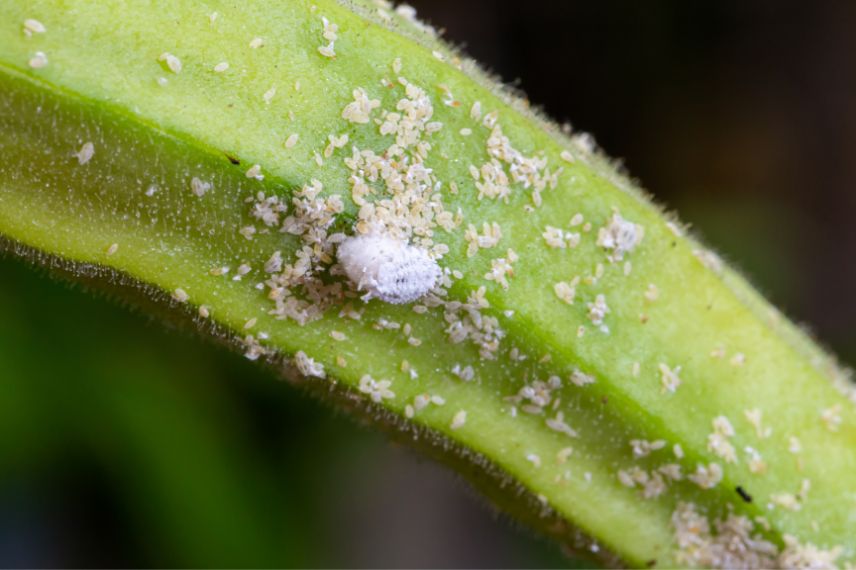
White scale insects
Fire blight
Fire blight is a serious bacterial disease, which can affect the Japanese quince. It spreads quickly and can cause significant damage.
Symptoms
It is characterised by rapid wilting of branches and discolouration of leaves, as if burned by fire. We can also observe a viscous white ooze on the bark.
Prevention
Prevention relies on the rapid and complete elimination of infected parts and disinfection of pruning tools. Also avoid excessive humidity.
Treatment
Remove all parts affected by fire blight and burn them. If the entire bush is affected, pull it out and burn it. When fire blight is detected on a plant in your garden, you should inform the local council or the Regional Plant Health Service.
For further reading, see our advice sheet: Fire blight: prevent and control this disease.
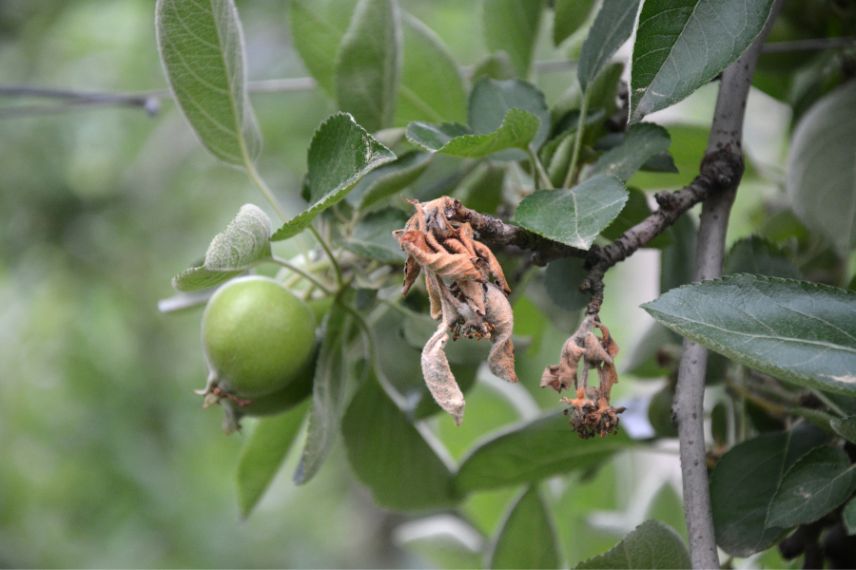
symptoms of fire blight
Collar gall
Crown gall is a disease caused by the bacterium Agrobacterium tumefaciens at the collar of the plant.
Symptoms
It manifests as growths or swellings at the collar of the bush. These tumours are round and pale, with a rough, spongy or hard appearance. They can also be found on the branches.
Prevention
To prevent this condition, it is important to select healthy plants without galls and to plant in well-drained soil. Use cutting and pruning tools that are always properly disinfected. Take care not to injure the bush and avoid replanting in an area that has been contaminated.
Treatment
If crown gall appears, remove the affected young plants. For mature bushes, they can be left in place but they will never recover.
To learn more, see our advice sheet on crown gall.
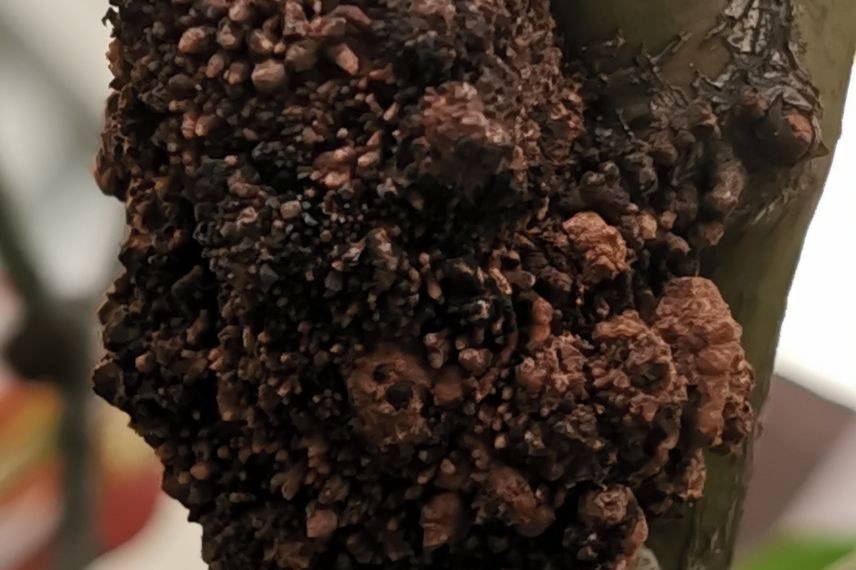
Crown gall
Canker
The Japanese quince can also be affected by canker caused by bacteria or fungi. Cankers disrupt the proper flow of sap.
Symptoms
Cankers appear as lesions or cracks in the bark and gum exudates.
Prevention
To prevent this disease, it is important to ensure proper pruning without harming the bush and to regularly disinfect pruning tools. Also prevent the plant from becoming stressed by drought, inadequate root nutrition, or soil compaction.
Treatment
Remove all affected parts with well-disinfected tools and apply a fungicidal and healing paste to the wounds or use vegetable oil. Then spray the entire bush with copper-based treatments or Bordeaux mixture.
For more information, see our advice sheet on tree canker.
In addition, discover our sheet: Identify the main pests and diseases of plants, as well as our comprehensive guide on planting and maintenance of the Japanese quince.
- Subscribe!
- Contents
Comments