





























Discover 7 early-flowering Japanese quinces
A selection for a flowering garden from the end of winter
Contents
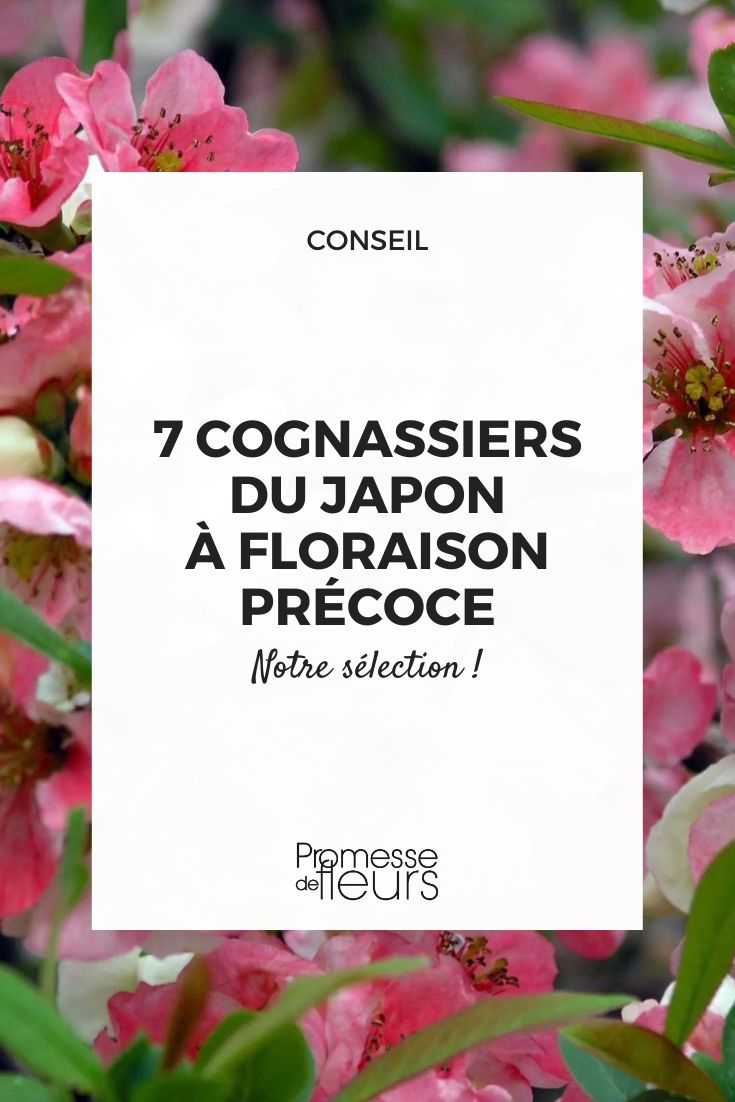
The Japanese quince or Chaenomeles is among the bushes that bloom from the end of winter, brightening the garden at a time when vegetation has not yet returned. Its bare branches are covered with single or double flowers, red, pink, white or orange, from February to June. Foliage then appears, followed by fruits that can be eaten in jam, which, in turn, grow in autumn. The Japanese quince is a decorative, hardy bush, easy to grow, which sits well in a border, hedge or in a pot. It can be planted in full sun or partial shade, in ordinary, cool and well-drained soil. Discover our selection of Japanese quinces with early flowering that will brighten up your garden or balcony from the end of winter.

Japanese quince 'Toyo-Nishiki' - Chaenomeles speciosa
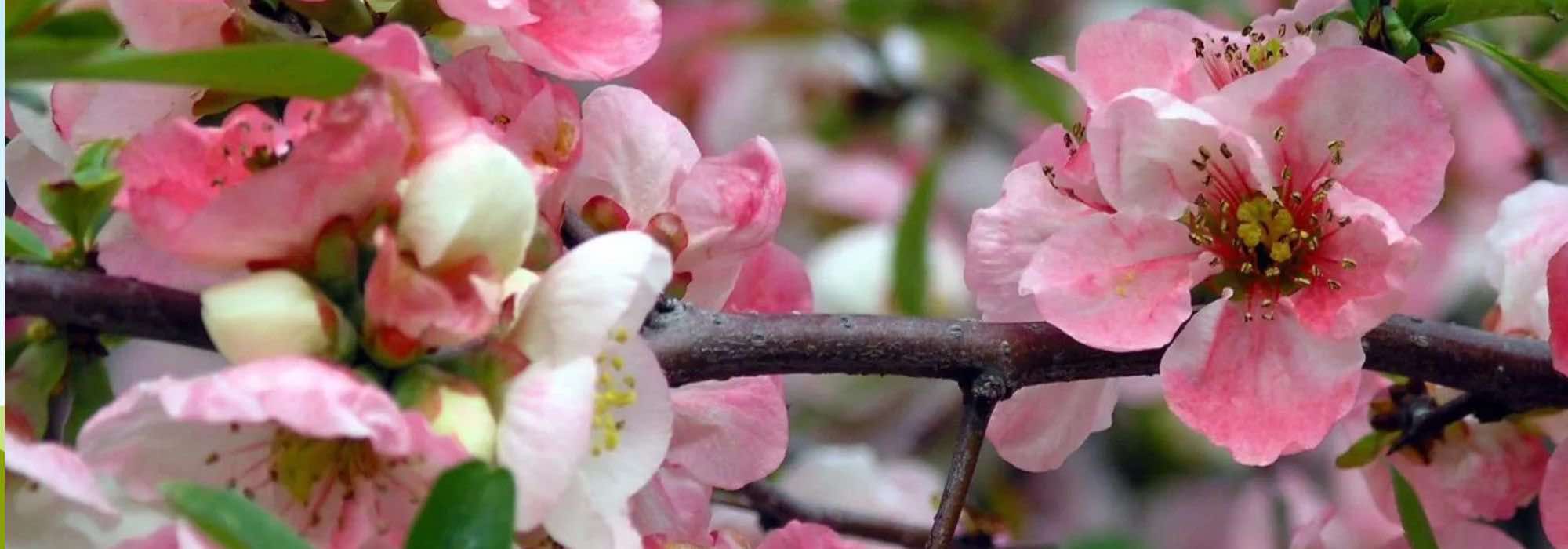
The Japanese quince ‘Toyo-Nishiki’ – Chaenomeles speciosa is a remarkable variety for its delicate single flowers, ranging from pale red to white, with pink in between. Its flowering unfolds on bare shoots from February to April, and is especially valued for brightening the garden from late winter. Reaching about 3 m tall and 2 m wide, this dense shrub with a bushy habit bears melliferous flowers of 3–4 cm in diameter, resembling those of plum trees or ornamental cherries. Made up of five petals, they open to a yellow-centred heart of stamens. They have a very short pedicel and are grouped in threes or fives on the branches. The flowering is followed by the appearance of foliage, narrow and dark green, glossy, then by small decorative yellow-tinged greenish fruits, which can be used to make jelly or jam. This hardy deciduous shrub is suitable for all well-drained soils, planted in a sunny or partly shaded position and is hardy down to -29°C.
Derived from Chaenomeles speciosa native to China, ‘Toyo-Nishiki’ was developed in Japan. It is characterised by exceptional vigour and a flowering highly prized for making ikebana-style bouquets. This thorny-branched quince is ideal for creating flowering defensive hedges, backdrops for romantic, cottage-style or Japanese borders. It pairs well with plants such as Japanese Kerria, which flowers later in April, or winter honeysuckle, which blooms earlier, from January. It can also serve as ground cover or be trained up a wall.
Chaenomeles japonica - Japanese quince
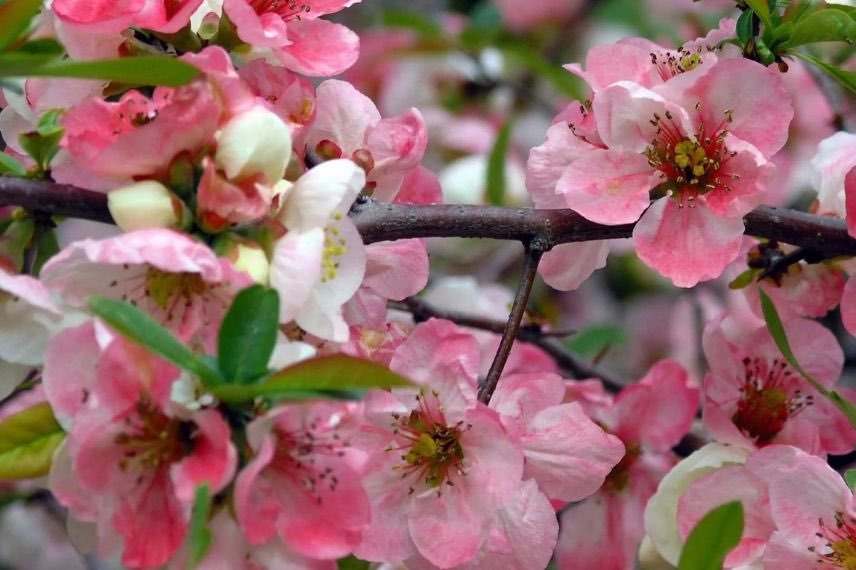
Chaenomeles japonica – Japanese quince is distinguished by its vivid red flowers, which appear on its naked and thorny branches from February to April. This bush grows to 1.5 m tall and 1.3 m wide. The deciduous, bright, glossy foliage appears almost simultaneously with the flowers. In autumn, the bush bears small yellow, fragrant quinces, edible only when cooked, in compote or jam. To bear fruit, it needs another plant planted nearby. Native to Japan, it is easy to grow and adapts to a range of exposure conditions and soil types, attracting garden wildlife.
This bush suits a range of climates and can be grown as a standalone specimen, in a border, or in an informal hedge. It pairs well with scented shrubs such as winter honeysuckle and lilacs of modest size. It makes a spectacular pairing with the bright yellow of Forsythia flowers. It can also be placed near creeping ceanothus. Its bare branches with buds make lovely vase bouquets.
Japanese quince 'Flocon Rose' - Chaenomeles speciosa
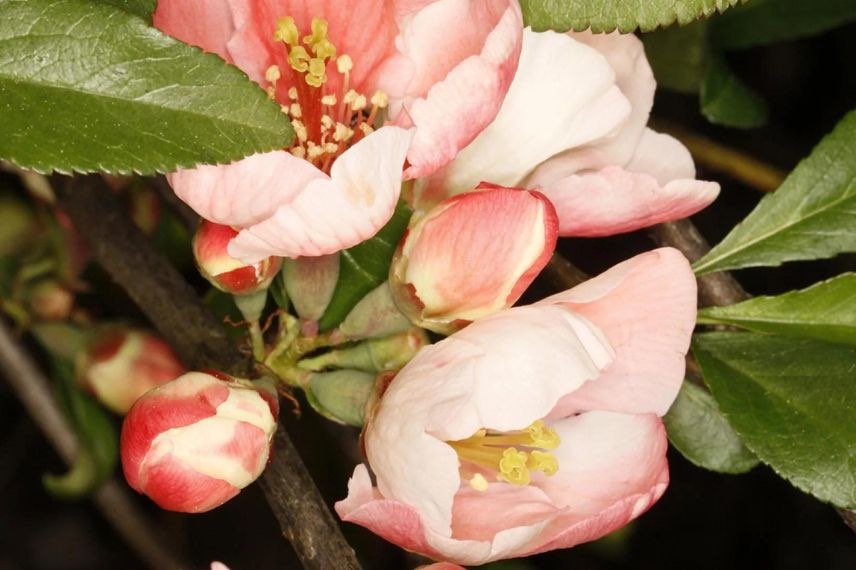
The Japanese quince ‘Rose Snow’ – Chaenomeles speciosa offers an early spring flowering of delicate pink blooms. Forming a large shrub up to 2 m in height and spread, its flowering occurs from late March to early May on bare shoots, lasting 3 to 4 weeks. The melliferous, cup-shaped flowers, 4 cm in diameter, range from pale pink to pink-tinged white, with yellow stamens at the centre. The leaves of ‘Rose Snow’ develop after the flowers, turning yellow before dropping in autumn. The small quinces that follow flowering are green, then yellow and aromatic, edible after cooking. Ideal for an informal hedge or as a specimen in a small garden, with its flowering shoots, it also makes superb cut flower arrangements. This deciduous shrub is only lightly thorny and derived from Chaenomeles speciosa, a thorny shrub native to China. The ‘Rose Snow’ variety is hardy and robust, growing in any soil type and tolerating sun as well as partial shade.
Easy to grow in isolation, in an informal hedge or in a border, it pairs well with fragrant shrubs such as winter honeysuckle, the Rosa rugosa ‘Rubra’ rose and white lilacs, as well as buddlejas.
Japanese quince - Chaenomeles speciosa 'Scarlet Storm'
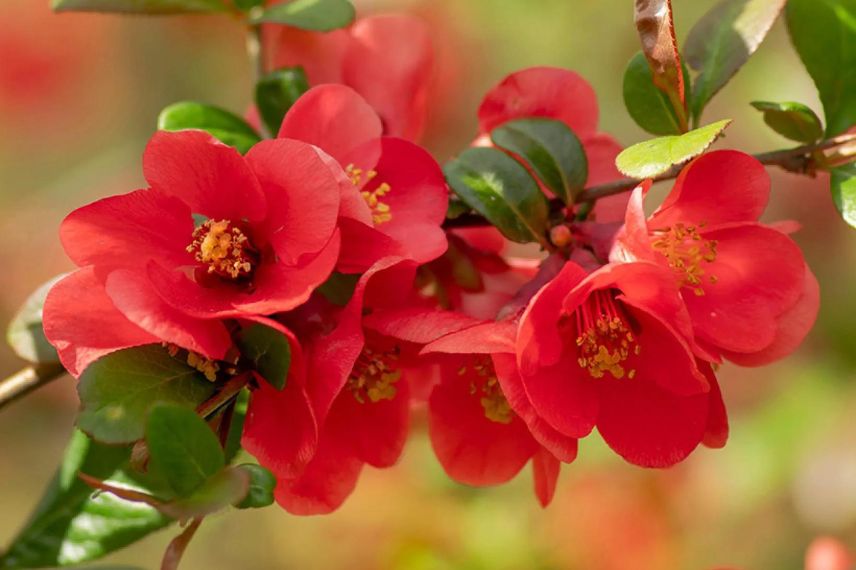
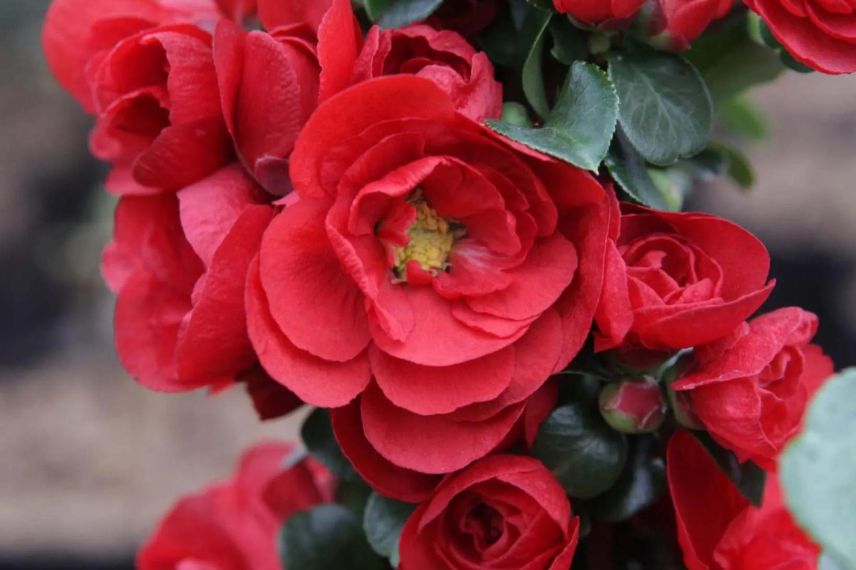
Japanese quince – Chaenomeles speciosa‘Scarlet Storm’ is a reliable choice and notable for being thornless. It offers a spectacular flowering, with large double flowers resembling camellias, in a deep crimson with a golden centre. These flowers, heralding the arrival of spring, appear between March and April. They transform the shrub with an upright habit into an incandescent bouquet. It forms a rounded shrub reaching 1 to 1.2 m tall, but does not bear fruit. The ‘Scarlet Storm’ foliage develops after flowering, consisting of narrow lanceolate leaves, dark glossy green. This hardy, drought-tolerant shrub prefers a sunny position and is easy to grow.
Derived from Chaenomeles speciosa, the ‘Scarlet Storm’, originating from China, is a variety that was developed in North Carolina, United States. It can be planted as a specimen, in a bed, in a hedge or as groundcover, pairing well with fragrant shrubs, groundcover roses and rosemary.
Japanese quince Cameo – Chaenomeles superba
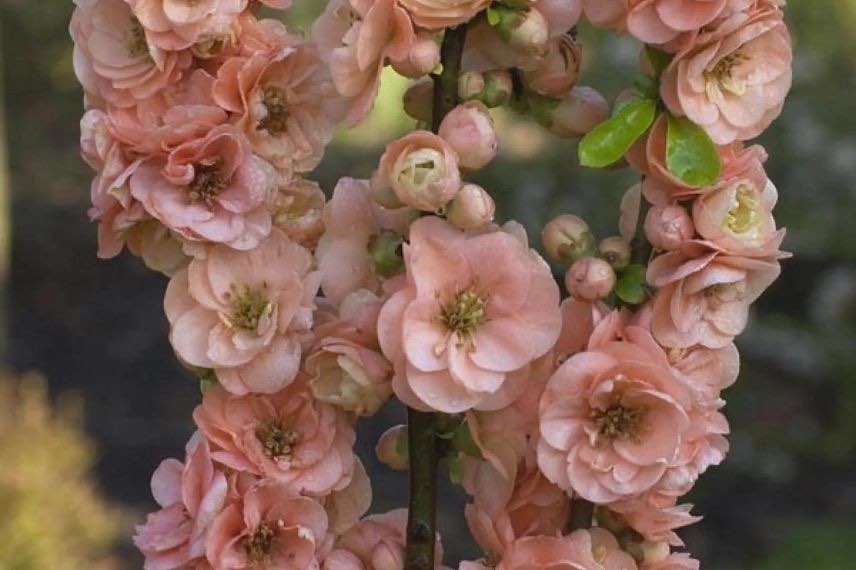
Another reliable choice is Japanese quince ‘Cameo’ – Chaenomeles superba is a decorative bush measuring 1.5 metres tall by 1 metre wide. In March and April, this bush is adorned with clusters of 2 to 4 double flowers in soft salmon-pink. The melliferous flowering precedes the appearance of the leaves, providing an attractive visual display. In autumn, the flowers give way to yellow quinces, decorative and fragrant, which add an aromatic dimension to the garden. The dark-green, glossy leaves measure up to 8 cm long and are deciduous. The bush is both vigorous and very hardy. This Japanese quince can be grown as a specimen, in a bed, in a hedge or as groundcover.
In a garden, it can be paired with other Japanese quinces, producing flowers in different colours—pink, red or white—to create a beautiful flowering bed as winter ends.
Japanese quince 'Orange Storm' - Chaenomeles speciosa
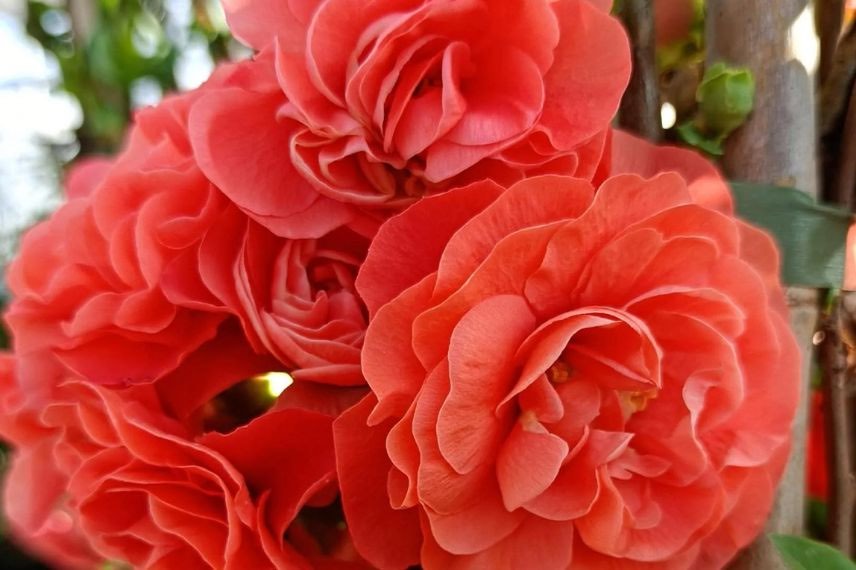
With its large, double flowers reminiscent of camellias and a brilliant orange, the Japanese quince ‘Orange Storm’ is full of charm. Originating from the Appalachian Mountains, it comes from the ‘Storm’ series, a particularly notable range comprising hardy, drought-tolerant bushes. This bush does not produce fruit and grows to a modest size, forming a rounded bush about 1.2 m tall. Its thornless flowering lasts from April to May, with melliferous flowers 5–6 cm in diameter, consisting of many petals and a yellow heart of stamens. They appear on bare shoots in clusters of 3–5 flowers.
Suitable for all climates, Chaenomeles speciosa ‘Orange Storm’ is ideal as a specimen plant, in a border, in an informal hedge or trained against a wall. It pairs well with bushes or blue-flowered plants, a colour complementary to orange. Let the blue Ceanothus, Buddlejas or lavenders inspire you.
Japanese quince 'Yukigoten' - Chaenomeles speciosa
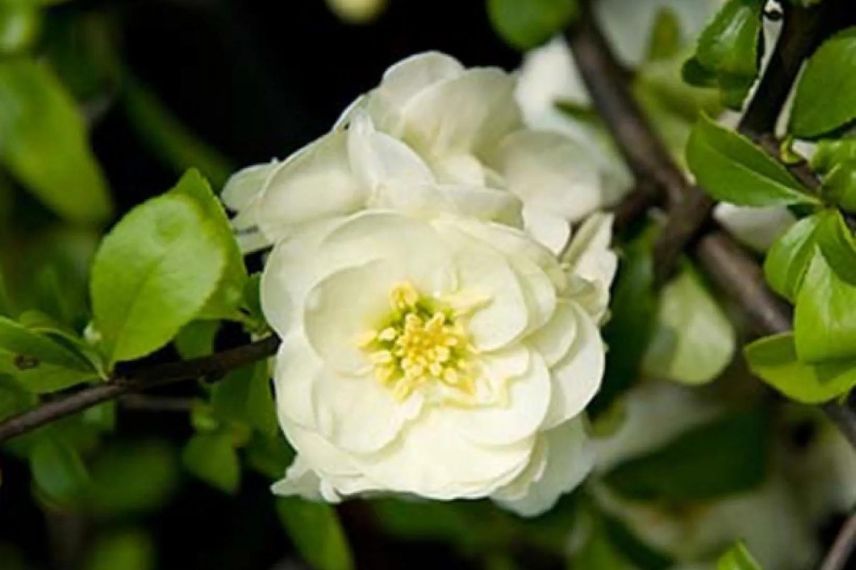
The Japanese quince ‘Yukigoten’ – Chaenomeles speciosa is a bush native to Asia, noted for its reddish foliage at bud burst period, turning pale green at maturity. It grows to around 1 metre tall and 1.5 metres wide. Its thorny shoots are clothed with double, creamy-white fragrant flowers, from March to April. Hardy and robust, it features deciduous, oval and dentate leaves, measuring 3–8 cm long, which develop after flowering. The shrub also bears edible fruits, quince-like, yellow-green and fragrant, to be used in jelly. Adapted to different soil types provided they are well-drained, the Chaenomeles speciosa ‘Yukigoten’ thrives in full sun or in partial shade. To maintain a compact habit, pruning of flowering branches is recommended.
It can be used as a specimen bush, in a pot, at the edge of a border or trained against a wall. Coupled with Primula vulgaris or Alpine columbines, it enhances gardens. In addition to its aesthetic appeal, this shrub is used in perfumery thanks to the cananga essence that can be extracted from it, and its seeds have medicinal properties, notably against diarrhoea.
In addition to this selection, discover our full range of quince trees, as well as our guide to planting and cultivating the Japanese quince.
- Subscribe!
- Contents
Comments