






























Designing a south-facing balcony: our tips and tricks
Choose the right plants, optimise watering.
Contents

Understanding the constraints of a south-facing exposure
A south-facing balcony benefits from maximum sunlight all day long, which brings both advantages and drawbacks.
Intense heat and direct sun rays
The south-facing exposure means your balcony will be bathed in light with maximum intensity during the hottest hours of the day. This abundance of light can be beneficial for many sun-loving plants, but it can also pose problems. Intense heat can make the balcony uncomfortable for users and can cause damage to plants and to materials if precautions are not taken.
Impact on plants and materials
Plants placed on a south-facing balcony should be selected with care. Heat-sensitive varieties are likely to dry out quickly, burn or wilt under the effect of the intense sun. Cacti, succulents and some Mediterranean plants are particularly well suited to this type of exposure.
With regard to materials, the furniture and decorative elements must be chosen according to their resistance to UV and heat. Materials such as untreated wood, certain plastics and synthetic fabrics can degrade quickly under UV rays, losing colour and their structural integrity. Opt for robust materials such as treated wood, metal or outdoor resins.
Creating shade
To make the balcony pleasant and usable even during the hottest hours, it is crucial to plan shaded areas. Installing parasols, shade sails or retractable blinds allows the creation of protected spaces where it is possible to relax without directly being exposed to the sun’s rays. In addition, these shading elements also help protect plants and furniture.
Plant selection
Don’t underestimate the impact of heat and blazing sun in spring and summer on your plants, especially when they’re potted and resources are more limited than in the ground. So, first tip: any plant listed as suitable for full sun won’t enjoy being roasted on your balcony. You need to choose the hardiest, those that won’t suffer from scorching rays and water shortages, those that appreciate dry soil in their natural habitat. So you don’t have to keep your plant on a constant water drip in its small pot where the compost dries out quickly. And your balcony will only have the shade you provide. The range of Mediterranean plants and of succulents and cacti is a good starting point for your selection.
As you benefit from an exposure conducive to flowering, think about choosing plants whose flowering is alternate. Note: all flowering plants with non-succulent foliage will require frequent watering during their flowering period.
Shrubs for a south-facing balcony
Among the hardy shrubs suited to full sun and pot culture, include buddlejas, lagerstroemias, Vitex, Choisyas, myrtles, ceanothus, all large bloomers loved by pollinators. Why not also plant a dwarf pomegranate?
Climbers for a south-facing balcony
Climbers can be used to create shaded areas if the layout allows, providing protection for other more sensitive plants. Make the most of their advantages. Two climbers come to mind in these conditions: the exotic passionflower and the trumpet vine with warm colours. In the south, bougainvillea is an excellent candidate.
Flowering perennials for a south-facing balcony
Certain hardy geraniums such as Rozanne, the champion of the category, are very floriferous and hardy. More modest, Geranium cinereum are very well suited. Think of Agapanthus, Gaura, ornamental salvias, lavender.
Herbs for a south-facing balcony
All the herbs of the garrigue are excellent subjects for this situation. Drought-tolerant, they will perfume your balcony with their scent more intense in the sun. Off you go with thyme, rosemary, oregano, marjoram and don’t forget hyssop and its pretty blue flowers.
The grasses for a south-facing balcony
Grasses provide a lasting presence and are interesting in these conditions, as many thrive on little. Choose sun-loving, dry-soil species such as Stipa, Panicum, Miscanthus to add structure.
Ponder succulents and cacti
In this category, you can rely on hardy, drought-tolerant plants that cope with dry periods without watering, often quite hardy. For example, tree Aeonium (Aeonium arboreum), sedums, agaves, Echeveria, Aloe, and Sedum are perfect for sunny conditions and require little care.
Annuals for a south-facing balcony
Many annuals are heat-tolerant, very floriferous and easy to grow from seed. For a season, enjoy Cosmos, California poppy, Cerinthe major and its magnetic colour.
Here are our articles for a southern-p Southern balcony plant selection:
- 8 dwarf shrubs to grow in pots on a south-facing balcony
- 7 perennials to grow in pots on a south-facing balcony
- 5 climbers to grow in pots on a south-facing balcony
- What can be planted on a south-facing terrace?
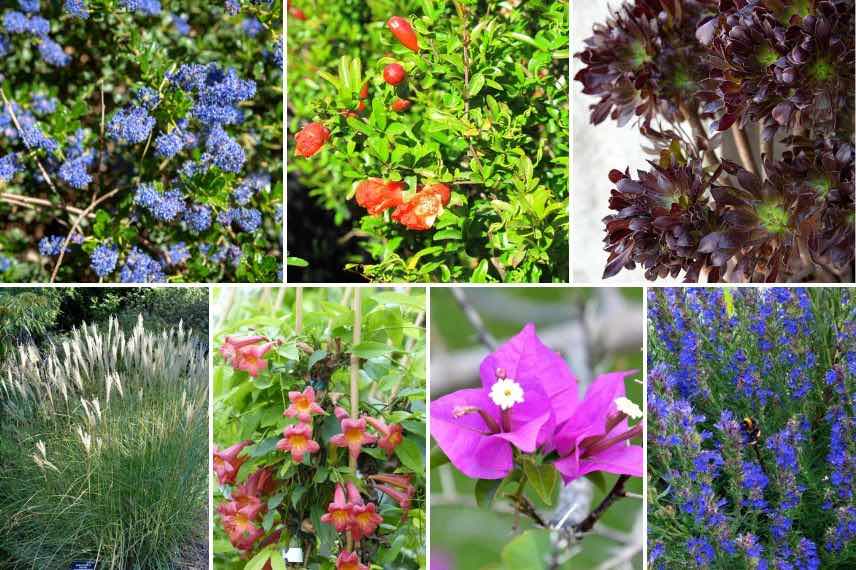
Among sun-loving plants suited to a south-facing exposure, clockwise: Ceanothus, dwarf pomegranate, tree Aeonium, hyssop, bougainvillea, trumpet vine, Miscanthus
Creating shade
Creating shaded areas is essential to protect both plants and balcony users.
- Easy to install and move, parasols provide mobile protection from the sun. Choose tilt models to adjust the shade throughout the day.
- Shade sails, fabrics stretched between anchor points, can cover large areas. Choose UV-resistant fabrics for increased durability.
- Ideal for controlling shade and light, but considerably more expensive, retractable blinds can be installed on the sides or above the balcony.
If space is large, don’t hesitate to combine several shade sources, as a shade sail installed above the balcony does not cover the same areas or times of day as an orientable parasol.
For furniture, opt for robust materials such as pressure-treated wood or thermo-modified wood, metal (beware of heat in direct sunlight) and synthetic resins (such as wicker resin that mimics rattan but is far more durable against UV and temperature fluctuations) which do not degrade under UV exposure. Use outdoor fabrics resistant to UV and fading.
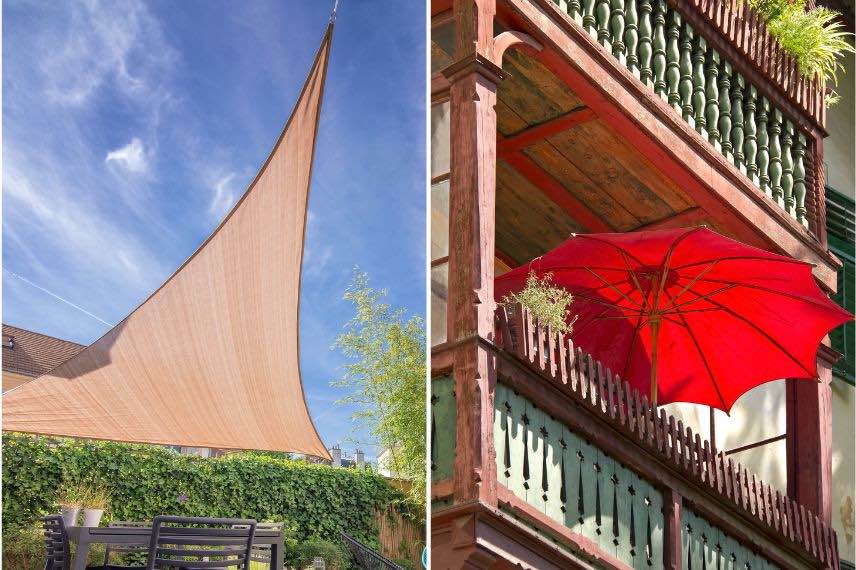
Increase shade sources with different orientations (above and facing)
Optimise watering
On a south-facing balcony, intense heat and constant sun can quickly dry out the potting medium in your pots, making watering even more crucial than in any other setup.
Automatic irrigation system
Installing an automatic irrigation system is a practical solution to ensure a regular supply of water.
- Drip irrigation systems deliver water directly to the roots, minimising evaporation and ensuring optimal hydration.
- Using timers to automate watering cycles helps ensure plants receive water regularly, even when you’re away.
Special pots, oyas…
Self-watering pots are designed to maintain a water reserve accessible to the plants’ roots, reducing the frequency of watering. They have a water reservoir and a wick system that draws water up to the roots by capillarity.
Insulated pots are made with a double wall and a vacuum in the middle. They protect the plants effectively.
Oyas are terracotta reservoirs that you fill and return to the soil to deliver gradual watering.
Mulching
Mulching is effective at conserving soil moisture and protecting plants from heat. Use organic materials such as wood chips, straw or pine bark. Spread a mulch layer about 5 cm deep around the plants to reduce evaporation and maintain soil temperature.
Succulent plants will prefer inorganic materials such as gravel or pebbles, but they tend to accumulate heat.
Watering method
- Water early in the morning to reduce evaporation and allow plants to absorb water well before the hottest hours.
- Water deeply but less frequently to encourage plants to become more autonomous, which improves drought resistance.
Rainwater harvesting
If you have the space, harvest as much rainwater, via tanks or troughs that you cover when it isn’t raining. Rainwater is free of lime, which is beneficial for plants.
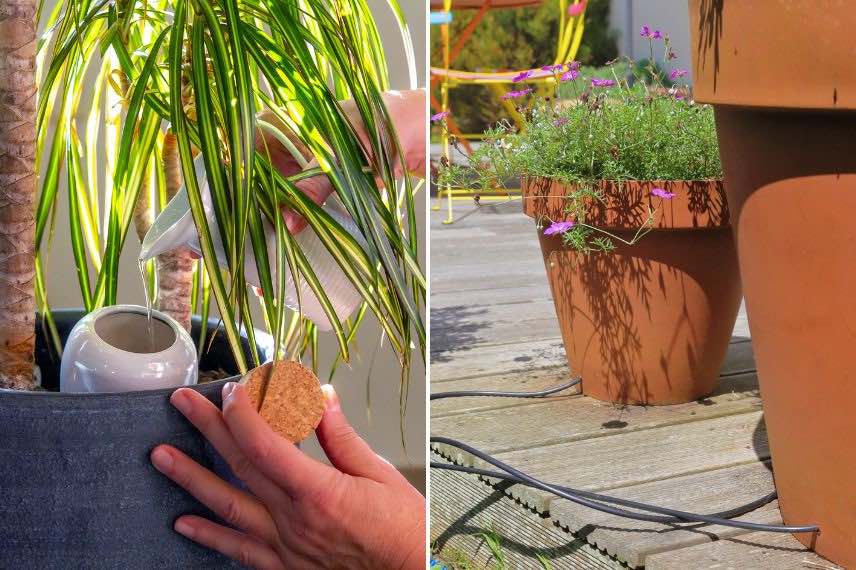
Keep your plants well watered when they need it, using oyas or a drip irrigation system, for example
A few tips to reduce heat
Light colours reflect sunlight, thereby reducing heat buildup. Painting walls and floors white or in light colours can help reflect light and keep the space cooler. Choose light-coloured furniture for the same effect.
Plants not only provide visual freshness but also help lower ambient temperatures through evapotranspiration. The more vegetated your space, the greater the benefit.
Textiles can also play a role in reducing heat. Use lightweight, sheer fabrics to block sunlight without obstructing the view or airflow.
Vertical permanent structures can provide effective sun protection. A pergola with climbing plants can create partial shade while letting air pass through.
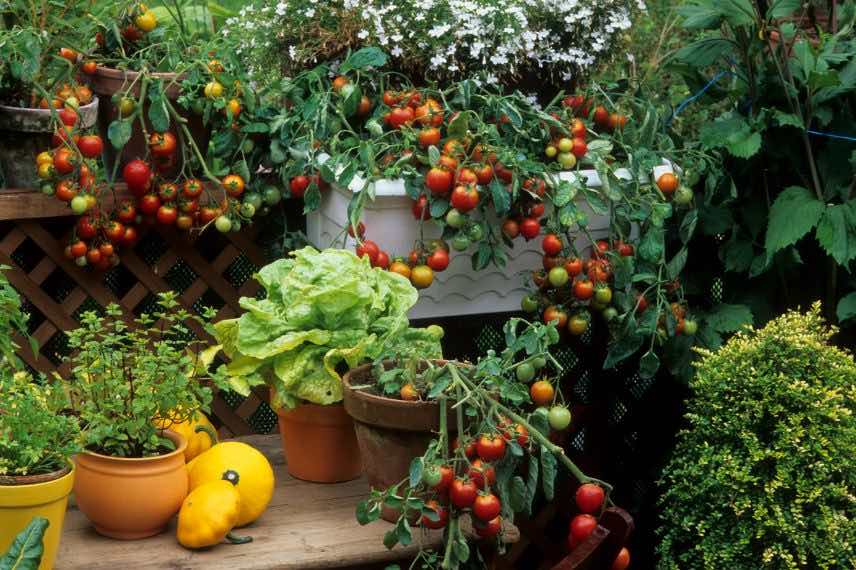
The more your balcony is vegetated, the cooler it is. You can indeed add vegetable plants that require warmth and sun (aubergines and peppers too); avoid salads, however, except in autumn and winter
- Subscribe!
- Contents
Comments