





























Create a micro-forest using the Miyawaki method
create a mini urban forest in a small space
Contents
Nowadays, the presence of nature near humans (not just in cities!) is drastically diminishing, particularly due to extensive and methodical global deforestation. Bad timing! It is precisely now that the benefits of a simple tree planting would have the greatest impact: thermal regulation, oxygen supply, carbon trapping, and the preservation of some fauna and flora… However, there are solutions to green urban areas, industrial zones, and even some of our countryside. One of these could be the Miyawaki method. It involves planting native tree and bush species very densely over a small area of a few hundred square metres. The aim is to create “micro-forests” in the heart of cities or in heavily disturbed locations.
→ How to create a micro-forest? What are the benefits it brings? Let’s take a look in this advice sheet!
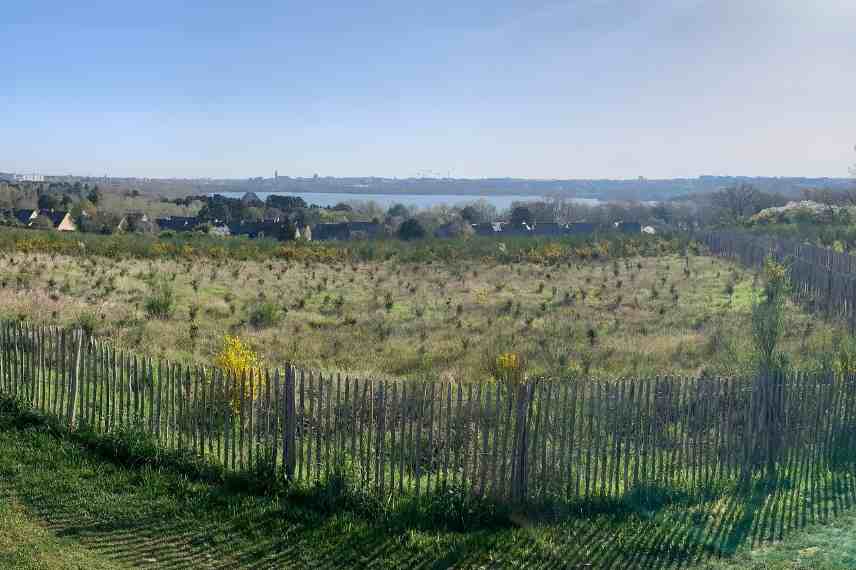
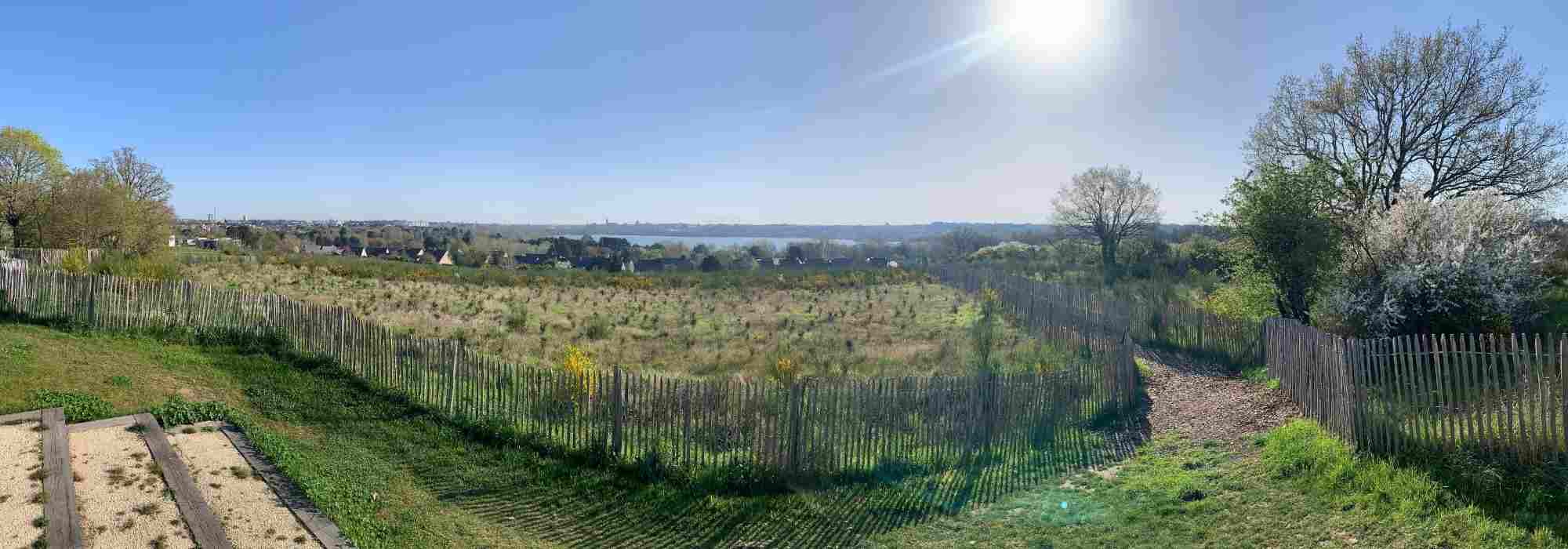
Urban afforestation of Grésillé on the edge of the housing estate and Lac de Maine in Angers (© Direction Parcs, Jardins et Paysages – Angers)

What is the principle of an urban forest or a micro-forest?
A micro-forest is, as its name suggests, a planting of trees and bushes over a small area (200 m² to 3,000 m²).
The idea is to artificially recreate, through a very dense planting of native species, what a forest should be without human intervention. When the planting occurs in a city or a relatively urbanised area, it can be referred to as an urban forest. However, an urban forest can also be a remnant of a true forest that has been preserved.
The attempt to (re)create these forest ecosystems through dense planting over a very small area has been popularised worldwide by a botany researcher, Professor Miyawaki. Millions of trees have already been replanted around the world thanks to his method.
Who is Akira Miyawaki?
Akira Miyawaki is a Japanese botanist, a global expert in applied ecology for the restoration of native forests. He developed an ecological engineering method, known as the “Miyawaki method,” which allows for the restoration of indigenous forests using native trees on degraded or deforested soils, often without humus.
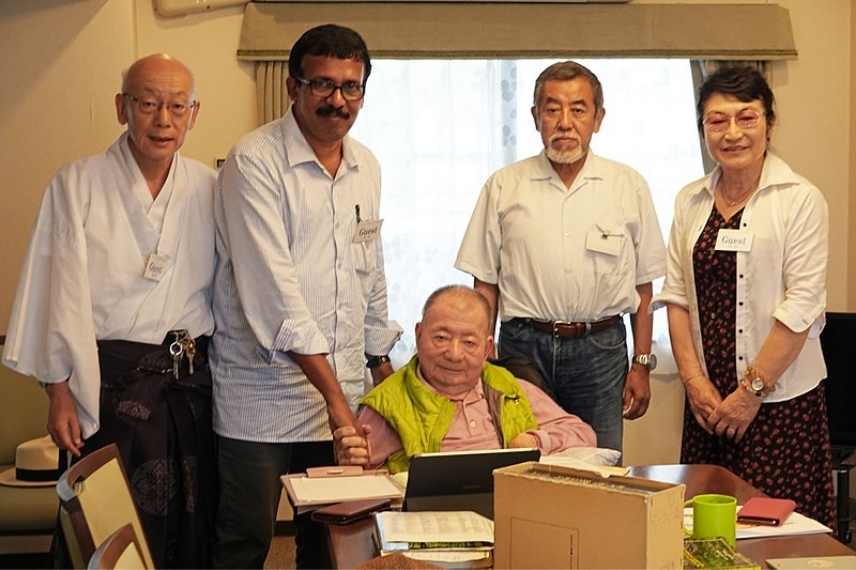
In the centre, Akira Miyawaki
Creating a micro-forest using the Miyawaki method
- Firstly, an inventory of local trees (large and medium) and bushes will be taken. It is essential to know the local flora that is suited to the soil and climate. For example, in clayey and acidic soil, one should avoid planting a bush that prefers calcareous and well-drained soils, even if it is native. To prevent any potential mistakes, a thorough soil analysis will be conducted (pH, soil type, organic matter content, present minerals, potential pollutants…). Only what grows (or should grow) naturally in the location of the micro-forest will be planted;
- The soil will be prepared over the entire area: firstly, it will be decompacted to a depth of 30 to 50 cm. This may seem paradoxical at a time when soil cultivation is being discouraged. However, this soil work will allow for a “clean slate.” The soil fauna will only be disturbed once, and the horizons (layers of soil with specific microbial fauna and flora) are, in theory, not mixed;
- After soil decompaction, nutrients and soil enhancers will be added by raking: compost, manure, shredded leaves… A layer of RCW (ramial chipped wood) can be placed on the soil. Future plantings will thus benefit from the best start to produce a healthy and strong root system in the shortest time;
- Planting can begin. This will be done at a high density: an average of 3 large trees per square metre plus other trees and bushes. The trees and bushes will grow rapidly in a sort of race towards the sun. This planting method creates a kind of competition among the different species. This competition results in sometimes significant mortality (between 40 and 60%) of the weaker trees and bushes over the years. This is entirely normal. The dead trees and bushes will also contribute to the ecosystem balance, particularly for wood-eating organisms (fungi and insects);
- In the first few years, care must be taken to prevent the more fragile plants from being smothered by others by pruning or removing some branches at the base of the trees. After the first 3 years following planting, the micro-forest requires no further maintenance.
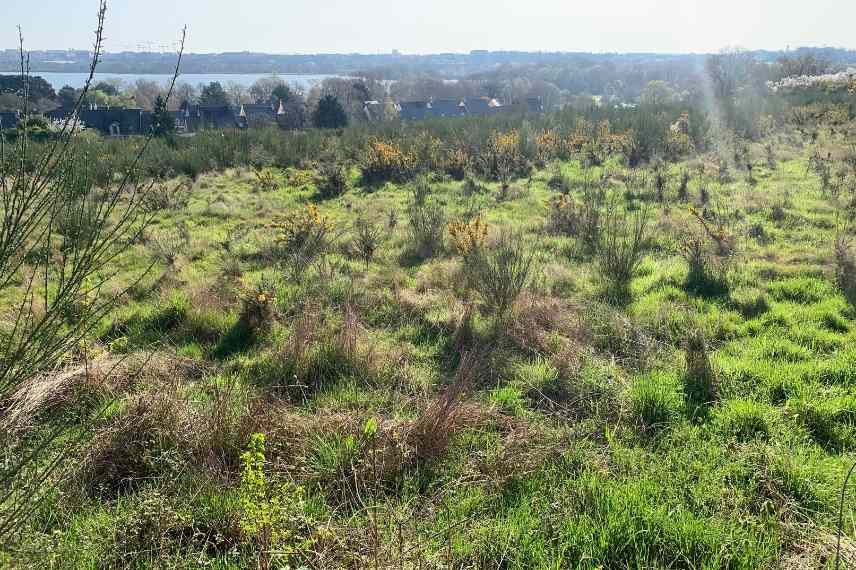
The micro-forest near Lake Maine in Angers was planted at the end of 2019, here in March 2022 (© Direction Parcs, Jardins et Paysages – city of Angers)
What are the advantages and benefits of a micro-forest?
In a world where the place of plants and Nature in general is shrinking, whether in cities or even in our countryside, the idea of an urban micro-forest is undoubtedly appealing. Reforestation with a few trees and bushes indeed produces a plethora of benefits for the environment in general and for humans in particular, a fortiori in the context of climate change.
- True natural air conditioners, trees help regulate temperature in overheated concrete environments;
- Trees also produce oxygen, while capturing a significant amount of CO2 and fine particles;
- Micro-forests help restore degraded soils, as well as manage runoff water. A mini-forest can act as a sponge buffer to prevent or limit the impact of flooding;
- The creation of a “forest ecosystem” serves as a refuge for wildlife (birds, insects, small mammals…), as well as for forest flora, and numerous species of fungi. The proliferation of micro-forests can also create ecological corridors between “real” natural environments, which are increasingly distant from each other;
- These micro-forests can become places of well-being for the population. Urban forests will play a role in environmental education for both young and old, serving as educational spaces.
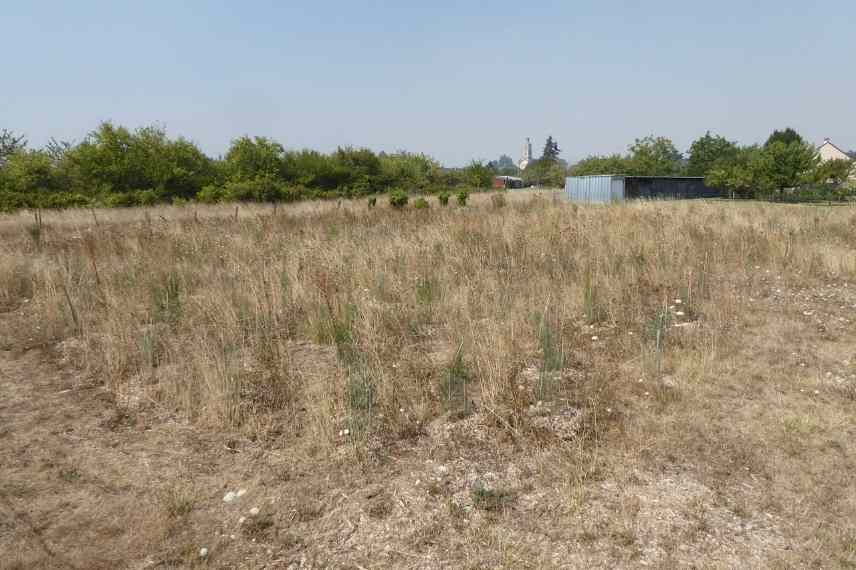 A small micro-forest was created in 2021 in the village of La Ménitré in Maine-et-Loire (© Gwenaëlle David): the planting of local species also plays a role in rural environments…
Read also
10 good reasons to let weeds growIs it possible to create one in your garden?
Why not, if you have the space at home? It only takes a few hundred square metres to create a micro-forest. You can choose to strictly follow the Miyawaki method after thoroughly studying your soil and the flora around you.
However, you can also plant young plants with bare roots or sow seeds of native species without turning the soil, thus preserving the soil fauna and layers.
Or even better, preserve a spot where young shoots of native trees and bushes (be sure to check that they are not exotic species!) are already germinating and growing: in other words, you allow a small area of your garden to return to forest naturally. The result is, in the end, almost as quick as with the Miyawaki method and much more natural.
Legal Considerations
Don’t forget that there are regulations regarding the pruning of trees and bushes planted in gardens. They must be planted at least 50 cm from the boundary if they do not exceed 2 m in height when mature. Otherwise, they should be planted at least 2 m from the boundary. Keep this in mind when planting!
→ More information on the site service-public.fr
Is the micro-forest THE ultimate solution?
There is no ultimate solution to address the destruction of ecosystems and the increasingly negative impact of humans on the environment. Aside from a complete halt to all human activities… but that is impossible as long as we are on this planet.
The establishment of micro-forests is one of the many (almost) good ideas that can be implemented, particularly considering the numerous benefits mentioned in point 3.
However, this type of “forest” will only host one type of biodiversity. Other natural or semi-natural environments (grasslands, wetlands, bocage…) are equally important for various reasons and support another type of biodiversity, which is just as crucial as forest biodiversity.
Moreover, it will never be a true forest with all the biological interactions that arise from it. Everyone is well aware of this, except perhaps a handful of journalists and a few salespeople trying to sell us the concept as a revolution.
In short, micro-forests following the Miyawaki method are quite good. They are, in any case, better than nothing. But a true forest is better. And even the multiplication and preservation of different natural environments connected by ecological corridors would be the absolute best.
However, that does not mean we should not green our cities and even our countryside. The more trees we plant, the more we can benefit from all their advantages. So, what are we waiting for?
“The best time to plant a tree was 20 years ago. The second best time is now” (Chinese proverb)
- Subscribe!
- Contents
Comments