





























Cover crop, ground cover: everything you need to know!
To never leave the soil naked
Contents
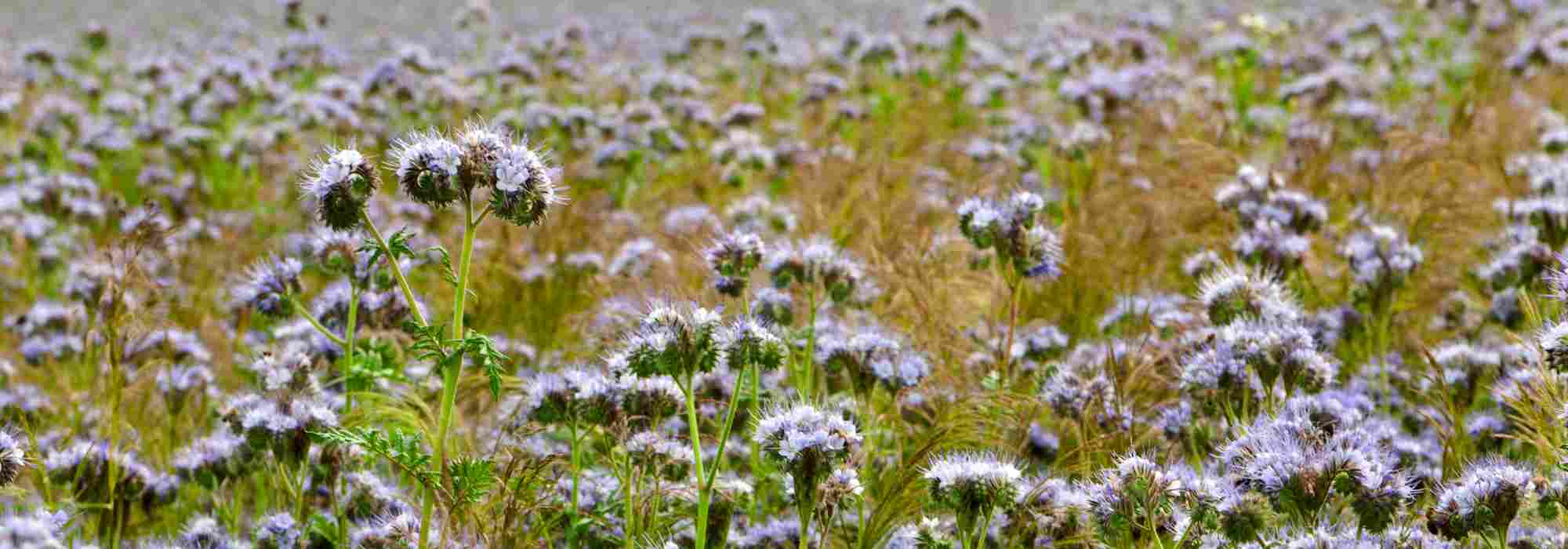
Cover crops, or green fertilisers, ensure that the soil is never left naked between each crop, as well as during the growing season between vegetables in the vegetable garden, at the base of trees, or in a young bed undergoing planting. This cover crop will benefit by protecting the soil from water and wind erosion, maintaining soil fertility, improving its structure by aerating and draining it, and limiting the proliferation of adventive species. Among the plant species that achieve this, we can mention phacelia, white mustard, white clover, rye, vetch, buckwheat… This cover crop can be mown and then incorporated into the soil; in this case, it is referred to as green fertiliser. It is indeed under this name that the plants most commonly sown for cover crops are found.
→ Discover in this advice sheet the different plants for cover cropping, the benefits of it, and how to proceed with sowing green fertilisers in your garden.
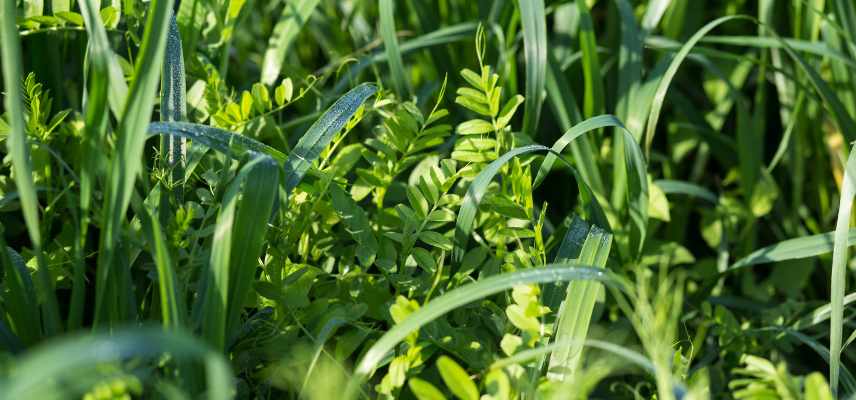
Vetch and oats

What is referred to as "cover cropping" or CC?
A cover plant, or green cover, also known as green manure, is a plant species that is sown on bare soil (field, cultivation area, vacant plot, vegetable bed…) with the aim of limiting soil erosion (due to leaching and wind), contributing to its fertility (nitrogen fixation by Fabaceae), sometimes improving its structure, and combating adventive plants or “weeds”. This cover plant will not be harvested or destroyed in autumn.
Thanks to the roots of these plants, the soil increases its water retention capacity, making it less vulnerable to drought, while drainage is also improved. Fertilising elements are mobilised at the surface, making them available for the following crop. With cover crops, microorganisms and all soil life (notably mycorrhizae) are kept active. Finally, the establishment of certain plant species as cover helps to break the life cycle of certain pest insects or diseases.
Some species, such as phacelia or white clover, sown for green cover or as green manure, produce flowers that attract and nourish pollinating insects. This is a bonus for pollination in the garden and in crops.
This ancient practice, forgotten since the 1940s, has made a strong comeback in our gardens over the past few decades, as well as among market gardeners and farmers, because green cover significantly reduces the use of herbicides and other pesticides. Soil cover is one of the key elements in conservation agriculture and organic farming.
Cover plants are either sown after the crop (as a catch crop), or sown during the crop (intercalary crop). Green manures are sown before or after the crop, but are subsequently buried in the soil to increase the nitrogen content.
Please note: Some crops (maize, soybeans, vegetables…) can be sown under permanent green cover (PGC). The soil is therefore never bare, and a cover crop is established after each harvest. This vegetative cover thus serves as a plant mulch or shelter plant for the following crop.
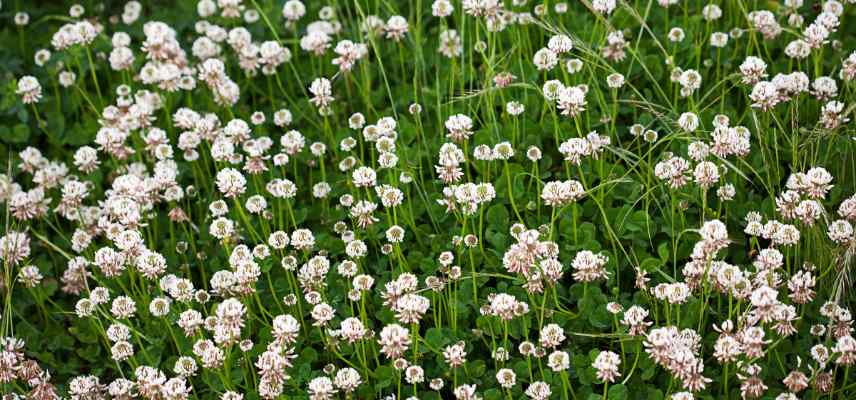
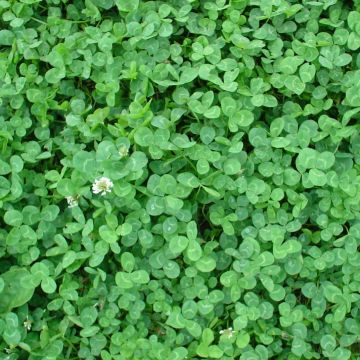
White clover
Read also
Green manures: why, how?Which plants to choose for a cover crop?
Plants for blanket bog will be classified into 4 categories:
- legumes or Fabaceae, such as white clover, red clover, crimson clover, faba bean, or vetch: in addition to the usual benefits of cover crops, Fabaceae fix nitrogen in the soil and make it available for subsequent crops;
- grasses (Poaceae), such as rye or ryegrass: improve soil structure, promote the formation of organic matter (humus), and help limit hydraulic and wind erosion;
- crucifers or Brassicaceae, such as forage radish or mustard: often used with other plants, crucifers form a very dense blanket bog that smothers adventive plants or “weeds”;
- other plants: flax, phacelia, sunflower, buckwheat…
Of course, mixtures are entirely possible and even desirable, as these plants complement each other in terms of benefits to the soil.
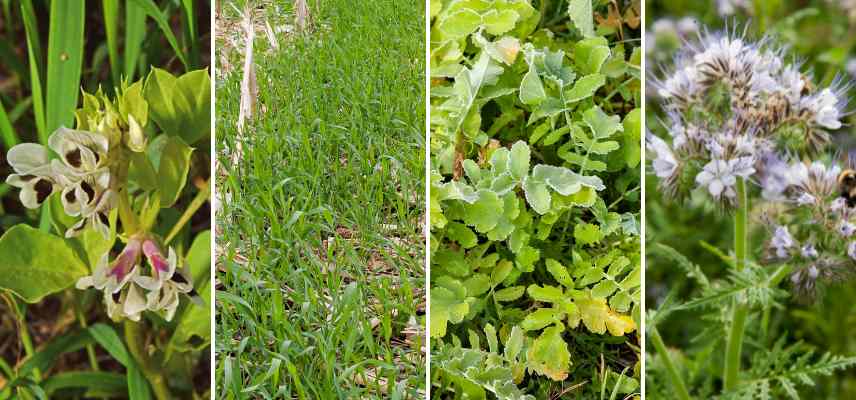
Faba bean, rye, forage radish, and phacelia
Discover other Green fertilisers
View all →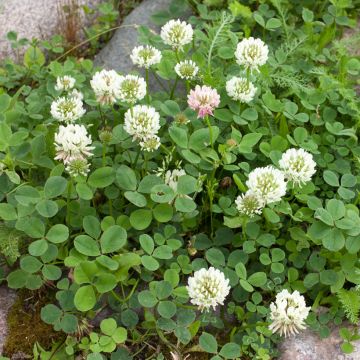
Available in 1 sizes
Available in 1 sizes
Available in 1 sizes
Available in 1 sizes
Available in 1 sizes
Available in 2 sizes
Available in 3 sizes
Available in 1 sizes
Available in 1 sizes
Available in 3 sizes
When and how to proceed with sowing?
On will only discuss cover crops for our gardens, particularly for the vegetable garden or at the base of fruit trees.
When to sow your cover crop?
If you want a cover crop sown after harvesting, don’t wait too long. As soon as your vegetables are harvested and the soil is bare, you can sow your cover crop.
However, you can also sow your seeds directly during the growing season, even at the same time as your sowing or planting of vegetables: this will be an intercalary crop.
The sowing season runs from around March to October. The earliest sowings are for vetch, white clover, phacelia, white mustard, and lucerne. You can still sow in October corniculate lotus or common vetch.
Opt for mixtures!: the cover crop will be denser, the root system will be much more robust, and the benefits of each species will complement each other.
How to proceed?
The soil must be clean. Prepare the soil so that it is slightly crumbly on the surface. Sow your seeds and then water well to facilitate germination and keep the soil moist. You can also add a bit of compost on the surface.
If you have placed mulch in your crop, you can remove part of it and sow your cover crop.
In the case of broadcasting seeds: place your seeds (or your seed mixture) in a bucket and mix them with well-dried river sand. This way, the lighter seeds are less likely to be blown away, and you will also see better where the seeds have fallen, as the sand is lighter than the moist soil.
Note: you can also sow a cover crop at the base of fruit trees to prevent grass growth.
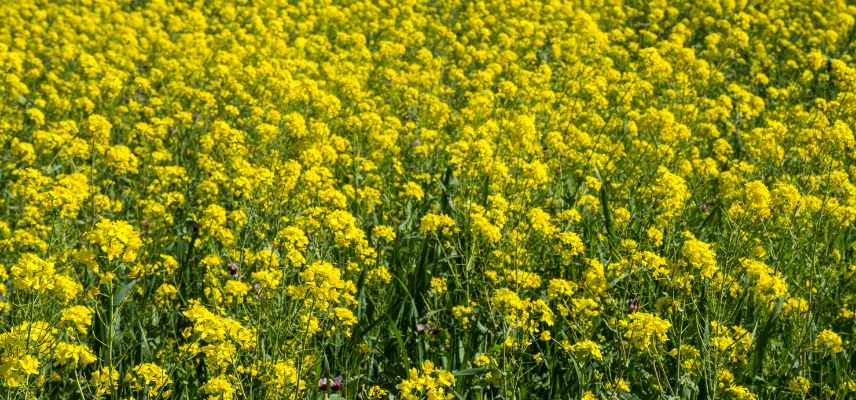 Mustard sown by broadcasting
- Subscribe!
- Contents

Comments