





























Climate change: the most effective trees to sequester CO₂
Selection of champion trees for carbon sequestration
Contents
Climate change is a topical issue that has generated a lot of discussion. There are several approaches to tackling this phenomenon, including planting forests. The forest is indeed, after the ocean, the largest carbon sink on our planet. According to the National Forests Office, the French forest absorbs around 87 million tonnes of CO2 per year, or 19% of greenhouse gas emissions. Trees contribute thereby to protecting the planet, by reducing CO2 emissions and by strengthening biodiversity. Discover how trees absorb carbon and a selection of species effective at trapping CO2.

How does a tree trap CO2?
To live and grow, the tree draws water and minerals from the soil through its roots, forming the sap that circulates up to the leaves. As for the leaves, they absorb the carbon dioxide present in the air, then, under the sun’s rays, a chemical reaction takes place that transforms all these elements into glucose and oxygen. Glucose nourishes the tree and oxygen is released into the atmosphere. This phenomenon is called photosynthesis. At night, the inverse operation occurs; trees absorb oxygen and release carbon dioxide, but in smaller amounts than during the day. The tree thus absorbs carbon, which is then sequestered in the trunk, branches, leaves and roots. Carbon can also be sequestered in the soil in the form of decomposing vegetation and through the roots. Although all trees help to sequester carbon dioxide, some have a greater capacity to sequester carbon than others. In a reforestation project, it is recommended to plant native species. Here are some examples of trees regarded as effective at absorbing carbon.
Paulownia, an effective carbon sink
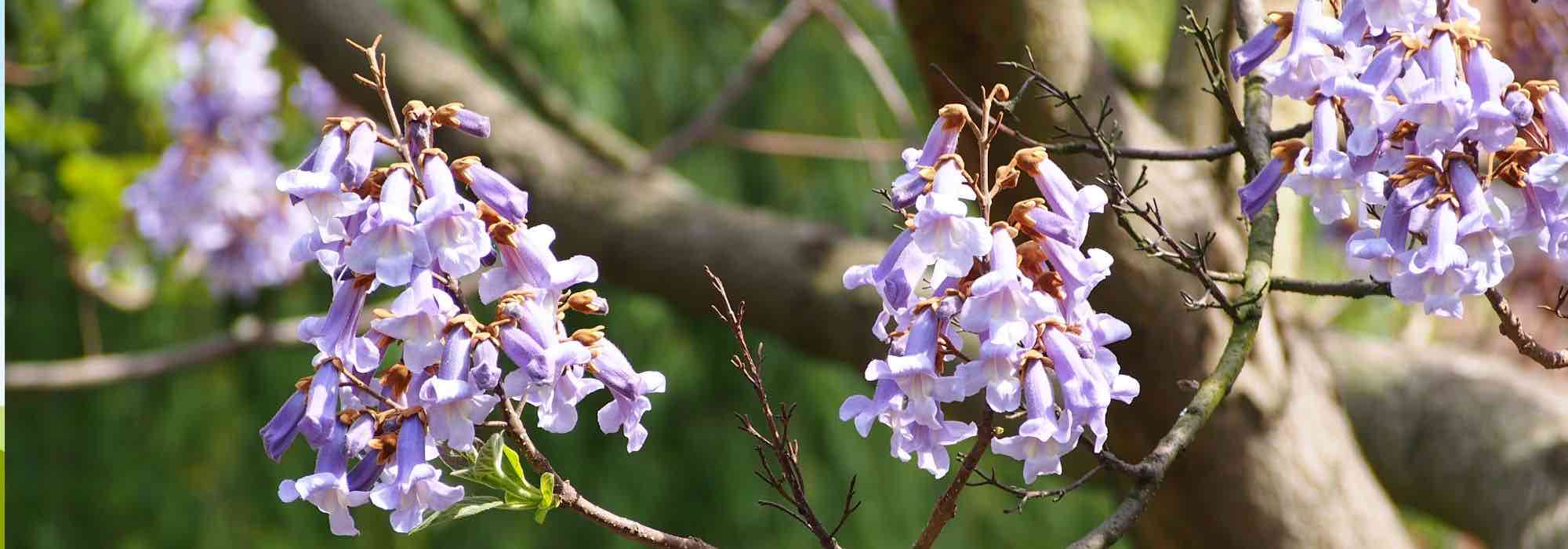
The Paulownia is considered a highly effective carbon sink, absorbing ten times more CO2 than other trees. Another advantage is that it grows rapidly and reaches a height of 8 to 12 metres at maturity. Originating in Asia, this deciduous tree is recognisable by its large heart-shaped leaves and clusters of purple flowers. The most popular is Paulownia tomentosa. It flowers in May and June before producing fruits that resemble capsules and open to release the seeds they contain.
It grows best in sun or partial shade, in all soil types, provided it is deep and well-drained. It is also best planted in a site sheltered from winds. If you wish to enjoy its shade, you will need to prune its lowest branches. A pruning to aerate the branch structure and remove dead branches is also recommended. Nevertheless, pruning too-large branches is discouraged as it weakens the tree and makes it susceptible to fungi.
For more, read our article on Paulownia, the champion tree for CO2 storage.
Pine, a carbon sink
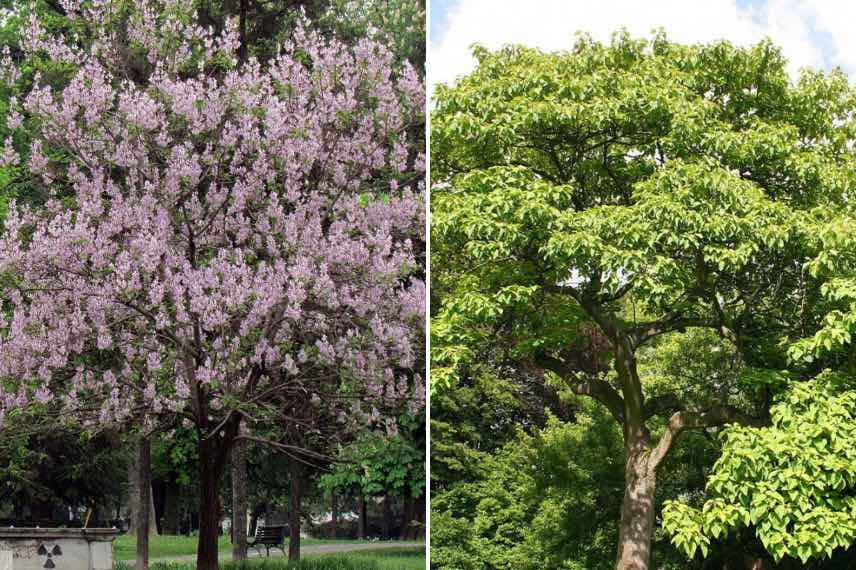
Pine is also regarded as an important carbon sink. Easy to grow, the pine is an evergreen tree formed of fine needles. You have a choice of many species. The Scots pine is among the most popular, with its slender habit and outstanding resilience. It can reach a height of 30 metres at maturity. Its trunk bears a scaly, salmon-coloured bark and its foliage, a pale blue-green, scents the air on warm days. This tree bears pine cones. It is hardy down to -34.5°C and should be planted in well-drained, non-calcareous soil. In a garden, create a dedicated area where you plant different types of pines together to form a mini conifer forest.
Oak
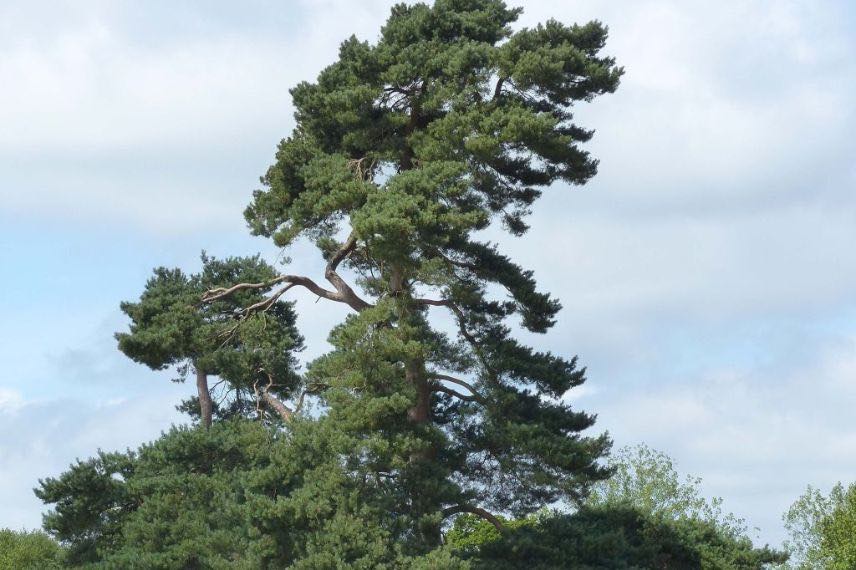
The oak is also regarded as an interesting tree for sequestering carbon. With slow growth, it enjoys a long lifespan. Belonging to the Fagaceae family, it comprises around 600 species, which split into two groups: oaks with deciduous and lobed leaves, and those with evergreen or semi-evergreen leaves, whose shapes are closer to holly leaves. Oaks can grow to a height of up to 35 metres, but for a garden those of more modest size are preferred, such as the holm oak or the purple oak. The holm oak and cork oak thrive in the southern regions of France. Deciduous species are better suited to colder regions. Soil type depends on the species; North American red oaks and cork oaks favour acidic soil, while other species remain tolerant of calcareous soil. These trees prefer a sunny position. In a large garden, pair different oak species together to create a harmonious blend of leaf colour and growth habit.
For more on oak cultivation, consult our comprehensive guide to oak cultivation and planting.
Norway maple
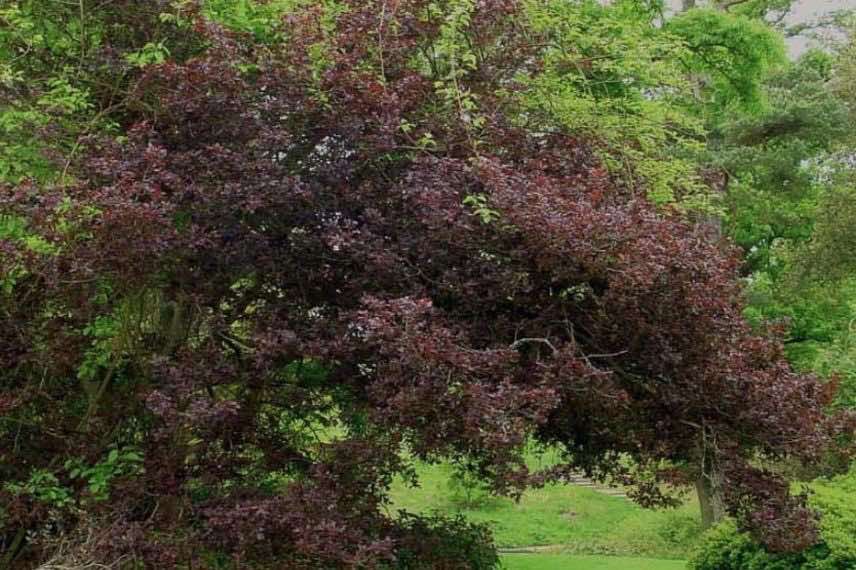
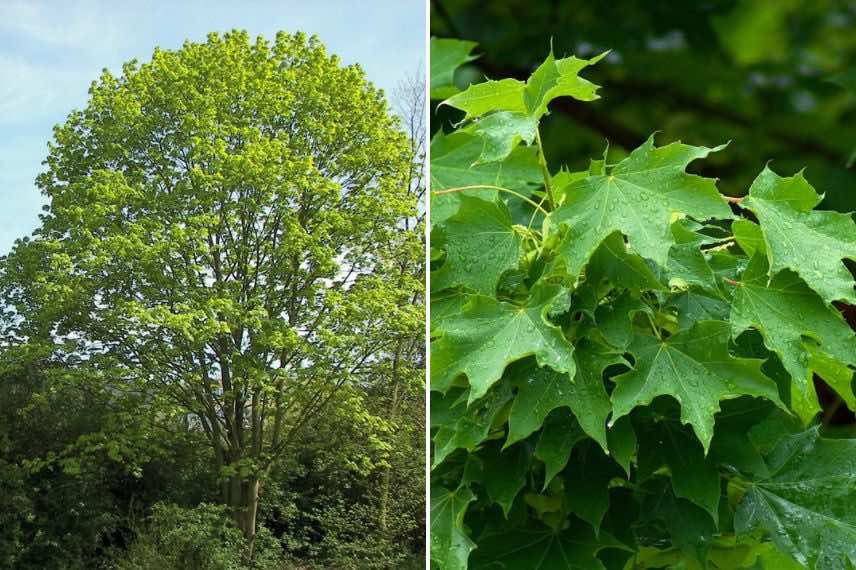
Another tree cited as an effective carbon sink, the Norway maple is among the best-known maple species in France. It has glossy dark green leaves that turn yellow-orange in autumn. With its pyramidal crown, it reaches a mature height of 25 metres. Its leaves are palmately lobed with very pointed and dentate lobes. Leaves fall in winter. A discreet flowering takes place in March and is followed, in June, by the appearance of small winged fruits. It thrives in full sun or partial shade and has hardiness down to -34.5°C. Not particularly fussy about soil types, it nevertheless needs to be planted in deep soil because its root system is well-developed. The Norway maple is often used as a solitary specimen in a garden but can also be paired with purple beech to create a striking colour contrast.
Ash
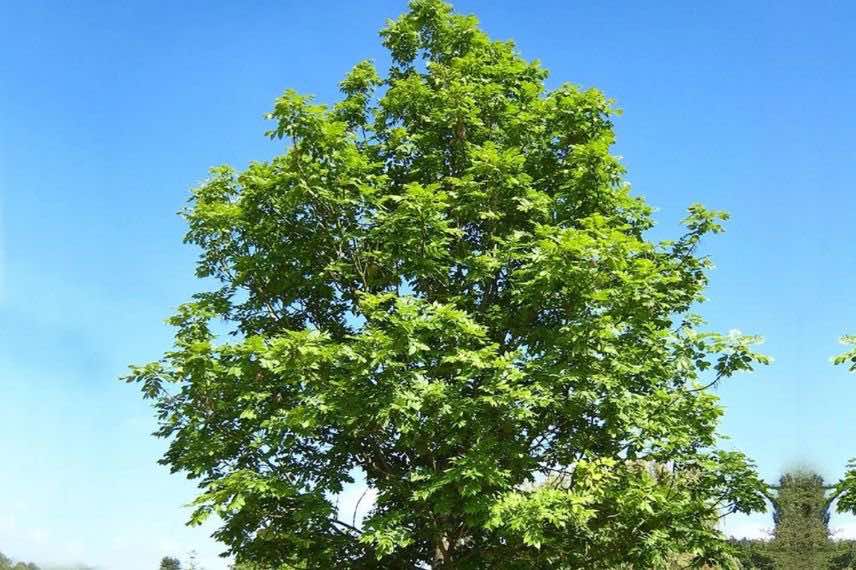
Ash would also have a good capacity for absorbing CO2. Common ash or Fraxinus excelsior is a large tree that is often found in the forests of our regions. It is distinguished by its size, which can reach up to 30 metres at maturity, and by its velvety black flower buds, as well as its lanceolate, dark green leaves that turn yellow in autumn. It grows quickly and offers an elegant, airy habit. Hardy to -34.5 °C, it can be planted in any ordinary soil, provided it offers moisture and depth. Plant it as a specimen in a garden or by the edge of a water feature.
In addition, see our article on climate change and tree planting.
- Subscribe!
- Contents
Comments