





























Chicken eggs in 10 questions/answers
Everything You Need to Know About Your Chickens' Eggs
Contents
As a chicken owner, collecting eggs is a (nearly) daily joy. These fresh eggs satisfy the cravings of all family members. Whether prepared soft-boiled, fried, in an omelette, or just gobbled up, incorporated into culinary creations, these eggs have an unmatched flavour. A fitting reward for the care and attention you give to your hens each day. It’s also a miracle renewed every day. In this regard, you’ve surely pondered some existential questions about these eggs… However, other questions sometimes arise, more aligned with your daily concerns as an amateur keeper of a few pampered hens. Here’s an overview of the 10 most common questions and answers about eggs.

How can hens lay eggs without a rooster?
Indeed, a hen lays eggs regularly even in the absence of a cock. This is simply because an egg is a mature ovum, and a hen ovulates almost every day. All these ova are stored in an ovarian follicle awaiting their ripening. These clusters of ova form a sort of rosary that actually represents all the future eggs of a hen. Then, the follicle releases the mature ovum, which travels to the uterus via the oviduct. When one rosary ends, another forms, marking the beginning of a new laying cycle. Generally, it takes about twenty days for this new rosary to form, a time during which your hens do not lay.
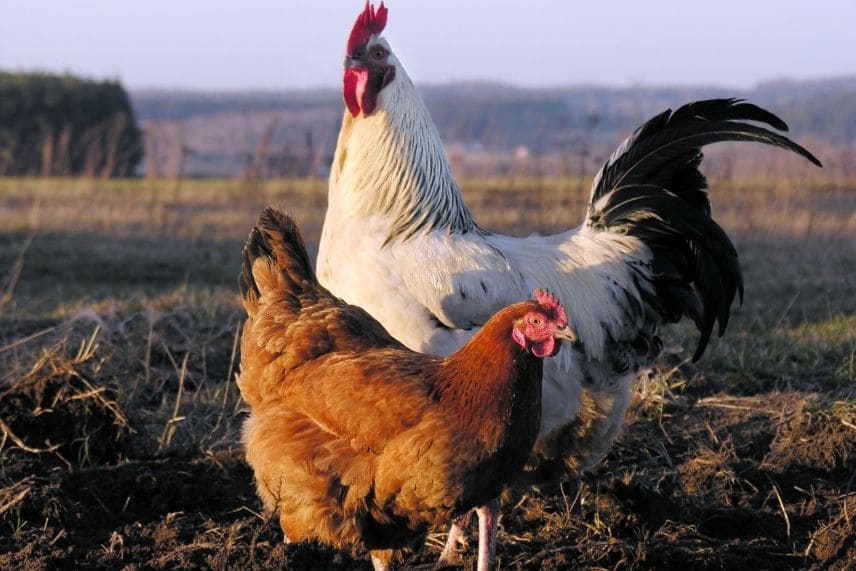 A hen ovulates daily and does not need a cock to lay. However, it is useful for fertilising the eggs.
Each egg consists of a yolk, white, and shell. The yolk corresponds to the amniotic egg, while the white is albumen secreted by the oviduct that protects the yolk. Finally, the shell, primarily made of calcium crystals, forms in about fifteen hours and protects the egg.
Unlike other birds, the hen has the ability to ovulate almost all year round. This is simply because it has been domesticated for thousands of years, crossbred, and artificially selected… However, originally, a hen, like its avian relatives, only produced ova (laid eggs) at specific times.
How to tell if an egg is fertilised?
An egg can only be fertilised if your hens cross paths with a cock. Moreover, mating must occur! But believe me, cocks are robust enough to mate with several hens! Furthermore, during each mating, nearly all the eggs that make up the chain and are stored in the follicle are fertilised. Thus, a cock in the prime of life can fertilise up to 80% of the eggs. Then, with each laying, the hen releases her fertilised (or not) eggs and incubates them. This explains why chicks do not all hatch on the same day…
Theoretically, all the eggs from a hen can be fertilised as long as mating has occurred. However, an embryo only develops (in 21 days) if the egg is incubated. This means that an egg collected each day can be fertilised but is still consumable.
As long as the hen is incubating, potentially, the embryos are developing.
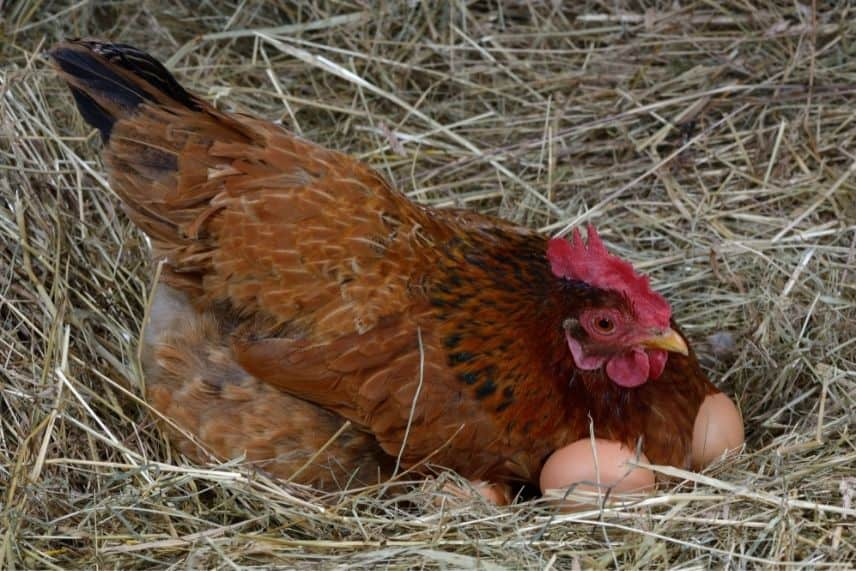 You need to candle the eggs incubated by a hen to see if they are fertilised
But sometimes not all eggs are viable. How can you tell if an egg is really fertilised or not? You need to candle it, which means observing it in transparency, using a strong light source. Hold the egg in your hand and place the light source under the rounded end. You can then see what is happening beneath the shell:
- If the egg is completely transparent, it is not fertilised (or has just been laid)
- If the egg is striated with red veins, it is fertilised
- If the egg appears dark and reveals a shape, it is not only fertilised, but a chick is developing inside.
Why are chicken eggs different colours?
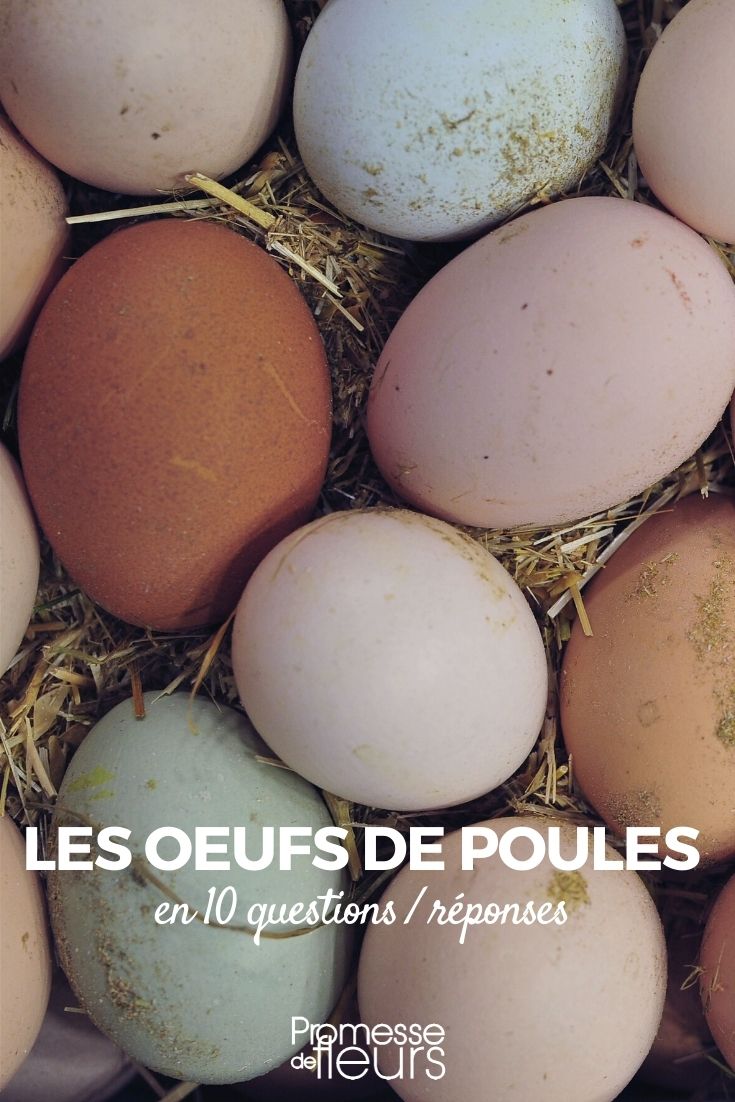
The colour of a hen’s eggs does not depend on its diet or health, but solely on its breed. The colour palette is relatively vast, varying in darkness depending on the genetic heritage of each hen. The colour of the shell is determined by pigments derived from the blood or bile of your hens.
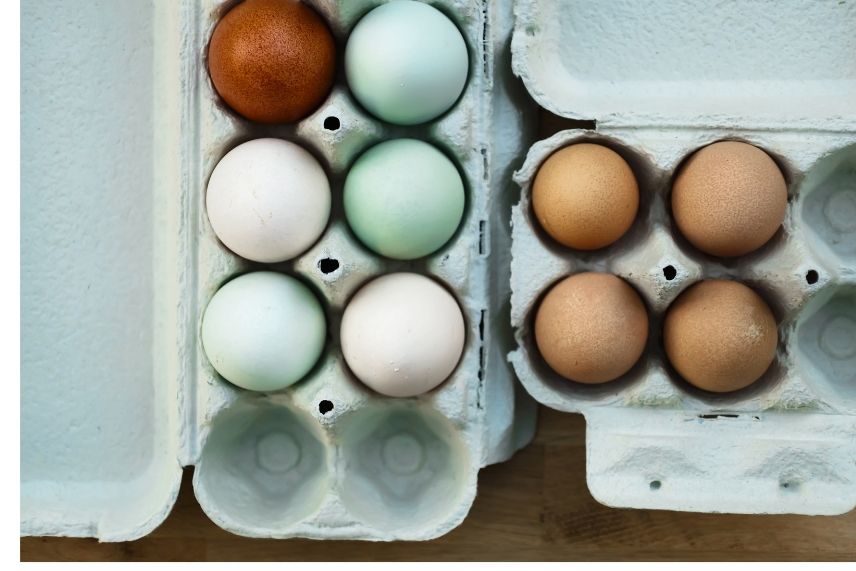
From pure white to chocolate brown, eggs vary in colour depending on the breed of the hen
So, if you want to collect eggs of different shades, adopt hens of different breeds. Let’s explore the colour chart:
- The Marans hen lays dark brown to chocolate brown eggs
- The Leghorn and Gatinaise hens lay perfectly white eggs
- The Araucana, Améraucana, Javanaise, and Cream Legbar hens lay eggs that range in colour from green to light blue
- The Barnevelder and Welsummer hens lay reddish-brown eggs
Other hens like the Red hen, Orpington, Vorwerk, Sussex… produce light brown eggs.
→ Also, check out our advice sheet: Why do hen eggs come in different colours?
A hen lays about one egg per day, which amounts to approximately 300 eggs per year, depending on factors such as breed, age, and environmental conditions.
The answer to the first question is simple (though…), the answer to the second is a bit more random. Generally, a hen lays an egg per day but, occasionally, it can happen that she lays two in a day, or more precisely, two within a 24-hour cycle, knowing that it takes between 15 to 26 hours for the egg to form.
On the other hand, determining the number of eggs in a year is more complicated, as it varies depending on the breed of the hen, her age, and the season. Some breeds like the Red Hen, Sussex, Gatinaise, Vorwerk, Marans, and Harco are champions in all categories as they lay between 200 to 300 eggs per year, a number that can vary depending on the diet and comfort provided. Also, be aware that in winter, hens lay less due to the lack of light and the cold. Summer heat can also be a hindrance.
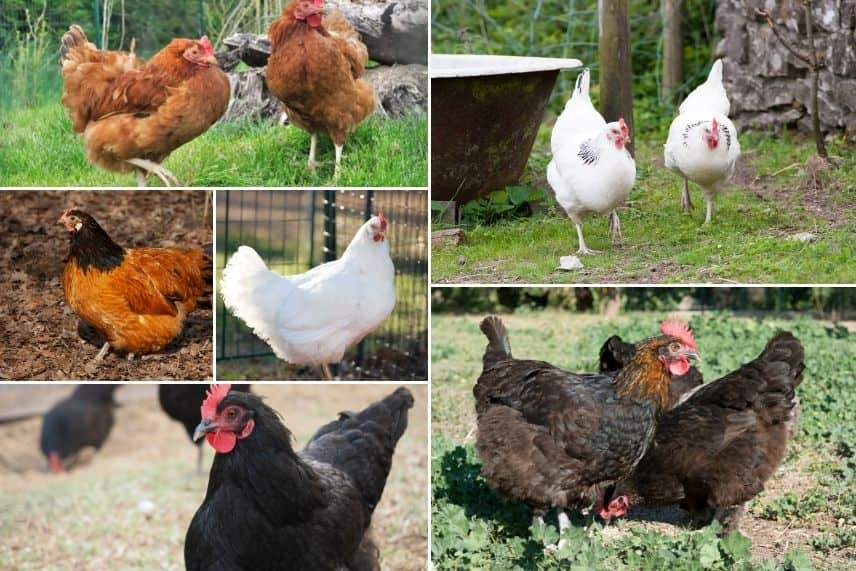
Red hens, Sussex, Gatinaise, Vorwerk, Harco, and Marans are among the most productive egg-laying hens
A hen typically lays eggs for about 2 to 3 years.
Again, the laying duration varies depending on different criteria such as breed, diet, and living conditions… Generally speaking, a hen lays in quantity until she is 3 years old. After that, laying decreases by about 20% per year. Most hens stop laying altogether around the age of 8.
Why do hens sometimes lay eggs without shells?
Several reasons explain the laying of a soft, shell-less egg. This often starts with the onset of laying in a young hen. These first eggs often have a very thin or non-existent shell.
A hen lacking calcium also lays shell-less eggs, which are primarily composed of calcium crystals. To remedy this issue, it is recommended to provide your hens with crushed oyster shells or their own crushed eggshells (with the risk that they may eat their own eggs!).
Finally, the laying of shell-less eggs can also be explained by a period of stress due to a predator attack, poor hygiene, moulting, or excessive heat.
How to store your eggs?
Here’s a question that has always sparked debates between refrigerator enthusiasts and others. Generally, it is recommended to store eggs at room temperature, only up to 22 °C. This is also how they are stored in supermarkets. However, there is nothing wrong with keeping them in the refrigerator. Ultimately, it is more the fluctuations in temperature that pose a risk for the proliferation of bacteria such as salmonellosis.
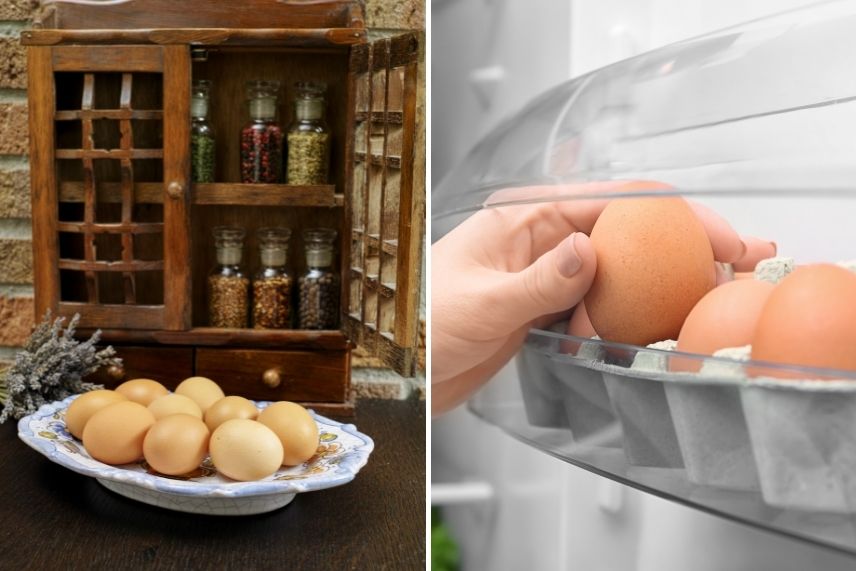
Whether stored outside or in the refrigerator, eggs should not be subjected to temperature fluctuations
You can therefore keep your eggs in a garage, a cellar, or an unheated conservatory, but avoid the kitchen countertop where temperature changes are quite significant. As soon as summer heat arrives, place them in the refrigerator or in a room that maintains a minimum of coolness.
How long can eggs be stored?
Eggs can be stored for 30 to 40 days if kept under proper conditions. We strongly advise you to write the laying date in pencil on each freshly collected egg.
If it is slightly cracked or broken, it should be consumed within a maximum of 2 days.
How to tell if an egg is fresh?
Haven’t you written the laying date on your egg and are you unsure about eating it? A simple trick is to place it raw in a bowl of cold water. If it sinks to the bottom, it is very fresh. If it stays in the middle, it is suitable for an omelette or hard boiling. However, if it floats on the surface of the water, it is best to throw it away.
Can you wash eggs soiled by dirt or droppings?
You should never wash eggs that are dirty with soil or droppings. Why? By washing them, you make them porous as you remove the fine protective layer that envelops them. This facilitates the entry of bacteria. The only time you can clean them is just before cracking them.
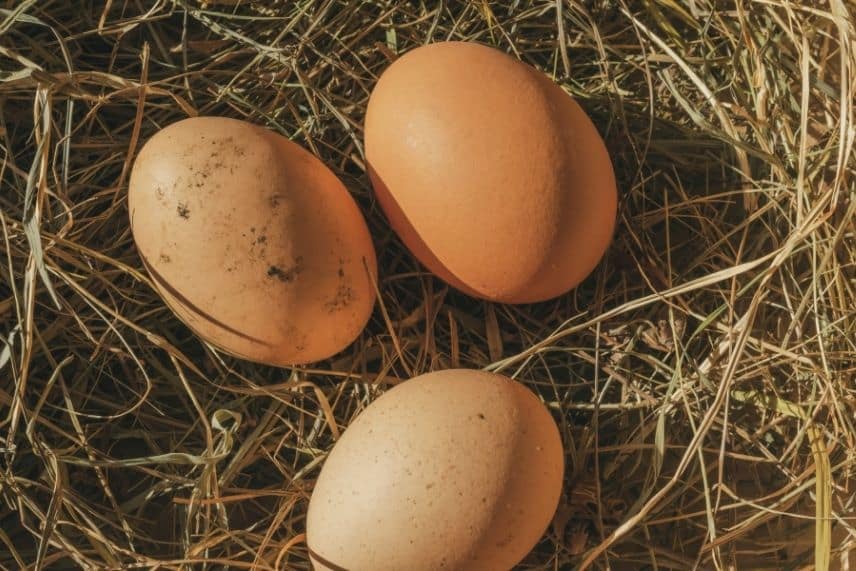
An egg should only be washed at the moment it is cracked
- Subscribe!
- Contents
Comments